
The Iceberg tomato is a Russian-bred variety developed specifically for regions with cold springs and short summers. It's an excellent choice for gardeners who grow vegetables in challenging climates.
Description of the Iceberg variety
Iceberg tomato plants are low-growing, determinate varieties. They are bushy, moderately branched, and reach a height of 0.6-0.8 m.
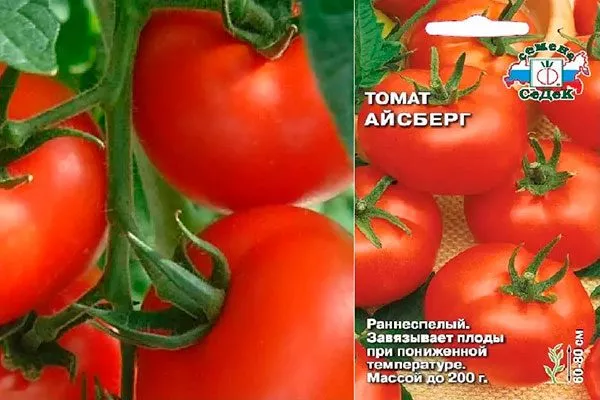
Iceberg tomatoes produce large, clustered tomatoes, each containing 5-7 tomatoes.
Brief description of fruits:
- Color of unripe fruit: light green.
- Ripe fruit color: red;
- Shape: flat-round.
- Pulp: dense, fleshy.
- Skin: dense, glossy.
- Weight: up to 200 g.

History of creation
The Iceberg tomato was developed by breeders from the renowned Russian company SeDeK, which has specialized in producing new varieties of a wide variety of crops for 30 years.
The taste of fruits and their purpose
Iceberg tomatoes have excellent flavor, with firm, plump flesh. They are very tasty and juicy, with a slightly sweet flavor and a classic tomato aroma.
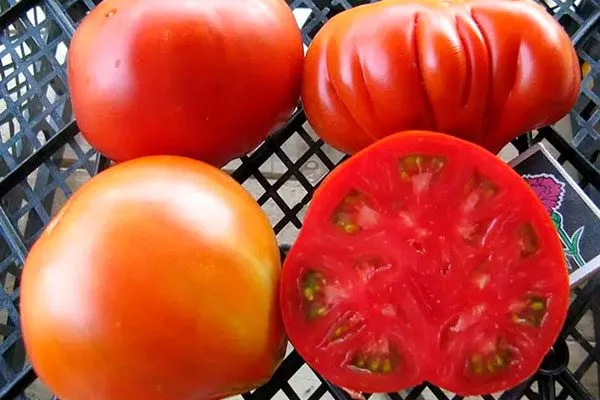
The fruits have a universal purpose: they are eaten fresh, used to make juices, preserves, and used to make pastes, ketchups, and sauces.
Characteristics
The Iceberg variety was developed specifically for regions with long springs and short, cool summers, making it highly cold-resistant. This tomato's other characteristics are also excellent, allowing it to be successfully grown in the northern regions of the country.
Ripening time
The Iceberg tomato is an early-ripening variety. It takes approximately 90-95 days from germination to ripening of the first fruits.
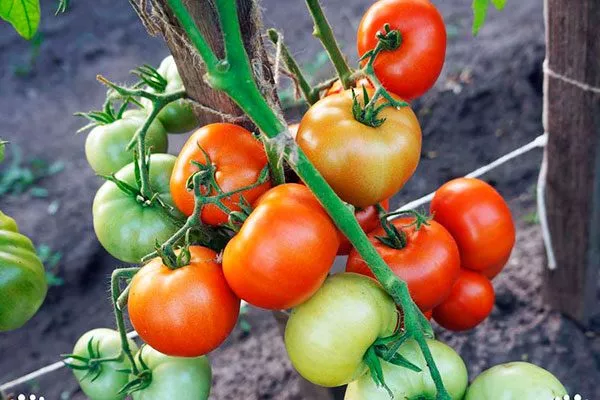
With proper agricultural practices, the first tomatoes can be harvested as early as July, and even earlier when grown under cover. Ripening times depend on soil type and climate conditions.
Productivity
The Iceberg tomato is a high-yielding variety. A single plant can yield approximately 4 kg of tomatoes. When grown in a greenhouse, approximately 30 kg of fruit can be harvested per square meter.

Immunity to diseases
The Iceberg variety is resistant to most diseases, including late blight. However, preventative measures are necessary to ensure infection prevention.
Pros and cons
The cold-hardy Iceberg tomato has many advantages that are important for growing vegetables. However, this variety also has a number of disadvantages, which it is recommended to be aware of in advance.
Landing
Iceberg tomatoes are grown using seedlings. Seedlings are grown in heated greenhouses or indoors on windowsills. The seedlings are then transplanted into the ground or greenhouses. To achieve good results, it is important to follow proper agricultural practices at all stages of seedling cultivation.
How to prepare seeds for sowing?
It's recommended to prepare seeds before sowing for seedlings to ensure high germination rates. Store-bought seeds are usually already treated and ready for planting, but home-grown seeds require careful preparation.
How to prepare Iceberg seeds for planting:
- Large seeds should be separated from small ones, and chipped or darkened ones should also be discarded. A special sieve can be used for calibration.
- To test for germination, use a saline solution (1 teaspoon per 250 ml of water). Any seeds that float to the surface are discarded as they are not viable. Good seeds that settle to the bottom are rinsed under running water and dried.
- For disinfection, use Fitosporin-M, chlorhexidine or 3% hydrogen peroxide.
- Before sowing, the seeds are germinated by placing them in a moist environment. The optimal temperature is 24…28 °C.
Selecting a site
The Iceberg tomato, like other crops, prefers well-lit, sunny sites protected from wind and drafts. Choose sites that are level or slightly elevated; low-lying areas are unsuitable for tomatoes, as they do not tolerate stagnant water.
The Iceberg tomato doesn't thrive in high groundwater. If the groundwater level is too low, raised beds are used. The Iceberg variety prefers fertile, loose, loamy soils with a pH of 6.0-6.7.
Preparing the beds
In the fall, the plot is dug over and fertilized with humus, compost, or rotted manure. The depth of autumn digging is 25-30 cm. Green manure can be sown before winter; it improves the soil quality. If the soil is highly acidic, wood ash or other acidifying agents can be added during the digging.
In the spring, the beds are dug over again, adding 2-3 buckets of fallen leaves per square meter to loosen the soil. The area is then leveled and prepared for planting tomatoes.
Growing seedlings
It takes approximately 55-60 days to grow seedlings. The sowing date is calculated based on the seedlings' growth time and planting time in a specific region. On average, sowing occurs in late March to obtain ready-to-plant seedlings by June.

Features of growing Iceberg tomato seedlings:
- Sow seeds in any suitable container. The main thing is that they are disinfected and have drainage holes. Large containers, individual plastic cups, cassettes, peat pots, and tablets are all suitable for growing seedlings.
- Seedlings should be sown in a warm room. The temperature should not fall below 15°C. Ideally, it should be between 20°C and 22°C.
- Seeds are sown at a depth of 1.5 cm. Space adjacent seeds 2-3 cm apart, and rows 3-4 cm apart. When sowing, place 2-3 seeds in each cup to select the strongest seedlings. Furthermore, by planting several seeds in a single container, gardeners ensure nearly 100% germination in the prepared planting containers.
- The crops are covered with plastic film to create optimal conditions. The containers with the plants are placed in a warm, bright room. The crops are aired daily to prevent condensation.
When seedlings emerge, which usually happens about a week after sowing, the covering material is removed and the seedling containers are moved closer to the light. At the same time, the temperature is lowered to 15–16°C. Failure to do this will cause the seedlings to stretch and become weak and unviable.
Features of seedling care:
- After the emergence of seedlings, the temperature is kept lowered to +16 °C, then it is raised again to +20..+23 °C.
- When the seedlings appear, they are provided with 24-hour supplementary lighting for 3-5 days, then it is reduced to 18-20 hours, and after a month - to 11-12 hours.
- During the first three weeks, water the seedlings once a week. After transplanting, water 2-3 times a week. Sprinkling 2-3 times a week also helps.
- Seedlings are fed only after transplanting. Special seedling fertilizers are applied; 1-2 applications are sufficient.
- Before transplanting seedlings into the ground, harden them off. For a week or two, the seedlings are placed outdoors to allow them to adapt to the new conditions. If transplanting to a greenhouse, hardening off the seedlings is not necessary.
Transplanting
Seedlings are planted in late May or early June, depending on soil type and climate conditions. When choosing a planting time, consider the air and soil temperatures, which should reach 18 to 20°C and 12 to 14°C, respectively.

Features of planting Iceberg tomato seedlings:
- For planting, prepare holes measuring 15 x 20 cm. Add fertilizer (humus, wood ash, and superphosphate) and top with regular soil. Add 3-5 liters of water and allow the soil to settle for 30 to 60 minutes. The optimal planting pattern is 30-40 x 30-40 cm. Six bushes can be planted per square meter.
- Place the seedlings in the holes with a lump of soil or a peat container. Fill the empty space with soil, compact it, and then water again. The water should be warm and allowed to settle for 3-4 days. After planting, do not water the tomatoes for 10 days. An exception is made only during extreme heat.
Care Features
The Iceberg tomato requires standard care; it is not difficult to grow; even inexperienced gardeners can grow this variety.
Watering
Water the Iceberg tomato plant whenever the soil dries out. It is recommended to water the tomatoes in cloudy weather or after sunset.

Watering should be infrequent but generous. On average, 1-2 times a week is recommended; in hot weather, watering should be more frequent—2-3 times a week.
Loosening
To prevent the soil from hardening after watering and to prevent the crust from blocking oxygen supply to the roots, it's important to loosen the soil regularly. Ideally, do this after every watering or rain, but at least once every two weeks. Loosen the soil to a depth of 4-6 cm.
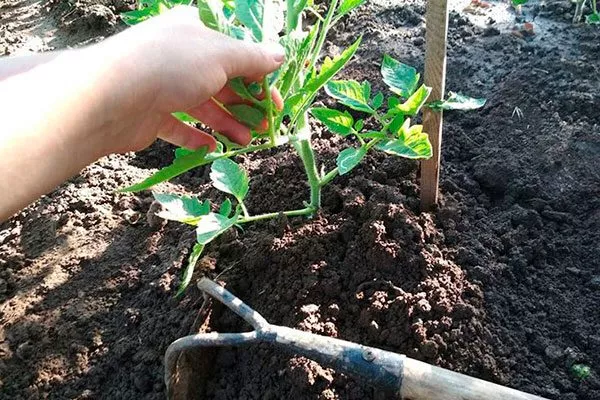
About 10 days after planting, the tomatoes need to be hilled up, with the soil raked upward. Hilling should be repeated three weeks after the first.
Top dressing
It is recommended to feed the Iceberg tomato with a liquid mullein solution and mineral complexes several times per season. During flowering, potassium-rich fertilizers are added to promote good fruit set, as well as phosphorus fertilizers to stimulate root development.

During fruiting, apply complex fertilizers high in potassium and phosphorus. These support fruit formation and promote ripening. At this stage, tomatoes also need calcium supplements to prevent blossom-end rot and improve fruit structure.
Shaping and garter
Iceberg tomatoes don't require any shaping, and pinching out side shoots is optional and can be done at the gardener's discretion. However, staking is recommended; it's recommended to tie the plants to supports to prevent them from falling to the ground.
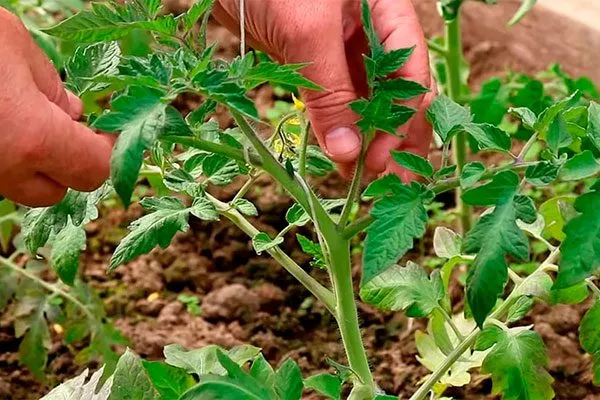
You can place supports along the edges of the rows and stretch wire between them to make trellises and tie the stems of the tomato bushes to them.
Diseases and pests
Under unfavorable growing conditions and poor agricultural practices, the Iceberg tomato is susceptible to late blight, septoria leaf spot, and other fungal diseases. To prevent this, spray the plants with Bordeaux mixture, Cuprozan, Fitosporin, and other pesticides.
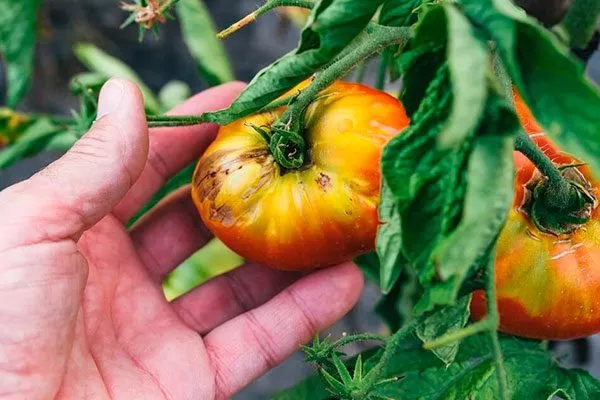
Iceberg tomatoes can be affected by wireworms, whiteflies, mole crickets, root-knot nematodes, and cutworms. Insecticides can be used against them, but not during the fruiting period. Biological products such as Fitoverm are also recommended.
Harvesting
The fruits are picked regularly from the bushes, as they ripen unevenly. Fruiting begins in July and continues for a long time, allowing the grower to produce a harvest until autumn. Harvesting occurs in dry, warm weather, in the mornings when there is no dew. The fruits are carefully cut and placed in wide containers; it is recommended to store them in a single layer.
Reviews
The Iceberg tomato is a reliable and proven variety, ideal for Siberia and other regions with climates unfavorable for growing heat-loving vegetables. This early variety boasts high yields, and its versatile fruits are suitable for any purpose.