
Many vegetable gardening enthusiasts strive to grow tomatoes in their gardens that stand apart from standard varieties. It was for these connoisseurs that the unique Auria tomato was created. Its elongated, double-ended fruits are combined with a superb aroma and flavor, generating genuine interest among consumers.
Description of the bush and fruits
The Auria tomato is a large plant, typically reaching 180-200 cm, and is an indeterminate variety. It is distinguished by its moderately dense leaves with a characteristic light green hue.
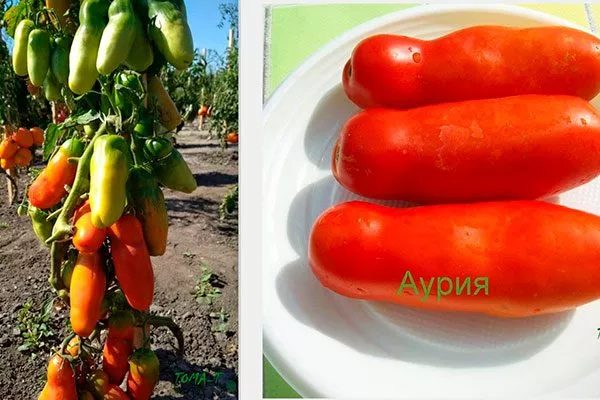
There are also other varietal characteristics and indicators:
- The central stem of the bush is erect, while the branches resemble vines due to their increased flexibility, which allows them to form a large number of fruits.
- Despite its impressive size, the bush is compact and has a well-developed root system, making it a worthy addition to any garden plot.
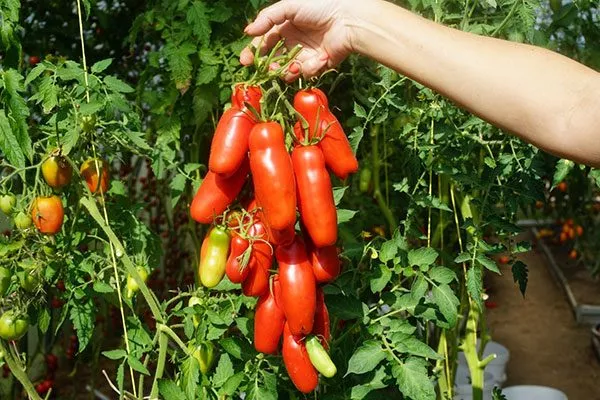
- On average, a mature bush produces up to six fruit clusters, each containing 3-8 ovaries. The first fruit cluster appears above the 10th or 12th leaf.
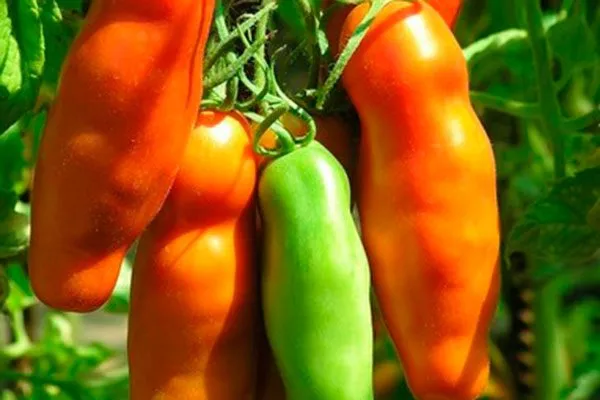
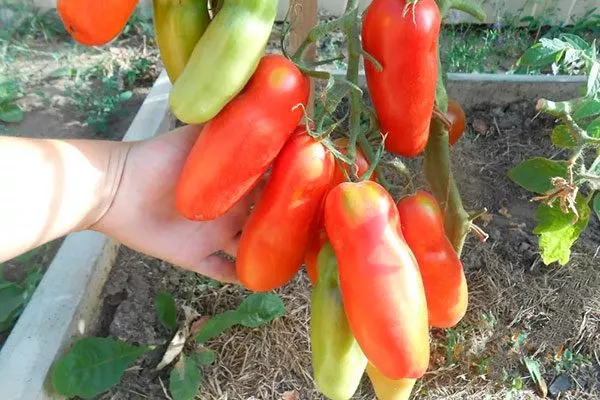
- This medium-sized tomato stands out for its unique appearance. It's very long, with an uneven surface and a two-lobed tip.
- The weight of a tomato varies between 150-200 g, reaching 12-15 cm in length.
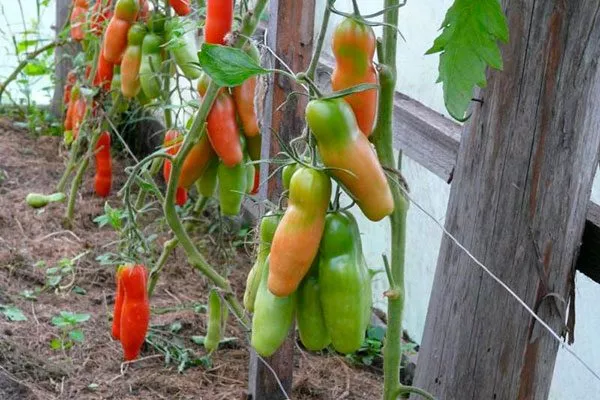
- The orange-red color of tomatoes is typical for this variety, while unripe fruits are light green with a darker shade at the base. Occasionally, the skin may be lighter from the center of the fruit to the top, which is normal and does not affect the taste of the tomato.
- The skin is thin yet strong, which allows for long-term storage and transportation when stored properly. Inside, the fruit has fairly dense walls.
- The oblong shape and shiny skin give the tomatoes an attractive commercial appearance.
- When cutting an Auria tomato in half, you'll notice two seed chambers inside. The seeds are small and evenly distributed throughout the pulp.
- The tomato pulp is rich in dry matter, which also ensures its long-term shelf life, resistance to cracking, and ability to withstand long-distance transportation.
- ✓ The fruits have an elongated shape with two ends, which is a unique characteristic of the variety.
- ✓ High productivity: up to 8 kg of ripe tomatoes from one bush.
Key Features
Disease resistance is average, and the tomato plant is not particularly resistant to fungal diseases. The bush requires careful support and reinforcement, as its stem is very fragile and unable to support the weight of its own fruit.
Origin, regions and climate
Foreign seeds often list Ukraine as the origin, while in the post-Soviet space, this variety is often associated with Israel. Those who consider this variety a shining example of folk selection are probably closest to the truth.
However, official sources indicate that the Auria variety, which has an average ripening time, is the result of the successful work of Israeli breeders.
This variety is known by various names:
- Male dignity;
- Adam;
- Ladies' pleasure;
- Women's joy;
- Ladies' man;
- Aurica;
- Auria;
- Auriya;
- Adam.
The tomato is not included in the State Register of Breeding Achievements, but is recommended for cultivation in all regions of Russia. In the central part of the country and the Urals, greenhouse cultivation is preferred, while in the south, the bushes grow successfully in open ground.
Tomatoes are highly stress-resistant. They can tolerate drought, but careful monitoring of humidity is essential, as the plant prefers warm climates and does not tolerate sudden temperature fluctuations. Yield and development can be adversely affected by drafts and strong winds.
Ripening and fruiting, productivity
Tomatoes are classified as intermediate-ripening plants. It takes about four months (105-110 days) from the time the seeds germinate until the ripe fruits appear on the bush. This variety is not prone to premature ripening; the fruits ripen gradually.
The peak fruiting period occurs in the summer months – July-August-September, although it may vary depending on conditions and local climate.
One of the key features of the variety is its high productivity:
- If agricultural standards are observed, up to 8 kg of ripe tomatoes can be harvested from one bush during the season;
- from one square meter – up to 20 kg.
To increase the yield of the Auria variety, it is recommended:
- Train the plant to have a single central stem. This type of planting encourages the emergence of young shoots that develop their own root system and also contribute to increased yield.
- By using biostimulants that do not have a harmful effect on the human body, you can also increase fruiting on the bush.
- Tomatoes produce better fruit and reach technical maturity faster in greenhouse conditions using polycarbonate material.
Taste, purpose and benefits
The Auria tomato has excellent flavor. Its aroma is rich with sweetness. This tomato's appearance is more striking than its taste; it's not particularly appealing when eaten raw—the sweetness of the flesh only manifests when it's underripe. Its high dry matter content gives it a slightly succulent texture.
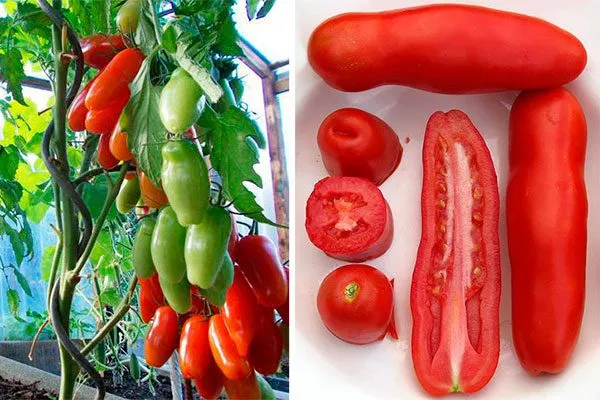
Optimal use:
- According to reviews, Auria is ideal for canning. Its elongated shape makes it easy to store in jars, and the canned tomatoes retain their integrity and flavor. The firm flesh is not damaged by heat treatment.
- The lack of moisture in tomato pulp allows it to maintain its integrity when heated. This ensures the necessary consistency for tomato paste. There's no need to simmer the puree for long periods to remove excess water. After cooking, the tomato's flavor fully develops, imparting a sweet note and thickness to the finished paste.
How to grow seedlings?
When growing Auria tomatoes, experts recommend creating bushes with one or two main stems, using supports or trellises, and periodically removing excess side shoots. Planting also has its own specifics and nuances.
Seed preparation
The process of preparing seeds for seedlings begins two months before the planned transplanting into greenhouse beds or open ground. This most often occurs in February.
- ✓ Optimum soil temperature for seed germination: +24°C.
- ✓ The need to use artificial lighting in a greenhouse when there is insufficient natural light.
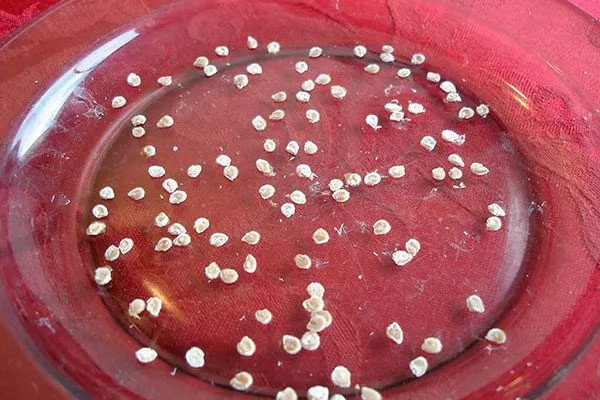
To ensure a high tomato yield, it is important to begin seed preparation in advance:
- Select the planting material, removing any small or damaged ones. Then, place the hand-selected seeds in a jar filled with salt solution. After 15 minutes, the empty seeds will float to the surface and the healthy ones will sink to the bottom.
Empty seeds are discarded and the rest are washed in clean water, dried and placed in a solution of potassium permanganate for 20 minutes for disinfection. - To stimulate early germination, it is recommended to soak the seeds before sowing. To do this, line a wide container with cheesecloth, spread the seeds evenly over it, and then moisten thoroughly.
It's best to use warm distilled water, which should cover half of the seeds. Sometimes, special growth stimulants are added to the water to accelerate seedling growth. - The next stage is active seed development. Spread them evenly over a layer of cheesecloth on a plate, but do not soak them in water. Spray occasionally to maintain moisture. For germination, a temperature of at least 20°C is required.
- Hardening off plays a key role in strengthening seedlings and mature tomatoes, making them more resilient to sudden temperature fluctuations. It also increases yields by 40-60%.
To do this, place the seeds in the refrigerator for 10-14 hours at 2°C. Then return them to room temperature at 20°C. Repeat this process at least three and up to five times.
Container and soil
To prepare the substrate, combine freshly dug garden soil and organic compost in a 1:1 ratio, adding a small amount of peat. Mix all ingredients together, then pour in a hot solution of potassium permanganate, which has a pinkish tint and has antibacterial properties.
After treatment, leave the soil mixture to air out for 14-16 days. Then pour it into planting containers.
For growing plants, you can use either shared wooden containers or individual containers, such as plastic cups, paper containers, or peat pots. Regardless of your choice, be sure to make small holes in the bottom of the containers to prevent excess moisture from accumulating. Don't forget to disinfect the containers, too.
Sowing and growing seedlings
The sowing process is no different from standard procedures, but the sprouted seeds are placed in narrow furrows 1 cm deep. The planting containers are then covered with plastic film to create a greenhouse-like microclimate and placed in a room with a temperature of at least 24 degrees Celsius.
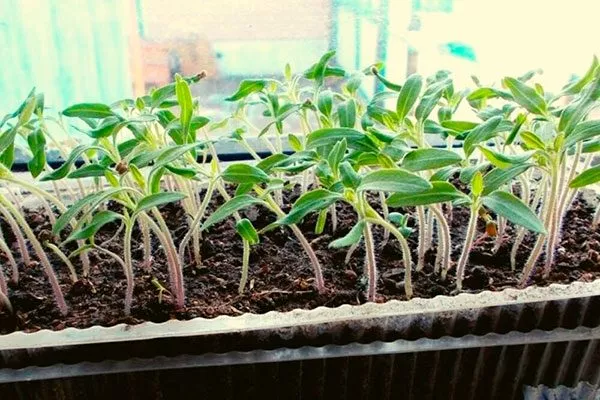
Key rules and actions:
- Ventilate the plant daily, lifting the film for 25 minutes to provide oxygen and prevent dampness. If necessary, sprinkle a little water using a spray bottle.
- When the first green shoots appear, remove the cover and reduce the room temperature to +20 degrees, and move the containers to a bright place where the seedlings will receive light for at least 14-16 hours a day.
If there is insufficient natural light, use fluorescent lamps. - Watering should be moderate – it is needed after the top layer of soil has dried out slightly.
- Afterwards, lightly loosen the top part of the soil.
- Fertilizer is applied three weeks after the first shoots appear, using purchased products.
- When the sprouts have two true leaves, transplant them into individual containers.
- Three weeks before transplanting outdoors, begin hardening off the seedlings. This process involves exposing the seedlings to fresh air, starting with 40 minutes and gradually increasing the time to 13-15 hours. At the same time, reduce the nighttime temperature in the room where the plants are kept to 14 degrees Celsius.
Transfer
Auria tomato seedlings are transplanted outdoors once the risk of frost has passed and the soil temperature reaches 15°C. To speed up the process, the seedlings can be transplanted into a greenhouse two weeks earlier.
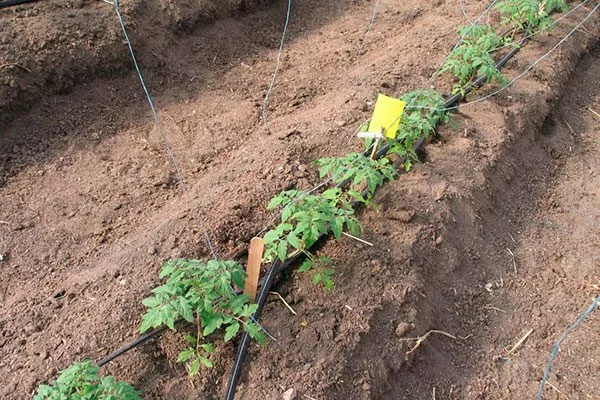
Choosing a location for your Auria tomato bed requires special attention, as it directly impacts the yield. It's best to choose a site on a raised section of the garden to provide protection from strong winds. Then, follow these steps:
- Fertilize the bed with organic matter, for example, 10 kg of manure per 1 square meter of area.
- Mark out the locations of the holes in the future beds – the distance between seedlings should be 50-55 cm, between rows – 40-45 cm, which will allow you to place 3-4 seedlings per 1 square meter.
- Before planting, water the seedlings and carefully remove them from the containers.
- Add wood ash to each hole, the dimensions of which are identical to the size of the root system.
- Replant according to the classic scheme.
After work, the soil should be moistened again, mulched a little and the young plants should be allowed to get used to the new conditions for a week.
Further care for the Auria tomato
Tomatoes are easy to care for, making them suitable for amateur growers. Special care includes regular leaf removal and bush shaping. Once the plants reach the desired size, carefully trim their tops. This promotes optimal nutrient distribution, favoring fruiting rather than foliage growth.
Watering
In a greenhouse, watering twice a week is recommended until flowering, using 2-3 liters of water per plant. Once fruit sets, increase the watering to 5 liters once a week. In open ground, water tomatoes once or twice a week until flowering, using 5 liters of water per plant.
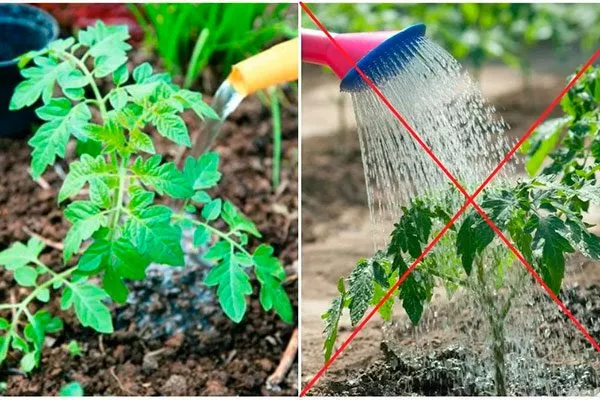
During hot periods, watering can be done daily. To prevent moisture loss from the soil, mulching around the bush is recommended. Compost, peat, or hay can be used as mulch.
Bush formation
To ensure optimal growth of the Auria tomato variety, carefully remove side shoots. Do not allow them to grow beyond 3-5 cm. Use scissors to remove side shoots, leaving a short distance. Avoid twisting or pulling them out.
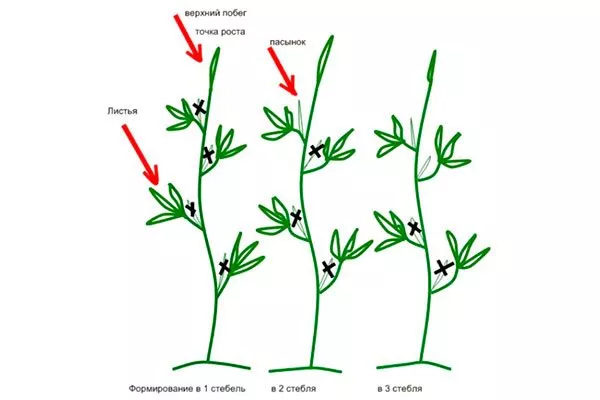
As tomatoes age, they should be regularly pruned, starting from the very bottom. Once the fruit has fully formed, the top of the plant should be carefully removed to ensure all its resources are devoted to the development and ripening of the fruit.
Soil care
The Auria tomato prefers soil that's not too compacted in the root zone. Therefore, after each watering or at least every two weeks, it's important to gently loosen the soil around the plants while simultaneously removing weeds.
- at the beginning of growth, during the first three weeks, fluff up to a depth of 11-12 cm;
- in the future, in order not to damage the root system, reduce the loosening depth to 6-8 cm.
As the bush grows, hill it to create optimal soil temperature and moisture conditions. Sometimes, instead of hilling, a weekly soil coating with humus is applied over the previously loosened layer.
Tying up
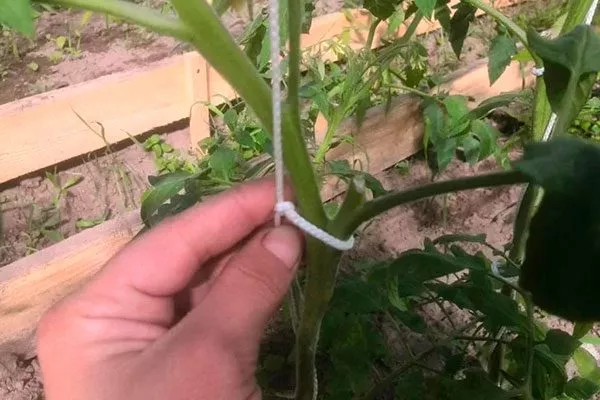
This tall-growing variety, adorned with abundant clusters of fruit, requires support. Support will help light penetrate to the foliage and tomatoes, protecting them from contact with the ground. The following methods are used for this:
- installing stakes in the ground next to the bush, to which the stems are then tied using a light synthetic cord;
- using trellises to support tomato stems and branches;
- the use of metal or wooden trellises to prevent the plant from falling to the ground.
Top dressing
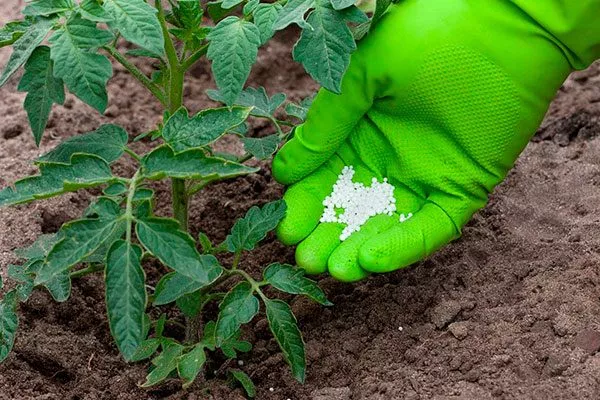
To ensure quick establishment and growth of the "Male Dignity" tomato variety, fertilize them within two weeks of transplanting. Use nitrogen-based fertilizer. Organic fertilizers, such as a 1:10 mullein solution, are particularly effective.
Next:
- Fertilize a second time during the flowering period. Choose a mineral supplement or continue using organic matter.
- Before fruits ripen, add potassium salt to minerals or organic matter to speed up the ripening of vegetables.
Diseases and pests: resistance, control, prevention
Auria exhibits moderate resistance to diseases affecting plants in the nightshade family. This variety is most often susceptible to infection from neighboring plants, so it is extremely important to avoid planting it near related crops.
This tomato is vulnerable to diseases such as blossom end rot and dry spot:
- In the first case, the affected fruits cannot be saved, but spraying with Bordeaux mixture can stop the progression of the fungus.
- Dry spot can be treated with Antracol.
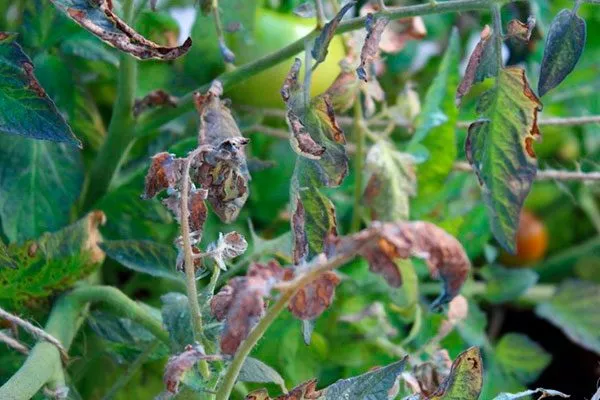
Preventative measures include regular weeding, proper soil loosening, and moderate watering. Greenhouses should be equipped with a forced-air system to ensure a constant flow of fresh air to prevent fungal growth.
The main enemies of tomatoes include whiteflies, spider mites, Colorado potato beetles, and aphids:
- To catch whiteflies, pheromone traps are used, which act only on the pests, without affecting other insects.
- Spider mites prefer humid greenhouses. Frequent ventilation is sufficient to prevent them from becoming uncomfortable.
- A special soap solution applied to the stems helps to deal with aphids.
- The Colorado potato beetle is caught and destroyed by placing it in glass jars and setting it on fire.
It's important to remember that prevention is the key to protecting plants from diseases and pests. It's recommended to check your plants daily for signs of disease.
The nuances of cultivation in open ground and in a greenhouse
This variety is ideal for growing both outdoors and indoors. It's important to remember that the plant prefers bright sunlight. If natural light is insufficient, artificial lighting should be used in the greenhouse to avoid stunting the plant's growth.
When choosing a place to plant tomatoes outdoors, preference should be given to sunny, non-shaded areas.
The date of sowing seeds is directly related to the location where the seedlings will be planted:
- In southern regions, tomatoes are planted outdoors. In this case, sowing occurs 62-63 days before the planned planting.
- If you choose greenhouse cultivation of the Auria variety, then sowing of seeds should be carried out 45-55 days before transplanting seedlings.
Harvesting and storage
It's important for any gardener to ensure that harvested tomatoes remain fresh for a long time. To achieve this, follow these guidelines:
- collect tomatoes together with the stalk;
- remove slightly unripe vegetables;
- use boxes made of wood or cardboard;
- carefully place dry and healthy harvest into them;
- Store in a cool, ventilated place.
Pros and cons
The Auria tomato stands out for its unique fruit shape, which attracts vegetable lovers, despite its unremarkable flavor. Among the advantages of this variety are the following:
The Auria tomato is considered an "amateur" variety. Although it's not widely grown, it's still quite well-known among gardeners who've tried it in their own plots.
Similar varieties
| Name | Growth type | Disease resistance | Fruit shape |
|---|---|---|---|
| Auria | Indeterminate | Average | Extended with two tips |
| Lady fingers | Determinant | High | Elongated |
| Tomato Zabava | Determinant | High | Peculiar |
| Eros variety | Indeterminate | High | Phallic |
| Kassady's Madness | Semi-determinate | Low | Icicle with a concave nose |
| Firewood grade | Determinant | High | Slightly bifurcated, dull character |
Seeds of this variety are rare, as it is not officially registered. While there are other varieties more suitable for various purposes (for example, fresh consumption, whole-fruit canning, etc.), Auria is the best choice for drying.
This variety is unique due to its fruit shape, and instead of it you can plant:
- Ladies' fingers, However, the fruits are significantly smaller, and yields vary greatly depending on growing conditions. Tomatoes of this variety, registered in the State Register in 2008, are similar to those of Auria. They are disease-resistant.
- Tomato Zabava (2013) also has a distinctive fruit shape. They have a pleasant flavor, and the bush is classified as a determinate variety. Its characteristics and appearance are similar to those of Auria. Zabava tomatoes are resistant to a number of diseases.
- Eros variety This variety gets its name from its fruit shape. It's mid-season, indeterminate, and produces yellow-orange, phallic tomatoes weighing 100-150 grams each. Compared to the Auria variety, Eros's fruits are slightly shorter but thicker, with sweet, slightly dry flesh. It has a forked beak. It is highly resistant to common tomato diseases.
- Cassady's madness. A variety for those who don't miss the chance to grow unusual tomatoes. It will be an even more exciting choice. This semi-determinate hybrid reaches a height of 120 to 160 cm and is classified as a mid-early variety.
Its fruits are bright red with golden highlights, weighing between 60 and 150 grams and measuring approximately 10 cm in length. The fruit is shaped like an icicle, but has a concave tip ending in a slight bulge. The variety is not resistant to tomato diseases. - Firewood grade. This is a new mid-early patented hybrid, officially registered with the State Register in 2019. This determinate variety is characterized by disease resistance. The tomatoes have firm skin and flesh, a rich red color, and a pleasant flavor. Their tips are slightly forked and blunt, reminiscent of the Auria variety.
Reviews
Auria tomatoes are a common choice in garden plots and farms due to their excellent productivity, good characteristics, transportability, and ease of care. However, this variety does have its own peculiarities: the fruits can be irregularly shaped due to bumps and vary in size.