
The Atomic Grape Breda tomato, also known as the Atomic Cluster, is distinguished by its exquisite taste and unique appearance—its exotic appearance and sweetness have led to its true popularity. This variety is suitable for cultivation throughout virtually all of Russia, including areas with risky farming.
History of selection
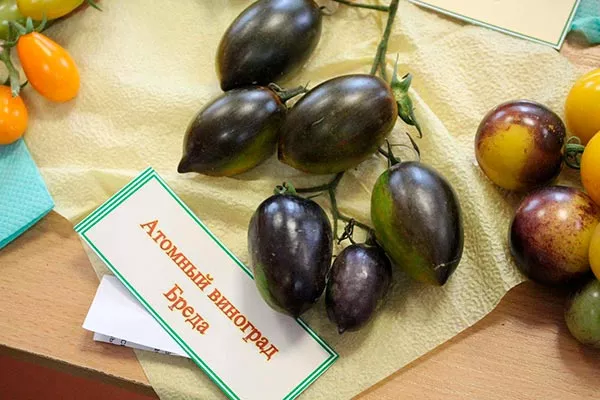
Brad Gates, a California vegetable grower, developed a unique tomato variety, Brad's Atomic Grape, on his farm in the Napa Valley. Gates is known for developing tomatoes with various color variations and striped patterns.
Historical data:
- The Atomic Grape variety was introduced in early 2016 and immediately won love and recognition throughout the country.
- In 2017, it was awarded the title of "Best National Heirloom" at the American Agricultural Festival.
- As the variety's popularity grew, Baker Creek Heirloom Seeds joined Brad Gates in a promotional campaign to promote Atomic Grape, which led to even greater awareness.
This variety has already won the hearts of Russian vegetable lovers, but there aren't many agricultural companies offering seeds in Russia right now. These are:
- "Aelita";
- "Our garden".
Description and characteristics of the tomato variety Atomic grapes Breda
Atomic Grape Breda tomatoes are an ideal choice for both greenhouse and outdoor cultivation. This variety has limited tolerance to low temperatures, but it adapts well to climates unfavorable for growing. The key is to provide the plant with protection during the initial period after planting.
Features of the plant, fruits and taste
Atomic grape (Solanum lycopersicum) is a mid- to late-season variety of the Solanaceae family. It is characterized by its small fruits, classified as grape tomatoes, and was developed for commercial use in the United States in the early 21st century. It is often called "Acid Tomato" due to its distinctive flavor.
This plant has no specific size and can grow up to 1150-200 cm – in a garden, the bushes can reach a height of 120-150 cm, while in greenhouses their growth can exceed 200 cm.
There are also other varietal characteristics:
- The bushes are distinguished by their vigor and dense foliage, but to obtain a good harvest it is necessary to carry out the step-sonning procedure.
- The stems are of medium diameter and without support may bend downwards during fruit ripening, leading to damage.
- The leaves are also medium-sized, bright green, and have a typical tomato shape (slightly elongated). Shortened, downward-facing branches can be seen between the leaf blades. They have sharp tips and large teeth along the edges. The leaves appear drooping and lifeless on the plant, but this is normal. The surface of the blades is slightly silky.
- The first cluster of fruits forms at the 8th leaf level, with subsequent clusters appearing at intervals of 1-2 leaves along the entire length of the shoot. Simple inflorescences produce up to 9-10 fruits, while complex inflorescences produce up to 12-15.
- The flower clusters are simple, although double inflorescences are sometimes found. The flowers are small and bright yellow. The peduncle is articulated.
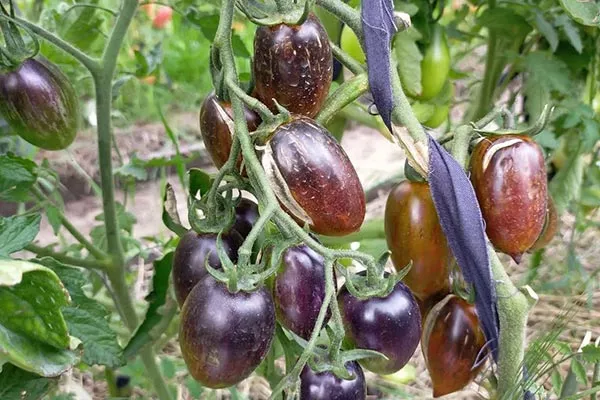
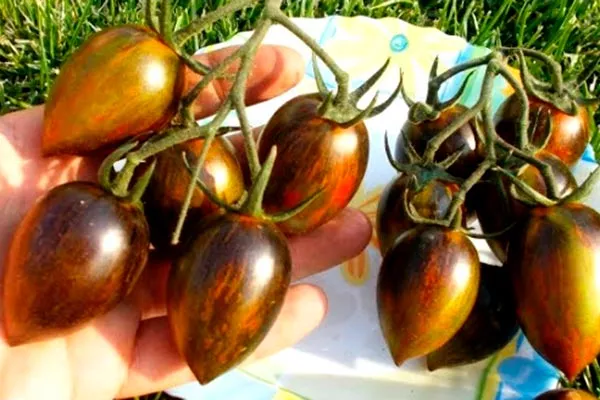
- Ripe fruits on clusters resemble grapes. These small to medium-sized fruits range from 2 to 7 cm in length and weigh 40-75 g. They have an elongated oval shape with slightly curved or slightly pointed ends.
- In cross-section, the Atomic grape Breda displays a vibrant palette of red, yellow and green colours.
- The skin of the tomatoes has a glossy texture, but is not overly tough.
- The fruit pulp is juicy and fleshy, with no noticeable voids. Each tomato contains three seed chambers with a moderate number of seeds.
- Grape tomatoes are distinguished by their vibrant color and distinctive flavor, which is distinctly sweet. However, they also have a slight tartness with fruity notes reminiscent of plum or tropical fruits. If tomatoes are grown in shaded areas, their flavor tends to be more acidic.
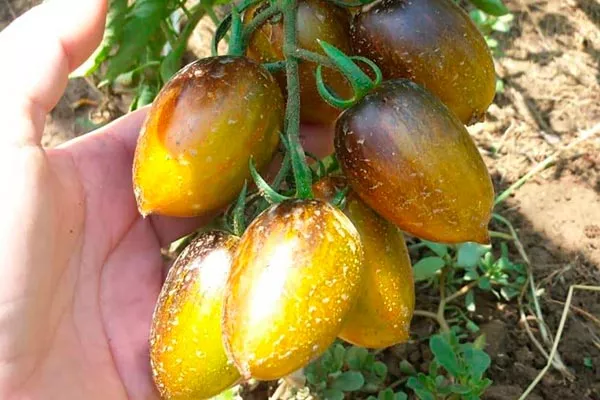
- Cherry tomatoes start out green, but over time they develop dark purple stripes, adorned with orange, red, and yellow veins. The skin color can vary significantly depending on climate and growing conditions, with cooler climates producing more purple and green tones.
- These fruits bear fruit well and ripen over a long period of time.
- The fruit is an excellent source of vitamins A and C, antioxidants that strengthen the immune system, stimulate collagen synthesis in the skin, and reduce inflammation. Tomatoes are rich in lycopene, a natural pigment with antioxidant properties that protect the body from negative environmental impacts.
Ripening time and productivity
This American variety is classified as mid-late. The tomatoes reach maturity 110 to 120 days after planting in open ground or under protective structures. Harvesting begins in early August and continues until the end of September, with the fruits ripening in small batches.
There are no official yield statistics for this variety. However, gardeners believe it is a medium-yielding variety, with a single bush yielding between 4 and 8-10 kg of vegetables.
Resistance to adverse factors, regionality
The Atomic Breda grape is distinguished by its resistance to adverse weather conditions. This variety produces abundant harvests in the mild southern climates, where the vines are planted in garden beds. In the central and northern regions, greenhouse cultivation is preferable. For gardeners in the Moscow region, the use of hotbeds is recommended.
This variety is protected from many diseases:
- fusarium;
- Alternaria;
- tobacco mosaic virus;
- blossom-end rot.
Despite the cool and humid summer with variable weather, the risk of fungal infections remains low. Due to the late ripening of the fruit, late blight is rare. However, preventative measures significantly reduce the likelihood of this.
Purpose and application
The Breda Atomic grape has gained popularity thanks to its vibrant striped skin, rich flavor, and versatility—it's suitable for both fresh eating and cooking:
- for steaming, frying and baking;
- can be cut in half and eaten as is, added to sauces, salads, used as a filling for tacos, or cut into pieces and served with grain dishes;
- for making juices and as an addition to the famous Bloody Mary cocktail, as well as puree for gazpacho.
- for stewing in sauces, soups and stews, baking in tartlets.
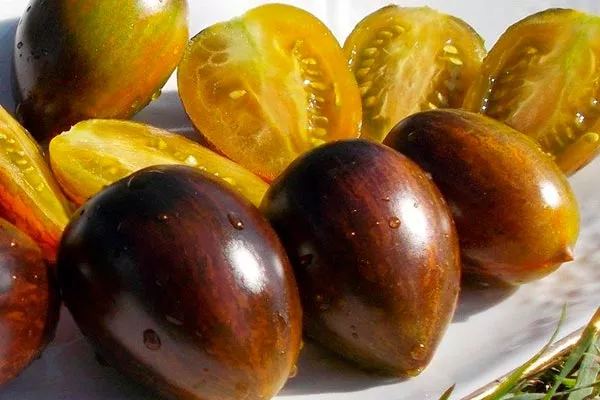
Roasting tomatoes gives them a richer, tart flavor. These colorful tomatoes can be used in any recipe that calls for regular tomatoes. They pair perfectly with:
- herbs such as thyme, cilantro, basil, oregano and mint, cheeses including burrata, mozzarella, feta and Parmesan;
- meats such as turkey, beef and fish;
- vegetables - eggplant, zucchini, potatoes and squash.
By storing whole Atomic tomatoes in a cool, dry, dark place, you can extend their shelf life up to 10 days.
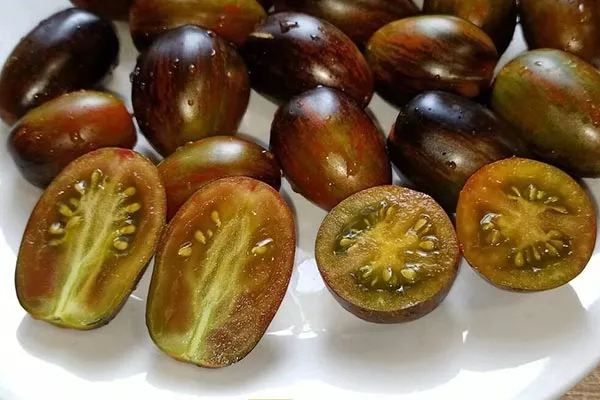
This variety is cultivated on small farms for sale to chefs and farmers' markets. It is sought after by gardening enthusiasts for its productivity, delicate foliage, and the fruit's ability to remain on the vine for a long time, ensuring a long harvest.
Growing
This variety requires special attention during seedling development, so extra care is needed during the transplanting period. These tomatoes require ample space to grow, do not tolerate delays in transplanting, and are sensitive to temperature fluctuations.
Sowing for seedlings
It's recommended to sow seeds 55-60 days before the planned transplanting date (this usually occurs in March-April, but the exact timing varies by region). It's important to carry out preparatory work, which includes the following:
- Seeds. They're very small, so you don't need to soak them before planting if you're confident in the quality of the planting material. If you're unsure, we recommend:
- soak them in a weak solution of potassium permanganate for 30 minutes;
- An effective natural method is using aloe vera: cut an aloe leaf in half, place the seeds inside, cover with the other half of the leaf and leave overnight, then plant the seeds in the morning.
- Soil mixture. Light soil with a high peat content is best for this variety. This type of substrate can be purchased at specialty stores. If using garden soil, it should be treated with Fitosporin, and vermiculite, peat, and sand should be added.
- ✓ The optimal soil temperature for sowing seeds should be at least 15°C.
- ✓ To prevent fungal diseases, it is necessary to ensure good air circulation around the plants.
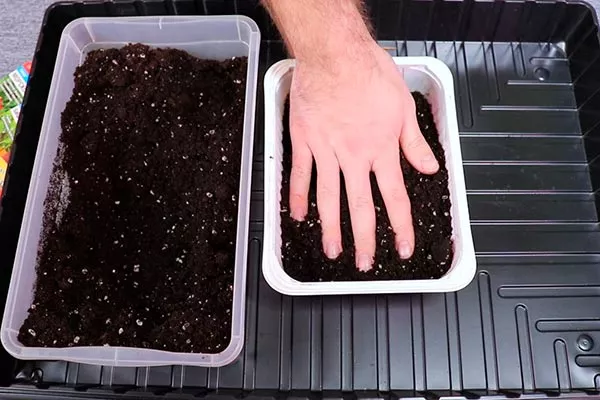
Sowing procedure:
- To begin, select wide containers that you fill with potting soil.
- Rinse with warm water until completely wet.
- After this, sprinkle the seeds on the surface, carefully covering them with a 2 cm layer of soil. Avoid burying the seeds too deep, as this may negatively affect their germination rate.
- Cover the containers with plastic material and place them in a warm place.
- When the first green shoots appear on the surface, remove the plastic and move the seedlings to a bright place so that they do not begin to elongate excessively.
- After about two to three weeks, when the tomatoes have two or three true leaves, transplant them into individual pots. During transplanting, you can carefully remove the end of the main root to encourage the development of a more robust root system.
Care during the seedling period
Ten days after planting the seedlings, begin the first feeding. The best choice is a yeast solution (100 g per 5 liters of water) or a universal mineral fertilizer containing all the necessary micronutrients, including nitrogen. Feeding should be done after watering.
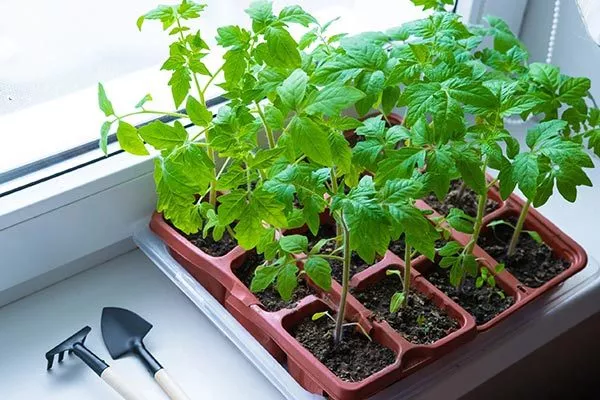
Other rules:
- Water the plants as the top layer of the substrate dries out. Avoid overwatering, as this can lead to fungal infections and the development of blackleg, which causes significant damage to plants.
- During the seedling growth period, light and the right temperature are critical. The room shouldn't be excessively hot, as this will prevent the seedlings from becoming too fragile, elongated, and weakened.
- From mid-April, begin acclimatizing the seedlings by taking them out onto the balcony for 10-15 minutes daily, gradually increasing the duration of their stay in the fresh air.
The intricacies of transplantation
To achieve the highest yield, plant in early or mid-May. If the soil hasn't yet warmed up, protect the young plants from the cold with plastic wrap until warmer weather arrives.
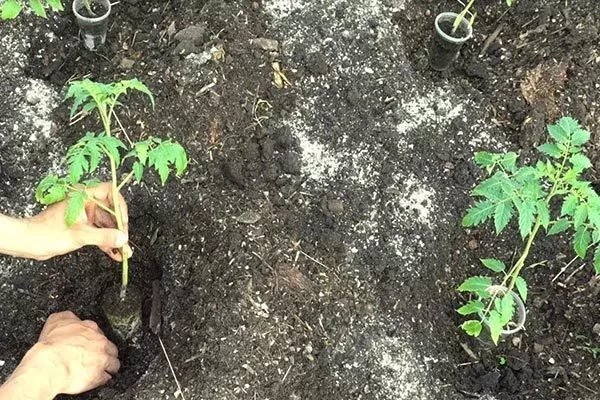
Criteria for seedling readiness for transplanting to a permanent location:
- presence of at least 5 leaves;
- age within 60-65 days;
- The height of the bush is in the range of 25-30 cm.
When choosing a site for gardening, choose areas previously sown with root crops, herbs, vegetables, and legumes. It's not recommended to plant tomato seedlings in areas previously sown with potatoes, eggplants, bell peppers, or physalis.
For growing Atomic Grapes, areas with strong drafts are undesirable. A sunny location and soil enriched with organic fertilizers are ideal.
Caring for the Breda Atomic Grape tomato in the garden
Tomatoes transplanted to open areas or greenhouses grow rapidly. This variety requires attention and care when young, but it proves more resilient in the garden.
Mature plants have increased resistance to fungal infections and can tolerate adverse conditions, such as low light and uneven moisture. Proper care is critical to achieving a truly bountiful harvest.
Bush formation
This variety is a tall-growing tomato. Its small fruits allow up to four stems to be left on the plant without concern. Training the bushes to two shoots will result in a loss of some of the harvest.
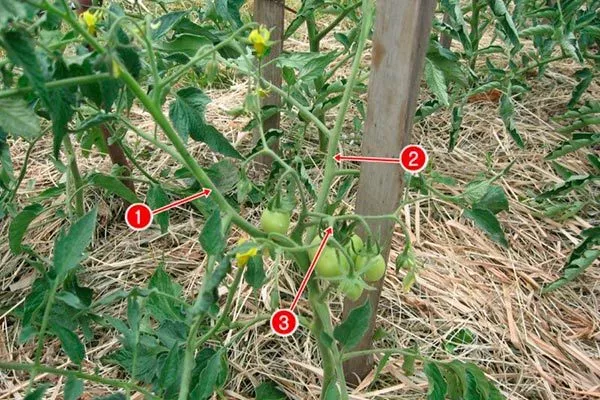
Basics of shrub shaping:
- The process should begin when the first side shoots appear. If you need to leave 3 or 4 main stems, then leave 2 or 3 strong side shoots under the first whorl of buds, while removing all the others. This procedure should be repeated regularly, once a week.
- Don't delay this procedure. This will allow the shoots to rob the bush of a significant amount of nutrients. Furthermore, small shoots (up to 3 cm) are easier to remove by simply pinching them off.
- After pruning, be sure to treat the wound with a solution of potassium sulfate. This is especially important if there are diseased plants in the garden bed or greenhouse.
Watering and fertilizing
There are no hard and fast rules for watering, but it is important to monitor weather conditions and rainfall, especially when it comes to tomatoes grown outdoors.
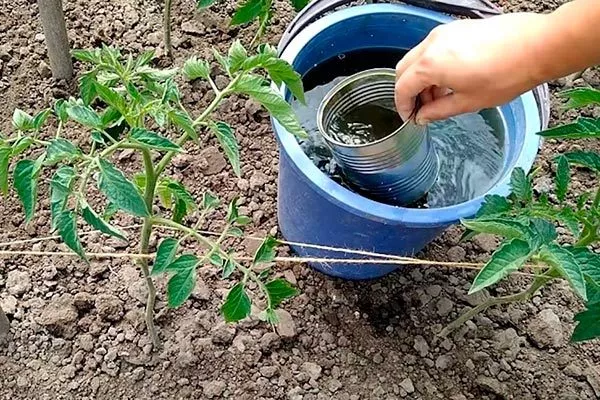
Please adhere to the following nuances:
- In June and July, tomatoes require regular watering at least two to three times a week if there is no natural moisture from rain.
- From August onwards, it is recommended to reduce the amount of humidification.
- If fruit ripening occurs earlier, you can begin to reduce irrigation as early as the third ten days of July.
- Excessive moisture can also negatively affect the taste of tomatoes.
Tomatoes need to be fed every two weeks, and the plan should be tailored to the specific plants - if they do not look strong enough, nitrogen fertilizers should be used, especially during the initial period of vegetation (May and June).
Remember that too much nitrogen can cause diseases and green spots near the stem, as well as white veins inside the tomato.
Other recommendations:
- From June, you should focus on potassium fertilization, since it is especially necessary during this period.
- Every two to three weeks, it is advisable to apply complex mixtures with a high content of potassium and phosphorus, which promotes better flower formation and improves the taste of tomatoes, and also helps to avoid deficiencies of other important nutrients.
- At the beginning of the growing season, use nitrogen fertilizers to stimulate growth.
- During the flowering and fruiting period, switch to potassium-phosphorus fertilizers to improve the quality of the fruit.
- Fertilize every two weeks, avoiding excess nitrogen.
Other actions
Don't neglect other types of care procedures. The productivity level and general condition of the plants depend on them:
- Pinching out stepsons. It's important to manage the number of branches to avoid excessive branching and to ensure larger, sweeter fruits. Remove side shoots, leaving short branches 2-3 cm long.
- Heating of the soil. This step should be done immediately after watering the soil to prevent a hard crust from forming on the surface.
- Mulching. For this purpose, it's best to use organic materials: peat, sawdust, straw, and freshly picked weeds. This additional layer helps retain soil moisture and prevents weed growth.
Protection from diseases and pests
Tomatoes have increased resistance to viral diseases and pathogens. However, to prevent potential problems, preventative spraying with Fitosporin is recommended before fruit formation.
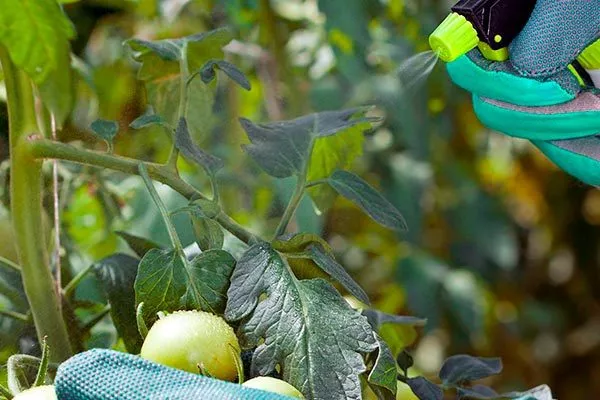
To protect plants from pests, it is best to treat the roots of seedlings with an insecticide, such as Bordeaux mixture or Confidor, which prevents the appearance of aphids, cockchafers, and wireworms.
Treat the bushes against mycelial fungi as well. The most effective fungicides include Ridomil, Gold, and Quadris. Spraying with garlic, wood ash, and onion peel infusions also produces good results.
When and how to harvest?
Harvest dates are approximate and depend on many factors, such as growing conditions, proper plant care, and weather conditions. In warm summers or in temperature-controlled environments, tomatoes can ripen significantly faster.
To determine the degree of ripeness, just look at the vegetables:
- When the fruits acquire their characteristic color, turning yellowish-purple with greenish veins, it is time to pick them from the bush.
- You can evaluate the structure of the fruit – a ripe tomato should be soft.
- The easiest way to determine ripeness is to taste it. Ripe cherry tomatoes are incredibly sweet, reminiscent of candy.
The skin is thick, preventing the tomatoes from bursting in frost, keeping them fresh on the vine, and preventing them from falling off or overripening as quickly as some other varieties. This also allows for long-distance transportation of the harvest.
Vegetables should be stored in a cool, dark place. Alternatively, on the bottom shelf of the refrigerator.
Similar varieties
| Name | Ripening period | Disease resistance | Growth type |
|---|---|---|---|
| Atomic grapes of Breda | 110-120 days | High | Indeterminate |
| Creamy Amethyst Cherry | 90-100 days | Average | Determinant |
| Dancing with the Smurfs | 100-110 days | High | Indeterminate |
| Morning bumblebee | 85-95 days | Low | Determinant |
| Furry Kate | 95-105 days | Average | Indeterminate |
| Variegated date palm | 105-115 days | High | Determinant |
| Blue Goldberry | 100-110 days | Average | Indeterminate |
There are no direct alternatives to the unique Breda Atomic Grape tomato variety. However, for those who appreciate the distinctive appearance and flavor of cherry tomatoes, consider cultivating such interesting varieties as:
- Creamy Amethyst Cherry;
- Dancing with the Smurfs;
- Morning bumblebee;
- Shaggy Kate;
- Variegated date palm;
- Blue Goldberry.
Pros and cons
Growing tomatoes in hot weather can be challenging, as flowers are prone to drying out and losing pollen at temperatures above 40 degrees Celsius. However, the Atomic Grape Breda tomato variety has an exceptional ability to withstand hot conditions, producing successful flower set and full-fledged clusters.
Reviews
The Atomic Grape Breda tomato, with its unique color, is winning the hearts of gardeners worldwide. This variety is resistant to temperature fluctuations and produces a high yield. While caring for the plant is easy, finding seeds for sale is difficult, so gardeners collect their own annually.