
The Orange variety tops the list of orange tomatoes in our market. These plants, with their attractive fruits and tall bushes, produce abundant yields. They are renowned for their disease resistance, but require careful care. To avoid losses during cultivation, it's recommended to learn from the experience of successful gardeners and thoroughly research the characteristics of this variety beforehand.
Historical facts
The Orange variety was created by Russian breeders (Korotkov, Korochkin and Dynnik) relatively recently, just over two decades ago, but has already become a favorite among professional farmers and novice gardeners.
This variety is suitable for both open-field and greenhouse cultivation. Information on the "Apelsin" seed crop was added to the State Register in 2000.
Description of Orange tomatoes
The Orange tomato variety is semi-determinate, meaning it has the potential to grow indefinitely. It prefers warm conditions and is ideal for greenhouse cultivation.
Bush
The Orange bush is highly branched and requires support. In the open ground, it reaches a height of 130-140 cm, and even higher in a greenhouse. It is a semi-determinate plant with no height limit.
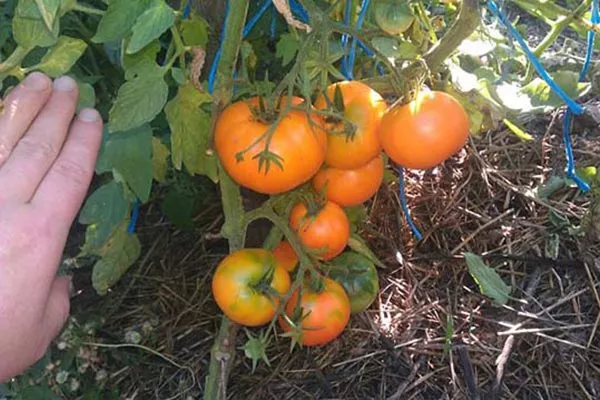
Please also pay attention to other parameters of asthenia:
- Stems thickened and quite strong, due to which the plants form into one or two powerful stems that require reliable support due to the large and heavy harvest.
- Foliage The bush is relatively rare with medium-sized plates of a rich green tone.
- Buds small, collected in panicles of 2-5 pieces, the first flower brush is formed above 6-7 leaves.
Fruit
Beautiful, vibrantly colored tomato plants will not only decorate your garden but also provide you with fresh, healthy, and delicious fruits:
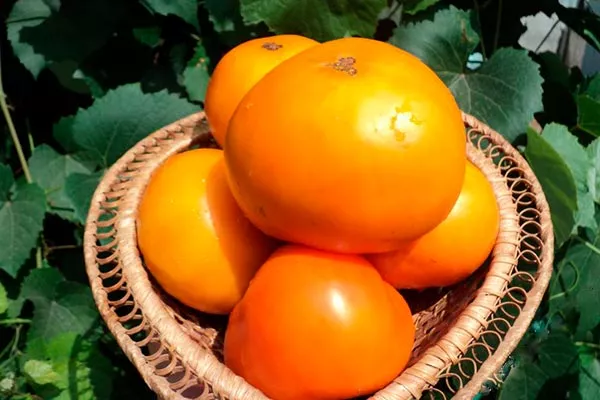
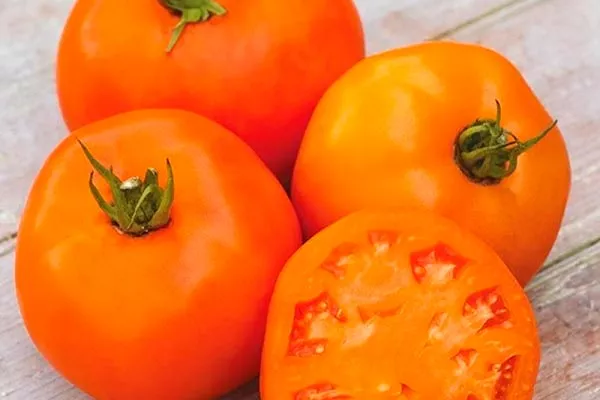
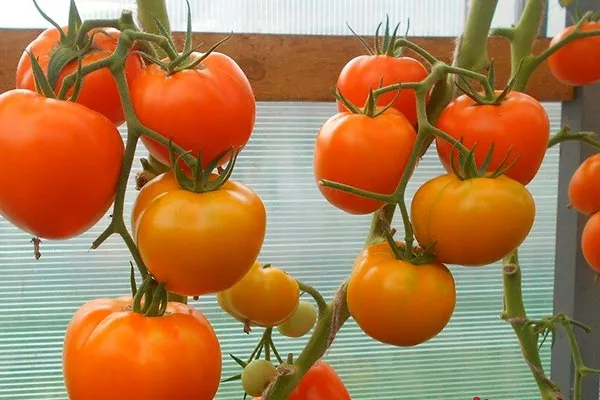
- Tomatoes are distinguished by their large parameters, ideal round shape and weight from 180 to 350 g, and sometimes specimens reach a weight of 450 g.
- The color of these fruits ranges from pale yellow to deep orange, which is what inspired the variety's name.
- Tomatoes have a fleshy structure and are rich in beta-carotene, have a sweet taste and a light tomato aroma, reminiscent of orange notes.
- This variety is distinguished by its exceptionally firm fruits. Even after a month of storage on a windowsill, when the seeds are harvested for the next harvest, they retain their firmness.
- Inside the vegetables is very juicy pulp with a minimal amount of seeds, which, although it slightly complicates the process of collecting planting material, does not detract from its value.
Characteristics of the variety
The Orange tomato differs from hybrids, which is significant: seeds can be collected from ripe fruits, which can then be used for sowing the following season, allowing you to save money on purchasing planting material.
Taste characteristics
The taste of Orange tomatoes is admired by consumers. Their flesh is tender, juicy, and sufficiently meaty, despite the low seed content. The tomatoes are sweet and slightly flavorful without a sour aftertaste, and their flesh contains 3.2% sugar and 6.2% dry matter.
Scope of use
This variety is versatile and ideal for use in a variety of culinary applications:
- Add to salads chopped fresh;
- used for preparing sauces, pastes and juices;
- canned for the winter.
Productivity and fruiting
This tomato variety has a medium ripening period of 98 to 110 days. Ripening occurs in stages, allowing for harvesting over a long period. Fruiting can continue until the first frosts of autumn. In a greenhouse, the harvest can continue until November, with the first tasty fruits available in mid-July.
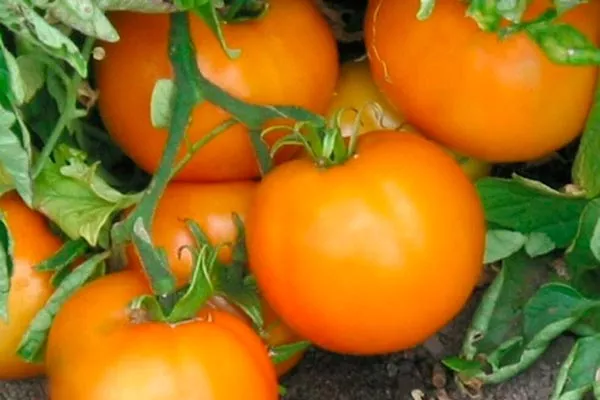
Its productivity is high. In a greenhouse, the tomato yield exceeds that of open-field tomatoes: a single plant can yield up to 7 kg of tomatoes per season, and sometimes even more (the maximum recorded yield is 22-23 kg per square meter). In a garden bed without a protective cover, the yield is 4 kg per plant.
Resistance of the variety to external factors
Orange bushes are heat-loving, which makes them sensitive to temperature drops and leads to a decrease in yield.
These tomatoes absolutely cannot tolerate drafts or strong winds. The fruits also love warmth and react very sensitively to weather changes.
Growing regions
In unstable climates, it is recommended to grow this variety in greenhouses, while the open method is suitable primarily for southern regions.
Mass cultivation of Orange is carried out in such places as the Central Black Earth Region, Eastern Siberia, the Central part of the country, the Middle Volga and Northwestern regions.
How to grow seedlings?
Although the variety was developed for cultivation in southern regions, it is also widely grown in other climates. This is due to the fact that the Orange adapts well to temperate climates thanks to the use of seedling cultivation techniques.
- ✓ Optimum soil temperature for planting seedlings: not lower than +12°C.
- ✓ Distance between plants when planting: 60 cm between rows and 50 cm between bushes.
Timing for sowing
The timing of seed planting depends on climate conditions and the cultivation method (indoor or outdoor). Therefore, pay particular attention to the following requirements:
- Wait until the weather is consistently warm, the danger of frost has passed, and the soil temperature reaches 12 degrees Celsius.
- In the southern regions, this may occur in April, in the Central Black Earth Region in May, and in the Central Belt of Russia from June. Review weather statistics for previous years to choose the ideal date.
- To plant mid-season tomato varieties in the garden, wait 60-65 days after the seedlings emerge. Allowing 5-7 days for germination, we can calculate that for outdoor cultivation in the south, seeds should be sown in February, in the Black Earth Region in March, and in the Central Russian region in April.
Soil mixture
You can buy ready-made soil for seedlings at any store. But if you want to try your hand at creating your own, remember that it should be nutritious, well-aerated, and have a pH of 6.2–6.8.
It's important to remember the importance of disinfecting homemade soil. To do this, you can warm it in the oven, soak it in boiling water, or treat it with a potassium permanganate solution.
When preparing a substrate for seedlings, you can use the following recipe:
- take 1 part of the soil taken from areas where nightshades were not grown;
- mix with 2 parts non-acidic peat;
- combine with 1 part humus and 1/2 part sand.
If the peat is highly acidic, add ash to the mixture. Adding superphosphate will also have a beneficial effect.
Selecting a container
For sowing tomatoes, you can use different types of containers:
- Boxes. These reusable containers are convenient because they're easy to move and transport, taking up little space on a windowsill. When planting, it's important to handle the roots carefully to avoid damaging them.
- Peat tablets and cups. This type of container is especially beneficial for tomato root development. However, it requires frequent humidity monitoring, as the tablets dry out quickly. Peat containers require a tray and are an expensive solution. They are especially convenient for transplanting seedlings.
- Seedling pots. These reusable containers take up a lot of space and are difficult to transport. Particular care is required when removing plants from their pots.
- Plastic cassettes. They also require a tray and care when planting. They're not very easy to move.
- Disposable plastic tableware. They can be purchased or made from plastic bottles. This is the most cost-effective option, as when replanting, you simply cut them open and remove the seedlings without damaging the roots.
For growing tomatoes, containers between 10 and 20 cm tall and with a capacity of approximately 1 liter are ideal. All varieties should be equipped with drainage holes. If they don't exist, you'll need to make your own.
Seed preparation
To improve seed quality and increase seed survival, it is recommended to calibrate the seeds. This involves immersing them in salt water for 10-12 minutes. After this, discard the seeds that float to the surface, and those that sink to the bottom can be used for planting.
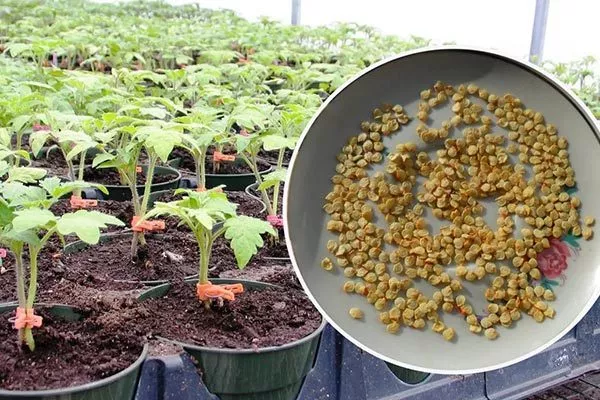
Preparatory activities:
- Disinfect the seeds. This is usually done by soaking the seeds in a weak solution of potassium permanganate (1 g per 160-200 ml of water) for 15-20 minutes. Afterwards, rinse the seeds thoroughly and dry.
- To stimulate seed growth, they can be soaked in a solution of Epin or Kornevin, pre-mixed with water according to the instructions, for 12 hours.
Sowing rules:
- Place a thin layer of drainage at the bottom of the container and pour the soil mixture on top.
- Moisten slightly.
- Sow the seeds:
- when sowing in individual pots, place one or two seeds in each pot to a depth of about 1 cm;
- In each common container, make furrows to the same depth, but maintain an interval of 4-4.5 cm between rows and 2 cm between planting material in one furrow.
- Then carefully cover the plantings with soil, moisten slightly and cover with film.
- Place the container with the seeds in a dark and warm place with a temperature of 25 to 30 degrees, for example, near a heating device.
Every day, the crops should be briefly ventilated and the soil moisture level should be monitored.
Caring for seedlings
When the first green shoots emerge from the ground, move them to the brightest corner of the windowsill, preferably on a south-facing side. If natural light is insufficient, be sure to add additional light sources. Tomato plants need comfortable conditions:
- daytime temperature should be within +18…+25°С;
- night – +12…+15°С;
- In the first week after seed germination, to prevent young shoots from stretching, the temperature should be kept a few degrees lower.
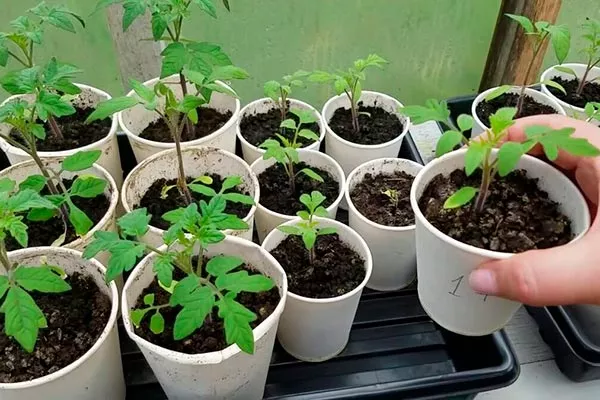
The humidity of the substrate should also be under control:
- Avoid both complete drying and over-wetting;
- During the first week of life, seedlings require special attention in terms of moisture - it is recommended to spray the seedlings in the morning.
The procedure of picking seedlings, that is, transplanting each plant into a separate container, should be carried out when two true leaves appear on them.
Planting seedlings in the ground
When transplanting seedlings to a permanent location, it is important to consider many factors - the transplanting technique, the timing of the work, and the preparation of the area/greenhouse.
Deadlines
The time to begin planting seeds depends on weather conditions and the local climate. It's important for the soil to be well-warmed. In most cases, the ideal time for transplanting is May-June, but if you're growing in protected soil, the process begins 2-3 weeks earlier.
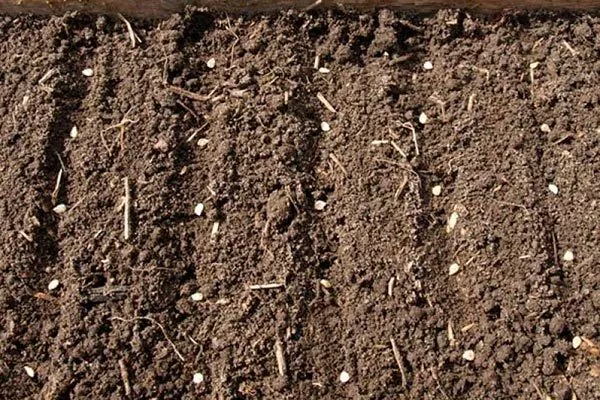
In southern regions, planting can begin even before this time. However, it's best to keep the average air temperature around 12 to 15°C, and the soil temperature at least 12°C.
Location determination
Selecting and preparing a site for tomato plants begins well in advance. It's important that the location receives plenty of sunlight, as tomatoes thrive in light and warmth. There are other criteria, too:
- It is necessary to ensure sufficient distance between the groundwater level and the ground surface so that the plant's root system does not rot.
- Tomatoes thrive in light soil. Fertilized loam is an excellent choice.
- Preparing the site for planting begins in the fall: the soil is dug up, plant debris is removed, and fertilizers are added:
- rotted manure (5-7 kg per 1 sq. m);
- 50-60 g Superphosphate.
- If the planting area was not prepared in the fall, then in the spring it is dug up and enriched with other fertilizers:
- rotted manure or compost in the same dosage;
- 1 tbsp each of potassium sulfate and Double Superphosphate;
- 450 g of ash.
- It's not recommended to plant tomatoes in areas previously occupied by tomatoes, potatoes, eggplants, or peppers. The best predecessors are zucchini, squash, cucumbers, carrots, cabbage, and greens.
Planting diagram
When planting bushes, use a 60 x 50 cm spacing, with a 60 cm gap between rows. Avoid planting too closely, as this can negatively impact the final yield.
Algorithm:
- Fill each hole with sawdust and ash, then sprinkle with water. The holes should be as deep as one shovel stroke.
- Place the seedlings with a lump of soil in the prepared holes, carefully pour soil around the stem and compact it, then spray with warm water in the amount of 1.5 liters per hole.
Initially after planting, plants should be protected with plastic film. Once the seedlings have established themselves and the weather becomes consistently warm, the cover can be removed.
Caring for Orange Tomatoes
Caring for this variety is not difficult – it is important to carry out standard measures taking into account the varietal requirements.
Watering
Tomatoes require careful care, regularly watering them. A warm, settled water solution is recommended for irrigation. It should be applied directly to the soil around the roots, avoiding contact with the leaves to prevent possible sunburn.
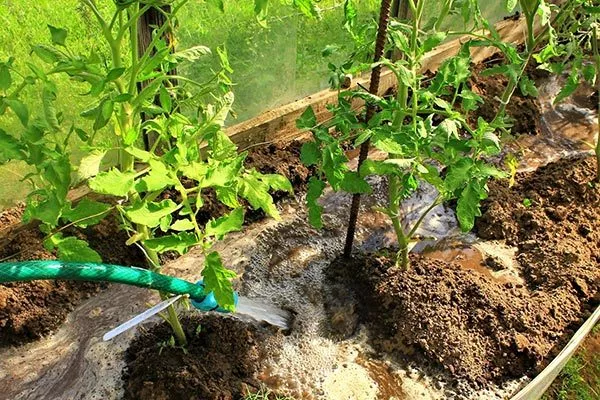
Rules:
- The first watering should be done a week after transplanting the seedlings.
- Then water 1-2 times a week.
- If the weather is rainy, it is better to postpone watering, and during hot periods it should be increased to 1-2 times a day.
Top dressing
To achieve high yields, plants need proper nutrition. Fertilizers should be applied to the soil at least three times during the growing season. This can be done using both organic fertilizers and commercially available specialized products.
Pinching out stepsons
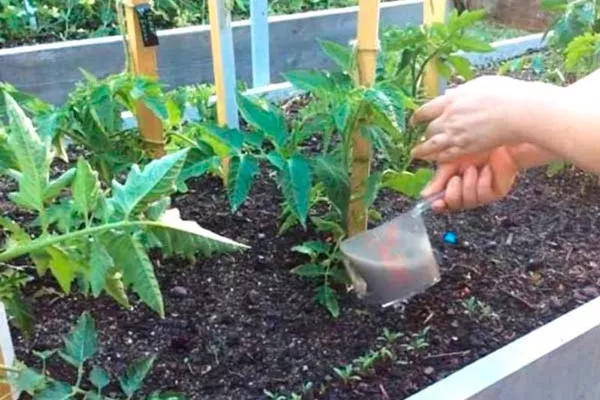
To form a bush, leave one or two main stems and remove all side shoots. A month before the end of the growing season, trim the tops of the main stems and remove underdeveloped inflorescences. These measures help extend the fruiting period until early fall.
Soil work
When caring for the soil, it's important to loosen it after watering. This approach increases the flow of oxygen and moisture to the plant's root system. At the same time, remove weeds, which compete with tomatoes for nutrients and water.
To prevent the soil from drying out, it is recommended to cover it with mulch. Hay, sawdust, and peat are ideal mulching materials.
Tying up bushes
The shrub must be carefully supported using nylon cord, which is ideal for this purpose. It is stretched between two posts located at the beginning and end of the row, approximately 30-35 cm above the ground.
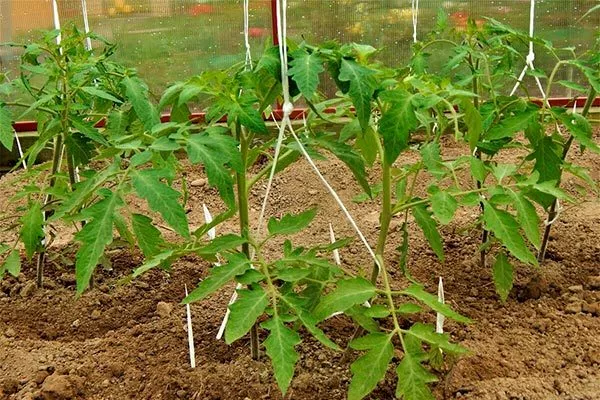
The branches are attached to a cord, and as they grow, a new layer of rope is added to ensure the bush continues to grow vertically. Alternatively, supports can be driven in around each bush.
To avoid damaging the plants, use soft fabric to secure the bushes. Nylon tights, which can be turned into support bands, are ideal.
Why don't Orange tomatoes bear fruit?
There are many reasons for this:
It's filled with manure or chicken manure; in a pinch, fresh grass can be used. It's then filled with water. This creates an environment that increases the plants' resilience to adverse conditions and helps regulate the temperature inside the greenhouse.
Harvesting and storage
Growing and harvesting Orange tomatoes requires not only diligence but also skill. The key is choosing the right time to harvest, when the fruits reach their peak ripeness and reveal the full richness of their flavor and aroma. Features:
- Handle tomatoes carefully to avoid damaging the delicate skin.
- It is recommended to store harvested vegetables in a cool, dark place, placing them on wooden boxes or racks in a single layer.
- You can determine when the fruit is ready for harvesting by several signs: it should be bright orange, slightly firm to the touch, and emit a subtle, sweet aroma.
Pest and disease control
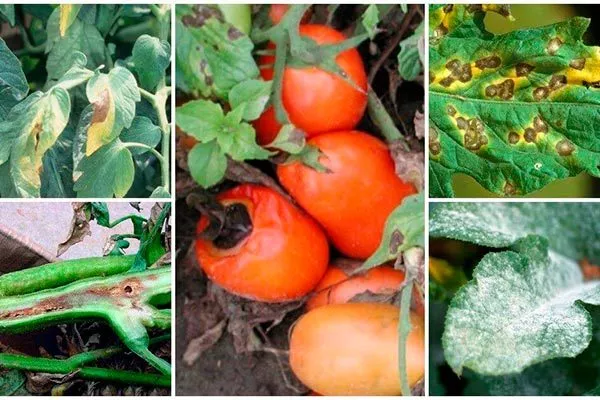
This variety has good resistance, but under unfavorable conditions it can be susceptible to disease attacks. To minimize the risk of infection, a number of preventative measures are recommended:
- treat plants with specialized preparations:
- Barrier;
- Barrier;
- Fitosporin.
- To protect against fungal infections, use products with copper antiseptic properties:
- Install a shelving system that protects tomatoes from rot and small ground insects:
- get rid of weeds;
- loosen the tree trunk circle;
- treat plants with appropriate insecticides, soap solution or garlic tincture against pests;
- spray with fungicides in spring;
- disinfect the soil and seeds before sowing.

Pros and cons
Reviews
The Orange variety impresses with its combination of flavor, nutrition, and attractive appearance. These tomatoes are easy to grow, making them ideal for both beginner and experienced gardeners, as with minimal care, anyone can reap an excellent harvest of high-quality vegetables.