
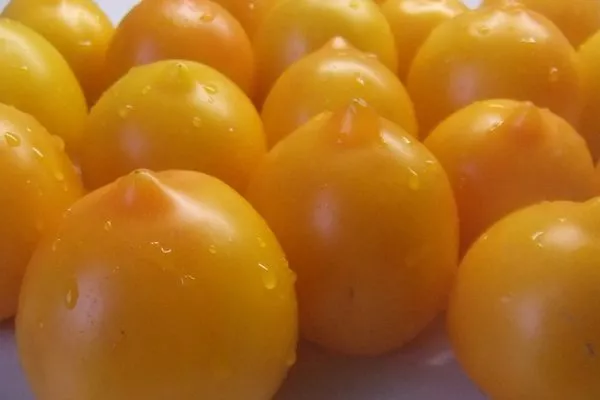
Anna German is the name of a mid-early, high-yielding cocktail-type tomato variety. Its signature feature is the unique appearance of its fruits, which resemble small lemons in shape and color. Gardeners grow it in open beds and greenhouses, in spring, summer, and fall rotations.
Origin and growing regions
This fruit variety was developed thanks to the efforts of the talented Russian breeder Igor Maslov. It is not listed in the Russian Federation State Register and has not been zoned. Thanks to its unusual appearance, the harvest has generated genuine interest among Russian gardeners.
Description of the bush and fruits
The Anna German variety is indeterminate. It has a spreading habit and tends to produce numerous shoots (excess shoots must be regularly removed).
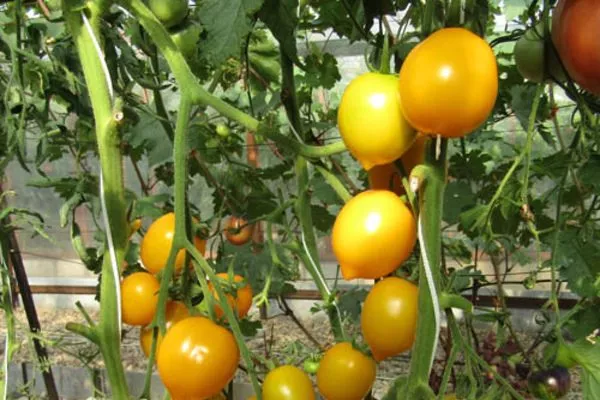
The description of their appearance includes the following features:
- height: 2-2.2 m (in protected ground), 1.2-1.5 m (in an open bed);
- structure: medium strength;
- stems: not thick, but strong enough;
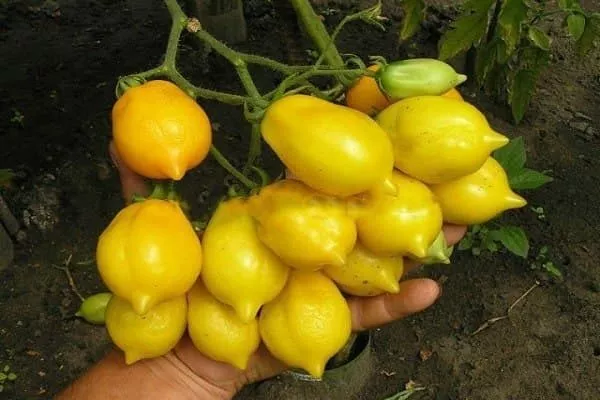
- brushes: complex or semi-complex, formed in quantities of 5-7 pieces, consisting of 16-30 fruits (the first is laid above the 6-7 leaf, the rest alternate through 1-2 nodes).
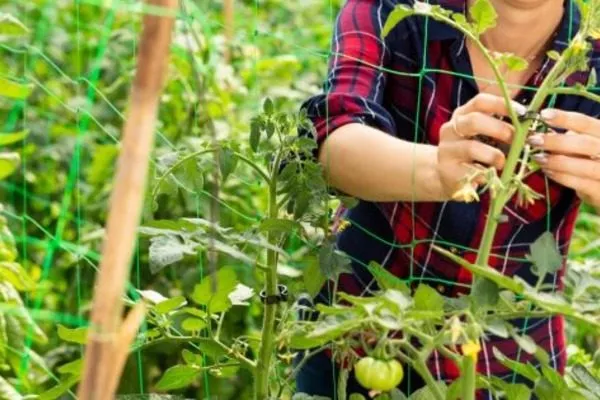
Tall bushes require special care, which includes mandatory tying to supports or trellises, proper pinching, and shaping into 1-2 trunks.
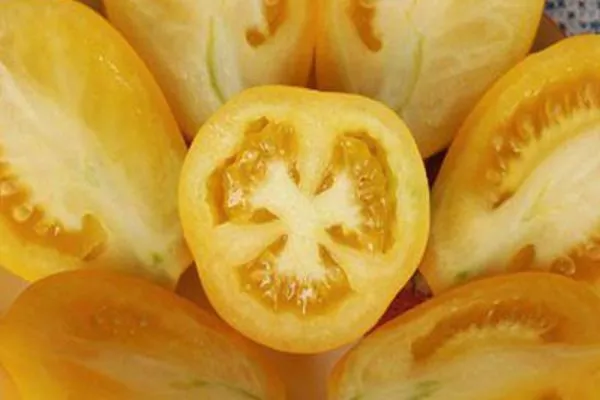
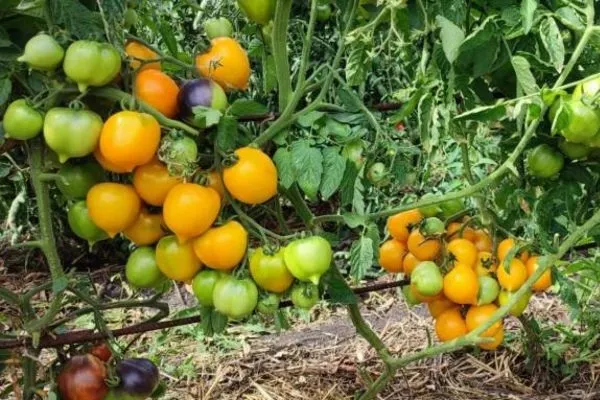
This fruit crop has a very decorative appearance thanks to its numerous, voluminous clusters of small, richly colored fruits. These tomatoes are of the cocktail variety and have the following characteristics:
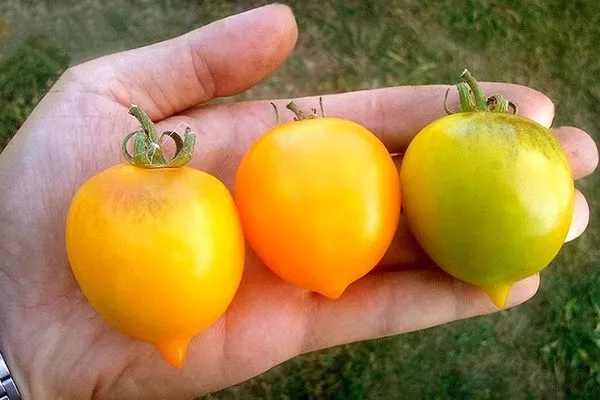
- weight - 60-65 g (with enhanced agricultural technology it is possible to obtain larger specimens - up to 90-100 g);
- oval shape with a spout resembling a lemon;
- beautiful yellow color (its saturation changes depending on the growing conditions of the crop);
- thin skin;
- fleshy pulp, dense and juicy.
Anna German's harvest has excellent tasting qualities. The tomatoes are sweet with a slight tartness and a fruity note. They're a true summer dessert, a worthy alternative to garden bounty (read about the sweetest tomato varieties). Here). It tolerates transportation well and is stored for a long time without losing its marketable appearance and freshness.
Yellow mini tomatoes are versatile. They're perfect for fresh consumption, salads, juices, canning, pickling, freezing, and drying.
Main characteristics
Anna German is a mid-early, high-yielding vegetable variety. Its key technical characteristics are as follows:
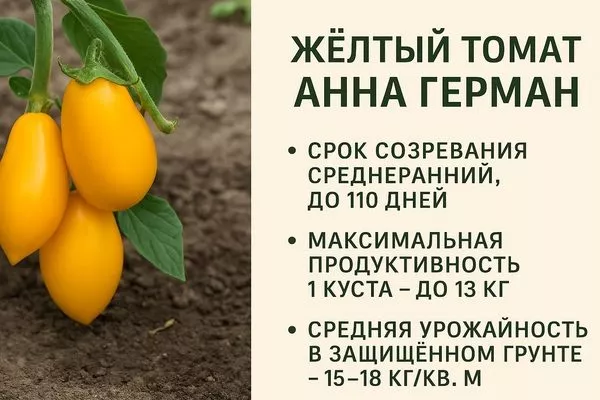
- fruit ripening time is 105-110 days after germination;
- tomato harvesting period: July-September, before frost;
- maximum productivity of 1 bush is up to 13 kg;
- The average yield in protected soil is 15-18 kg/sq.m (in an open garden bed the figure will be lower).
This yellow-fruited variety is tolerant of dry rot and sunburn. It has good resistance to viral and fungal infections.
Subtleties of cultivation
Fruit crops are quite demanding when it comes to proper agricultural practices. Don't violate them if you want a rich, high-quality harvest and healthy plants.
Sowing dates
To obtain Anna German seedlings, sow them 60-65 days before transplanting them to the garden (gardeners do this in March). Plant the grown and strengthened plants in warmed soil in an open bed at the following times:
- the first days of May - in the south of the country;
- the second half of the last month of spring, the beginning of June - in garden plots in the Middle Belt (under film used as a temporary shelter).
Sowing seeds and transplanting seedlings to a permanent location
The Anna German variety can be grown using seedlings or direct sowing. Experienced gardeners prefer the first option as more reliable and ensuring an early harvest.
Before planting, soak the seeds in warm water for 12 hours to improve germination. It's a good idea to treat them with a 1% potassium permanganate solution or Fitosporin-M. This will protect the plants from infections.
Start sowing in the first month of spring, 60 days before transplanting the seedlings to the garden. Follow these step-by-step instructions:
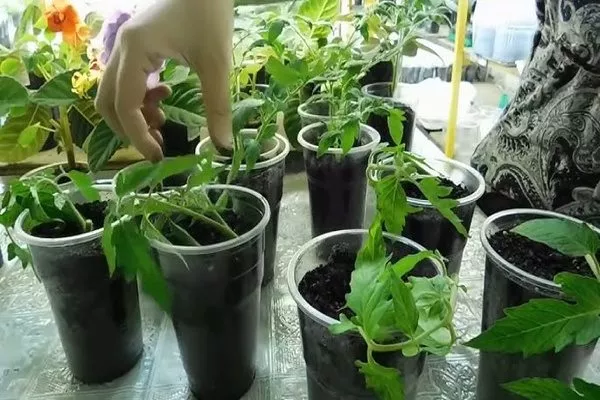
- Fill the planting container (a spacious wooden or plastic box with drainage holes in the bottom, individual cups, or peat pots) with garden soil mixed with humus and sand (2:1:1). Store-bought potting soil can also be used.
- Level the surface of the soil mixture. Make furrows in it. They are 1.5 cm deep and 5 cm apart.
- Place the seeds, spacing them 2-3 cm apart. If sowing tomatoes in cups, make a hole in the center. Place two seeds in it (the weaker seedling will need to be removed later).
- Sprinkle them with soil, deepening them by 0.5-1 cm.
- Gently moisten the planting with lukewarm, settled water. For convenience, use a spray bottle.
- Stretch a film over the planting container to create a mini greenhouse.
- Leave the container with the seeds in a warm place with a temperature of +25°C.
Move the box with the sprouted seedlings to a cooler room (18-20°C) with good lighting. Keep it in a sunny window. Water them regularly and moderately with warm, settled water.
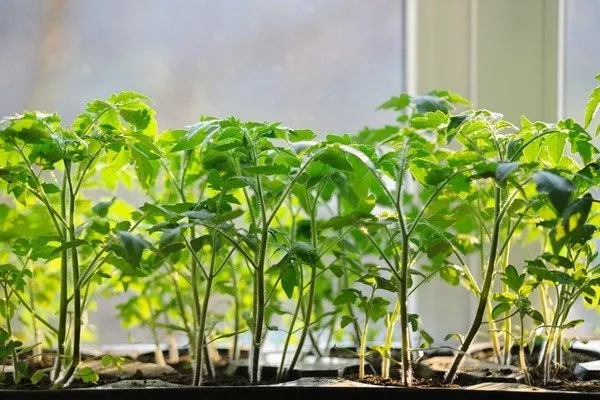
On cloudy days, provide supplemental light to the tomatoes with a phytolamp to prevent them from stretching. Once two true leaves appear, transplant. Read about fertilizing seedlings. Here.
If you are growing a vegetable crop outside of artificial cover, plant it in the garden after stable warmth has been established:
- when the air temperature during the day is not lower than +15-16°C, at night - +10-12°C;
- warming the soil in the garden bed to the depth of a shovel blade to +15°C;
- the threat of frost returning has passed.
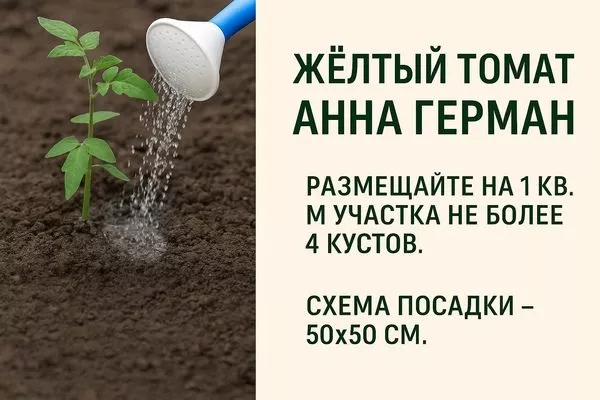
Plant no more than 4 plants per square meter of plot. The seed manufacturer's recommended planting pattern is 50x50-60 cm. The garden site should be sunny and wind-free. Follow these step-by-step instructions:
- Level the soil, dug over and fertilized with organic matter in the fall. Dig planting holes in it, following the diagram. They should be 10-15 cm deep and 20 cm wide.
- Add humus or compost, a little wood ash, and mineral compounds such as superphosphate, potassium sulfate, and monopotassium phosphate to the holes.
- Place the Anna German seedling in the center of the hole. Fill with soil, pushing the main shoot 5-10 cm deeper.
- Water the yellow-fruited variety with warm, settled water.
You can read about all the intricacies of growing tomatoes in open ground Here.
Rules for caring for tomatoes
When growing yellow-fruited tomatoes at your dacha, follow standard agricultural practices:
- Irrigation of bedsThis vegetable crop does not tolerate overwatering, but drought is also harmful. Water the plants generously, using 1-2 liters of sun-warmed and settled water per bush (the optimal temperature is 22-24°C). Apply the water at the roots. Avoid dripping onto the stems and foliage.
Carry out this procedure after the topsoil has dried. Before flowering, repeat this procedure every 5-7 days; during fruit set, repeat every 3-4 days; and during the period of mass ripening, repeat once or twice every 7 days.

- Adding nutrientsFertilize tomato plants 3-4 times during the season. Apply the first fertilizer 10-14 days after planting the seedlings in the garden bed. Use nitrogen-rich organic matter (mullein, green infusion) or urea.
During flowering, apply phosphorus and potassium fertilizers (ash, superphosphate). Apply fertilizer a third time during the fruit ripening stage. Use mineral fertilizers. Also apply foliar fertilizers with boric acid, magnesium, or calcium supplements (as needed). - Bush decorationTrain Anna German plants with 1-2 trunks, removing all side shoots. Prune the plants every 10 days. Break off shoots that reach 3-5 cm in length to the first cluster.
Practice removing the lower leaves during flowering and fruit ripening, leaving the lower part of the stem bare (this technique promotes a better flow of nutrients to the ovaries).
Do not pluck more than 3 leaves at a time to avoid putting the plant under severe stress.

Avoid overcrowding. Under such conditions, plants are more susceptible to infection. Pinch off the growing tip above the ninth inflorescence. Perform this procedure in August. - GarterDue to the tall growth habit of the yellow-fruited variety, they require support (stakes or trellises). This protects the stems from breaking, reduces the risk of disease, and simplifies harvesting.
If you grow tomatoes in a greenhouse, don't forget about the need for ventilation.
Pest and disease control
This miniature yellow tomato variety is characterized by good immunity. It suffers from infections and pest attacks due to improper cultivation practices. This is especially true for greenhouse plants. Due to improper temperature conditions and high humidity in the shelter, they are susceptible to diseases such as:
- late blight;
- rot;
- Cladosporiosis.
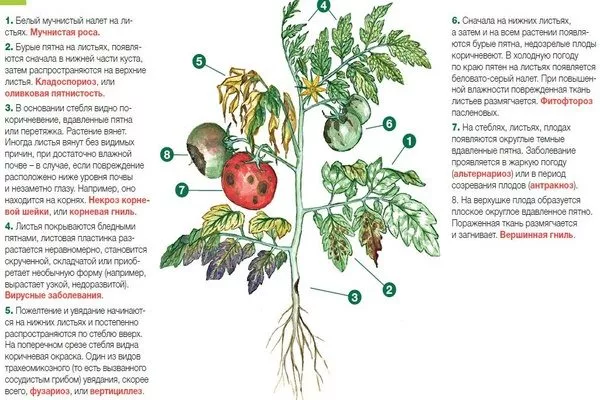
To treat Anna German's plantings affected by fungal diseases, use the biofungicide Fitosporin-M. For preventative measures, treat the bushes with copper-containing preparations.
Whiteflies, aphids, and Colorado potato beetles plague tomatoes growing in unfavorable conditions and without proper care. Control these pests with commercial insecticides or folk remedies:
- garlic infusion;
- onion peel decoction;
- laundry soap solution.
Pros and cons
This original tomato variety, reminiscent of small lemons, is winning the hearts of domestic gardeners thanks to its numerous advantages:
The varieties of the fruit crop named after the Soviet singer Anna German also have some disadvantages:
Reviews
Anna German is a miracle of domestic breeding, beloved by gardeners who prefer to grow unique varieties. These small tomatoes impress with their unusual lemon-shaped form and beautiful, sunny coloring. Their sweet, slightly tart flavor is reminiscent of summer fruits. They grow well in open beds (in the south) and in greenhouses.