
The Pineapple tomato, which has only recently become a popular choice in Russian gardens, has already won the hearts of many gardeners thanks to its exceptional popularity. Reviews of this variety are nothing but excellent. Gardeners are captivated not only by its flavor combination but also by its long fruiting period and abundant harvests.
Origin of the variety
The Pineapple tomato is a true masterpiece of American breeding. Its name likely derives from the distinctive coloring of its ripe fruits, which resembles the exotic pineapple. This bicolor variety has recently begun appearing in Russian gardens.
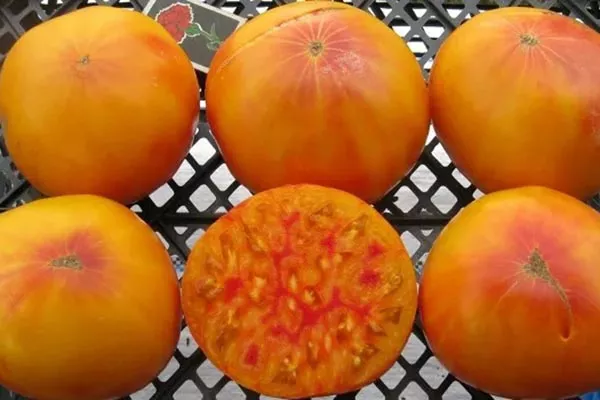
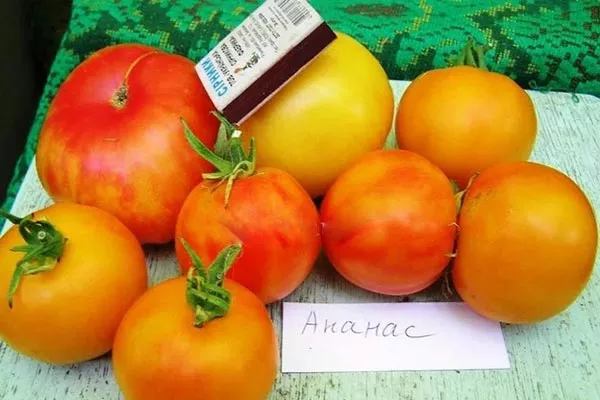
The name Bi-color Pineapple Tomato translates as two-colored Pineapple tomato and is explained by the unique coloring of the ripe fruit: yellow ribs closer to the top resemble pineapple scales.
General characteristics of the Pineapple tomato variety
The Pineapple tomato is a unique example of a bicolor variety, with two-toned fruits that intertwine shades. Despite the name, the colored spots don't resemble stripes or brushstrokes. This tomato variety is a truly delicious excursion into the world of unusual dishes.
Appearance of bushes
Pineapple is an indeterminate variety that grows to a height of 200 cm. The bush impresses with its vigor, and the leaves are a vibrant green.
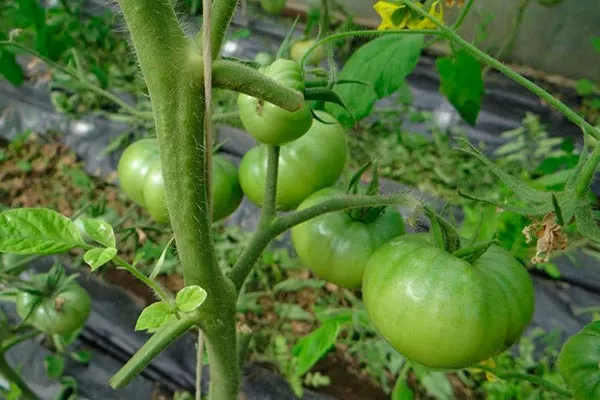
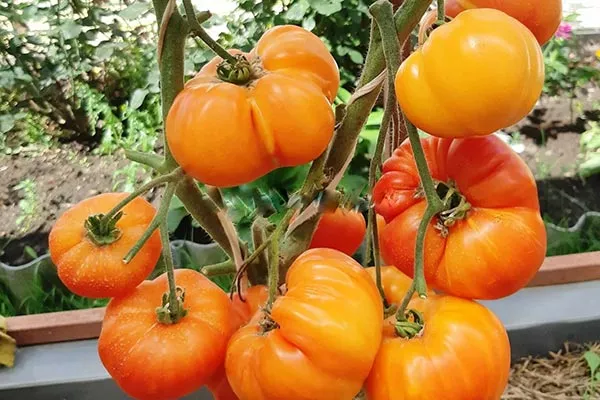
The first flower clusters appear on the 8th or 9th leaf, and then new clusters form approximately every 1-2 leaves. An average of 6 fruits are formed per cluster.
Description of the Pineapple variety of fruits
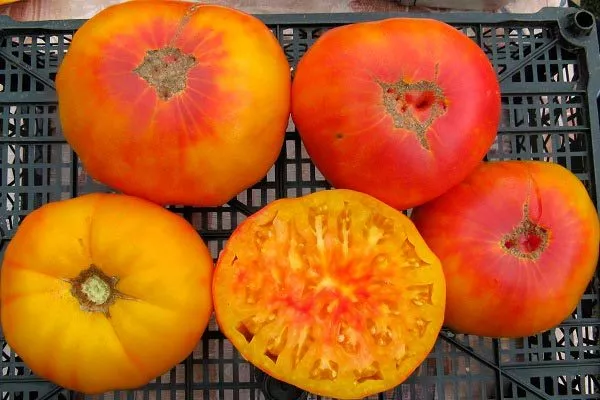
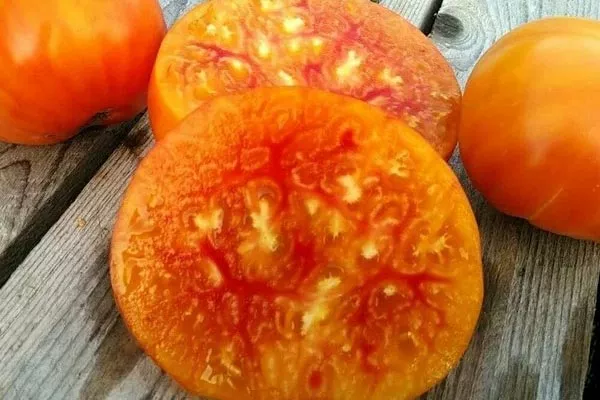
Pineapple tomatoes are large, weighing between 350 and 420 g. When ripe, they are orange in color, and the inside has a surprising coloring: the center is orange, and the edges are bright yellow.
Other varietal characteristics:
- the shape of the fruit is round-angular;
- Tomatoes are highly resistant to cracking and can withstand long-distance transportation perfectly, while maintaining their commercial qualities, as their skin is hardened;
- Their pulp is compacted and the seed chambers are few in number.
- ✓ Fruit shape: round-angular.
- ✓ Resistance to cracking and long-term transportation.
- ✓ Firm flesh with few seed chambers.
Ripening time and yield
Pineapple has a unique ripening period, which takes 120 to 130 days between sowing and the harvest of ripe fruits. There is some controversy regarding the ripening speed of this tomato: some sources claim it ripens early, while others say it ripens mid-season.
These differences are likely due to growing conditions, as the rate of development depends on the length of the summer season. On average, it takes about 3.5-4 months from germination to the onset of fruiting.
This variety is characterized not only by abundant but also long-lasting fruiting:
- If you follow agricultural recommendations, you can get up to 11-14 kg of delicious tomatoes from an area of 1 square meter.
- Each bush produces up to 40 clusters, each of which produces 6 fruits, which in total can yield at least 30 kg from one bush over the entire fruiting period.
- By artificially limiting the growth of the bush, it is possible to achieve increased productivity without compromising the taste of the fruit.
- Harvesting usually takes place from July to September.
Taste qualities
Pineapple has amazing flavor. Its fruits are rich, sweet, and juicy, with a vibrant fruity aroma. The flavor reaches its peak when the fruit is fully ripe.
Uses of fruits
This variety is ideal for salad use. Its potential ranges from simple fresh consumption to making juices, adjika, ketchup, and paste. It is highly valued as a salad plant and as a source for tomato products.
Resistance to diseases and pests
Many note good resistance to pathogens that commonly affect tomatoes. Pests also rarely attack this variety. This data is based on gardener feedback, as the variety is not officially registered in our country.
Where it grows and cold resistance
This variety can be cultivated in various climate zones. However, there is one serious problem: conditions for growing these tomatoes outdoors in areas with short, rainy summers are unsuitable. In temperate or northern climates, tomatoes are best grown in greenhouses.
Varieties
| Name | Growth type | Fruit color | Fruit weight (g) |
|---|---|---|---|
| Taiwanese | Indeterminate | Yellow | 350-420 |
| Yellow | Indeterminate | Yellow | 350-420 |
| Hawaiian | Indeterminate | Orange | 700 |
| BIO | Indeterminate | Multicolored | 350-420 |
| Steak | Indeterminate | Red | 300 |
| Black | Indeterminate | Black and purple | 700 |
Pineapple tomato varieties are available in a wide range:
- Taiwanese.
- Yellow.
- Hawaiian.
- BIO.
- Steak.
- Black and others.
Each variety is characterized by a unique fruit color, which also has a pleasant taste and a unique appearance.
The following varieties are available in our country:
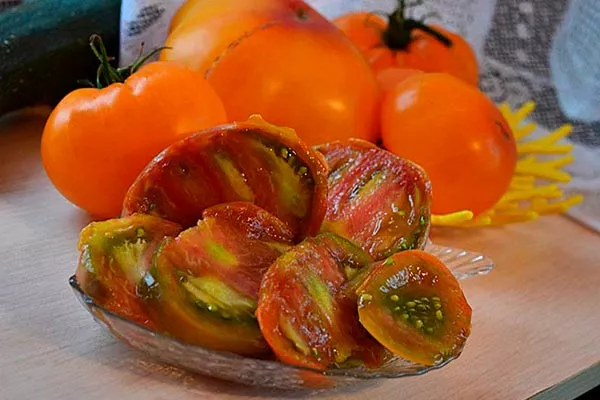
- Black pineapple - Originating in Belgium, it is distinguished by its citrus aroma and tricolor color. The tomatoes are sweet, virtually seedless, and round with a slightly flattened base and ribs. The average fruit weight is 700 g.
The color of this variety of tomatoes is uneven and can range from green to olive, black-purple, yellow, red, orange, and burgundy. This tricolor pattern continues throughout the fruit.

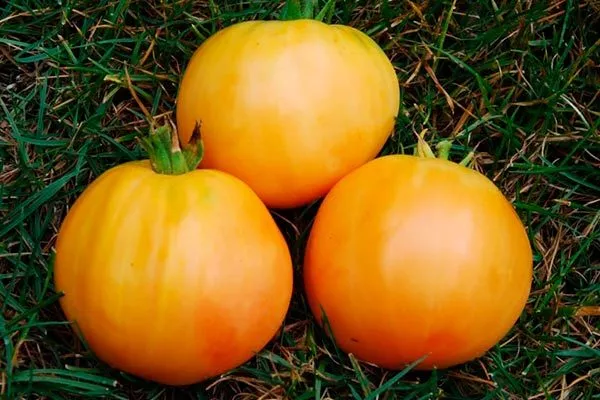
- Golden Pineapple – It's decorated with a golden color and a pinkish top. It's also renowned for its flavor and is ideal for both fresh eating and canning. The weight of this fruit ranges from 200 to 600 g.
Inside, it is a bright yellow vegetable with orange stripes that have a sweet, pineapple-like flavor and orange-pink veins with a tomato-like aroma.
- Hawaiian – It is distinguished by its bright orange color and large size, with one of them weighing up to 700 g.
- Tomato Beefsteak Pineapple – characterized by a bright red color and a weight of about 300 g.
How to grow tomato seedlings yourself?
To successfully grow Pineapple tomatoes, it's important to start by sowing seeds and then transplanting the mature seedlings into open or closed soil. This requires careful attention to sowing time, ensuring optimal conditions for seed germination, and selecting the appropriate substrate. Afterward, it's important to create suitable conditions for the seedlings to ensure their successful growth.
Timing for sowing
Transplanting seedlings into open ground should only be done once the threat of night frost has passed and the soil has warmed to the required level. Since the Pineapple tomato variety is mid-season, the optimal time for transplanting seedlings is mid-May, when soil temperatures reach 15°C to 18°C.
Seeds should be sown in the soil 1.5-2 months before transplanting the seedlings into a garden bed or greenhouse. If you plant the seedlings too early, their young shoots won't have time to establish and will die. If you delay this process, the sprouts will become too long and difficult to transplant.
Soil mixture
You can use a homemade substrate that will contain the following elements:
- soil taken from a place where plants will grow in the future: be it a greenhouse or an open area;
- peat;
- washed river sand;
- wood ash.
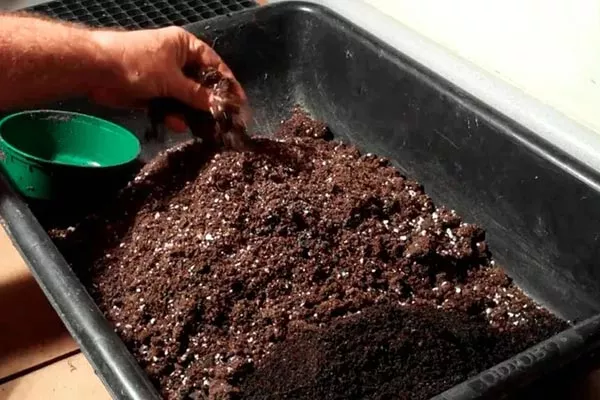
You can also purchase ready-made soil mixture for tomatoes in a specialty store.
Growing container
For successful seed germination, the best option is to use containers. They are filled with a suitable soil mixture, and the seeds are placed in specially prepared niches. Later, when the seedlings have matured, they are transplanted into individual pots.
Preparing seeds for planting
To ensure your seeding efforts are not in vain, they should be thoroughly inspected. To speed up the selection process, use the salt water method. Prepare the solution as follows: add 1 tablespoon of salt to 150 ml of water. After 10-12 minutes, the poor-quality seeds will float to the surface, while the good ones will sink to the bottom.
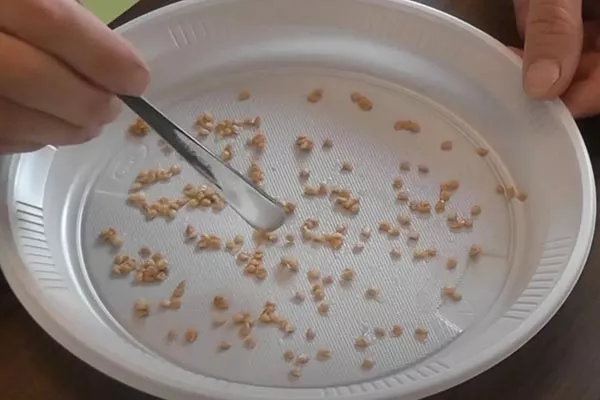
Before planting the seeds, they must be treated:
- Disinfection can help prevent plant diseases. To do this, soak the seeds in a 0.8% vinegar solution for 10 minutes or in a weak potassium permanganate solution for 30 minutes. After treatment, rinse them thoroughly under running water and dry.
- Warming the seeds is necessary if they have been stored in cold conditions for a long time. You can choose one of two methods: either leave them near a radiator for 2-3 days, or soak them in a thermos with warm water for several hours, after which they should be dried.
- Hardening off enhances young plants' ability to adapt to a variety of weather conditions. It's done like this:
- Spread the seeds on one side of the cloth and cover the other side with the top, then place everything on a plate, add a little water and leave it in the room for a day.
- The next day, move the container with seeds to the bottom shelf of the refrigerator for 24 hours.
- Repeat this procedure after 24 hours.
Sowing seeds
Be especially careful to plant the seeds immediately after preparation. Therefore, during cultivation, be sure to prepare the area for planting.
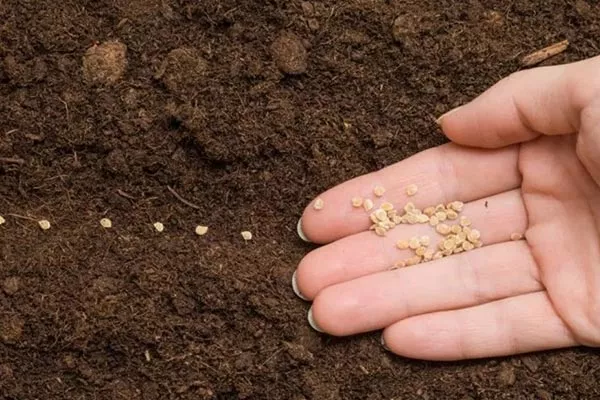
The process is simple:
- Carefully pour the soil mixture into the prepared container and compact it lightly.
- Spray the soil with water and protect it with film overnight.
- The next day, level the surface and make furrows for the seeds, placing them at intervals of 4 cm, with the depth of each hole being about 1 cm.
- After this, carefully cover them with soil and spray with water again.
- Then cover the container again with film and place it in a bright place near a window.
Caring for seedlings
To speed up germination and ensure healthy seedling growth, it's important to provide suitable conditions. Expert advice includes the following:
- Place the seed box in a warm place with sufficient light, covering it with glass or plastic film.
- For optimal germination, the room temperature should be around 25 to 27°C. Once the seeds have sprouted, the temperature should be lowered slightly to 17 to 20°C.
- To maintain vigorous seedling growth, provide sufficient light, preferably 12 hours a day. If natural light is insufficient, artificial light, such as phytolamps, can be used.
- Water the soil carefully to avoid overwatering. A spray bottle is recommended for even moisture distribution.
- Once two true leaves appear, transplant each bush into its own container. Small plastic containers are ideal for this.
- It is necessary to follow the feeding instructions provided by the manufacturer to feed the seedlings.
- After picking, it is advisable to add fertilizer to the soil to stimulate rooting.
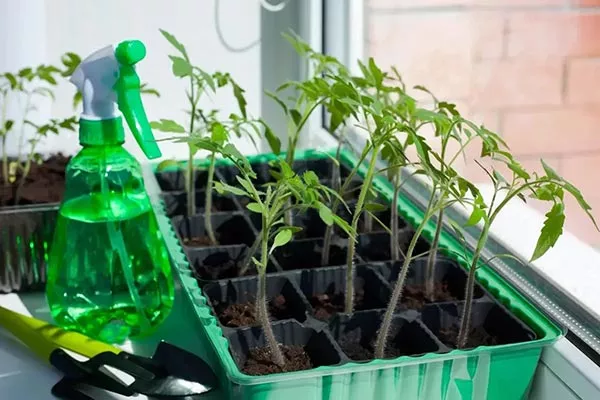
When five true leaves appear on the seedlings, they should be watered with an insecticide solution to protect the plants from pests.
Hardening off seedlings
A week before transplanting the plants outdoors or indoors, they begin the process of acclimating to the new conditions. This is done to allow the young plants to better adapt.
To strengthen them, take them outside for several hours each day. It's important to avoid exposing the plant to direct sunlight, as it can be damaged. The duration of these "excursions" is gradually increased.
Planting seedlings in a permanent location
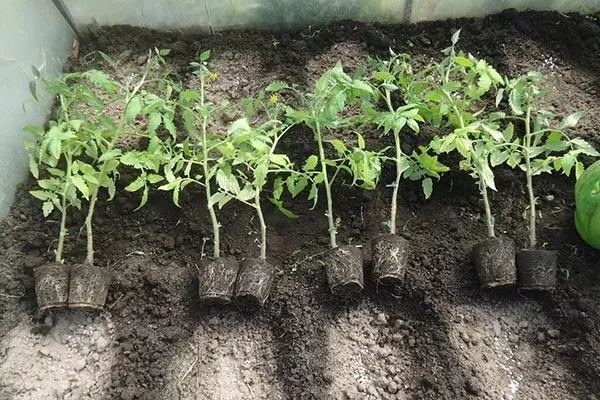
Planting Pineapple tomato seedlings outdoors is done after they have hardened to cooler temperatures and adapted to natural conditions. Avoid planting these plants too densely or in clusters, as their bushes are quite tall.
Landing time
To ensure that Pineapple tomato seedlings are not damaged by night frosts and that the soil is warm enough, they should be planted when the danger of frost has passed and the soil temperature reaches at least +15°C.
This variety is considered mid-season, so the optimal time for transplanting is mid-May, provided that the soil temperature meets the specified parameters.
Selecting a site
The best location for transplanting Pineapple tomatoes is a well-lit area. Rows of tomatoes should be positioned so that the wind can pass freely between the plants.
It is also important to consider crop rotation when choosing a site:
- Eggplants, peppers, cabbage, carrots, and onions make good predecessors. Not only do these crops not deprive tomatoes of essential nutrients, but they also promote improved growth and yield. They also help fight pests and diseases, making them ideal companions in the garden.
- It is not recommended to plant in areas where nightshades and other similar crops were previously grown, as this may lead to a recurrence of diseases and pests.
Planting diagram
Before planting, it is recommended to fertilize the soil with humus or special complex mixtures, which will provide additional incentive for rooting and subsequent growth.
Seedlings are rooted at a spacing of 2-3 plants per square meter. It is important to provide a trellis to support the bush and allow for easy tying.
- ✓ Optimum soil temperature for planting seedlings: +15°С…+18°С.
- ✓ It is necessary to use a trellis to tie up the bushes due to their height of up to 200 cm.
How to care?
Pineapple is a plant that doesn't require much care, but to get a delicious and flavorful vegetable, it's important to follow certain instructions.
Watering
Pineapple soil shouldn't be too wet to prevent root diseases. Therefore, watering should be done with an emphasis on soil moisture, every 5-7 days. It's also important to prevent the soil from drying out excessively, especially when the tomatoes are forming and ripening.
When watering, avoid getting water on the plant's leaves and stems. While the tomato plant is still growing, water more frequently, and reduce the intensity once the first fruits appear. Use relatively warm water, as cold water can cause hypothermia of the roots and lead to plant death.
Top dressing
When the plant begins to develop fruit, additional nutrition is needed. For this purpose, complex mineral preparations are added to the soil during watering. Organic matter can also be used.
Pinching out stepsons, shaping
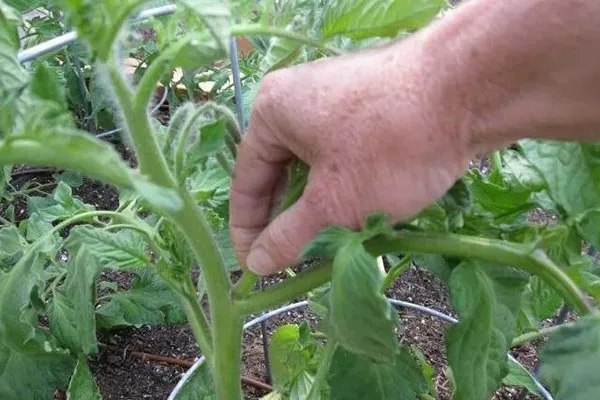
This is a key step in caring for indeterminate tomato varieties, as it promotes effective ovary development and ensures the growth of large fruits. Removing lateral branches concentrates the plant's energy on fruiting.
To ensure that tomato bushes of this variety reach their full potential, they need to be trained. You can leave one to three stems on the plant, but a three-stem system is considered the most effective.
Soil care
Tomatoes prefer well-aerated soil, which requires regular attention. Periodic loosening is necessary to ensure the plant's root system receives oxygen, which positively impacts growth and development.
Peculiarities:
- Removing weeds frees the garden bed from competitors for nutrients, which helps increase yields.
- Weed and loosen the soil every two weeks. This should be done manually to avoid damaging the root system.
- Loosening the soil in the initial period after planting tomatoes is especially important to prevent drying out and cracking.
- Once the plant has strengthened and taken root, you can move on to less frequent loosening, doing it once every four days.
Tying up bushes
During the growth process, the stem must be fixed to a special support or trellis, which promotes better development of the plant, increases its illumination and prevents moisture accumulation.
Features of cultivation and possible difficulties
During the process of growing tomatoes, various difficulties may be encountered:
- Seedlings growing on a windowsill can become overly sensitive under favorable conditions, which can complicate their adaptation to transplantation. To prevent this, hardening off the seedlings is recommended.
- Yellowing and drying of leaves in seedlings may be due to a lack of light or excessive moisture.
- Due to a lack of light, as a result of bushes being placed too close together, plants may begin to reach for the light source, stretching out.
- If the leaves of the plants have drooped, this may indicate a lack of moisture.
- White spots on tomato leaves may indicate sunburn, while brown spots indicate fungal infections.
The nuances of growing in open beds and in a greenhouse
Each plant species requires its own specific requirements for successful growth. Here are some specific growing conditions for the Pineapple tomato, both in open ground and greenhouses:
- Growing different crops together isn't always possible. For example, cucumbers and tomatoes shouldn't be grown in the same greenhouse due to their specific climate requirements.
- Incorrect pruning of bushes leads to the growth of green mass rather than the formation of ovaries. Excess nitrogen also contributes to this.
- Failure to remove side shoots in a timely manner can lead to reduced yields. It is recommended to remove them when they reach 3-4 cm in size to avoid nutrient loss.
- Insufficient ventilation in a greenhouse promotes the development of fungal pathogens. This occurs in conditions of high humidity and temperature, so it is important to ventilate the space.
- You should not keep the greenhouse closed all the time, as this can lead to the pollen grains sticking together and disrupting the pollination process, which in turn reduces fruiting.
- Incorrect application timing. Greenhouse-grown tomatoes require regular application of bio-fertilizers—every two weeks or after each harvest—to maintain their health and productivity.
Disease prevention and pest control
This tomato variety boasts excellent resistance to common diseases common to the crop. However, it should be noted that improper care, insufficient air exchange, and excessive soil moisture can lead to diseases such as gray mold, root rot, wilt, and mildew.
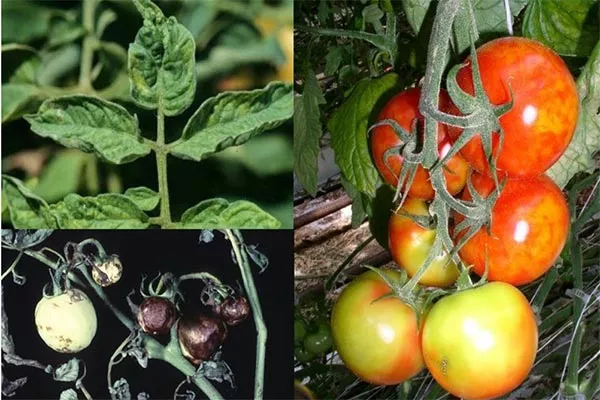
To prevent diseases, it is recommended to use a soda solution (120-150 g per 5 liters of water) to treat plants, and also strictly follow agricultural growing rules.
Pest control can be achieved using both traditional folk methods and specialized insecticides. Crop rotation is especially important in open-field conditions, which means avoiding consecutively growing tomatoes in the same plot and avoiding planting nightshades in close proximity to tomatoes.
Harvesting
Pineapple tomatoes are harvested when they are fully ripe. This variety is classified as mid-late, which reduces the risk of unripe fruits until the end of their growth.
How to grow Pineapple tomatoes in pots?
Due to its size and large fruit, the Pineapple variety is not ideal for indoor cultivation. However, those who prefer can use a large pot, equivalent to a 50-liter capacity.
It is necessary to provide adequate support for the plants, arrange regular watering and apply a balanced liquid fertilizer every two weeks throughout the entire growing period.
Pros and cons
Gardeners speak highly of this variety. Its advantages include:
The only drawbacks noted are the need for periodic tying and pinching (which, of course, is typical for tall varieties) and the unsuitability for whole canning.
Reviews
The Pineapple tomato is ideal for outdoor cultivation in regions with a long, warm period, essential for the plant's full development. In cooler climates, it is grown in spacious greenhouses. Gardeners value this variety highly for its many positive qualities.