
In 2008, developers Svetlana Ilyinichna Ignatova, Nina Sergeevna Gorshkova, and Tatyana Arkadyevna Tereshonkova introduced the Ampelny tomato variety. It features a determinate growth pattern, resulting in a compact size and ease of cultivation.
Features of hanging tomatoes
Instead of traditional cherry tomatoes, trailing tomato varieties are gaining popularity today. These can be grown not only in a conventional manner, but also in an inverted manner, which contributes to increased yields.
The plants are resistant to adverse conditions, in particular, to lack of light, thanks to their compact and stable root system.
One of the key advantages of trailing tomatoes is their versatility in growing conditions: they grow well not only in a traditional garden but also indoors, for example, on a balcony.
Description of the bush and fruits of the Ampelny variety
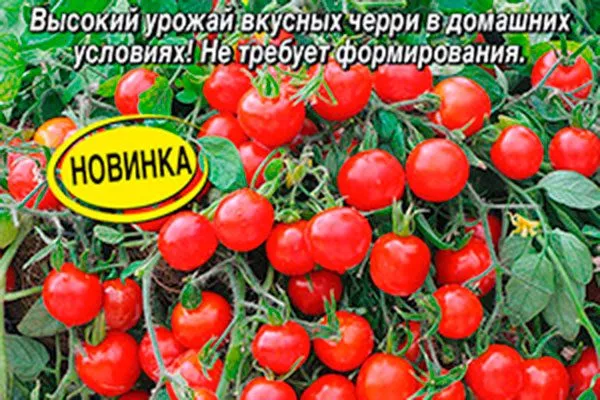
This tomato variety is a unique ornamental crop with small but tasty fruits that grow on bushes 50 to 100 cm tall. This ampelous variety is not a hybrid, so when harvesting your own seeds, the varietal characteristics are fully preserved.
Other signs:
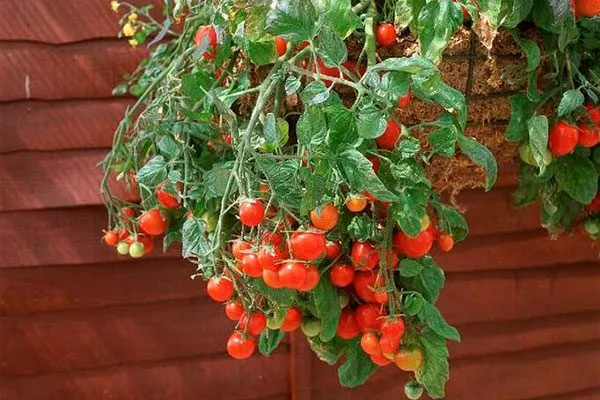
- The shoots appear to cascade down, creating an elegant composition, which is why this variety is often used in landscape design.
- The stems of this variety, although they appear thin, are strong enough to not require support even when bearing a significant number of fruits.
- Tomato leaves are small in size and have a bright greenish hue, which adds decorative properties to the plant.
- Due to its vine-like growth habit, this vegetable is ideal for vertical gardening spaces or creating hedges.
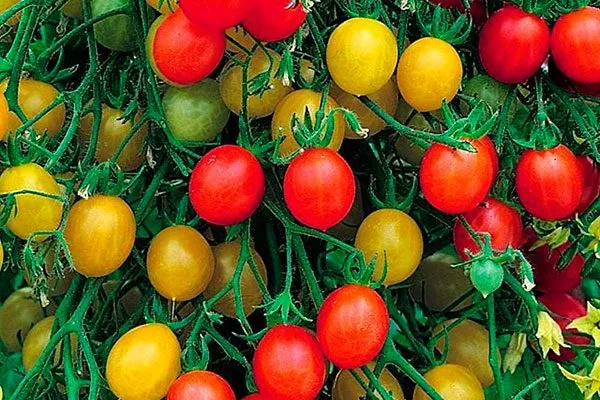
- Tomatoes are very attractive in appearance. They are small in size—each one weighs no more than 15 g. They are round, bright red, and contain 2-3 seed chambers (nestlets) inside.
Main characteristics
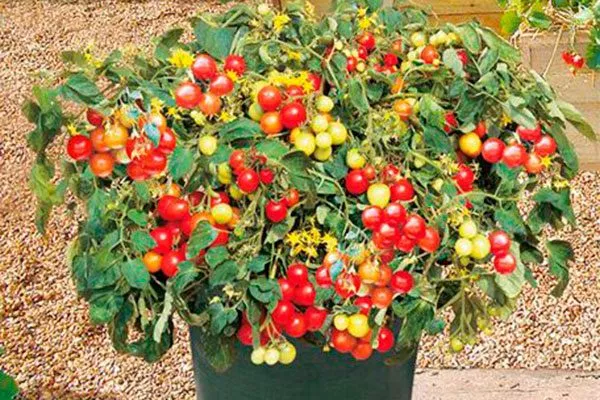
These tomatoes have a sweet aroma with a delicate tartness. With proper care and the right growing conditions, their fruits will become a true delicacy. They are excellent for eating raw, but they can also be used for juice and preserves.
Key characteristics:
- Fruiting begins on average, 101 days after planting. The harvest can be collected as early as June or July.
- Usage:
- for direct human consumption;
- when pickling and preserving in any form (juice, ketchup, sauce, adjika, salads);
- in the production of whole fruit preserves.
- Growing conditions:
- open air;
- in greenhouses using films;
- on the windowsills;
- as an ornamental garden plant.
- The yield is 1.5-1.7 kg per 1 sq. m.
- The variety is disease-resistant. It is not susceptible to cladosporiosis, tobacco mosaic virus, or fusarium, significantly reducing the risk of yield loss and ensuring stable cultivation.
Landing
You can get your first harvest of this tomato variety much earlier than usual. To achieve this, seeds are planted in tall indoor flower pots and sown at any time of year, even in autumn and winter. The main advantage of growing tomatoes in such containers is their portability: in adverse weather conditions, they can be easily moved indoors.
To plant tomatoes using seedlings, you can use a soil mixture from a specialty store or create it yourself:
- the ideal soil for hanging tomatoes should be airy and not heavy;
- To prepare it at home, you will need peat, compost and turf soil.
Features of growing hanging plants:
- To speed up fruiting, you can start sowing seeds of trailing varieties as early as March. If you want to save time, plant them in September-November and grow the seedlings at a comfortable temperature on a balcony or veranda.
- Sowing is carried out according to the standard scheme for ordinary tomatoes.
- Once the danger of freezing has passed, transplant adult seedlings into beds, greenhouses or flowerpots.
- Plants should be planted 60-65 days after sowing, with 3-4 plants recommended per 1 square meter of land.
- The ideal location for hanging bushes is one with good air circulation to ensure effective pollination.
Care
Care measures are simple - it is enough to follow the rules of agricultural technology, which are as follows:
- Formation of bushes. To achieve larger fruits, form a bush on one stem; for a more abundant harvest, form a bush on several stems:
- When a plant is grown on a single shoot, all excess shoots are removed immediately after they appear;
- if it develops on several stems, the stepsons are not removed until the first flower stalk appears;
- After flower stalks have formed on each stem, all new shoots are pruned, which ensures effective ventilation of the plant and has a positive effect on fruiting.
- Top dressing. Plants, especially those growing in the confined spaces of pots and greenhouses, require regular and abundant feeding:
- Before flowering, it is recommended to use nitrogenous substances;
- during the period of formation of ovaries and fruits, it is important to feed the bushes with potassium, phosphorus and mineral mixtures;
- The use of calcium nitrate should not be ignored;
- During flowering, it is a good time to spray plants with a solution of boric acid, which helps increase yields.
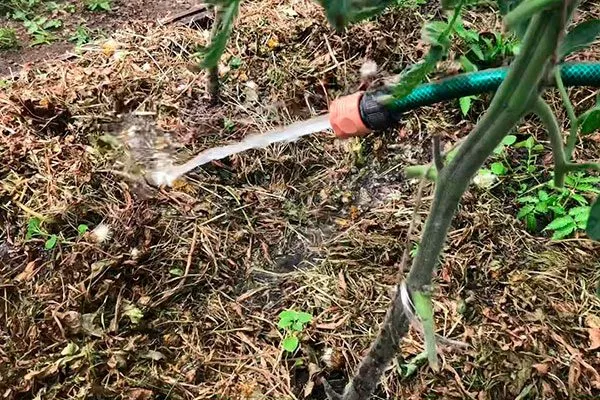
- Watering and mulching. Regular mulching is essential to maintain moisture levels, which is essential for the root system. Do this after watering, which is done as the top layer of the substrate dries out.
Why don't hanging tomatoes bear fruit?
When growing trailing plants, gardeners sometimes encounter the problem of a lack of ovaries. There are several reasons for this:
- Moisture fasting. In hanging pots, the substrate loses moisture more quickly, so regular watering is essential. It's important to ensure you don't overwater your plants, even in regular outdoor garden beds. After each watering, it's recommended to lightly compact the soil and protect it from drying out.
- Nutritional deficiency. Active plant growth and abundant fruit production drain the plant's energy, which can lead to fewer ovaries and a decline in overall fruit production. Fertilizing is best done in conjunction with watering every two to three weeks.
- Root rot. When water stagnates, the roots begin to rot, which leads to a cessation of the supply of nutrients and a deterioration in the condition of the plant.
- Insufficient pollination. Indoor tomatoes require some intervention in the pollination process. This can be accomplished by using a brush to transfer pollen from one flower to another or by shaking the plant periodically. The best option for greenhouses is introducing bees indoors.
Diseases and pests
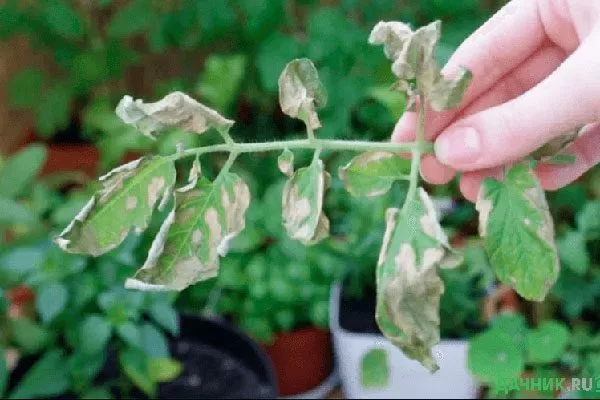
Despite its good resistance to diseases, the Ampelny variety is sometimes subject to the following problems:
- Blackleg. Prevention:
- Avoid overwatering plants, as excess moisture promotes the development of fungi;
- do not compact the soil around the plants;
- add Trichodermin to the substrate.
- Mole cricket. Methods of control:
- treat the soil and bushes with Medvedoks, Bankol, Fenoksin Plus;
- replace the soil;
- plant marigolds next to the plants;
- Water the soil with a mixture of sunflower oil and eggshells.
- Whitefly. Methods of prevention and disposal:
- carry out chemical treatment if detected: use Pegasus, Confidor, Actellic;
- spray the bushes with a garlic solution;
- Place baits and sticky tapes near plants.
Pros and cons
The advantages of this tomato variety, as noted by gardeners:
Experienced vegetable growers' reviews have been overwhelmingly positive. They emphasize that the Ampelny variety is not only a delicious vegetable but also a wonderful addition to any garden, balcony, or outdoor space.
Reviews
To start growing the Ampelny tomato, you can use any suitable container, including hanging planters. The main advantage of this variety is its minimal care, growing conditions, and soil requirements, allowing even novice gardeners to easily achieve success and reap a bountiful harvest.