
The Altai Honey tomato is a domestically bred variety that attracts gardeners with its unusual fruit color. The "honey" tomatoes are bright orange. These fruits make a harmonious addition to culinary dishes, adding a sunny touch to salads and preserves.
Who and when developed the Altai Honey tomato?
The Altai Honey variety was developed by Rostovsky Scientific and Production Center LLC. Its authors are V.V. Ognev, T.A. Tereshonkova, N.N. Klimenko, and T.V. Chernova. The variety was added to the State Register of the Russian Federation in 2017.
The variety is recommended for cultivation in all regions of the country (in open or closed ground, depending on climatic conditions).
Description of the plant and fruits
The bushes are medium-sized, determinate, reaching a height of 1.5 m (slightly lower in greenhouses and slightly lower in open ground). The leaves are medium-sized, elongated, and dark green. The fruits are large, with a small number of seeds. The inflorescences are of an intermediate type.
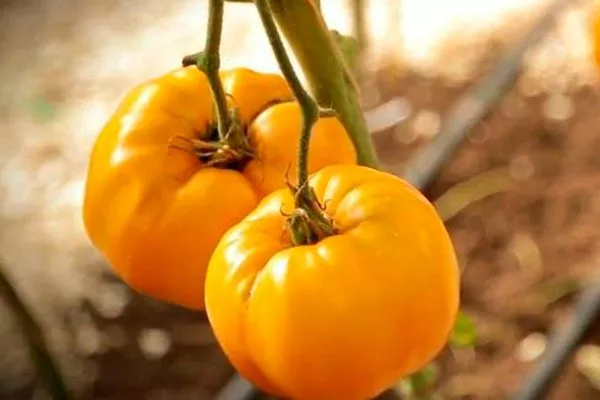
Brief description of fruits:
- Unripe fruit color: green with a spot near the stalk.
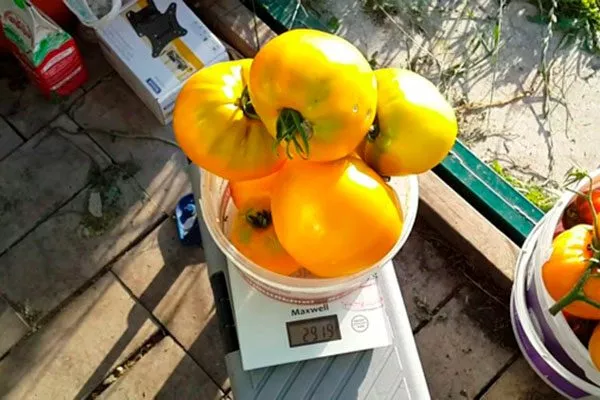
- Color of ripe fruit: apricot-orange.
- Form: heart-shaped, slightly ribbed.
- Pulp: tender and dense.
- Skin: dense.
- Weight: 350-500 g
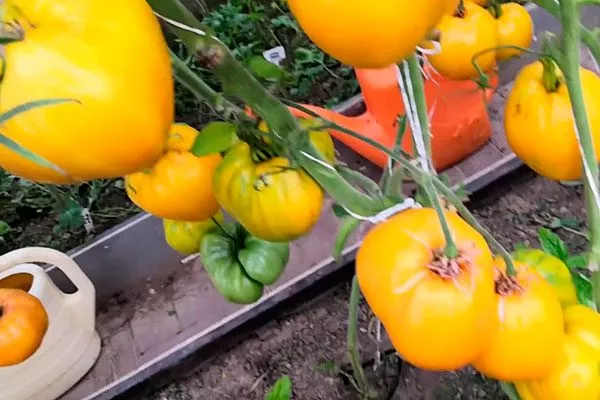
5-6 fruits are formed in clusters.
Taste and purpose
The fruits of the Altai Honey variety have a pleasant, slightly sweet flavor with hints of honey. The pulp is tender and melts in the mouth.
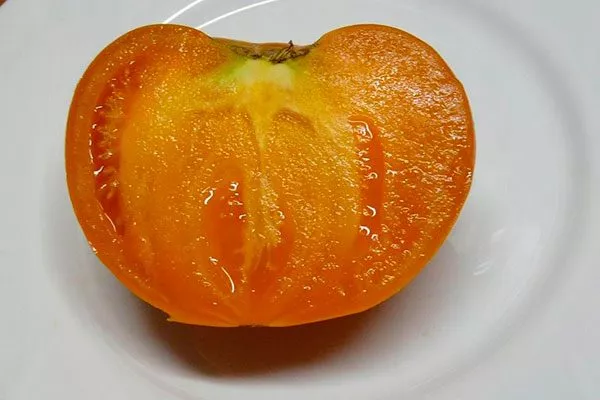
The fruits have a universal purpose: they are used for fresh consumption and in cooking, for making juices, sauces and preserves.
Characteristics
The Altai Honey tomato is a mid-early variety, with 105-110 days from germination to fruit ripening.
Resistant to stressful conditions, heat, cold and temperature changes, it also has an innate resistance to fungal infections.
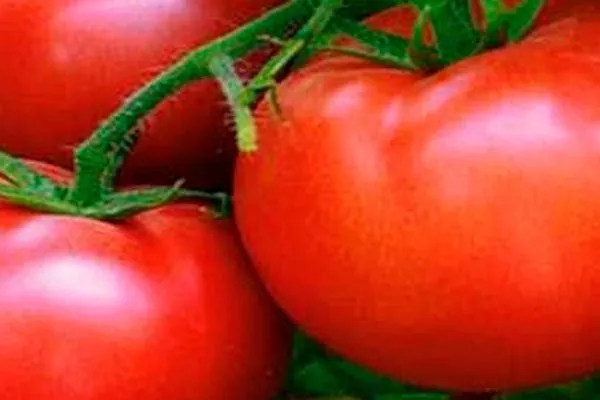
It is highly productive, yielding 6 to 7 kg of ripe fruit per square meter. A single plant can yield up to 5 kg of tomatoes.
Pros and cons
The Altai Honey tomato attracts gardeners not only with its unusual coloring but also with its excellent characteristics. While the variety has many advantages, it also has some disadvantages, which are important to consider before planting to determine whether the orange tomato is suitable for your intended purposes.
Landing features
The Altai Honey variety is grown using seedlings. They grow for two months and are then planted outdoors (in the south) or indoors (in other regions).
Seed preparation
Home-collected seeds require thorough preparation. They must be calibrated, tested for germination, soaked in a growth stimulator, and germinated. It is also recommended to warm and harden the seeds in the refrigerator.
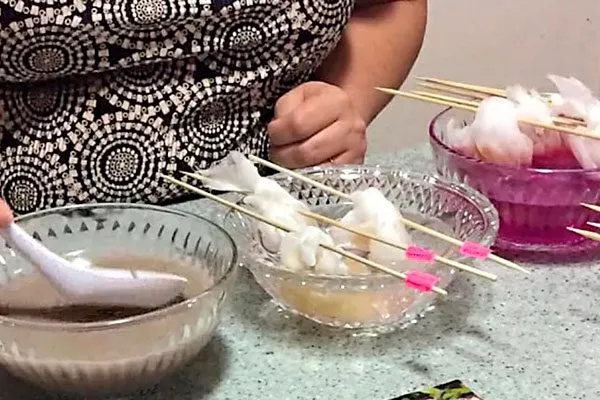
Seeds purchased from the manufacturer are usually completely ready for planting; all that remains is to germinate them.
Features of seed preparation:
- They must be within their expiration dates. They shouldn't be older than 4-5 years. If you're harvesting them yourself, be sure to note the date, and check it when purchasing.
- To disinfect seeds, you can use a solution of potassium permanganate or hydrogen peroxide. Self-harvested seeds can also be treated with Fitosporin-M or Chlorhexidine.
- Salt water (1 teaspoon per 250 ml of water) will help sort out non-viable seeds. Any seeds that float to the surface are defective.
- To increase germination, seeds are soaked in growth stimulants, for example, in the complex preparation “9 elements”.
The seeds are germinated by wrapping them in damp cheesecloth. The plate containing the seeds is kept at room temperature, periodically checking the moisture content of the cheesecloth. As soon as the seeds sprout, they are immediately planted in prepared planting containers.
Selecting containers and soil mixtures
To grow seedlings yourself, you'll need a planting container and potting mix to fill it, or you can use peat pots—they're not only ready-to-use, but also planted in the ground along with the seedlings.
Features of container and soil mixture preparation:
- Large containers or individual containers can be used for sowing. Drainage holes in the initial container are not necessary, as seedlings are watered minimally before transplanting. Drainage holes are essential in individual cups or pots where transplanted seedlings are planted, as they allow excess water to drain away (after transplanting, seedlings are watered much more frequently).
- Fill the empty container with ready-made seedling substrate—available at any grocery store. Alternatively, you can prepare your own soil mixture, for example, by mixing equal parts peat, turf, humus, and sand (3:3:3:1), and adding 1 tablespoon of wood ash.
- Before use, the soil mixture is soaked in boiling water and potassium permanganate, followed by Fitosporin (1 tablespoon per 10 liters of water). The prepared soil mixture or substrate is poured into a disinfected container.
You also need to prepare containers for picking in advance; these should be glasses or pots with a capacity of 400-500 ml.
Growing seedlings
Seeds for seedlings are sown so that they will be ready for planting in 60-65 days. On average, sowing occurs in March; in the south, in late February; and in more northern regions, in early April.
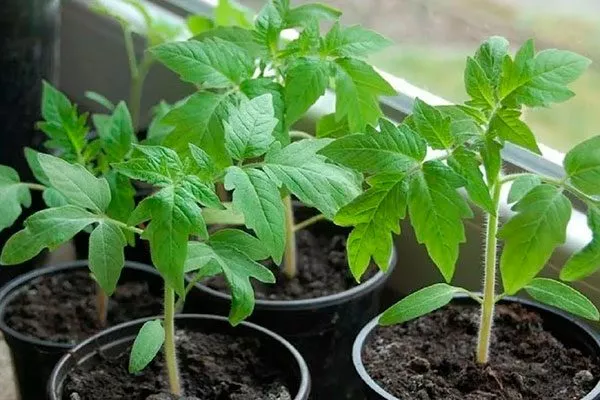
Features of growing seedlings of the Altai honey variety:
- The soil in the planting containers is leveled and moistened with warm, settled water from a spray bottle.
- When planting seeds in separate containers, place several seeds in each of them, for example, 3 pieces.
- If sowing in large containers, shallow rows are made for planting, spaced 3 cm apart. Space adjacent seeds approximately 2 cm apart.
- The seeds are planted 1 cm deep, covered with loose soil and watered again.
- To create a comfortable environment and speed up germination, the crops are covered with plastic film. It is removed daily to allow air to flow through the crops and, if necessary, to moisten them.
Once the seedlings emerge, the covering is removed, and the boxes and pots containing the seeds are moved closer to the light. During this period, the seedlings require 24-hour supplemental lighting. However, to prevent the plants from becoming too tall, the temperature must be significantly lowered—from 22 to 25°C to 14 to 16°C.
Caring for seedlings involves maintaining an optimal temperature, providing light, watering, and fertilizing. Their condition must be closely monitored, promptly responding to any warning signs.
Care tips for Altai Honey tomato seedlings:
- Throughout the entire growing period (except for the first week, which requires 24 hours of lighting), the seedlings are provided with 11-12 hours of daylight.
- For the first three weeks, water once every seven days, then 3-4 times. Use settled, warm water. Apply it directly to the roots to avoid dripping onto the seedlings. Sprinkling seedlings with overhead water is not recommended, as it can cause late blight.
- When 1 or 2 true leaves appear on the plants, they are pricked out and planted in separate cups (or larger ones), pinching the central root by 1/3 of its length.
- During the growing season, seedlings are fertilized several times. The first feeding is done when the first pair of true leaves emerges, with a nitrogen-containing fertilizer applied to stimulate foliage growth. Seven to 10 days after transplanting, a phosphorus-potassium mineral fertilizer is applied to promote root development. The feeding is repeated after two weeks.
Selecting a site
The Altai Honey tomato is planted in sunny, warm, and well-drained areas. It should be protected from drafts and cold, gusty winds.
Tomatoes grow best in loose, fertile, and well-drained soils; swampy areas and lowlands where water stagnates and cold air are contraindicated for tomatoes.
Soil preparation
The site for planting Altai Honey tomatoes is prepared in the fall. The area is cleared of plant debris and dug deep with a spade. Organic matter is added during the digging process; this not only rots over the winter and nourishes the soil, but also warms it in the spring. 5 kg of organic matter (compost or humus) is added per square meter.
If the soil is too dense, heavy, or clayey, it needs to be loosened. To do this, add river sand at a rate of 10 kg per square meter. If the soil is acidic, this can be checked using special tests. Add deacidifying agents, such as slaked lime. In the spring, level the soil with a rake and water it with copper sulfate.
If the soil wasn't prepared in the fall, it should be prepared in the spring, at least 2-3 weeks before planting the seedlings. In this case, no organic matter is added; only mineral fertilizers, such as double superphosphate, are used.
Transplanting
Altai Honey tomato seedlings are planted outdoors once the danger of frost has passed. Greenhouse tomatoes are planted 2-3 weeks earlier. When planting outdoors, consider the air and soil temperatures, which should reach 18-22°C and 14-16°C, respectively.
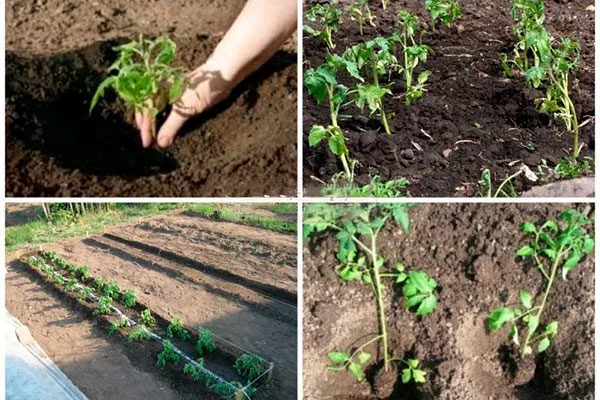
Features of planting tomato seedlings Altai Honey:
- No more than 3 seedlings are placed per 1 square meter.
- To plant seedlings, dig holes about 15 cm deep and about 20 cm wide. The hole should be large enough to accommodate the seedling's root system, including the root ball.
- The optimal planting pattern is 40 x 60 cm. They can be dug in rows or in a checkerboard pattern.
- Seedlings planted in non-peat containers are watered generously, ensuring the soil ball easily shakes out of the container. The plant is removed along with the soil and carefully placed into the prepared holes.
- Add a handful of organic matter, wood ash, and a tablespoon of mineral fertilizer to each hole. Add about 5 liters of water to each hole. After half an hour to an hour, plant the plant in the hole, fill the empty space with soil, and form a depression around the stem for watering.
The planted tomatoes are watered again, then given a 10-day break. This will allow the plants to focus on rooting.
Care Features
To get a good harvest from the Altai Honey tomato, proper care is essential. This isn't complicated, but it requires regular maintenance, and it includes the full range of measures required for proper cultivation.
Watering
In both open and closed soil, water 1-2 times a week. Waterings should be infrequent but deep. Frequency depends on the weather and soil conditions. The watering requirement varies depending on the age of the plants and ranges from 2-10 liters, with an average of 4-6 liters.
Loosening
Loosen the soil the day after watering. Loosening prevents the soil from hardening and forming a crust, which prevents oxygen from reaching the roots.
Weeds are also removed during loosening. The loosening depth gradually decreases, reaching about 10 cm after planting the seedlings, and subsequently 4-5 cm.
Fertilizing
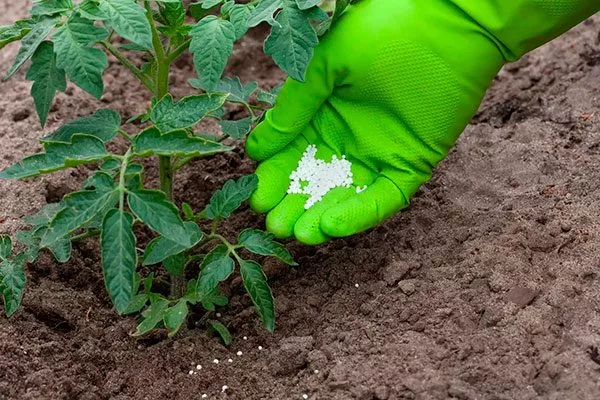
The bushes are fed alternately with organic and mineral fertilizers every 2-3 weeks. The first fertilizer application is two weeks after planting the seedlings. During this period, the bushes can be fed with a mullein solution (an infusion diluted with water at a ratio of 1:10).
During flowering, potassium fertilizers are applied to stimulate fruit set. Nitrogen, which promotes foliage growth, is not applied during the fruiting stage. Potassium-phosphorus fertilizers, as well as Kristalon and Fertika, can be used.
Shaping and garter
Altai Honey tomato bushes require support to prevent stems from breaking under the weight of the fruit. Plants are trained into two stems. Side shoots are always pinched and tied up, not just the shoots but also the fruit clusters.
Diseases and pests
The variety is resistant to most common tomato diseases. However, under a combination of unfavorable factors—damp and cold weather, poor agricultural practices, poor soil, etc.—the bushes may be susceptible to late blight.
To prevent late blight and other fungal infections, spray the bushes with Fitosporin or Trichodermin. Treatments include Hom, Fitosporin, Previkur, and Fundozol.
The most common pests affecting the Altai Honey tomato are aphids and spider mites, which can be controlled with folk remedies (such as a soap and garlic solution) or insecticides such as Batrayder and Biotlin. Biopreparations such as Fitoverm, Actovit, and others can also be used.
Harvesting and storage
The fruits begin to ripen in midsummer, and harvesting continues until the first frost. In open ground, tomatoes are harvested in dry weather, in the morning or afternoon. In a greenhouse, the fruits are harvested at any time of day. Unripe tomatoes are stored in a cool, darkened room. Ripening takes 7-14 days.
The Altai Honey tomato is an interesting variety for those who enjoy unusual varieties. If you're looking to add a touch of bright orange to your pink and red palette, plant these "honey" tomatoes in your garden. With just a little care, you're guaranteed to get a bountiful harvest of sweet tomatoes.