
The Akhmar tomato variety is the result of the work of renowned breeder Vasily Ivanovich Blokin-Mechtalin and was officially approved for cultivation in 2020. This indeterminate hybrid offers versatility, high transport resistance, and all the advantages associated with a hybrid tomato.
Description of the bush and fruits
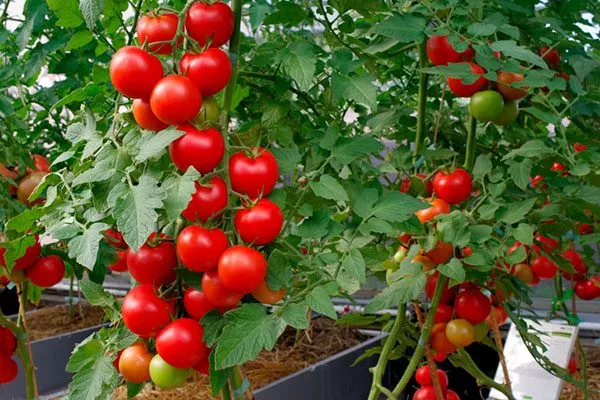
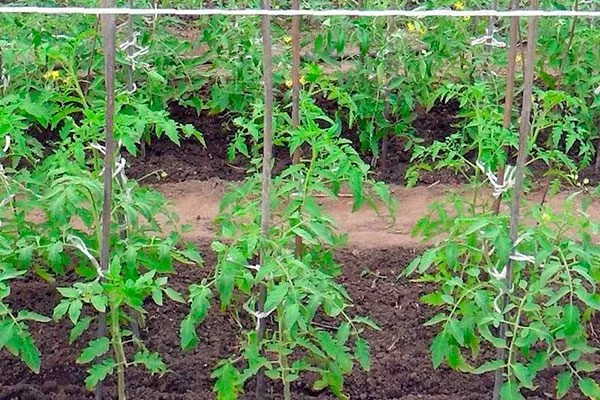
The Akhmar bush can grow up to 170-200 cm in height. Its leaves are particularly elongated and have a deep green hue. The inflorescence is simple, with the first forming above the 7th or 8th leaf, and subsequent ones every 1-2 leaves. The fruits are articulated with the peduncle.
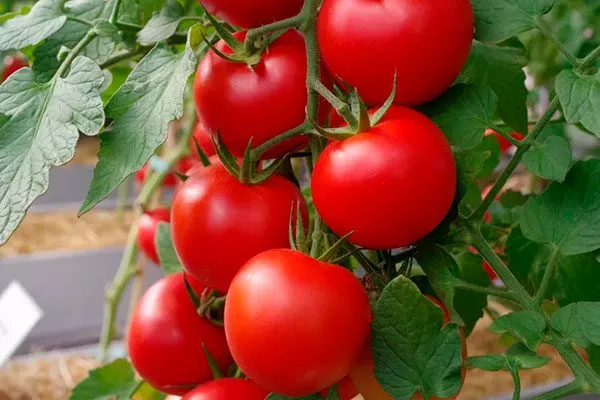
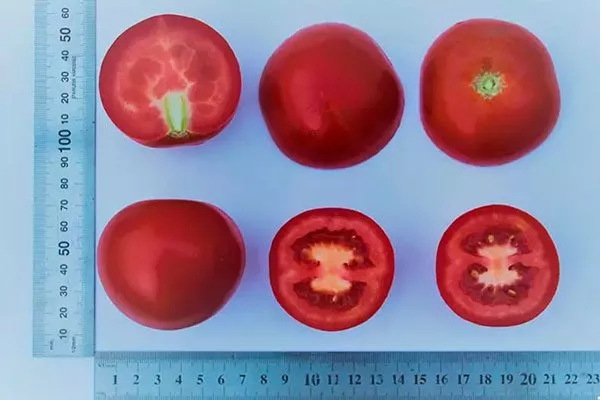
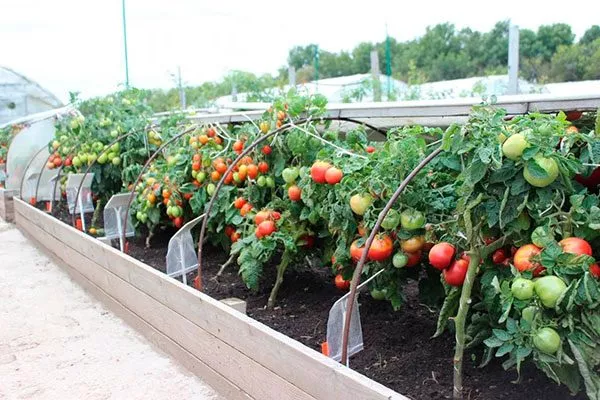
Unripe tomatoes are light green. The average weight of a single fruit reaches 130-150 grams, and its shape is round. Each tomato contains 3-4 seed chambers (nest), and the number of fruits in a single bunch can vary from 7 to 10.
Main characteristics
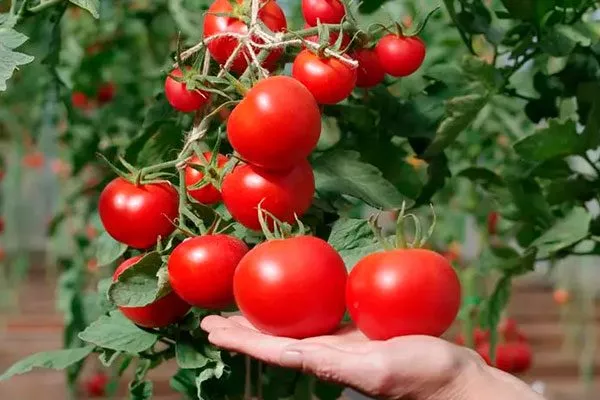
The Akhmar tomato impresses not only with its attractive appearance but also with its exquisite flavor. Its dense flesh provides juiciness and tomato flavor, making it ideal for eating raw, in salads, or as an ingredient in hot dishes. Furthermore, the Akhmar is ideal for whole-fruit canning, freezing, or drying.
Distinctive features:
- is distinguished by a relatively short maturation period, which takes 95-100 days;
- the harvest can be collected from June to October;
- Akhmar's productivity is 17.9-18.6 kg/sq.m when grown in polycarbonate greenhouses, with the optimal planting pattern being 50x50 cm;
- One of the key advantages of the hybrid is its resistance to cracking of the fruits, which can remain intact for a long time while on the bushes, which makes Akhmar especially valuable for commercial sale;
- high resistance to verticillium wilt and fusarium wilt;
- the ability to tolerate minor temperature fluctuations.
| Disease | Sustainability level |
|---|---|
| Verticillium wilt | High |
| Fusarium wilt | High |
| Late blight | Average |
Growing and care
This variety can be planted both outdoors and in greenhouses using plastic film. To achieve high yields, ensure consistent watering and feeding of organic and mineral nutrients. Seeds should be sown between February and April.
- ✓ The optimal soil temperature for sowing seeds should not be below +15°C.
- ✓ To prevent diseases, pre-sowing treatment of seeds with a 1% solution of potassium permanganate for 20 minutes is recommended.
It is recommended to apply top dressing using the following components:
- organic matter such as mullein or manure, dissolved in water in a ratio of 1:12;
- Superphosphate;
- potassium salts;
- nitroammophoska;
- fertilizers Kemira, Fasco and Dobrivo.
Gardeners report the following benefits:
There is one drawback: it needs to be planted in areas with abundant fertility.
Reviews
The Akhmar tomato is a true gift for gardeners who value not only its yield but also its sweet flavor. This hybrid requires little care and adapts well to various climates, making it a popular choice among both greenhouse and open-air gardeners.