
The Agata tomato has been on the market for a long time, and during this time, it has earned a large following among vegetable growers in our country. This cultivar boasts compact bushes, so it doesn't take up much space in the garden. The medium-sized, round tomatoes are characterized by a sweet flavor with a noticeable tartness.
Description of the bush and fruits
The plant is determinate: its growth ceases after the flower cluster forms at the top of the stem. The first simple inflorescence appears above the 6th or 7th leaf, and subsequent flower heads form every other leaf.
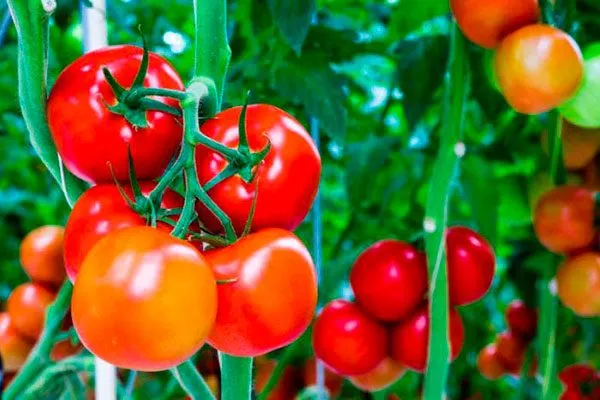
Distinguishing characteristics:
- The bush is low-growing, 33-45 cm in height, with moderate or sparse foliage.
- The leaves are medium-sized, green, glossy, slightly corrugated, without pubescence.
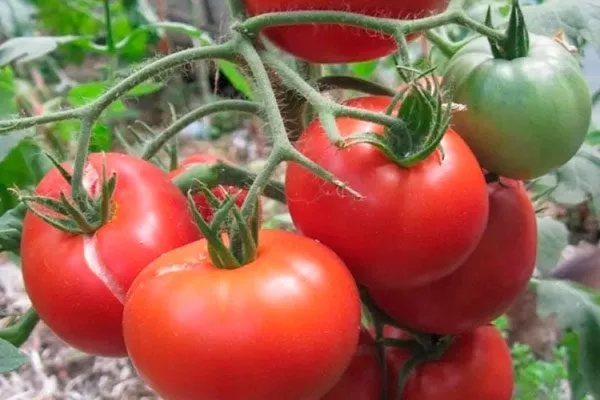
- The tomatoes are small, red, flat-round in shape, and their weight varies from 77 to 99 g.
- A single cluster typically produces 3-4 tomatoes. Each fruit contains 5 to 11 seed pods.
- Beneath the smooth, dense skin lies red flesh with a rich flavor and distinct aroma.
- The dry matter content is 5-5.5%. Tasting scores range from 3.8 to 5 points on a five-point scale.
- ✓ The bush height of 33-45 cm makes the variety ideal for growing in small greenhouses and under temporary shelters.
- ✓ The weight of the fruits is 77-99 g and their number in a bunch (3-4) makes it easy to plan the volume of preservation.
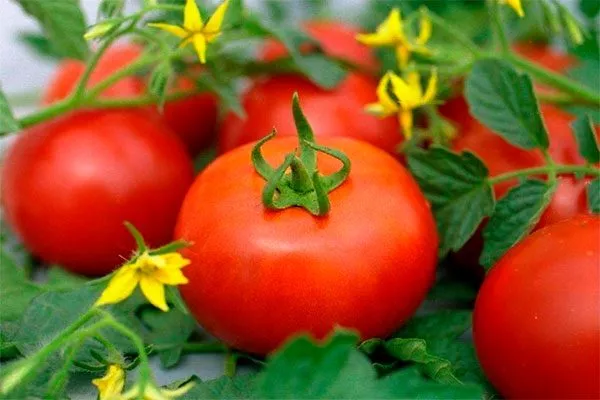
These vegetables are ideal for salads, fresh, pickling, canning, and making juices, ketchups, sauces, purees, and pastes. Smaller varieties are conveniently preserved whole: the skin doesn't wrinkle during cooking, preserving their attractive appearance.
Main characteristics
Researchers at the Federal Research Center "All-Russian Institute of Plant Genetic Resources named after N.I. Vavilov" spent over 20 years developing this tomato variety. Breeding work was conducted at an experimental station in Krymsk, Krasnodar Krai. It was officially approved for use in 1987.
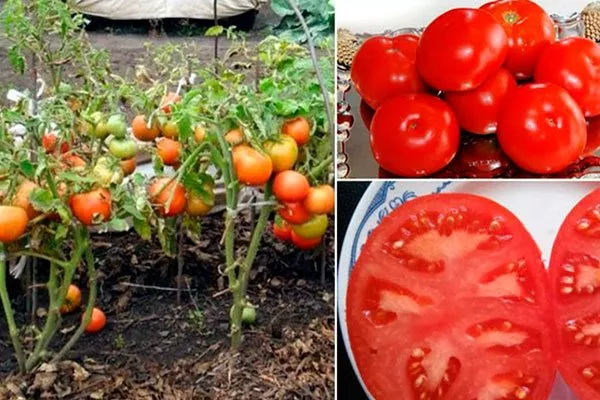
Features of the culture:
- Fruit ripening occurs 98-113 days after emergence, which allows Agatha to be classified as an early-ripening variety.
- The bulk of the crop ripens in the first 7 days of fruiting, and harvesting occurs from July to August.
- The cultivar has high productivity: 583-676 centners are harvested from 1 hectare.
- The variety is zoned for various climatic zones, including the North Caucasus and Middle Volga regions, as well as Eastern and Western Siberia, making it suitable for cultivation in both warm and cold conditions.
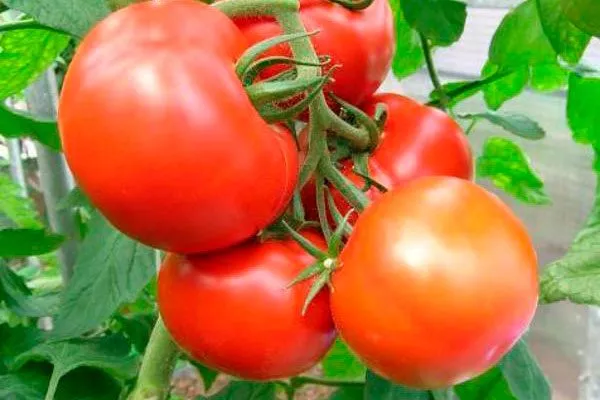
The crop has low immunity to most tomato diseases. It is particularly susceptible to late blight and is frequently attacked by pests. Regular preventative treatments with fungicides, insecticides, and folk remedies are important for plant protection.
Growing the Agata tomato
The variety is suitable for both seedling and direct cultivation. The latter method allows for earlier harvesting. However, despite the quick and early ripening of the vegetables, in regions with short, cool summers, it is recommended to grow seedlings in advance.
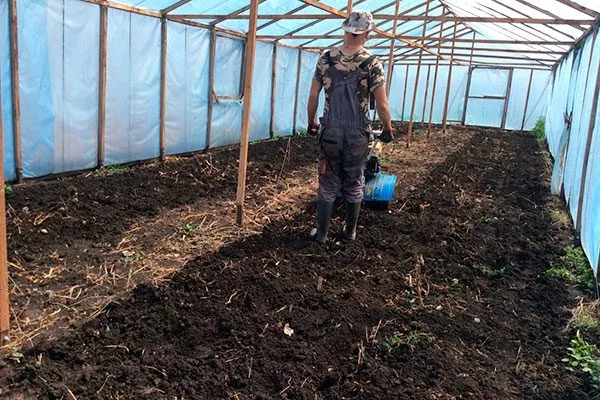
Selection, preparation of the site and greenhouse
In the fall, before frost sets in, remove weeds and collect and remove plant debris. Follow these recommendations:
- Evenly distribute 5 kg of rotted cow manure and 500 g of wood ash per 1 sq. m over the beds.
- Dig the soil to the depth of a shovel blade.
- In the spring, a month before planting seedlings or sowing seeds, apply a mixture of 20 g of potassium sulfate and superphosphate per 1 square meter. Dig the soil again, break up clods, and level the surface.
Sowing seeds in the ground
When sowing seeds directly into the soil, it's important that the soil at a depth of 15 cm warms to +12°C. If there's a risk of recurrent frost, cover the seeds with plastic, creating a mini-greenhouse.
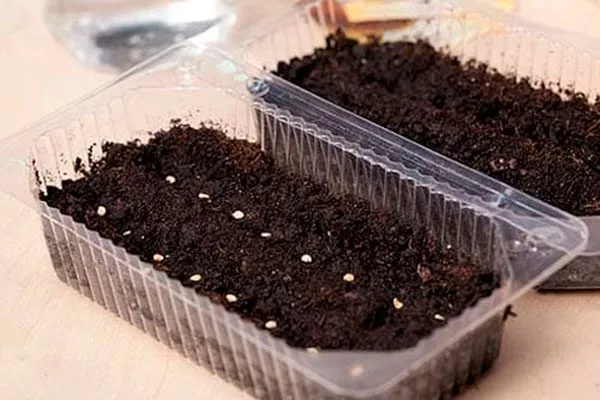
Sowing times directly depend on the region:
- North Caucasian – from February 20 to March 1.
- Middle Volga and West Siberian – from March 1 to March 20.
- East Siberian – from March 25 to April 10.
Recommendations for growing seedlings:
- To obtain seedlings, place the seeds in separate cups or by picking them out.
- The seedlings tolerate transplantation well, but do not trim the roots - this may slow down their development.
Start sowing seeds:
- Dig furrows up to 3 cm deep.
- Place the sprouted seeds at a distance of 3 cm from each other.
- Sprinkle with soil, compact lightly and moisten with a spray bottle.
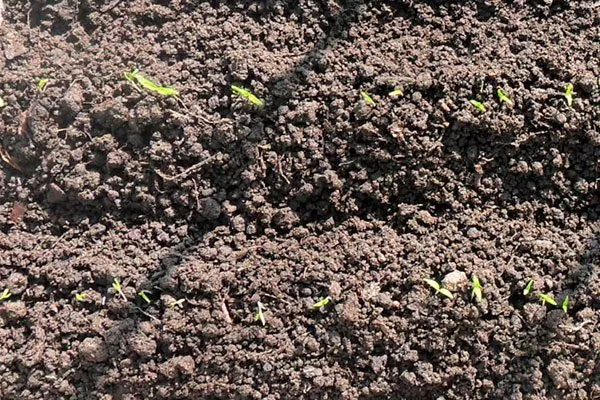
Until seedlings emerge, keep the soil moist and water sparingly. Thin the plants after the first true leaf appears, then again after 5-6 leaves have formed. After the leaves emerge, water the seedlings every 2-3 days.
Transplanting
The recommended planting pattern for Agata tomatoes is 50x40 cm. If organic and mineral fertilizers were added during soil preparation, use urea as a starter fertilizer (2.5-3 g per plant).

Additional requirements:
- Make the holes deep enough so that the root system of the seedlings, along with the root ball, fits freely into them, and the seedling itself can be buried down to the cotyledon leaves.
- A few hours before planting, water the seedlings generously to make them easier to remove from the containers.
- Pour urea into each hole, place the plant, cover with soil and compact lightly.
- Pour 1.5 liters of warm, settled water under each bush. After 2 days, repeat the watering, increasing the volume to 2 liters.
If cold weather is predicted, mulch the beds and cover them with plastic at night, using arches to protect the plants.
How to care for the Agatha tomato?
To achieve generous harvests and strengthen the plant's immunity, it's important to take care of the crop. Timely implementation of standard agricultural practices will ensure good results.
Garter
In the field, Agata tomatoes don't need to be tied up, but in the garden, it's important to prevent the plants from coming into contact with the soil under the weight of the fruit. To do this, install a wooden stake or metal rod near each bush and secure the stems.
Watering and fertilizing
For watering, use warm water, which you'll fill in barrels placed in open areas. Water the plants once a week, directing the water at the roots and avoiding contact with the leaves to avoid burning.
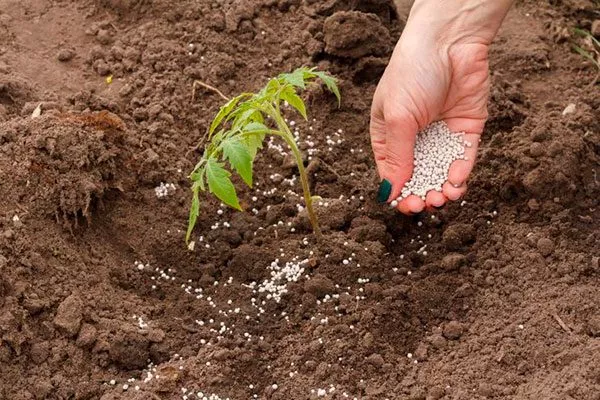
During the growing season, provide plants with moderate amounts of essential nutrients (nitrogen, potassium, and phosphorus). Use homemade organic infusions.
Basic feeding:
- Nitric - An infusion of mullein, bird droppings, or freshly cut grass. Place the chosen ingredient in a barrel of water and let it steep for 5-7 days. Strain the concentrate and dilute: add 2 liters of the infusion (or 1 liter of bird droppings) to 10 liters of water. Water at a rate of 1 liter per bush.
- Potassium-phosphorus – Wood ash infusion. Dissolve 3 liters of sifted ash in 10 liters of water. Every 1-2 days, water the plant with 1 liter per bush. This solution is also suitable for foliar feeding.
Fertilize the crop 2-3 times per season, using each type of fertilizer at two-week intervals. If organic fertilizers are not available, you can use urea or ammonium nitrate (30-40 g per 1 sq. m) as a nitrogen fertilizer, and for potassium-phosphorus fertilizer, use monopotassium phosphate (10-20 g per 1 sq. m).
Processing
Since older tomato varieties do not have sufficient resistance to fungal diseases, it is recommended to carry out preventive treatment of plants with a solution of the biofungicide Fitosporin-M Tomatoes.
The product is effective against fungal pathogens, non-addictive, safe for humans, and can be used without restrictions, including during harvest. Furthermore, it contains humic acids, which boost plant immunity and promote productivity.
Possible problems
Agatha is an old variety that isn't particularly resistant to diseases and pests. The primary defense against late blight is early and simultaneous harvesting. Other diseases usually don't have time to develop severely enough to significantly affect the yield.
Preventative treatments remain important. This cultivar can cause some problems: if watered irregularly, large tomatoes may crack, and larger specimens sometimes develop blossom-end rot, although this is rare.
Diseases and pests
Healthy plants are less susceptible to disease and pest attacks, but yield losses can be significant. Therefore, it's important to take preventative measures, and if damage is detected on the plants, to determine the cause as soon as possible and take appropriate action.
The Agatha variety suffers from several problems:
- Late blight. This fungal disease attacks the leaves, which begin to turn black, and then the fruit. It often develops due to fluctuations in humidity and temperature, as well as in dense plantings.
To treat late blight, use fungicides such as Fitosporin, Ridomil Gold, or HOM, which are effective against the fungus. Treat affected plants with the solution, paying special attention to the undersides of leaves and the root zone. - Mosaic. This viral disease manifests as spots and curling of leaves. It is transmitted through infected seeds or by aphids and nematodes. Remove affected plants immediately. Treat garden beds and tools with a 1% solution of potassium permanganate or bleach.
- Bacteriosis. The bushes quickly wither. Copper-based treatments or complete removal of infected plants will help.
- Root rot. Caused by fungi, it is characterized by the death of roots and basal stems. Water plants with a zineba solution. Remove severely affected bushes and burn them outside the area.
The cultivar may be susceptible to pest attacks. Cutworm larvae damage the roots, so treatment with Diazinon is effective. The bushes may be attacked by mole crickets, which attack seedlings and tomatoes lying on the ground. Set traps or spray the plantings with Grom or Medvetoks.
Similar varieties
Several varieties of early-ripening tomatoes, like Agatha, produce red, flat-round fruits that are rich in juice. Popular alternatives include:
| Name | Description and Features |
| Amur standard | The bushes are low-growing, 45-50 cm tall. The root system is located close to the surface, and the stems are dense and stable. Unripe fruits are light green, turning red as they ripen. The tomatoes are medium-sized, weighing between 100 and 120 g. They are generally round or slightly flattened round in shape, with small ribbed areas.
Ripening begins in 85-95 days, and the first harvests are already in July. In greenhouse conditions, yields reach 4.8 kg per square meter. The Amur strain is resistant to verticillium wilt and is virtually unaffected by fusarium. |
| Alpha | An early-ripening variety that produces compact plants 40-50 cm tall with robust stems and potato-like leaves. The bushes are standard and do not require pinching, simplifying care. The fruits are perfectly rounded and flattened, turning red when ripe and light green when unripe. The tomatoes weigh only 60-80 g.
This variety is characterized by rapid ripening—from the first shoots to harvest, it takes 87-96 days. The first harvest is in midsummer, and Alpha continues to bear fruit until the onset of cold weather. The fruits ripen evenly and uniformly. The yield is high—with proper care, up to 6.2 kg can be harvested per square meter. The crop is resistant to late blight and pests. |
| It's so big | A determinate variety with compact bushes 25-35 cm tall. The plant produces miniature cherry-sized fruits weighing 15-20 g, with the largest specimens reaching 25 g. The tomatoes are round and slightly ribbed. Unripe fruits are light green with a characteristic spot, while ripe ones acquire a rich red hue.
This early-ripening variety takes 90-95 days to fully mature. Harvesting occurs from July to August. Productivity is good: 1.5-1.6 kg per plant, and up to 3.5 kg per square meter. |
| Sanka | A low-growing variety, the bushes reach 40-60 cm in height in open ground and up to 100 cm in greenhouses. The stems are weak and prone to breakage. The fruits are medium-sized, round, with slight ribbing near the stem. They weigh between 71 and 110 g. Ripe tomatoes are a rich red color, while unripe tomatoes are green. The dense skin prevents cracking.
This is an ultra-early variety, with fruits beginning to ripen 79-85 days after germination. The yield is high: 2.5-4 kg can be harvested from a single bush. Fruiting is prolonged, from July to August, and in southern regions, the harvest is collected twice per season. |
Pros and cons
The Agata tomato is one of the most popular varieties of old selection, known for its easy-to-grow, compact bushes. It's important to explore not only the cultivar's advantages but also its disadvantages.
This variety has only one drawback: under unfavorable weather conditions, the tomatoes may have a significant sour taste.
Reviews
Agata is a versatile variety that has remained popular among Russian vegetable growers for many years. It attracts even novice growers, as it's easy to care for and requires simple farming practices. With proper care, it can strengthen the plant's immunity and significantly increase its productivity.