
The Agasha tomato is a hybrid classified as a determinate tomato, meaning the bush reaches a fixed height after which growth ceases. This variety can be grown both in open fields and greenhouses.
Features of the bush and fruits
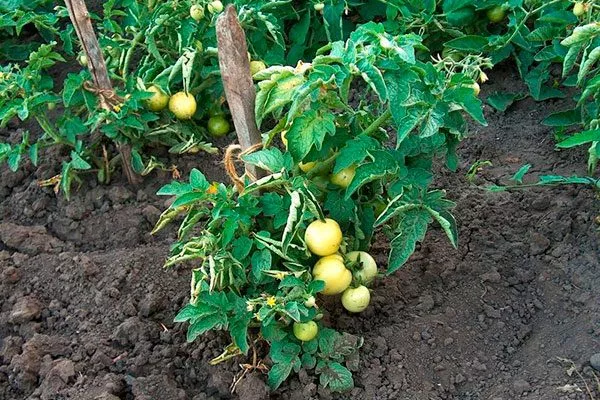
The bush reaches 75-85 cm in height, with small leaves and short internodes. The plant is characterized by moderate foliage.
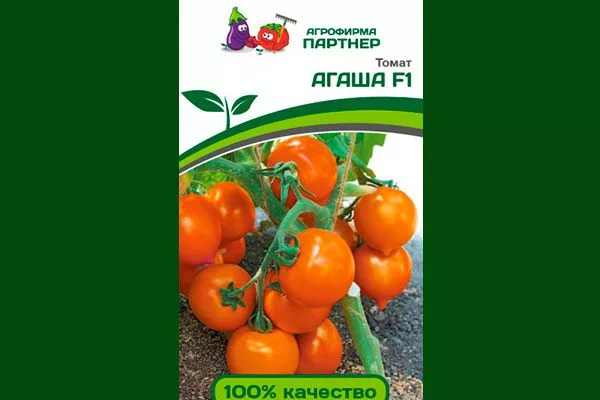
Other varietal characteristics:
- each brush produces 5 to 6 fruits;
- the inflorescence is simple, the formation of the first brush begins above the 5-6 leaf, and the subsequent ones are formed every 1-2 leaves;
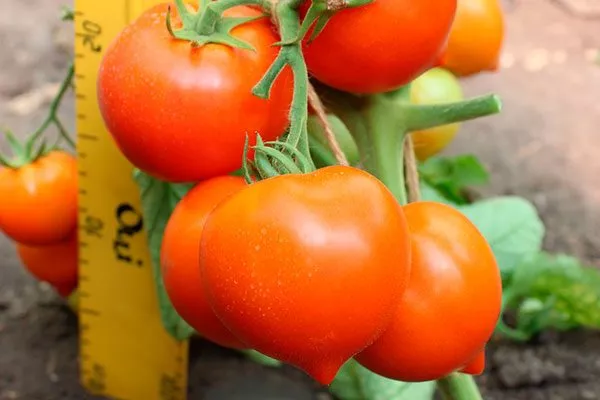
- Tomatoes are bright orange in color, round in shape with a small nose;
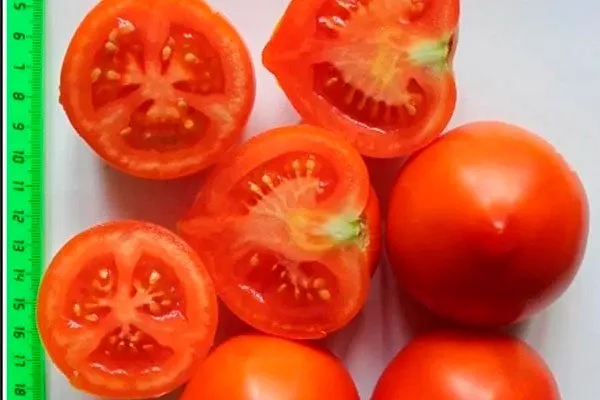
- the weight of one fruit ranges from 110 to 120 g, and the number of chambers – from 3 to 4;
- the flesh is dense and rich, and the skin is smooth;
- This variety is distinguished by its high content of sugars and acids, which gives it a sweet taste with a slight sourness.
Main characteristics
The Agasha tomato is an early-blooming variety developed in Russia in the 1990s. It was developed by breeder Vladimir Shumilov, who used the Rozovy Malysh variety as a base and crossed it with other varieties to produce a more robust and delicious tomato.
The name Agasha is derived from the words "agat" and "yasha," which translate as "strong and tasty." This accurately describes the hybrid.
Key characteristics:
- The ripening period of Agasha tomatoes is approximately 85-90 days, which allows you to begin harvesting fresh ripe fruits as early as the beginning of summer.
- This variety is characterized by extremely high productivity: in open ground, it yields up to 15 kg/m2, and in protected ground, around 20 kg per square meter. For a good harvest, it is recommended to plant four to five plants per square meter of soil.
- A distinctive feature of Agasha is its exceptional resistance to various diseases and adverse weather conditions. This variety requires little care and can be grown both outdoors and in greenhouses.
- Agasha vegetables find a wide range of culinary uses. They are ideal for salads, appetizers, side dishes, and sauces, and their rich flavor and juiciness make them a great addition to any dish.
Agasha tomatoes are often used for canning. They retain their shape and flavor even after cooking, making them ideal for making tomato juice, puree, and sauces. - Tomatoes are rich in nutrients – they contain numerous vitamins and microelements, such as vitamin C, potassium, magnesium, iron, and others. They are also rich in antioxidants, which strengthen the immune system and protect the body from various diseases.
In addition, Agasha fruits contain lycopene, a natural antioxidant that helps reduce the risk of developing cardiovascular diseases and cancer.
Growing
Plant Agasha tomatoes only after all danger of frost has passed, or use protected soil for an early start. To ensure proper bush formation, leave 2-3 stems on each plant. This will allow for better control of their development and create optimal conditions for ripe fruit.
Seedling
Pay attention to choosing high-quality seed material. When purchasing seeds, it's best to choose reputable, large suppliers to avoid counterfeits, as packets may contain seeds of other varieties.
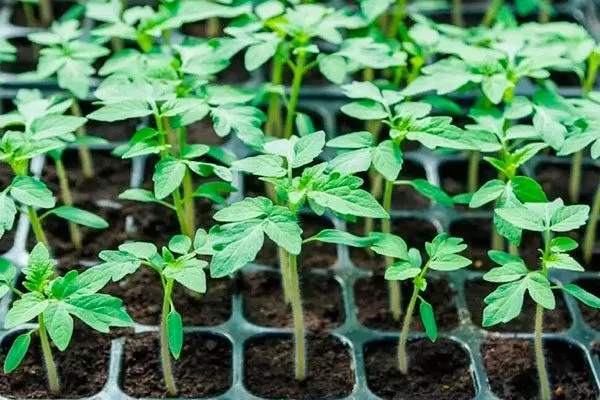
Agasha seeds can be planted directly into the ground, as they have a high germination rate. However, they are more often grown from seedlings, especially in areas with unstable climates. For this purpose, the seeds are sown 1.5-2 months before transplanting into the garden. In central Russia, tomatoes are transplanted in late spring, so seedlings are sown from March 15 to April 10.
Preparation:
- It's important to select only healthy seedlings. For this, you can use a saline solution (1 tablespoon per 300 ml of water) to maceration. Place the seeds in the solution for 30 minutes. Healthy seeds will sink to the bottom. This method is not necessary for store-bought seeds.
- Seed disinfection is an important procedure for preventing the spread of diseases. For disinfection, you can use a 3% hydrogen peroxide solution, as well as Maxim, Vitaros, Fitolavin, and Fitosporin.
- Stratification and germination of seeds. To do this, place a damp cloth in a plastic container and place a damp cloth on top. Cover the container with a lid, removing it once a day to allow air to circulate.
Place the container in the refrigerator at 2°C to 3°C overnight and keep it warm during the day at 22°C to 25°C. Regularly moisten the cloth in the container to avoid drying it out. If you follow these instructions, seedlings will appear in 5-7 days, after which they can be transplanted into the soil. - When the seedlings have one or two true leaves, they should be picked.
Routine care for seedlings includes regular watering, feeding and lighting.
Transplanting seedlings into open ground
Tomato seedlings should be transplanted into open ground when the plants have 5-6 true leaves and are 25 to 35 cm tall. Before transplanting, acclimate the plants to the outdoor conditions by placing them outside for 2-3 hours daily, gradually increasing the time spent outdoors.
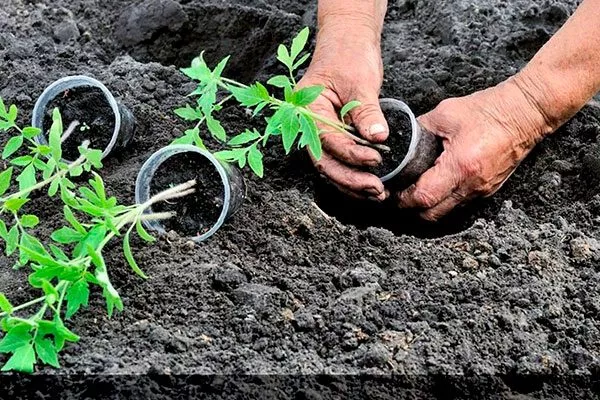
If seeds are sown directly into the soil, do so 3-4 weeks before transplanting the seedlings. In the first few days after planting, it is recommended to protect the beds with spunbond supported by hoops. Tomatoes are planted in two rows. The distance between beds should be 50-55 cm, and between plants within a row, 40-45 cm.
Caring for the Agasha tomato variety
Caring for the Agasha tomato is standard, but it's worth paying attention to some important aspects:
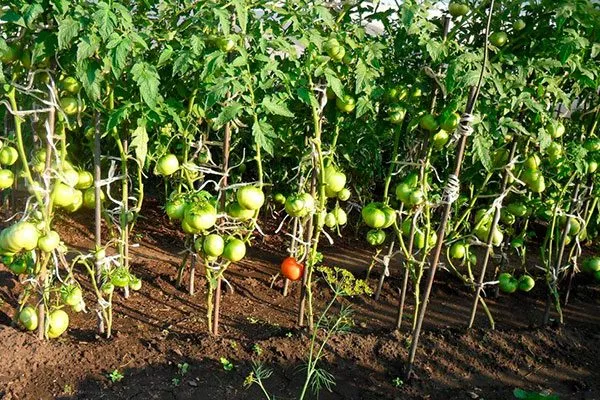
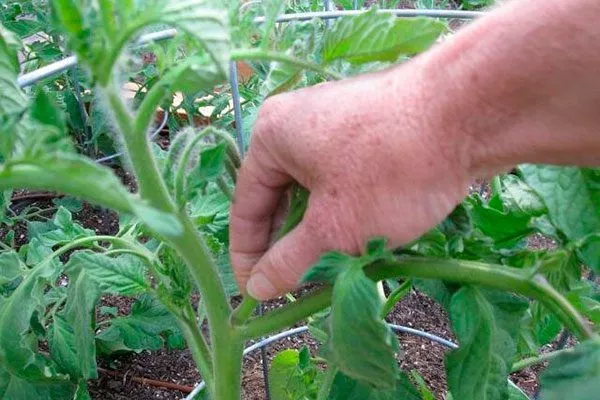
- It's necessary to secure the bushes to prevent them from falling over and the fruit from being damaged by pests and diseases from contact with damp soil. A stake is installed in each bed to secure the bush.

- Alternatively, you can use mulching to prevent rotting of fruits that touch the ground.
- For watering, use warm water that has been left outside for several days. The Agasha variety doesn't require frequent watering—once a week is sufficient. Water should be applied directly to the roots, avoiding contact with the leaves and stems to prevent burning.
Plant nutrition should be carefully formulated. The best solution is organic mixtures that you can prepare yourself:
- Nitrogen fertilization. This can be a solution of mullein infusion, bird droppings, or freshly cut grass. The main ingredient is added to a barrel and filled with water. It is left to steep for a week. Then, it is strained.
Dilute at a ratio of 2 liters per 10 liters of water (1 liter if using bird droppings). One liter of fertilizer is sufficient for each bush. - Potassium-phosphorus fertilizer. Wood ash can be used to prepare it. A 3-liter jar of wood dust is added to 10 liters of water. It is left to steep for two days, then either poured under the root system or used for foliar spraying.
During the growing season, each solution should be applied 2-3 times. Nitrogen is applied initially, followed by potassium and phosphorus. The interval between applications is two weeks.
Diseases, pests
Late blight is a dangerous disease if the crop hasn't had time to ripen before its peak. The infection can be identified by the following signs:
- brown spots on the leaves, surrounded by a whitish coating;
- drying and wilting of greenery, withering of bushes;
- fruit falls off and begins to rot when ripe.
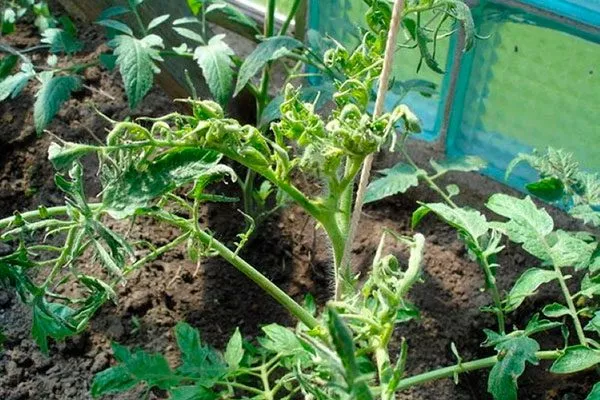
At the first signs of late blight, immediate action is needed before it spreads to the entire crop. Remove affected areas and spray the bushes with an onion-garlic infusion:
- Chop 100 g of onion and garlic.
- Pour 5 liters of water over the ingredients.
- Let it sit for 24 hours.
- Strain the infusion and spray the bushes with it.
To prevent late blight, a good option is to apply a boric acid solution (1 teaspoon per 10 liters of water) externally. This should be done before lunch. Mulching the bushes is also recommended for this purpose. Compost, sawdust, freshly mown or dried grass can be used for this purpose. Compost should not be used for this purpose.
Whiteflies, aphids, and spider mites are prominent pests. Due to the crop's advanced maturation, the use of chemicals is not recommended. Alternatively, a tobacco dust solution or a soap-ash extract can be used to control insects.
Reviews
Agasha tomatoes are the ideal choice for those who enjoy growing their own produce and preparing delicious and healthy dishes. This variety stands out not only for its excellent taste but also for its excellent resistance to disease and adverse weather conditions. When growing Agasha tomatoes, you can be sure that your harvest will not only be high-quality but also completely healthy.