
The Abruzzo tomato is a newly developed Russian heirloom variety that has quickly gained popularity among gardeners and farmers thanks to its excellent flavor and impressive yield. It stands out for its good resistance to adverse weather conditions and diseases.
History of variety selection
The misconception that the name Abruzzo derives from Italian is unfounded. There is an ancient Italian variety growing on the Abruzzo coast, known as Pera d'Abruzzo or Abruzzo Pear, but it is not related to Russian tomatoes. This variety was very popular in the 1960s to support economic stability. Its fruits were used to make pastas and sauces.
Agrofirm "Aelita" is the original developer of the Abruzzo variety in Russia and the holder of the rights to it. Renowned agronomists such as:
- V. G. Kachainik;
- M. N. Gulkin;
- O. A. Karmanova;
- S. V. Matyunina.
An application for registration in the State Register of Breeding Achievements was submitted in 2017. After passing variety trials, the Abruzzo variety was included in the list of agricultural crops of Russia in 2019. It is used for cultivation in private gardens, in open fields, and under protective shelters (greenhouses, hotbeds).
General characteristics of the variety
Abruzzo is an indeterminate variety, meaning that its bush continues to grow and bear fruit as long as conditions remain favorable.
Appearance of bushes
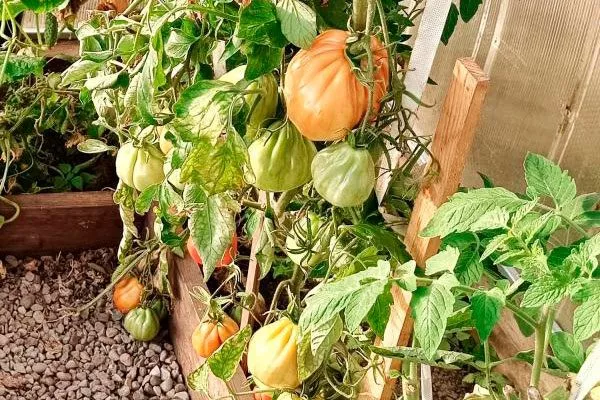
The Abruzzo tomato is characterized by its indeterminate growth habit, which continues to grow until it runs out of space or is trained. This requires regular pinching of the top and pruning of side shoots.
Main characteristics of the bush:
- the height of the bush in open ground reaches 150-170 cm, in greenhouses it can reach 200 cm;
- the plants have medium sized leaves;
- the leaf blade has a rich green hue;
- there are no joints on the peduncles;
- inflorescences are of intermediate type;
- Harmonious formation of ovaries is observed on the stems.
Description of fruits
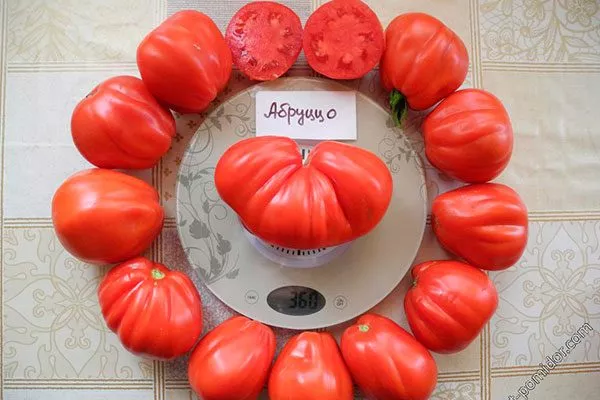
Abruzzo tomatoes are characterized by their significant size – their average weight ranges from 250 to 310 g, and the largest specimens growing in the lower part of the bush can reach 750 g.
Distinctive features of this variety:
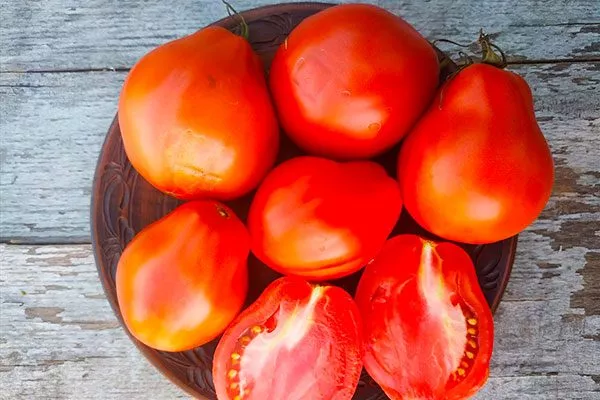
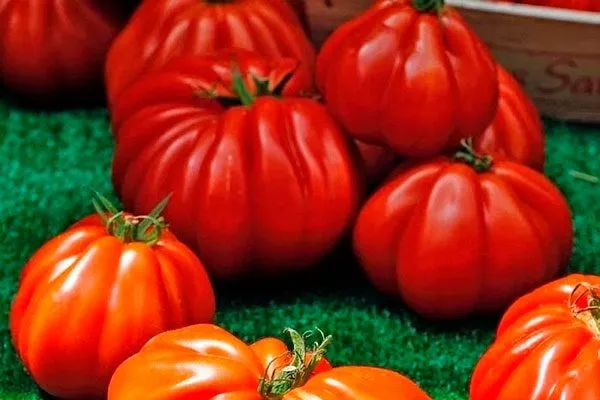
- pear-shaped;
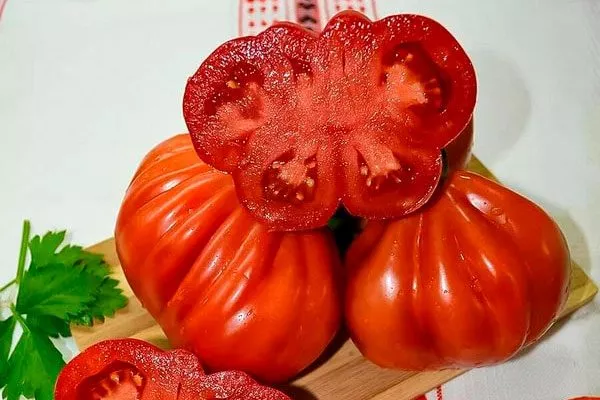
- strongly pronounced and unusual ribs on the sides;
- fairly thin skin;
- rich tomato aroma;
- fleshy pulp;
- Ripe fruits are bright red, while unripe fruits are light green with dark spots near the stalk;
- the skin is glossy and shiny;
- when cut, a small amount of juice flows out;
- inside there are 4-6 seed chambers with a small number of seeds;
- contains a lot of lycopene, which is responsible for the rich red color and is a powerful antioxidant due to its carotenoid properties.
The sugar content gives the pulp a unique sweet flavor. When cut, the fruit resembles a ripe watermelon, with its pink and pearlescent hues.
Abruzzo tomatoes, picked from the vine, are not runny, and contain a small amount of light-colored fiber. The variety has excellent flavor, and its distinctive feature is a rich and harmonious aftertaste, unlike most salad varieties.
Ripening time and yield
Abruzzo begins to bear fruit 105-110 days after the seeds have germinated. If you transplant the bushes outdoors between May and June, you'll be able to harvest the fruit as early as July.
If all agricultural recommendations are followed, you can expect productivity of up to 7 kg per bush. With four plants per square meter of land, the yield can reach 25-28 kg per square meter.
Key aspects influencing the fruiting of Abruzzo tomatoes:
- proper formation of bushes;
- choosing a suitable place for growing, where the plant will receive sufficient light and is protected from gusts of wind;
- compliance with crop rotation rules:
- It is best to plant bushes after crops such as pumpkin, carrots, beets, green onions, green manure and cabbage;
- It is not recommended to plant tomatoes after bell peppers, other nightshades, and strawberries, as these plants can transmit the same diseases and pests to tomatoes, which can survive the winter in the soil and attack tomatoes in the summer.
- plant seedlings only after the threat of frost has completely passed;
- take proper care of the bushes, weed and feed them regularly;
- tie up and remove excess shoots in time.
The ideal location for growing Abruzzo tomatoes is next to shorter varieties of tomatoes, which will provide all plants with enough light for normal development and ripening of the fruits.
Areas of application of fruits
Abruzzo tomatoes are a true culinary masterpiece, captivating with their sweetness and rich aroma. They're perfect for any culinary recipe, from salads to appetizers. Furthermore:
- Abruzzo is a highlight of any vegetable salad or appetizer plate, pairing beautifully with cheeses, olives, garlic and herbs.
- Tomatoes are great for cooking hot dishes: they can be baked, stewed, fried, or boiled. They make delicious tomato soups, pasta with tomato sauce, pizza, lasagna, and stuffed tomatoes with meat or vegetables.
- The fruits are an excellent raw material for making tomato paste and a variety of sauces, such as tomato ketchup, adjika, and salsa. Paste made from this variety is distinguished by its aroma and natural sweetness.
- Due to their taste, these tomatoes are widely used for canning and freezing.
- They are pickled, salted, and preserved.
Resistance to diseases and pests
The Abruzzo tomato variety is characterized by early ripening, making it resistant to late blight. Although it is a cultivar and not a hybrid, its creator paid special attention to strengthening the plant's defenses against fungal and viral infections.
Pests are rare, but aphids are the main enemy of these tomatoes. To protect against them, use insecticides such as Actellic or Fitoverm, or a soap solution.
Preventing plant damage from diseases and pests is possible through adherence to crop rotation rules, timely removal of plant waste, and proper agricultural practices.
Regions for cultivation
Russia's regions are diverse, each with its own climate. Abruzzo is suitable for:
- regions located in the Middle and Lower Volga regions;
- settlements located in the north and northwest of the European part of the country;
- territories spread across the center of the European part of Russia;
- Siberia;
- Urals;
- Far East;
- Central Black Earth Region;
- North Caucasus.
Features of planting and growing
Abruzzo is cultivated in various parts of Russia. In the south, it performs excellently and produces abundant harvests in open fields. In cooler regions, such as the central and northern regions, this variety produces consistent fruit only in greenhouses.
Sowing Abruzzo tomato seeds for seedlings
The Abruzzo tomato is a natural variety, allowing you to harvest the seeds from ripened fruits yourself. Simple seed treatments ensure successful germination in subsequent seasons, and the young plants will fully match the qualities of the parent plant.
If the seeds are collected from your own garden, it's important to disinfect the planting material using a solution of potassium permanganate or hydrogen peroxide (3 ml of the solution per 100 ml of water). Other preparatory measures:
- To select good seeds, soak them in salted water for 20 minutes. Any seeds that float to the surface are unsuitable for planting and should be discarded.
- Some gardeners prefer to harden the seeds by placing them in the refrigerator for a while.
- Another disinfection method is using a copper sulfate solution. Use 1 teaspoon of the solution per 250 ml. Soak the seeds in the solution for 10 minutes.
- After water treatment, the seeds should be placed in a damp cloth and left to germinate in a warm place with regular ventilation and humidification.
- ✓ The optimal soil temperature for sowing seeds should not be below +15°C.
- ✓ To prevent fungal diseases, it is recommended to use only disinfected tools when working with plants.
Sowing should be done a couple of months before the planned transplanting of the plants to their permanent beds. Depending on local climate conditions, this usually occurs in late March or early April.
Commercially available peat substrate can be used to create seedling soil. If a larger amount of soil is required, you can mix the components yourself:
- 2 parts chernozem;
- 3 parts humus;
- 1 part river sand.
All components should be thoroughly mixed and then treated with a dark pink solution of potassium permanganate for disinfection. Another effective disinfection method is to heat the mixture in the oven for 20-25 minutes at 220 degrees Celsius.
A variety of containers are used for growing seedlings: plastic cups, wooden boxes, peat pots, or cassettes. Reusable containers must be disinfected with boiling water or doused with hydrogen peroxide before use.
Stages of growing plants from seeds:
- Fill each container with soil to a level equal to approximately two-thirds of its volume.
- Water the soil with water at room temperature, cover it with plastic wrap and leave for 4 hours to soak.
- Make shallow holes or grooves 1-1.5 cm wide on the surface.
- Sow the seeds, pressing them slightly deeper.
- Sprinkle with a layer of soil or peat.
- Moisten the surface with warm water from a spray bottle.
- Cover the future seedlings with plastic film or glass.
- Move the containers to a room with a temperature of +23°C.
- After the first green shoots appear, remove the covering.
- To prevent the plants from becoming too elongated, move them to a room with a temperature of +17+19°C for a week.
Caring for seedlings includes regular ventilation and watering. After 2-3 true leaves have formed, transplant the plants into individual containers. Use mineral fertilizers, but be careful with the dosage.
Transplanting seedlings into a greenhouse or open ground
Transplant seedlings into the soil in the morning or during the day if the weather is cloudy. The ideal time to move them to the greenhouse is late spring. Abruzzo tomatoes are not transferred to the open garden until early June.
Choosing a place for planting tomatoes and preparation
Before starting, you need to choose a suitable location. Tomatoes prefer bright, sunny spots with continuous light. They also need plenty of space for root development and air exchange. An ideal growing location is one protected from strong winds.
Preparing soil and seedlings:
- To successfully grow Abruzzo, it's important to prepare the soil in advance. This includes removing weeds and digging the soil to a depth of about 25-30 cm. Additionally, add compost or humus to improve fertility.
- Before planting plants, you should calculate the required spacing between them to ensure optimal lighting and air exchange.
- Before planting, the roots should be treated with a growth stimulant solution to speed up their adaptation and anchoring in the soil.
- When digging a hole, it is important to consider the depth at which the plants were previously located in containers to avoid damaging the roots or stems.
The landing process
The procedure for transplanting plants is carried out as follows:
- Prepare deep holes.
- Add fertilizer according to the soil characteristics.
- Install auxiliary supports to secure the plants.
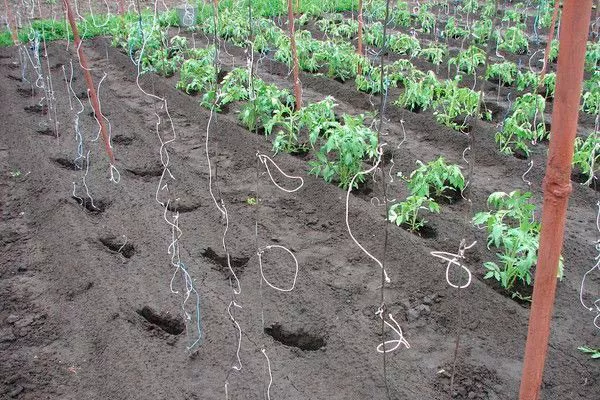
- Carefully remove the young tree from the pot, with or without a lump of soil, and carefully place it in the prepared hole.
- Cover with soil.
- Make sure the plants are standing upright.
- Secure them with synthetic cords to support stakes or trellises.
- Fill the area around the seedling with dry straw or peat.
Further care of tomatoes
In the first weeks after transplanting, it's best not to water young plants to allow the roots to establish and adapt to the new conditions. Afterward, water them once a week, using 3-5 liters of water per plant.
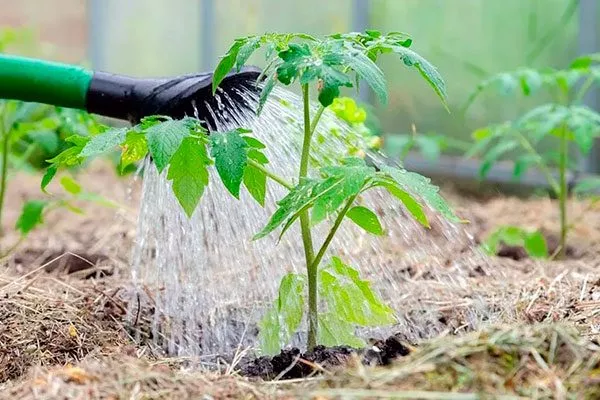
Other rules for "water procedures":
- After the flowers appear, watering is increased to twice a week, and when it is time to harvest, it is reduced or stopped altogether to avoid the development of diseases caused by excess moisture.
- In greenhouses, tomatoes are watered in the morning, after which the room is ventilated to reduce humidity. The best method of humidifying a greenhouse is drip irrigation.
- Outdoor tomatoes are watered after sunset to ensure the water is absorbed into the soil without evaporation. In southern regions, it's recommended to occasionally mist the leaves to prevent them from drying out.
Other mandatory actions:
- Formation of bush. To ensure a large harvest, the bushes are structured with two stems. Leaving more shoots will hinder the process of growing large tomatoes and delay their ripening.
- Support. For tall plants, it is necessary to provide support so that the stems do not break under the weight of the fruit.
- Pinching out stepsons. All side shoots, except the main stems, should be removed. Side shoots are located in the leaf axils and should not be confused with fruit clusters. Only shoots that have reached a length of 4-5 cm should be removed.
The procedure is performed wearing gloves to minimize the risk of cross-contamination. The removal site will heal within a day, so the side shoots are removed early in the morning. - Fertilizing plants. The process begins six weeks after the plants are planted. To do this, pour water (10 liters) into a large container and add urea (5 g), potassium salt (10 g), and Double Superphosphate (25 g).
In the future, it is recommended to alternate mineral and organic mixtures. - Loosening the soil. This process should be performed immediately after watering to ensure the plants' root system receives not only water but also oxygen. This treatment requires special care, as carelessness can damage the surface roots of the tomato plants, potentially resulting in their death.
- Weed prevention. Unwanted plants rob tomatoes of nutrients, so they need to be removed. Using geotextile when creating a bed can reduce the problem, but not completely solve it.
- Mulching. Sprinkling compost, humus, peat, sawdust or freshly cut grass around the bushes prevents weeds from growing and helps retain moisture.
Disease prevention and pest control
This variety is characterized by increased resistance to diseases and insects. The following methods are used to control aphids, spider mites, and wireworms:
- chemicals – Aktellik, Biotlin, Fitoverm, Aktoverm;
- folk recipes – a solution of ordinary soap, ash, hot pepper, onion and garlic.
Pros and cons
This plant requires minimal attention. The main care is staking and topping, but otherwise, it's standard. The advantages of the Abruzzo variety include:
Among the disadvantages, it is worth highlighting the need to strengthen tall bushes and remove side shoots.
Reviews
The Abruzzo tomato is an early-ripening variety renowned for its productivity and numerous other advantages. It's suitable for both outdoor and garden cultivation, but its cultivation requires special attention to planting and subsequent care.