
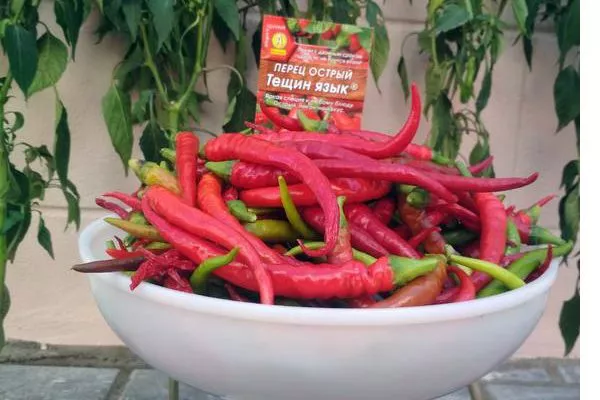
The pepper with the interesting name "Mother-in-Law's Tongue" is a hot, early-ripening crop grown in two ways: in open ground and under plastic/greenhouse cover, depending on the growing region. This variety is highly resistant to various temperatures, so fruit buds form even in inclement weather.
Who developed the variety and when?
Three breeders worked on the creation of the hybrid: Kachainik V. G., Nastenko N. V. and Gulkin M. N. The breeding took place at the Aelita agricultural firm, and the variety was approved for use in 2012.
Description of the Mother-in-Law's Tongue variety
This hybrid was created relatively recently, but over the past decade it has gained popularity among gardeners for its ease of cultivation and drought tolerance. Consumers also love it for its piquant flavor and versatility. It's easy to recognize by its appearance.
Bush height
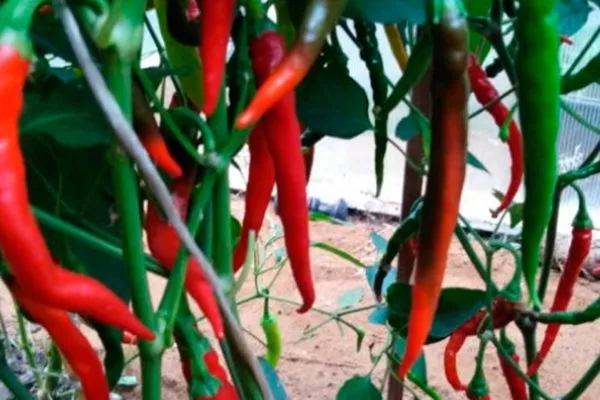
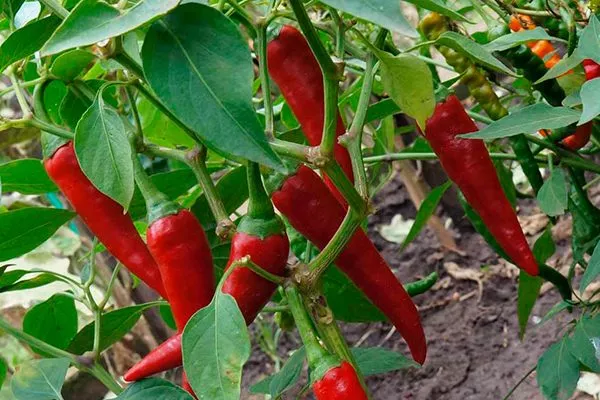
The "Mother-in-Law's Tongue" pepper is a low-growing variety, with stems reaching a maximum length of 50 cm. The fruits are drooping on a compact, semi-spreading bush. Thanks to these characteristics, the pepper can even be grown on windowsills. The leaves are dark green, small, and slightly wrinkled.
Fruit quality
The peppercorns have a classic narrow and elongated shape, but they are slightly curved. Note the following characteristic features:
- length – from 7 to 12 cm;
- weight – from 25 to 50 g;
- wall thickness – 2 cm;
- pericarp – about 3 mm;
- color - initially green, red when fully ripe;
- number of seed chambers – 2 pcs.;
- surface - very shiny;
- structure – slightly wrinkled;
- the skin is thick and strong;
- the consistency of the pulp is rough.

Necessary climatic conditions
The Teshchin Tongue hybrid is suitable for cultivation in absolutely all regions of Russia, including the Far East, the north, the Urals, and elsewhere. In the south and central parts of the country, seeds can be planted directly in open ground; in other regions, greenhouse conditions are used.
Ripening and yield
Harvesting is possible 95-115 days after the sprouts emerge. This period ranges from approximately mid-July to late September, depending on the region and conditions. The yield is quite good: 2.5 to 3.5 kg can be harvested per square meter.
Advantages and disadvantages
Mother-in-law's language has a lot of advantages.
Growing seedlings
Like any hot pepper, Mother-in-Law's Tongue is grown from seedlings. The only places where it can be sown outdoors are in warmer regions.
- ✓ Optimum soil temperature for sowing seeds: +25°C until seedlings emerge, then decreasing to +20°C during the day and +16°C at night.
- ✓ The need to use phytolamps to provide 14 hours of daylight, especially in northern regions.
Soil for sowing
Mother-in-law's tongue prefers fertile, loose soil with a neutral pH. The optimal composition is equal parts:
- river sand;
- peat;
- turf soil;
- humus or compost.
Sowing seeds
If you're purchasing planting material from a store, no prep work is required. When collecting your own seeds, follow these steps:
- Disinfect the grains using a light pink solution of potassium permanganate, hydrogen peroxide, or biopreparations. Soak them in the solutions for about half an hour.
- Germination is not mandatory, but it helps increase germination. To do this, soak the seeds in a damp cloth and leave for several days, until white spots appear on the seeds.
After this, you can begin sowing. Here's how to do it correctly:
- Prepare the containers. You can use a single container, but it's better to use individual cups to avoid the need for transplanting. Peppers get stressed when frequently transplanted. Poke holes in the bottom and spray the cups with a solution of hydrogen peroxide or potassium permanganate to disinfect.
- Place the prepared substrate on the bottom.
- Plant the seeds 1 cm deep.
- Level the surface.
- Moisten with a spray bottle.
- Cover with plastic wrap.
- Move the plants to a room with a temperature of 25 to 28 degrees Celsius. Under these conditions, seedlings will appear in 5 to 10 days.
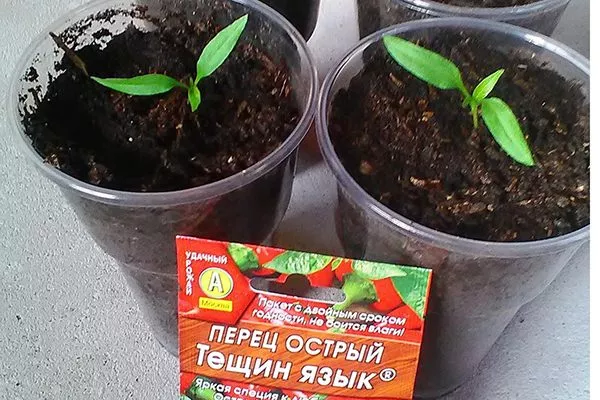
Periodically remove the cover for ventilation and moisten the soil mixture.
Lighting
The hybrid prefers plenty of light, so it's best to place the seedlings on a warm, south-facing windowsill. It requires at least 14 hours of daylight, so artificial lighting is often required.
Hardening
Mother-in-law's Tongue pepper seedlings need to be prepared for transplanting by moving them to a balcony or other cooler room 15-20 days before planting. If this isn't possible, open the windows, but be careful not to expose the seedlings to drafts.
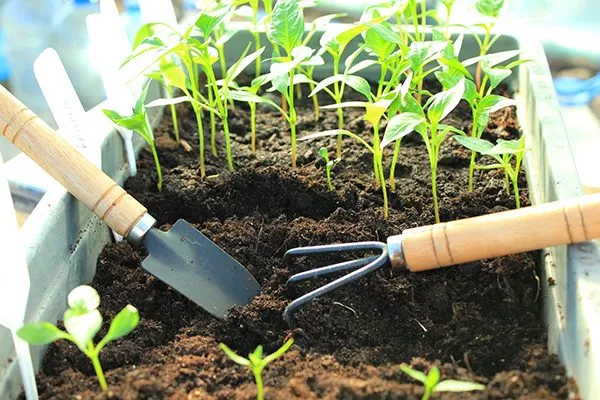
Rules:
- on the first day, leave the bushes in a cool place for 15 minutes;
- in the second - by 30;
- in the third – by 60, etc.
The minimum air temperature should be +13-15 degrees.
The predecessors are good
It is advisable to plant mother-in-law's tongue in soil where the following crops have previously grown:
- cabbage;
- legumes;
- zucchini and squash;
- green manure;
- pumpkin;
- carrot;
- onion;
- cucumber.
The predecessors are bad
You cannot plant hot peppers after:
- potatoes;
- eggplants;
- physalis;
- tomato;
- peppers.
Planting diagram
Mother-in-law's tongue, being a compact shrub, can be planted 40 cm apart. The depth of the planting hole depends on the size of the root system and the root ball.
Watering and humidity
At any stage of development, peppers of this variety require moist soil. It should never dry out or become crusty. Therefore, the plants need to be watered 2 or 3 times a week, and every other day in dry weather. Water the roots with warm, settled water.
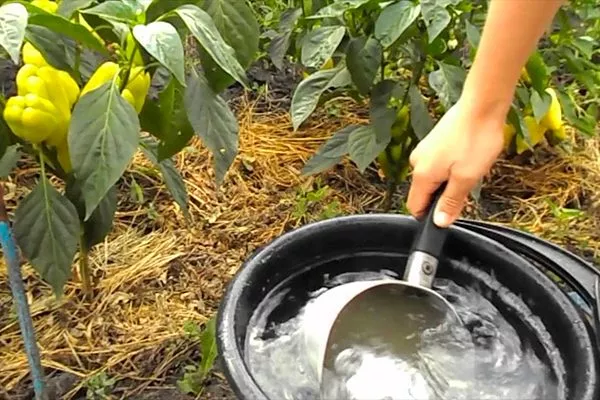
Avoid allowing liquid to come into contact with stems and leaves, as this will promote rotting and the development of fungal diseases.
Agricultural technology
The Teshchin Tongue hot pepper hybrid isn't considered particularly demanding, but if the proper growing practices aren't followed, the fruits will be small, dull, and the yield will be low. The guidelines are standard, but there are some specific considerations.
Transplanting
Mother-in-law's tongue is transplanted into open ground or a greenhouse when nighttime temperatures reach 10-12 degrees Celsius and daytime temperatures reach at least 15 degrees Celsius. The beds should be prepared approximately two weeks in advance. Here's how:
- Dig the area to the depth of a shovel blade.
- Along with this, add organic fertilizer, which hot peppers prefer. About 10 kg of organic matter is needed per square meter. This can be compost, humus, or manure, but it must be well-rotted.
- Add minerals to the total mass: 40 g of superphosphate and 30 g of potassium sulfate per 1 sq. m.
- Level the surface.
- When it's time to replant, dig planting holes according to the diagram.
- Carefully remove the seedlings from the containers, having watered the soil for 24 hours beforehand. If the seeds were planted in disposable cups, simply cut the plastic. If you used peat pots, place them directly into the holes.
If the seeds were planted in common containers, you will first have to transplant the bushes into separate containers (when 2 true leaves have formed), and then transplant them in the standard way. - Place the seedlings in the planting holes and sprinkle with substrate, compacting lightly.
- Water the seedlings.
Plant care and formation
The stems of the "Mother-in-Law's Tongue" pepper are quite fragile, so they can easily break, especially if transplanted into open beds. Therefore, the stems should be tied to a small stake, always with soft rope. There's no need to train the plants, as their growth stops after they produce fruit.
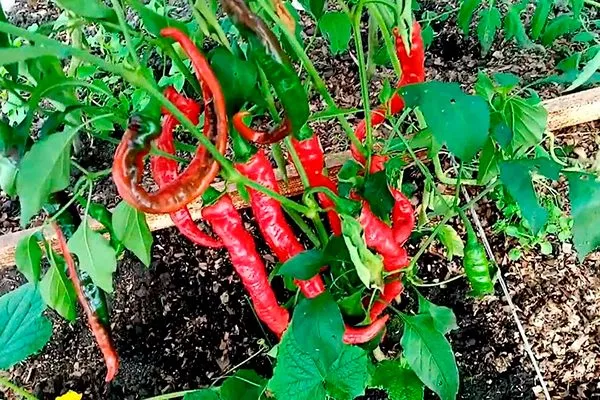
What else will you have to do:
- After watering, loosen the soil in the trunk area, but lightly so as not to damage the sensitive roots;
- You can lay down natural mulching material (peat, grass, sawdust, etc.), which will help maintain the required level of moisture;
- Be sure to thin out weeds so that they do not suck nutrients from the soil and do not allow pests to hide in it;
- In the first days after transplanting, hill up the bushes to a height of 10 cm, which will protect the thin stems.
Fertilizers and dressings
Mother-in-law's tongue, like any other pepper, requires additional feeding, especially if the seedlings are planted in a greenhouse. This should be done every couple of weeks. Both organic and mineral fertilizers can be used, but these fertilizers should be alternated.
- Two weeks after planting the seedlings, apply a complex mineral fertilizer with a high nitrogen content to stimulate growth.
- During the flowering and fruit setting period, use fertilizers with a high content of phosphorus and potassium.
- One month before the end of the growing season, stop applying nitrogen fertilizers to speed up fruit ripening.
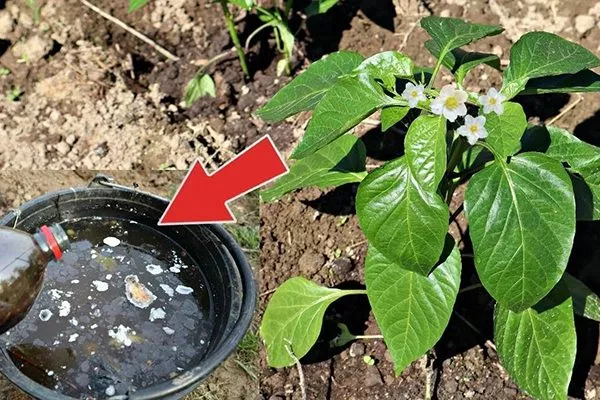
Fertilizer application scheme:
- The first feeding is done 14 days after repotting, using a mullein infusion. Mix one part mullein with 10 parts warm water. Fermented grass can also be used.
- The second application requires minerals, so phosphorus and potassium are used. These fertilizers should be designed for peppers. The application period is 10 days after the first application of organic matter.
- Fertilizers are then used every two weeks.
Resistance to diseases and pests
Mother-in-law's tongue is very resistant to diseases, but they occur in the following cases:
- excessive soil moisture or drought;
- violation of agricultural technology rules;
- proximity to infected crops.
What diseases are common in hot peppers?
- Blossom-end rot. It occurs due to a lack of moisture, especially if the weather is very hot. It manifests itself as a dark spot on the fruit. Treatment is pointless, so the peppers are picked and burned.
- Sunburn. It develops when peppers are exposed to direct sunlight in the afternoon. Signs include the formation of light, dry spots. There's no cure, but the plants should be provided with shade.
- Gray rot. It most often occurs in greenhouses that are not properly ventilated. It manifests as grayish spots that cover not only the fruit but also the foliage and stems. Copper-containing fungicides are required.
- Anthracnose. The fungus is caused by excessively high air and soil humidity. Signs include leaves and fruits covered with grayish or brownish necrotic spots. Bordeaux mixture is sufficient for treatment.
- Tobacco mosaic. The main cause is a common infection that occurs when plants are close to diseased plants or when seeds are not disinfected. It manifests itself as spots and streaks, along with yellow leaves that fall off without cause. The disease is virtually incurable.
- Verticillium wilt. A fungal infection that occurs as a result of infection. It can be recognized by yellowing of the leaves, followed by darkening and wilting. Only Trichodermin is used.
Pests rarely visit the Mother-in-Law's Tongue hot pepper. This is due to the pungency of the fruit. However, they can attack the young plant before the peppercorns develop. These pests include aphids, cutworms, thrips, slugs, and so on. Insecticides and acaricides are used for prevention and treatment, such as Karate, Actellic, Akarin, and Karbofos.
Harvest time
Harvesting begins in July and ends in September. This depends on growing conditions and regional variations. Mother-in-law's tongue is typically harvested when technically ripe, but if long-distance transport is planned, it's best to harvest the fruit while it's still green.
The Teshchin Tongue pepper is a hot variety characterized by a pleasant, piquant aroma and flavor. It's easy to grow and can be planted anywhere in Russia. The key is to keep the soil from drying out and provide the plants with plenty of light.
Can you add an article about sweet peppers?