
A wide selection of vegetable varieties is available on the market, among which the Andryusha eggplant hybrid is particularly noteworthy. It boasts not only a high yield and pleasant flavor, but also exhibits resistance to the tobacco mosaic virus. Successful cultivation requires careful and regular care.
Who brought it out and when?
It was created by Russian scientist V. I. Blokin-Mechtalin with the goal of developing a versatile eggplant that would grow successfully both in open ground and greenhouses. Thanks to the breeder's efforts, this goal was soon achieved.
The hybrid produces a bountiful harvest regardless of weather conditions or cultivation methods. In 2020, it was added to the State Register of Breeding Achievements of the Russian Federation.
Description and characteristics of the variety
It grows in various climate zones, including those considered risky for farming. It is popular among both amateur gardeners and professional farmers.
Fruit
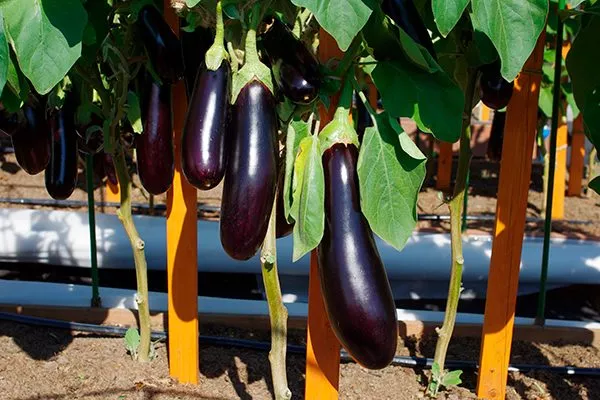
They have a smooth, club-shaped form with a slight curve. The typical length is 20-22 cm, but larger specimens up to 30 cm are occasionally found. The diameter is usually 10 cm, sometimes 6-7 cm. The standard fruit weight ranges from 190 to 220 g, with a maximum weight of up to 250 g.
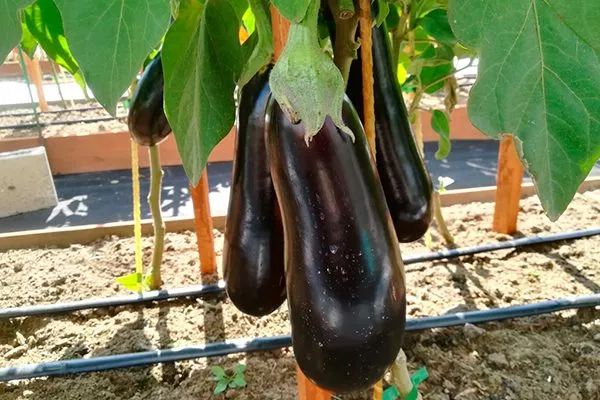
The skin is dark purple, almost black, and has a strong shine. The flesh is dense and light-colored, with a minimal number of seeds.
- ✓ High resistance to tobacco mosaic virus, but sensitivity to late blight and rot when over-watered.
- ✓ Requires training in three stems for maximum yield.
Bush
The bushes belong to the tall group, reaching up to 1 m in height. They are characterized by a semi-spreading habit, with pubescent stems that have a light anthocyanin coloration.
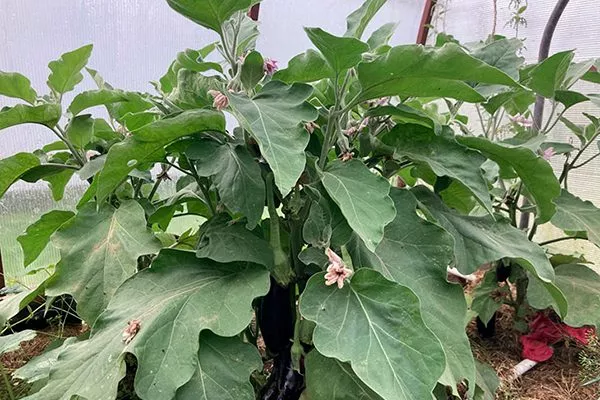
The foliage is green, smooth, with slightly wavy edges. The leaf blades are standard in size and decorated with small spines on the calyx.
Taste and uses
The fruits have a delicate flavor without any bitter notes. Gardeners can use them in a variety of ways, such as frying, baking, or grilling as a complement to meat. Eggplant caviar made from Andryusha is delicious.
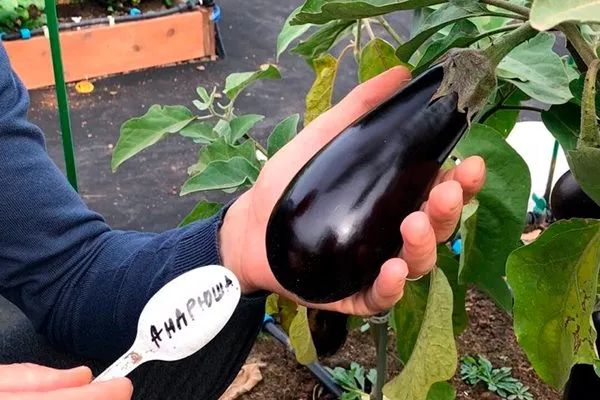
Blue ones are often used to prepare stews, added to assorted vegetable mixes, used to create winter salads and a variety of canned goods.
Ripening and yield
The variety's yield is considered very good, with approximately 7.5 kg harvested per square meter. These impressive results are due to the extended fruiting period, which lasts approximately four months. By following proper cultivation practices, these yields can be increased.
The yield is higher in open ground than in a greenhouse. This variety is mid-season in terms of ripening time, with a growing season of 130 to 135 days. The first fruits appear as early as early July.
Advantages and disadvantages of the variety
To successfully grow a hybrid, it's important to understand its strengths and weaknesses. The plant is large and requires a fair amount of space, so dense planting of Andryusha is not recommended. This variety has many positive qualities:
Landing features
Grow eggplants exclusively using seedlings. Follow the recommendations of experienced agronomists:
- The planting material does not require any pre-treatment. Sow in February or March, as transplanting to a permanent location should be done no earlier than 2-2.5 months later.
- For planting seeds, use wide containers with drainage holes.
- Prepare a substrate from peat, sand, turf, humus, and perlite, and disinfect it a couple of days before planting. A solution of Fitosporin works well for disinfection.
- Before the procedure, moisten the soil, spread the seeds on the surface, and sprinkle them with soil.
- Spray the plantings, cover with film and place in a dark room with a temperature above +23°C.
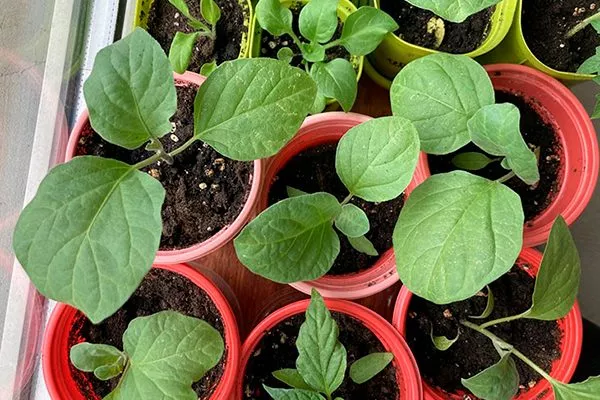
- In a week or two, seedlings will appear, after which place the seedlings on the windowsill and reduce the temperature by a few degrees.
- Caring for the seedlings is simple: when two full leaves appear, transplant them into individual containers. After two weeks, fertilize them with a mineral fertilizer suitable for seedlings.
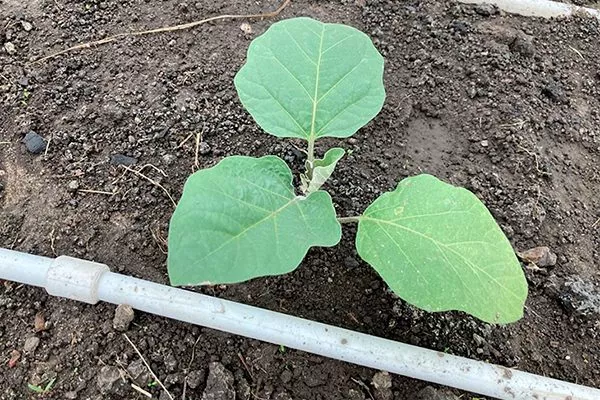
- After hardening off the established seedlings, choose a sunny location before planting them in their permanent location. Typically, planting time is mid-May; greenhouse transplants can be done earlier, in April. It's important to have consistently warm weather.
Subtleties of agricultural technology
Caring for this crop isn't particularly difficult, but it does require attention and regularity. Follow these important agricultural practices:
- Watering. Plants require regular watering if there has been no rainfall for a long period. Water with warm, settled water. Apply 1-3 liters of water per plant, depending on the plant's growth stage.
The optimal watering schedule is 1-3 times per week. During hot periods, mulch the soil to prevent rapid evaporation of moisture. - Soil formation and care. To ensure efficient growth, remove side shoots to direct the plant's energy toward fruit production. Train the plant with three stems to increase yield. After watering, loosen the soil and regularly remove weeds.
- Fertilizer. Fertilize the crop at various stages of the growing season. Apply the first fertilizer 1.5 weeks after transplanting the seedlings into the beds.
Use bird droppings or mullein, ash, yeast, potassium sulphide, and superphosphate diluted in water as fertilizer. Apply after watering, twice a month. - Diseases and pests. The Andryusha variety is resistant to the tobacco mosaic virus, but can be susceptible to late blight and rot, especially if overwatered. Maintain a regular watering schedule to prevent fungal diseases. Periodically treat the plants with Fitosporin-M for prevention.
Be aware of potential pest attacks, such as whiteflies in greenhouses or Colorado potato beetles and aphids in open ground. Use traditional remedies, such as garlic infusions, tobacco dust, or wood ash. If these methods are ineffective, consider insecticides.
Growing Andryusha eggplants is a fascinating and rewarding process that can yield a bountiful harvest. To achieve success, it's essential to follow the care recommendations. A combination of care, attention, and proper growing techniques will ensure a high-quality harvest and the enjoyment of healthy, juicy fruits.