
The Rotunda sweet pepper has become one of the most beloved summer vegetables in our country. It is popular due to its high yield, durable skin, and strong immune system.
Description and characteristics of the variety
The Rotunda sweet pepper is known for its high yield. During the first couple of years, experienced farmers recommend harvesting the fruit slightly unripe (dark brown), allowing it to ripen at room temperature.
The main distinguishing feature of peppers is their undemanding nature when it comes to planting companions. Rotunda peppers also grow alongside bitter crops, but be prepared for the peppers to become spicy as well.
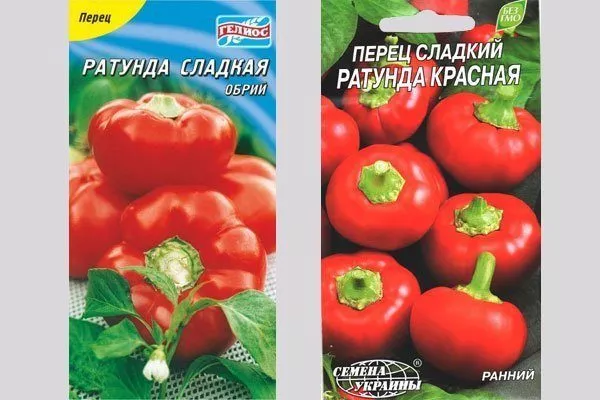
Ratunda sweet pepper seeds
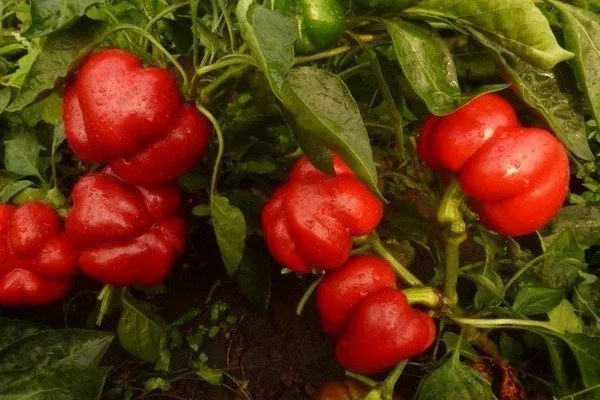
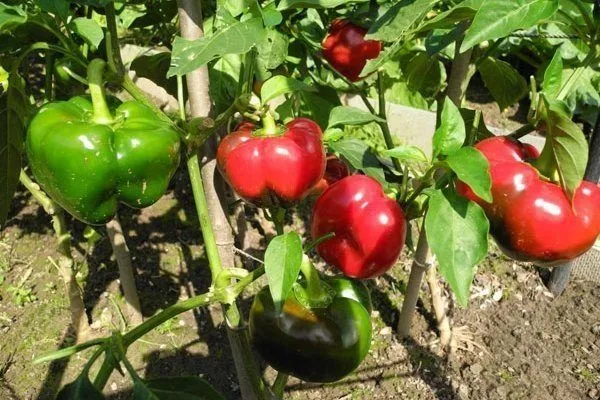
Rotunda pepper on a branch
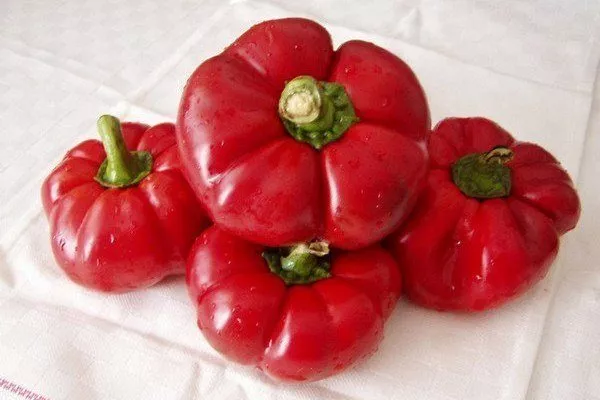
The fruits are deep red or cherry colored
Bush
The plant is short and standard, without spreading branches. It is quite robust, as it can withstand any harvest load. It does not grow taller than 0.6 m. The leaves are small and borne on petioles. Flowers appear between the shoots.
fruits
Almost all varieties have pods resembling small pumpkins with clearly defined lobes. However, there are also smooth barrel-shaped varieties. A common feature of all varieties of this sweet pepper is that the fruits are not long, but flattened. A plant produces 10 to 16 fruits.
Yield: 1 sq. m – 4-5 kg of peppers.
Unripe, green pods are unsuitable for salads, nor are they used for canning. The ripe fruit is a rich cherry or red color, depending on the variety. Inside the fruit are several chambers containing seeds. The average weight of a single pod is 0.1 kg. Larger varieties exist, weighing approximately 170 g.
The fruits of almost all varieties of Rotunda grow without bitterness. The plant is prone to cross-pollination. Crops grown near the pepper will inevitably affect its flavor.
There are varieties that are inherently bitter, but often the pungency is contained in the chamber partitions, and the pulp itself is sweet, which is how the semi-sharp Ratunda pod is obtained.
Almost all varieties of this sweet pepper are mid-season, bearing fruit four months after planting, but some varieties are available earlier. Unripe fruits don't store well.
Ripe Ratunda harvest is not afraid of transportation, so it tolerates transportation well.
Advantages and disadvantages of pepper
The Rotunda sweet pepper has both pros and cons, so it is necessary to evaluate them before growing the plant.
Benefits of sweet pepper:
- healthy fruits, containing a huge amount of ascorbic acid;
- The pepper is juicy, but not very sweet, so the vegetable is used for salads and canning;
- a huge amount of vitamin C, P and B;
- undemanding in care;
- attractive appearance of bushes.
The Rotunda pepper has no particular drawbacks; the only drawback noted by gardeners is the large number of seeds in the fruit.
This video talks about the characteristics of a fleshy sweet pepper called Ratunda:
Features of planting and growing
Rotunda is an annual plant, so it goes through a full cycle during its growing season: from sowing to fruit formation. Initially, the bush develops very slowly, with the green part growing above the soil surface growing much faster than the roots. The first leaves appear eight days after planting, and buds appear only 60 days after germination.
- ✓ The soil temperature for sowing should not be below +25°C for optimal germination.
- ✓ Seedlings should be illuminated for at least 14 hours a day to prevent stretching.
Preparing soil and seeds
A good harvest of Rotunda sweet peppers can be achieved by growing seedlings. These peppers often thrive on windowsills or in small gardens.
First, prepare the soil mixture; it should be as nutritious and loose as possible. The substrate consists of humus, soil, and river sand (3:3:1). Add 250 ml of wood ash to 5 liters of the mixture.
Use fresh seeds for planting, meaning those harvested last year. Be sure to disinfect them for 15 minutes in a 1% potassium permanganate solution. Then rinse the planting material under running water and dry.
The seeds are sown in the last week of February at a temperature of 25 degrees Celsius. Sprouts usually appear two weeks after sowing; once all sprouts have emerged, the container with the seedlings is moved to a well-lit area.
Sowing
There's no need to replant the seedlings because the root system is very weak and will suffer during transplanting. It's better to do it right away. sow seeds one grain per pot.
If you've made your own potting mix, you'll also need to consider drainage. First, poke holes in the bottom of the pot to allow excess moisture from watering to drain, then add a layer of finely ground agroperlite or other material. Place the pots on trays.
When purchasing a store-bought mixture, choose one specifically designed for peppers. When purchasing, pay attention to the acidity level; it should be neutral or slightly alkaline.
Caring for seedlings
To ensure high-quality germination, place the seedling containers in a warm place with a temperature of approximately 25 degrees Celsius. When the sprouts begin to emerge, lower the temperature to 20 degrees Celsius, then increase it back to 25 degrees Celsius after the first week. At night, lower the temperature to 15 degrees Celsius. This will prevent the seedlings from stretching, but will instead allow the roots to strengthen.
Sweet pepper sprouts require additional lighting, with a daylight period of 14 hours. For this, you can use LED or fluorescent lamps.
Another important aspect of caring for Rotunda is fertilizing. You can buy it at the store or make it yourself. Apply the first fertilizer when one or two leaves have formed. If you decide to transplant the seedlings, postpone fertilizing until you're ready to replant.
The fertilizer consists of 1 teaspoon of urea and 1 tablespoon of superphosphate. Approximately 150 ml of fertilizer is required per plant. Apply the second fertilizer a week before planting the seedlings outdoors or in a greenhouse. The mixture consists of 2 tablespoons of superphosphate, 1 tablespoon of potassium sulfate, and 10 liters of water.
Superphosphate takes a very long time to dissolve, so top dressing is done 1 day before application to the soil.
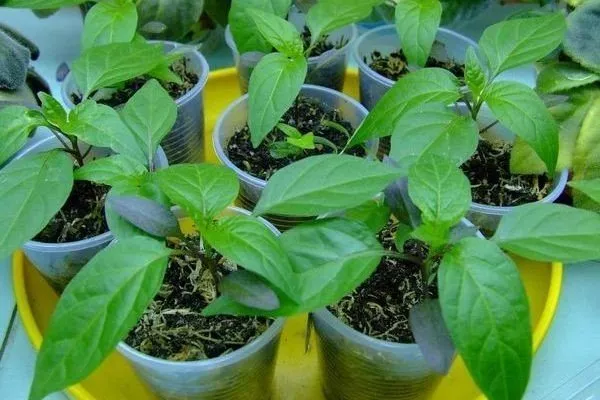
Growing in a greenhouse
Rotunda peppers are planted in a greenhouse once the first bud has appeared. Planting pattern: 0.25 x 0.25 m. In a greenhouse, carefully monitor watering; it should be moderate; it's better to water frequently but little by little than to overwater the soil.
- ✓ The greenhouse must be ventilated regularly to distribute pollen.
- ✓ The temperature in the greenhouse should not fall below +12°C during flowering.
Excessive humidity in the greenhouse interferes with pepper pollination. As soon as pollen begins to fall, the greenhouse is ventilated more frequently. The air helps distribute the pollen throughout the plants, and fruit buds develop faster. This is crucial for sweet peppers, as the number of buds affects the number of fruits produced, as well as their size.
Transplantation into open ground
Seedlings are planted outdoors in the last weeks of May or early June, but if planting in northern regions, it's best to wait until the threat of frost has passed. The best location for Rotunda peppers is a well-lit, fertile spot. In spring, fertilize the soil with 40 g of phosphorus, 40 g of potassium, and 20 g of nitrogen.
Mulch the groundTo prevent moisture from evaporating too quickly, you can use dry grass or hay as mulch.
Fertilize Rotunda in open ground with a mullein solution (1 part organic matter to 10 parts water). You can also use simple complex fertilizers. These are essential during bud formation, flowering, and fruiting.
During periods of prolonged drought and heat, cover the seedlings with netting; this will prevent the plants from being affected by high temperatures and will produce a better harvest.
Peppers won't pollinate at temperatures below 12 degrees Celsius. If they flower in such conditions, the fruits will grow small and crooked.
Pepper care rules
Sweet peppers require high-quality and regular care; only then will they be able to produce a large, healthy harvest.
Watering and fertilizing
Rotunda requires warm water. This will help the seedlings establish quickly. Water regularly during the growing season. If you overwater the pepper in hot weather, the plant will begin to wilt.
A great option is drip irrigation combined with mineral application. At different stages of development, peppers require fertilizers, specifically nitrogen, potassium, and phosphorus.
Bush formation
Rotunda peppers need to be properly shaped. Basic rules of the procedure:
- when the first branch appears, remove all the shoots below;
- Pick the 1st flower;
- remove the weak one from the paired shoots, leave the strong one;
- In the last week of summer, pinch off the tops of the sweet peppers to prevent new shoots from appearing and to allow the peppers to begin to focus their energy on producing a crop;
- harvest the first crop green;
- Cut off ripe pods as often as possible.
Harvesting and storage
Don't pick green peppers; it's better to harvest them when they're technically ripe; this will help them last much longer. Avoid damaging the pods during harvesting. Fresh peppers can be stored for about a month.
Use the seeds from the largest fruits for further cultivation. They are removed, washed, dried, and placed in paper.
Protection from diseases and pests
In greenhouse conditions, aphids are considered the most dangerous pest of Rotunda. Preventative measures include fertilizing with potassium and phosphorus. Other insects can be controlled with specialized products such as Lepidocide or Fitoverm.
Reviews of the Ratunda pepper variety
Unique Rotunda pepper pods make a wonderful addition to any meal, and when preserved for winter, they'll bring back memories of summer and warmth. The key is to follow all planting and growing guidelines, as well as proper and regular care.