
Peppers aren't the most demanding plants, but they do require a fair amount of care. Sowing pepper seeds for seedlings allows for a bountiful harvest with excellent flavor and vitamin content. To grow hardy and strong plants for permanent planting, it's important to properly prepare the soil and seeds, sow the peppers, and care for the seedlings.
Timing of sowing seeds for seedlings
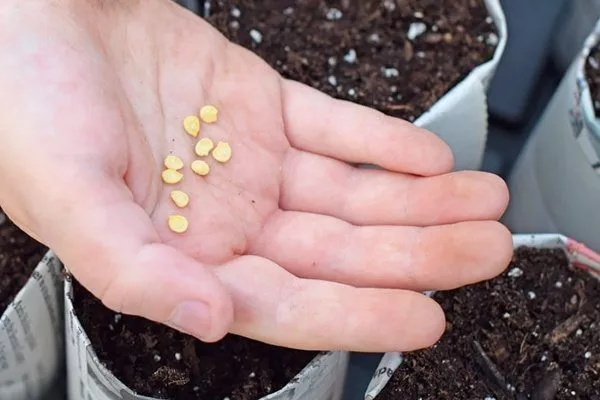
Peppers are sown in open ground only in southern Russia. Gardeners in other regions of the country grow the vegetable in greenhouses and under plastic covers. The soil temperature suitable for planting is between 15 and 16 degrees Celsius.
When planting seeds in heated and unheated greenhouses, consider the early maturity of the chosen bell pepper. When determining sowing dates, consider the days you want to harvest the first peppers. Seedlings in a heated greenhouse ripen after 100 days, while in an unheated greenhouse, they ripen after 120 days. Also add the time for germination to this.
It's easy to calculate that, for example, if you want to harvest peppers in August, you need to plant pepper seedlings for subsequent transplantation into protected soil in late February. The final sowing date is mid-March.
| Region | Sowing time | Type of greenhouse | Expected harvest |
|---|---|---|---|
| South of Russia | February 1-15 | Unheated | End of June |
| Middle zone | February 20 – March 5 | Heated | Beginning of July |
| Urals, Siberia | March 10-20 | Heated | End of July |
Preparing seeds for sowing
Don't expect a high germination rate for all pepper seeds. Even if they come from a reputable manufacturer, every pack contains substandard seeds, and possibly even mixed varieties. That's why it's important to properly prepare the seeds for planting.
Remember to use seeds with a shelf life of no more than 4 years. To test pepper germination, place the seeds in a glass of water. Set aside any seeds that float to the surface; you won't need them. Only the seeds that sink to the bottom are used for sowing seedlings.
Pre-sowing treatment of planting material includes soaking, which helps disinfect the seeds. Potassium permanganate is considered the best solution. Potassium permanganate destroys protein substances, leaving the seeds unharmed.
To disinfect peppers, use this solution recipe:
- Dissolve 1 gram of manganese in 100 ml of cold tap water.
- Leave the solution for half an hour until the substances have completely penetrated.
Another recipe involves preparing a solution without precisely measuring the ingredients. The result should be a light pink color.
The following effective formulations will help stimulate rapid development and germination of sweet pepper seed coats:
- Growth stimulants that are purchased in a special store.
- You can treat the planting material with mineral fertilizers. Leave the seeds in the fertilizer for 4-5 hours.
- An infusion with added ash. Dissolve 30 grams of ash in ½ liter of water and soak the seeds in the resulting solution for 3 hours.
After the procedure, to stimulate seed growth, the seeds are rinsed several times under running water and then soaked for germination. Soaking softens the seed coat, allowing them to sprout faster.
It's also a good idea to perform bubbling—saturating the pepper with oxygen. This procedure consists of the following sequential steps:
- Place the seeds in a jar.
- Bleed the air out using a compressor.
- The duration of bubbling is at least 5 hours.
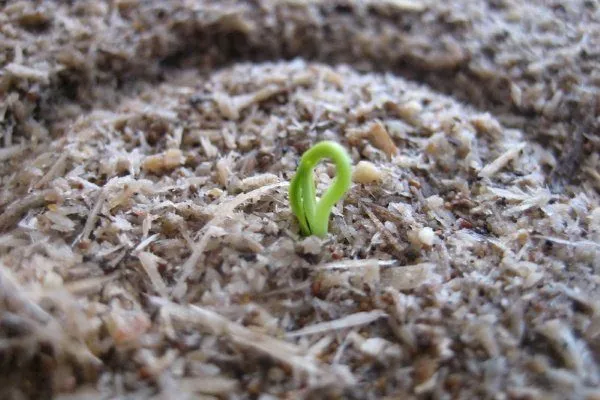
To germinate the seedlings, wrap them in a damp piece of cloth or gauze. Then, leave the seeds in a warm place. Be careful not to allow the gauze to dry out.
To prevent rapid evaporation of moisture, place the gauze with the grains on a saucer and wrap it in a plastic bag.
Some gardeners still use the old-fashioned method of sprouting peppers: soaking them in water. However, no one considers that the embryo needs not only liquid but also air to develop. Despite the swelling of the seeds, without oxygen, the embryo is unable to develop and quickly dies.
The best temperature for seed germination is above 20 degrees Celsius. If the room is cooler, the seedlings can be left on a cabinet. Near the ceiling, the temperature increases by a couple of degrees.
How to prepare soil mixture?
Pepper seedlings thrive in well-drained soil, rich in humus and nutrient-rich nutrients, and free of insect larvae and other pathogens that can cause vegetable diseases. Choose soil with a neutral pH, or at least slightly acidic.
There are several options for preparing the required soil mixture:
- Mix 1 part leaf mold and sand with 2 parts high-moor peat. This mixture is too acidic, so it's reduced by adding slaked lime or other lime-containing fertilizers.
- Add 1 part compost and 1 part washed river sand to 2 parts peat.
- Measure out 2 parts of sandy loam soil from the meadow and peat, and 1 part of humus. Also, take 2 matchboxes' worth of superphosphate and 1 box of potassium sulfate. Mix these fertilizers with 10 liters of potting soil.
If you don't want to prepare the seedling substrate yourself, buy ready-made soil for vegetable crops at the store. Tomato and eggplant soil are suitable for peppers.
If 100% peat is available, it is recommended to add mineral fertilizers with each watering, the main thing is that the concentration of the fertilizer is low.
Sowing peppers in separate containers and one container
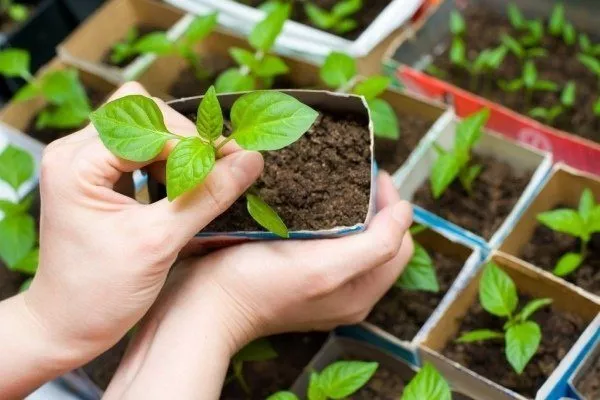
If peppers are planted in a common container, whether wooden or plastic, the seedlings are pricked out after sprouts and a couple of true leaves appear. However, experts have noted that peppers become sickly and frail after being pricked out into individual containers. This is due to damage to the roots during pricking, which is difficult to avoid.
That's why it's best to sow the seeds immediately in individual pots. If there aren't enough cups for each seed, use a larger, larger container. Make sure the seedlings, along with any clumps of potting soil, can be easily transferred to the cups later.
| Type of container | Size (cm) | Material | Period of use |
|---|---|---|---|
| Cassettes | 5x5x6 | Plastic | 3-4 years |
| Peat pots | 8x8x10 | Peat | Disposable |
| Homemade | 10x10x12 | Film | Season 1 |
The optimal planting pattern is 5x6 cm. The container depth should be 5 to 6 cm. Individual pots are purchased 10x10 cm each and should be 10 to 12 cm deep.
Some people mistakenly believe that cups made from pressed cardboard are the most convenient. The problem is that cardboard is held in place with glue, which is harmful and fatal to seedlings. As a result, the resulting seedlings are weak and susceptible to disease.
Some gardeners recommend making your own cups for sowing pepper seeds. To do this, cut a piece of thick plastic film and shape it. Secure the cups in place with rubber bands.
Rapid germination is ensured by burying the seeds in compacted soil, leaving a layer of loose soil above. A well-drained soil mixture allows oxygen to pass through, allowing the shoots to grow upward unimpeded. The best way to plant bell peppers is to press the seeds 1 cm into the soil in a container. Once the seeds are inside, lightly mist them with water and cover with loose, dry soil. After sowing, cover the containers with plastic wrap.
Conditions for the germination of sweet pepper seeds
Conditions under which seeds planted in the ground for seedlings will germinate faster and delight you with fleshy and strong shoots:
- The air temperature should be between 25 and 28 degrees with a plus sign. As soon as the stems emerge above the soil surface, the seedling tray is moved to a location with an air temperature of 14 to 16 degrees Celsius for 4 days. This simple method will help the root system become stronger and more robust. After 4 days, the peppers are returned to a warm location.
- Peppers also love plenty of light.Therefore, the box is often placed on a windowsill. But make sure there's no wind blowing from the window. Seedlings hate drafts, as they can become diseased and die. If the window isn't insulated, artificial lighting can solve the problem. Use a 40- to 60-watt grow light.
- Keep the soil moist regularlyIt shouldn't be dry. Water carefully, keeping the seeds from appearing on the surface and dislodged from the soil mixture. A spray bottle can be used. To extend the intervals between waterings, cover the pots with plastic sheeting or cotton material. Avoid placing the pots on a heating element, as the heater emits too much heat. The delicate seedlings may dry out and die.
- If the air is too dry, turn on the humidifier or spray the room yourself.
Conditions control schedule
- Days 1-5: Temperature 25-28°C, humidity 90%
- Days 5-10: 16-18°C during the day, 14-16°C at night
- 10-30 day: 20-22°C during the day, 18-20°C at night
- Daylight hours: 12-14 hours
For detailed information on how to properly prepare the soil and sow pepper seeds for seedlings, watch the video below:
By carefully sowing bell pepper seeds for seedlings, you can grow delicious and juicy fruits. Plant the seeds in a prepared substrate and check for germination beforehand. It's best to plant the peppers in individual containers. This will ensure strong, healthy seedlings that will produce a bountiful harvest.