
The Podarok Moldovy pepper is a long-standing member of the many pepper varieties. It has a fairly strong immune system, making it extremely rarely susceptible to disease. It boasts excellent transportability and shelf life, and is relatively easy to maintain. Its yield is particularly noteworthy.
History of the Gift of Moldova pepper variety
The variety was developed in Soviet Moldova at the Research Institute of Irrigated Agriculture and Vegetable Growing. The breeding process can be traced back to the 1960s, but the Podarok Moldovy pepper was only officially announced in 1969. During this same period, breeders submitted an application for approval to the Russian state registry.
In 1973, the variety was officially recognized and approved for cultivation. Two types of pepper were used to produce it: White Capia (a variety) and Line 115/60 (a hybrid).
Description of the Gift of Moldova pepper variety
It is intended for cultivation in any climate, with the exception of Russia's subarctic regions.
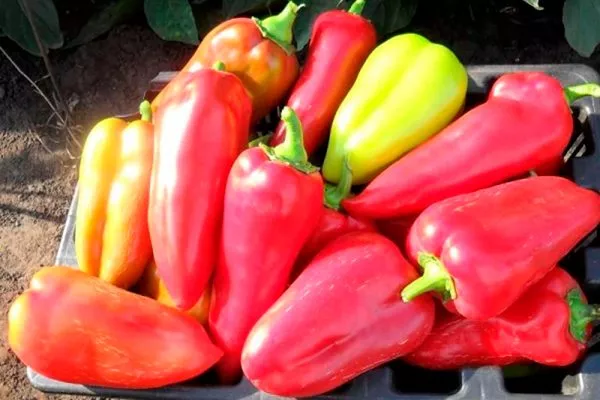
Planting methods vary: seeds in open ground in the south, seedlings in other regions. Seedlings can be transplanted into a vegetable garden, a greenhouse, or a plastic shelter. The bushes are compact, so they can even be planted on windowsills (in a 5-6 liter container).
Characteristics of the bush
The Podarok Moldovy pepper plant is low-growing, reaching a minimum height of 35 cm and a maximum height of 50 cm. It is semi-spreading and standard, so the central stem is considered strong and durable. The vines require no pinching or shaping.
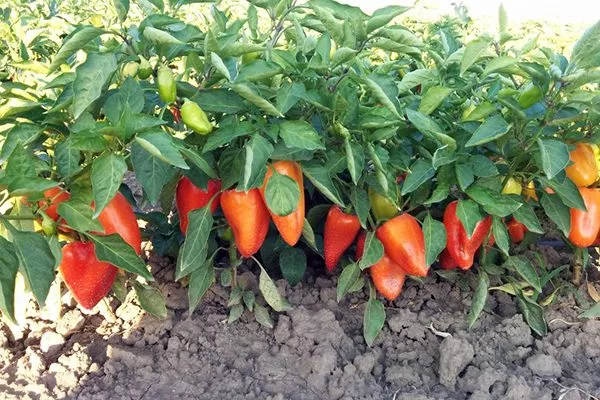
The root system is well developed, the foliage is significant, and the leaves are classic green and medium-sized.
Description of fruits
The fruits deserve special attention:
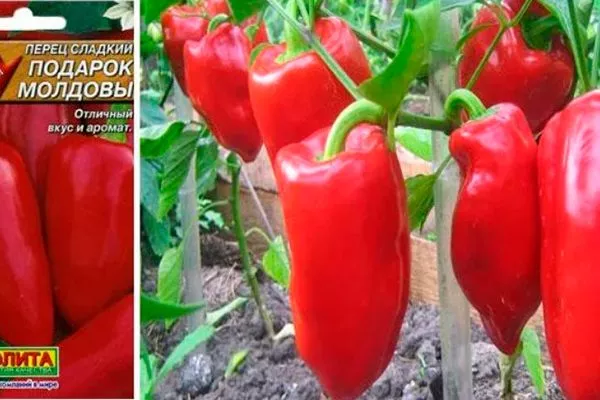
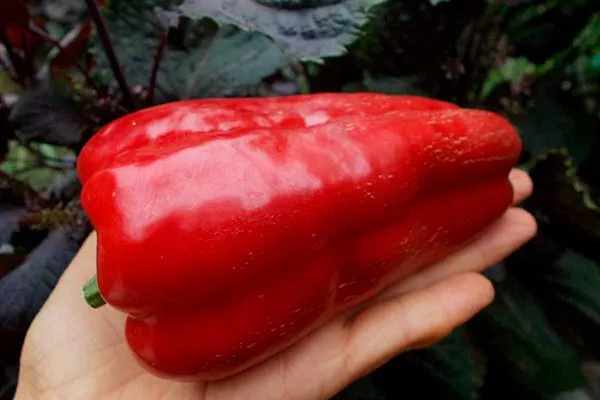
- length – about 10 cm;
- weight – from 55 to 110 g;
- diameter – 5 cm;
- color - initially light green, then bright red;
- the skin is thin but strong;
- walls – from 4 to 6 mm;
- the pulp is very juicy and fleshy;
- taste – sweet and rich;
- shape – conical.
Ripening time and yield
Gift of Moldova is a mid-early variety, harvested 120-125 days after germination. Yields are approximately 3.5-4.8 kg per square meter.
Product indicators
According to official data, the marketability rate is 98%, ensuring the peppers retain their quality and appearance for a long time. This allows for long-distance transportation.
Application and beneficial properties
This variety is versatile – it's eaten fresh, added to gravies and sauces, and used for stuffing, canning, freezing, and drying. These peppers are often stuffed; their tough skin doesn't crack during prolonged braising.
This plant-based product contains 90-95% water, making it a dietary supplement. It's rich in ascorbic acid, vitamin B6, proteins, carbohydrates, amino acids, phosphorus, magnesium, zinc, potassium, and calcium. It also contains other beneficial components. Therefore, eating Podarok Moldovy pepper promotes the following:
- acceleration of metabolism;
- neutralization of free radicals and cholesterol;
- production of natural interferon;
- restoration of immune system cells;
- improving skin condition;
- acceleration of wound healing;
- strengthening the nervous system, heart, blood vessels, etc.
Regions of Admission
Moldova's Gift can be grown in all regions of Russia, including areas with risky farming.
In cold climates, seedling and greenhouse planting methods are used; in the south, seeds are planted directly in open beds.
Advantages and disadvantages
The Podarok Moldovy pepper is not a hybrid—it's a self-sufficient variety, meaning you can collect your own seeds for planting next season. This is a significant advantage, as hybrid peppers cannot be grown from their own seeds (you have to purchase planting material from the store each year).
Other positive aspects:
Not a single drawback was pointed out by gardeners.
Features of cultivation
The best way to grow the Podarok Moldovy pepper is from seedlings. This starts in early March. The steps are standard, but there are some varietal specific characteristics:
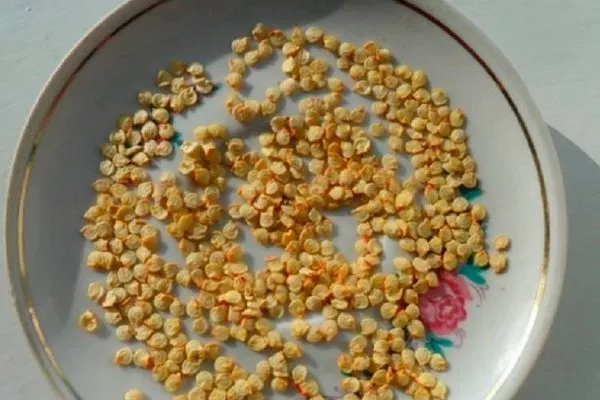
- Selection and preparation of seeds. The planting material must be of high quality and not hollow. To select it, inspect the seeds and soak them in water for half an hour. Any seeds that float to the surface are considered unsuitable.
Soak the seeds in a pink solution of potassium permanganate to disinfect them. To speed up germination, place them in a damp cloth for 3-4 days.

- Sowing. For sowing, use loose soil made from equal parts humus, river sand, and garden soil. It's recommended to add 0.5 parts charcoal. Disinfect the soil (bake it in the oven or pour boiling water over it).
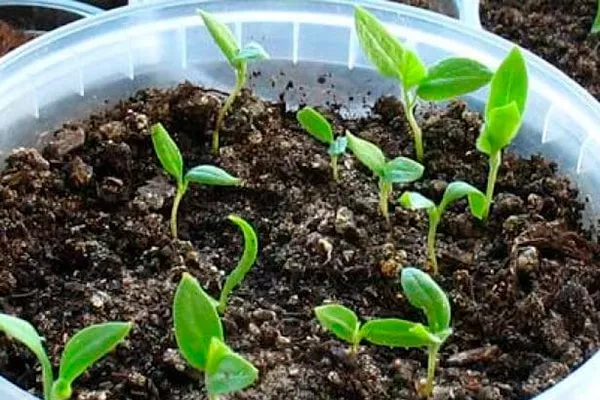
Place the substrate in individual containers or a common container, deepening it by 1 cm. Space the seeds 4 cm apart. Moisten with a spray bottle and cover with glass or plastic film. - Watering and caring for seedlings. Move the plantings to a warm location (optimum temperature is 25-28 degrees Celsius). Provide diffused light for 12-14 hours. Remove the cover daily for ventilation to prevent the risk of rot.
Water regularly to prevent a dry crust from forming. The first shoots will appear in about 7-10 days; sharply reduce the temperature to 16 degrees Celsius. Keep the seedlings in this condition until two leaves form, after which the temperature rises again.
- Picking. This is carried out when the plant has 3-4 leaves and only if the seeds were planted in common containers.
Transplantation into open ground
Once the bushes have grown and at least 9-12 leaves have formed, transplant them into a garden bed or greenhouse, depending on the growing region. Keep in mind that the soil should warm up to 12 degrees Celsius (55 degrees Fahrenheit) and the air temperature should be 15 degrees Celsius (59 degrees Fahrenheit).
- ✓ Optimum soil temperature for transplanting seedlings: +12°C.
- ✓ Distance between plants when planting: 40 cm in a row, 60 cm between rows.
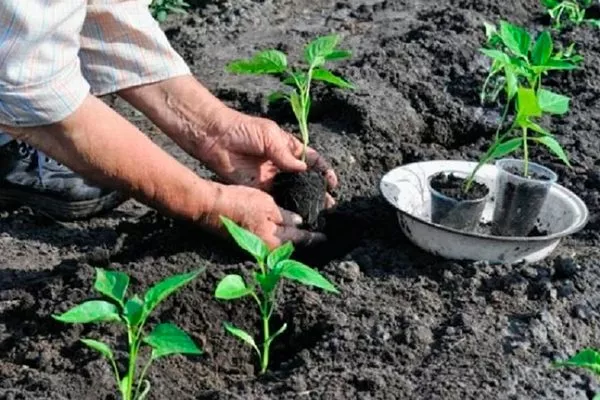
Transfer algorithm:
- Prepare the beds in advance by digging them over and adding phosphorus-potassium fertilizers. It's a good idea to add organic matter—rotted manure, compost, and similar—at a rate of 8-10 kg per square meter three weeks before the main work.
- On the day of replanting, moisten the soil mixture in the pots and allow the water to soak in.
- Dig planting holes 40 cm apart within a row. Leave at least 60 cm between rows. The hole depth depends on the size of the root system and the root ball.
- Remove the seedlings and transfer them with soil into the holes.
- Sprinkle with soil, compact and water with warm water.
- Mulch the tree trunk area with humus or peat.
If planting outdoors, be sure to install a stake and tie the plants to it. This will prevent them from breaking in windy conditions.
Features of care in open ground
The Gift of Moldova variety is unpretentious, so classic care is required—watering, loosening the soil, fertilizing, etc. Please note a few features specific to this variety:
- Watering. Peppers don't tolerate excessive moisture, as this can lead to the development of fungal and other diseases. The optimal frequency is once every 5 days, but in extreme heat, water once every 3 days. Water with drip irrigation or sprinkler irrigation. If this isn't possible, create furrows around the plants and water them. Avoid applying water to the roots.
- Fertilizer. According to expert recommendations, the Gift of Moldova pepper requires at least three fertilizing sessions. The first application should be two weeks after transplanting, the second at the beginning of flowering, and the third when fruit set. However, if you want to achieve a larger harvest, you can fertilize more frequently. You can use both organic and mineral fertilizers, as per the instructions.
- Pruning and garter. Whether or not to tie the stems is up to the grower, but it's best to do so, as the peppers will stay clean and the vines will take up minimal space. To encourage more fruit to form on the shoots, remove the first flower from each. Don't allow the side shoots to grow longer than the central stem, so pinch them out as they grow.
- ✓ It is recommended to remove the first flower on each shoot to increase yield.
- ✓ Lateral shoots should not be longer than the central stem.
Harvesting and storage
Peppers ripen simultaneously in each tier of the bush. A large number can be picked from one tier at once. Within a few days, all the fruits in the second tier will ripen, and so on. It's not recommended to twist the fruits or pull them off by hand; sharp pruning shears are recommended.
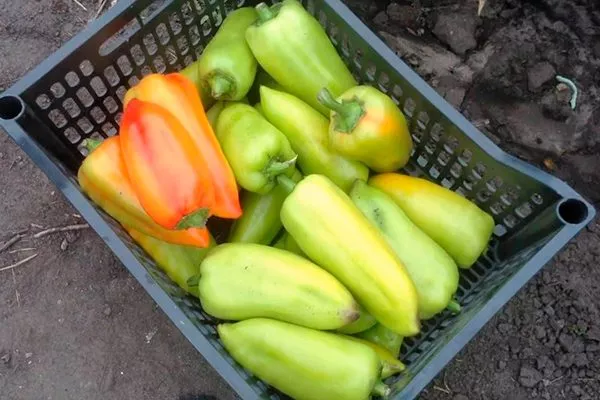
There are two ways to store peppers for 2-4 weeks: in the refrigerator or in a dark place at 8°C (46°F). Wrapping the vegetables in paper beforehand will extend their shelf life.
Diseases and pests
Gift of Moldova is considered disease and pest resistant, but problems do occasionally arise. This is due to several negative factors:
- proximity to affected plants;
- thickening of plantings;
- ignoring requirements for disinfection of seeds, soil and garden tools;
- presence of weeds;
- overflow;
- constant rain or severe drought.
The most common pests are brown spot and rot (gray, black, and white). Slugs, mites, and aphids are also a concern. To prevent problems, treat the bushes with insecticides and fungicides in the spring. Do this twice, 10-15 days apart.
Reviews of the Gift of Moldova pepper variety
The Podarok Moldovy pepper is a true variety, not a hybrid, but nevertheless boasts high disease and pest resistance. It boasts impeccable flavor, is easy to grow, and is undemanding to climate conditions.