
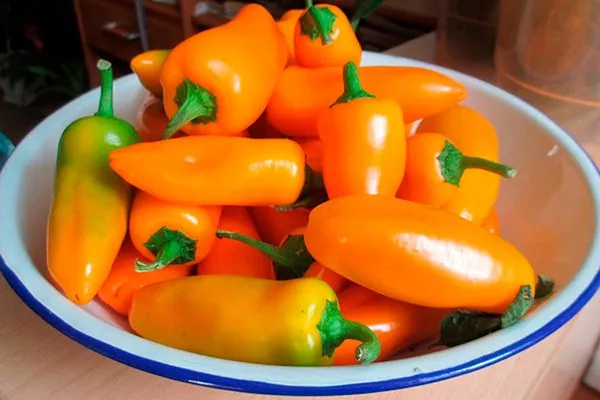
The Chanterelle pepper is a modern hybrid characterized by a stable yield and resistance to adverse conditions, diseases, and pests. It has an unusual orange hue, hence its name. It is considered easy to grow and can be grown in open ground or from seedlings.
Who developed the variety and when?
The Orange Chanterelle appeared at the beginning of this century, but the variety was approved for cultivation in 2002. Three breeders worked on the development of the hybrid: Yu. V. Nekrasova, S. F. Gavrish, and S. N. Rudneva.
Peculiarities
The Chanterelle pepper is versatile in cultivation – it can be planted in open ground, greenhouses, under plastic cover, on balconies, and even on windowsills. It's used in salads, appetizers, barbecues, stuffing, and other dishes. It can also be canned, dried, and frozen.
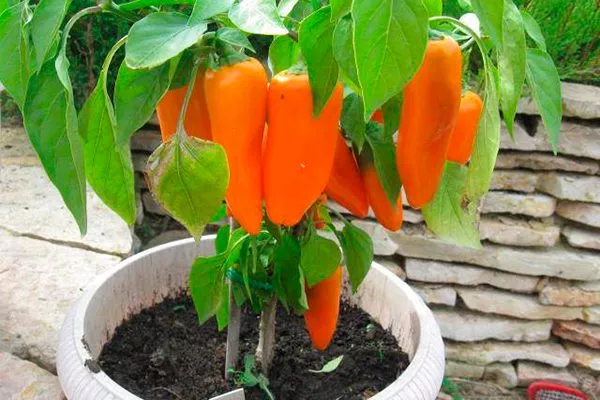
Characteristics of fruits
Chanterelle is considered a low-growing, semi-standard, semi-spreading plant, so staking is not required. The shoots bear medium-sized leaves of a standard green color but with a wrinkled texture.
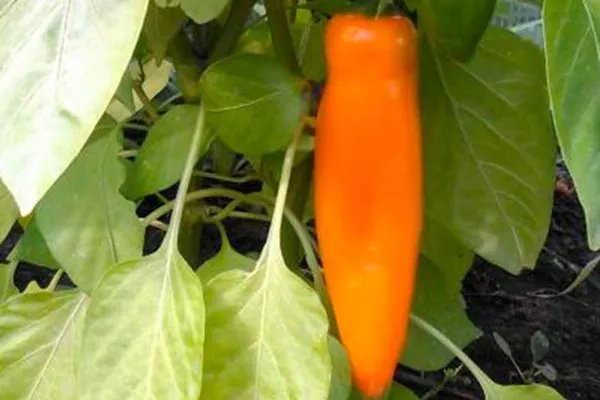
The appearance of fruits that are in a drooping position deserves special attention:
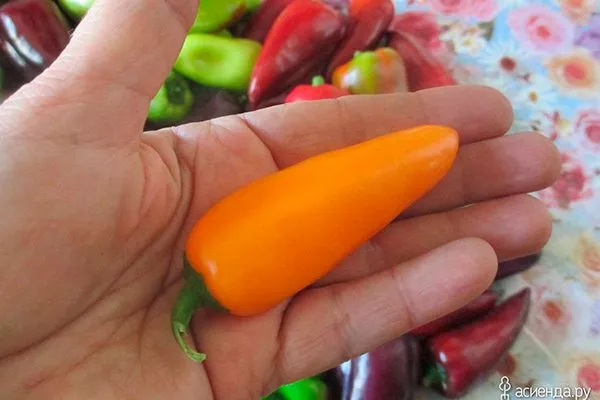
- weight – from 25 to 60 g;
- length – from 7 to 20 cm;
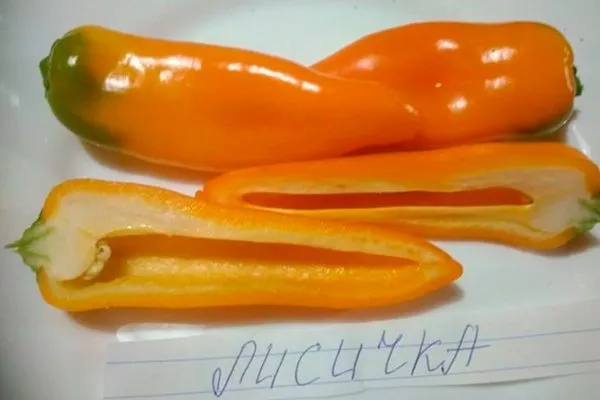
- wall thickness – about 6 mm;
- surface - shiny and smooth;
- number of seed chambers – 2 or 3 pcs.;
- color - initially green, then bright orange and even reddish;
- shape – conical;
- the pulp is juicy and fleshy;
- there are quite a few seeds;
- taste – rich sweet;
- number of fruits on one bush – 10-15 pcs.
- ✓ Resistance to most common pepper diseases, including tobacco mosaic virus.
- ✓ The ability to bear fruit in low light conditions, making it ideal for growing on a windowsill.
Ripening and yield
The Chanterelle hybrid is considered early-ripening, as the first harvest can be reaped 100 days after germination or 110-120 days after sowing. The yield is quite good: 2 to 2.5 kg, and sometimes even more, can be harvested per square meter.
Features of agricultural technology
The Fox hybrid is considered unpretentious, but to achieve high yields, fruit quality, and taste, it is necessary to adhere to certain agricultural practices.
Preparing for growing
Chanterelle, like almost all pepper varieties, is grown from seedlings, with the exception of the hot southern climate. In this case, the seeds can be planted deep in the garden beds.
Preparatory work involves preparing the soil in advance, in the fall. This work is carried out both in open ground and in greenhouses.
How to prepare the beds:
- Remove all debris, branches, leaves, weeds and previous plants from the area.
- Dig over the future beds, adding nutrients at the same time. About 10 kg of organic matter (compost, humus, manure, etc.) is required per square meter (fresh manure can be added in the fall). It's a good idea to add superphosphate and potassium salt according to the instructions.
- ✓ The optimal soil pH level should be between 6.0-6.8 to ensure the best absorption of nutrients.
- ✓ The soil must be well-drained to avoid waterlogging and root rot.
In the spring, you need to prepare the substrate for growing seedlings. Most often, vegetable growers use a mixture of equal parts sand, peat, humus, and turf soil. This ensures optimal looseness, lightness, acidity, and air permeability.
Chanterelles are planted using store-bought seeds, as hybrids cannot be propagated at home, as they do not retain their fruit characteristics. Therefore, there is no need to prepare the planting material, especially if it is pelleted.
Many gardeners disinfect peppercorns by soaking them in a pink solution of potassium permanganate or hydrogen peroxide for 15-30 minutes.
Sowing seeds for seedlings
The timing of planting seeds for seedlings depends on where they will be transplanted. If in open ground, it's early March; if in a greenhouse, it's mid-February. Here's how to sow:
- Prepare the containers. It's best to buy 500 ml peat pots, as there's no need to remove the seedlings from them—the bushes are transplanted directly in the pots. However, if this isn't possible, you can use disposable cups that can be simply cut open during transplanting.
If you use shared containers, you'll have to transplant the peppers, which absolutely cannot tolerate transplanting due to their sensitive root system. Make holes in the bottom of the containers and disinfect them with a solution of potassium permanganate. - Prepare the substrate as described above. However, keep in mind that all ingredients must also be disinfected. To do this, soak them in boiling water or a pink solution of potassium permanganate. You can also roast them in the oven for 30-50 minutes, etc.
Don't ignore disinfection rules, as this will help seeds, seedlings, and mature plants avoid infection and pest infestations (soil, etc., may contain bacteria, fungal spores, viruses, and larvae). - Pour the substrate into the glasses.
- Moisten the soil, but not too much.
- Plant the seeds 1-2 cm deep.
- Sprinkle with substrate and cover with plastic wrap.
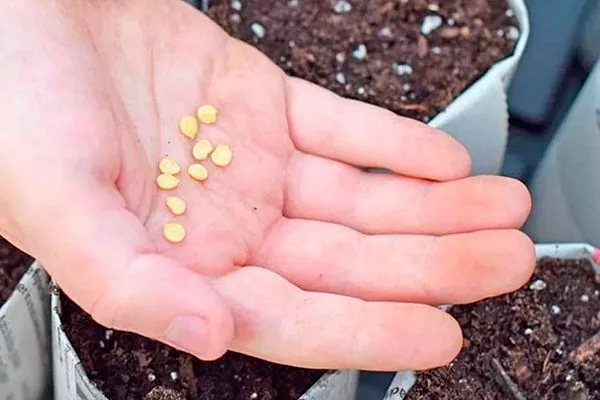
Move the plants to a warm, well-lit location. The optimal temperature is 27-28 degrees Celsius. In this case, you'll notice the first shoots within a week.
Growing seedlings
Seedlings need proper care – only then will you be able to obtain strong plants for transplanting. Here's how:
- Immediately after planting, open the cover every day for ventilation until the sprouts appear and reach a height of 2 cm. Then, remove the plastic completely.
- Be sure to water the plants regularly, ensuring that a dry crust does not form. Use a pipette, syringe, or spray bottle to moisten. Use only settled, room-temperature water.
- A couple of weeks after planting, fertilize the seedlings with organic matter. Gardeners recommend using a solution of bird droppings. To do this, dilute the concentrated solution in water at a ratio of 1:20.
- Daylight hours are about 14 hours, but this is impossible to achieve naturally in early spring. Therefore, install fluorescent or phytolamps over the seedlings.
Planting seedlings in a hotbed/greenhouse
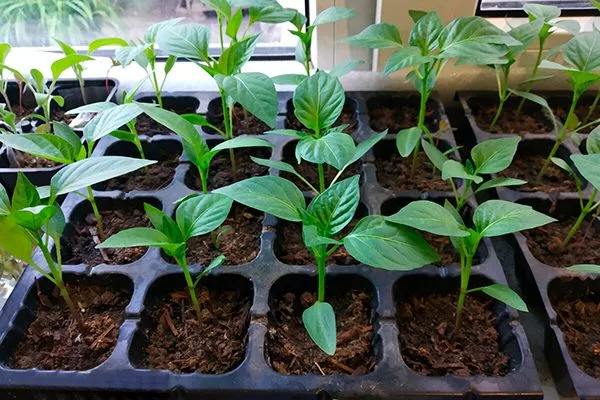
Peppers are transplanted into the greenhouse around the beginning of May. To do this, dig holes in the beds. The depth and diameter should correspond to the size of the roots and the root ball. Space the plants 40-50 cm apart. Remove the seedlings and plant them in the holes. The temperature in the greenhouse should be no lower than 22-25 degrees Celsius during the day and 18-20 degrees Celsius at night.
Planting in open ground
Peppers are transplanted to open beds in mid- to late May. The planting process is identical to greenhouse planting. However, there are some requirements:
- the weather should be cloudy, not sunny;
- there must be no wind, otherwise the sprouts will break or fall over;
- the bushes must be tied to wooden pegs so that the seedlings do not fall under the influence of natural wind;
- At midday it is important to shade the bushes so that young leaves and stems do not get burned.
Further care
After planting in a greenhouse or open garden, it's important to learn how to properly care for the Orange Chanterelle pepper. Here's what to do:
- Watering. This is done early in the morning or in the evening, once every 4-5 days. Each bush requires 1 to 5 liters of settled water, depending on its size.
- Mulching. It's essential to retain moisture and reduce weed growth. Straw, sawdust, and rotted manure are used as mulch.
- Top dressing. Fertilizer should be applied frequently—once every 10-14 days, and always before watering to avoid burning the roots. What can be used:
- Superphosphate – 2 tbsp., urea – 1 tbsp., water – 10 l;
- potassium sulfate – 1 tbsp., water – 10 l;
- concentrated solution of wood ash – 1 l, water – 10 l;
- any organic matter;
- potassium – during fruit growth.
- Formation of bushes. The Fox hybrid does not require shaping, but it is important to completely cut off all stems that do not bear fruit and are weak.
- Loosening and weeding. Both procedures are carried out immediately after the soil has been moistened or the rain has stopped. This will eliminate weeds and allow the roots to receive the oxygen they need.
Features of cultivation and possible difficulties
When growing any pepper, including the Foxtail hybrid, unexpected problems can arise. To avoid them, follow these tips from experienced vegetable growers:
- never over-water the soil (do not allow water to stagnate), because fungal diseases will begin to develop;
- carry out preventative spraying with insecticides (against pests) and fungicides (against diseases);
- When weeding and loosening the soil, pay attention to the presence of pests or their larvae - if you notice them, destroy them and treat the soil and bushes;
- If the bushes grow and develop poorly at the beginning of the growing season, apply nitrogen-containing fertilizers;
- If the fruits dry out or the leaves turn a brownish-purple hue, fertilize with phosphorus.
Typical diseases and pests
The Chanterelle pepper is fairly resistant to diseases and pests. However, they do occasionally occur:
- if there is no disinfection of soil, seeds, and garden tools;
- in case of over-watering or too rainy summer;
- during severe drought;
- if there are affected plants growing nearby;
- in the absence of weeding and loosening.
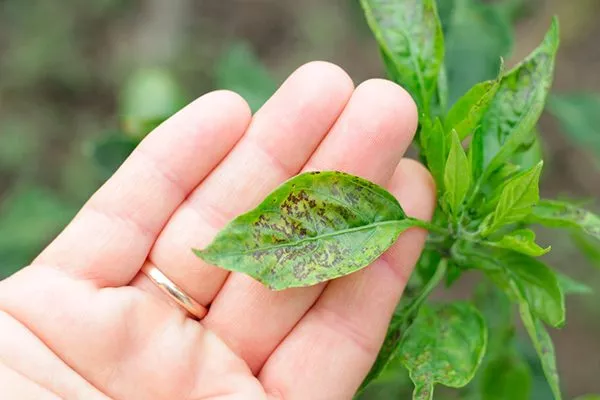
The most common diseases for chanterelles are the following:
- Powdery mildew. It manifests itself as a whitish coating on the green foliage of the plant. To prevent this problem, simply spray the bushes with whey and iodine. Previkur is used for treatment.
- Root rot. The disease can be identified by the plant wilting and the formation of yellow-brown dents on the stems. A closer look at the root collar reveals a black discoloration. Prevention is disinfection, and treatment is copper sulfate and Bordeaux mixture.
Nematodes attack the Chanterelle pepper. Hom is used to control them.
Advantages and disadvantages of a hybrid
Harvesting
Harvesting for long-distance transportation should be done when unripe—approximately 10 days before technical maturity. Fully ripe peppers can be used for fresh consumption or processing. Do not pick peppers by hand; they must be cut off with pruning shears, stems still attached.
Reviews
The Chanterelle pepper is a tasty and vibrant vegetable that's easy to grow. The key is to avoid overwatering, observe the planting and transplanting times, fertilize promptly, and water regularly. No bush training is required, which significantly simplifies the vegetable grower's work.