
The Lesya pepper is an early-ripening sweet pepper characterized by high yields, robustness, and an unusual fruit shape. This hybrid appeared relatively recently, but has already won the hearts of gardeners and consumers. It is also known as Lesya. The variety is sometimes called Red Lesya.
Where and when was the variety bred?
The Lesya variety emerged thanks to the intensive work of breeder D.G. Terentyev in Donetsk, formerly part of Ukraine. This happened recently, in 2016. The hybrid was included in collection no. 616. The variety has not yet been added to the Russian State Register.
Characteristics and description of the variety
The Lesya variety's signature feature is its fruit shape, which is indistinguishable from other hybrids. However, this vegetable also has other characteristics that are sure to please gardeners, particularly in terms of yield, shelf life, and so on.
Bushes
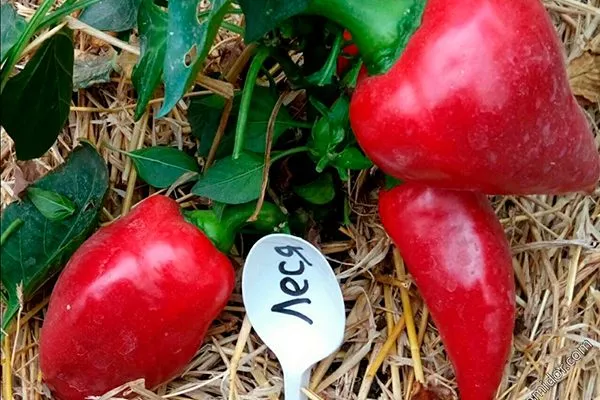
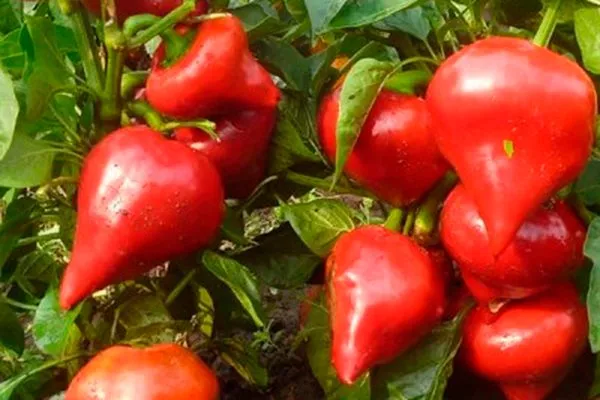
Lesya hybrid bushes are considered compact and low-growing – the minimum height is 40 cm, the maximum is 75 cm, but they most often grow to 55-60 cm. Other characteristic features of the bush:
- foliage - increased;
- branches are flexible and thin;
- leaves - light green with a smooth surface, large;
- number of fruits on one plant – 25-30 pcs.;
- The crown is quite spreading.
fruits
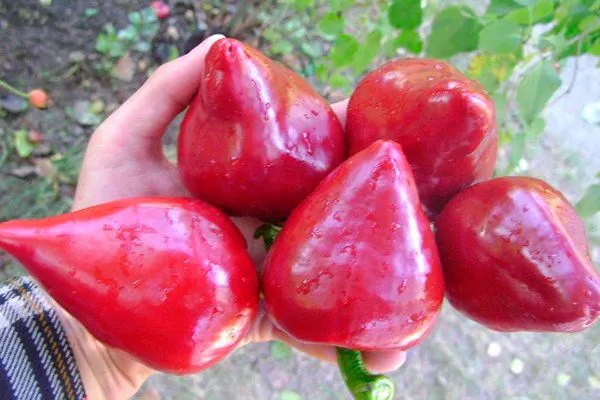
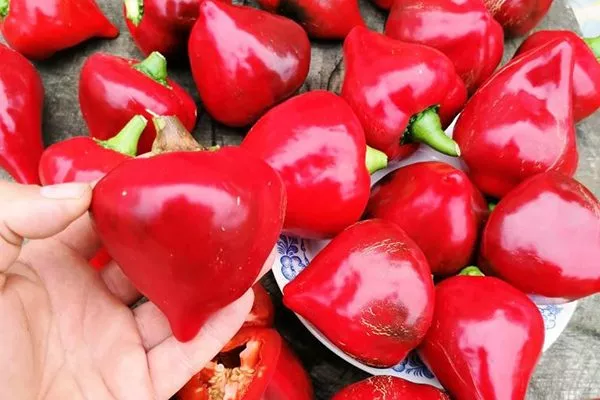
The main distinguishing feature of the Lesya variety is the unique shape of the peppers—they resemble a teardrop or a heart, with a widening at the stem and a pointed end at the other end. Note other characteristics as well:
- color - rich red with a cherry tint, and in some places it may appear black or dark green;
- the weight of one fruit is 100-150 g, but sometimes larger specimens are found - up to 200 g;
- pepper diameter – varies from 6 to 12 cm;
- length – almost always equal to the diameter, but can be longer;
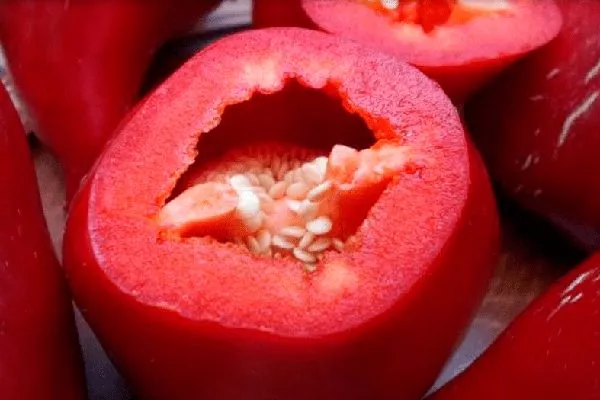
- thickness (meatiness index) – 0.8-1.5 cm;
- ribbing – absent;
- seed chambers – 2 units;
- the skin is thin, but quite dense;
- surface - glossy.
- ✓ The shape of the fruit resembles a drop or a heart with an expansion at the stalk and a pointed end.
- ✓ Rich red color with a cherry tint, sometimes with a black or dark green tint.
Taste qualities
Lesya peppers are considered very sweet, with juicy flesh and a distinctive crunch when bitten or cut. They have a piquant peppery flavor, a pronounced aroma, and a distinct spiciness.
What purposes is this variety suitable for?
Lesya is a versatile hybrid that's perfect for fresh salads and appetizers, as well as baking, boiling main and first courses, and canning. It can also be frozen and dried.
Productivity and shelf life
The hybrid is quite productive – about 6 kg of juicy fruit can be harvested from 1 square meter. The peppers have a long shelf life – for example, in the refrigerator, they retain their marketable appearance for 45-55 days. They can also be stored in a dry cellar.
Ripening time
Lesya is an early-ripening hybrid, so it fully ripens on the 105th day, but harvesting can be done for another 2 weeks, as the fruiting period is extended.
Diseases and pests
The Lesya variety has a strong immune system, making it extremely rarely susceptible to disease and pest infestations. This can be caused by poor agricultural practices and unfavorable weather conditions. Another possible cause is the presence of nearby infected plants.
The most commonly detected diseases are alternaria, black leg, gray or black rot, late blight, mole cricket, slugs and aphids.
Advantages and disadvantages
This unusual pepper has many positive aspects, among which the following stand out:
Features of cultivation
The Lesya hybrid is versatile in cultivation, as it can be planted both as seedlings and from seeds in open ground or a greenhouse. The key is to consider certain varietal characteristics and adhere strictly to them.
Which regions is it suitable for?
The Lesya pepper is grown in absolutely all regions of Russia, including the Central Russian Belt, the Urals, and Siberia. However, in this case, it is planted in greenhouses.
Suitable planting pattern
The Lesya variety is best grown from seedlings, allowing for a much earlier harvest. In the south, seeds are sown directly into the soil. Seedlings are sown in late February or early March.
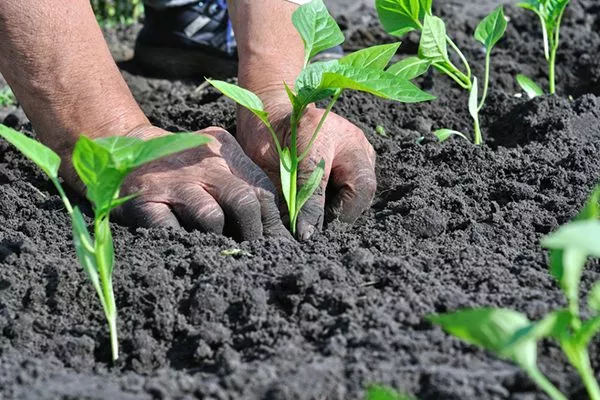
The variety prefers loose and light soil, so you can take the following components in equal proportions:
- turf soil;
- river sand;
- rotted manure or compost (humus).
- ✓ The optimal soil pH should be in the range of 6.0-6.8 to ensure the best absorption of nutrients.
- ✓ The soil should have a high water-holding capacity, but at the same time be well-drained to prevent water stagnation.
Fertility is also essential, so add vermicompost and mineral supplements. Don't forget to disinfect the soil mixture to prevent infection.
Next, follow the step-by-step instructions:
- Since peppers don't tolerate transplanting, it's best to sow them in individual 500 ml containers. It's best to use easily cut plastic cups or peat pots. Poke holes in the bottom of the plastic and treat them with a potassium permanganate solution.
- About a week before sowing, prepare the seeds. To do this, soak the seedlings in a damp cloth and keep them in a warm place. Immediately before planting, soak the seeds in a light pink solution of potassium permanganate to disinfect them.
- When whitish spots form on the grains, fill the containers with the prepared substrate and moisten it.
- Make furrows up to 1 cm deep and sow the seeds, burying them slightly.
- Sprinkle with soil mixture and moisten again slightly from a spray bottle.
- Cover with glass or plastic/cling film.
- Move the seedlings to a room with a temperature of 26 to 28 degrees Celsius. Do not water the seedlings until they sprout, but open the door for 10-15 minutes for ventilation.
- After 2-2.5 months, the bushes will have at least 10 true leaves, which will signal the time to transplant them to a greenhouse in cold climates or to the open ground in moderate weather. To do this, first prepare the site by enriching the soil with peat, humus, phosphorus, and potassium. Sprinkle with wood ash.
- Make holes 40 cm deep and 40 cm in diameter. The distance between bushes should be at least 50-60 cm.
- Remove the seedlings from the container by transshipment.
- Place them with a lump of soil in the planting holes.
- Sprinkle with soil and water.
If cold weather is expected, cover the bushes at night.
Planting recommendations
To avoid making mistakes, experienced gardeners recommend paying particular attention to the following points:
- Plant at least 2 seeds in each hole or container;
- when sprouts appear, remove the weakest one, leaving one strong and healthy;
- The seedlings need to receive a lot of light, so the best option is a windowsill or artificial lighting;
- To enrich the seedlings with useful elements, feed them 2 weeks after the first shoots appear, using special mineral complexes, but you can also water them with an ash solution (1 tablespoon of ash per 1 liter of water);
- The minimum air temperature for seedlings in open ground is 0 degrees.
Care tips
Caring for the Lesya pepper is easy, as it requires standard care – timely watering, fertilizing, and disease/pest prevention.
Watering
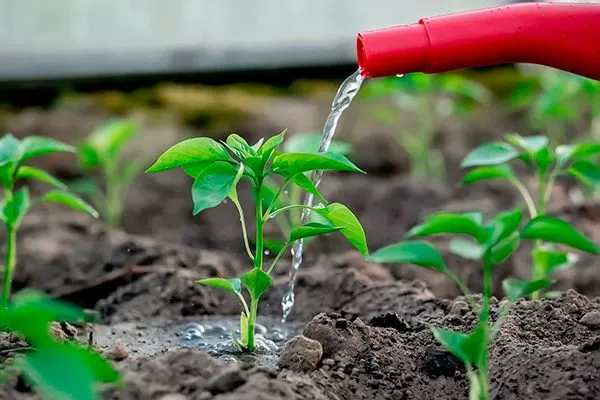
The Lesya pepper needs to be watered twice a week, and three times a week in dry or excessively hot weather. Here are some guidelines to follow:
- Since pepper is a heat-loving plant, the water should also be warm.
- Be sure to let tap water settle so that all the chlorine evaporates and other harmful substances settle to the bottom of the container;
- watering is carried out with a watering can under the roots so that drops of liquid do not fall on the leaves and stems, otherwise rotting will begin;
- The optimal time is evening.
Top dressing
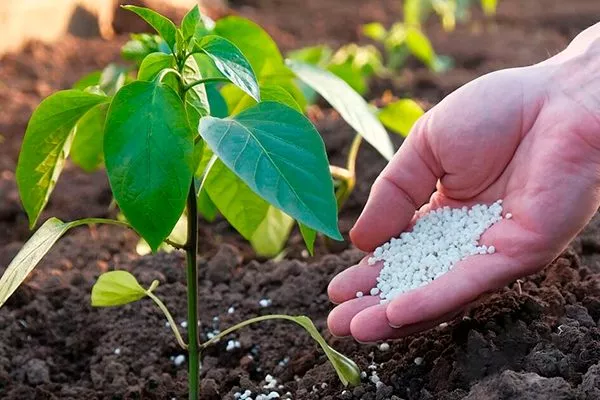
To maximize yields, apply fertilizer every two weeks. Organic fertilizers are the most popular. They should be alternated with mineral fertilizers. Optimal options and guidelines:
- Fertilizer from cow dung. For every 10 liters of water, you need 500 ml of solution. Add 1 tablespoon of nitrophoska to this mixture. One bush requires 500 ml of the prepared solution.
- Tincture of chicken manure. Add 500 ml of prepared bird food per 10 liters of water. Be sure to add 1 teaspoon of potassium sulfate. Apply 500-900 ml per plant, depending on the plant's age.
- Potassium humate solution. For every 10 liters of water, use 1 tablespoon of the solution. Add the same amount of nitrophoska. For 1 square meter, you'll need 5-6 liters of the prepared solution.
- Superphosphate. For 10 liters of water you need 1 tbsp. For 1 square meter you need 10 liters.
Important nuances:
- fertilize only with liquid solutions;
- fertilize in the evening;
- combine fertilization with watering;
- Make foliar solutions twice or three times during the growing season using Kemira according to the instructions.
Bush formation
The Lesya hybrid requires no training. The only thing you need to do is tie the stems to a trellis. However, when grown in a greenhouse, the bushes need to be trained into two stems. To do this, pinch off any excess shoots and side shoots that appear, leaving only the fork.
Preventive examination
Inspecting your bushes is essential to prevent disease development and eliminate pests promptly. Pay attention to the condition of the leaves and stems, as well as the growing fruit. If problems are detected, use the following treatments:
- for diseases - copper sulfate, Bordeaux mixture, Baktofit, Fundazol;
- for pests - Zolon, Fitoverm, Akarin, soap-ash solution.
What to do to avoid trouble:
- Treat with insecticides and fungicides once a month, starting from seedling age;
- do not allow the soil to become over-watered and water to stagnate;
- remove weeds and loosen the soil;
- Destroy any affected plants growing nearby.
Harvesting
Lesya peppers should be harvested only when technically ripe, otherwise the fruits won't have time to develop their sweetness and aroma. However, if long-distance transport is planned, it's best to harvest them 10 days before full ripeness—when the peppers are still greenish or yellowish.
Reviews
The Lesya pepper variety is easy to grow, but it's important to properly prepare the planting material, soil mixture, and containers. Don't forget about disinfection and other requirements. Only then will the plants yield a bountiful harvest of the sweetest and juiciest fruits.