
The Orange Miracle pepper, a Dutch-bred variety, is renowned among gardeners for its high productivity. It boasts excellent flavor, and the appearance of its fruits leaves gardeners amazed and delighted.
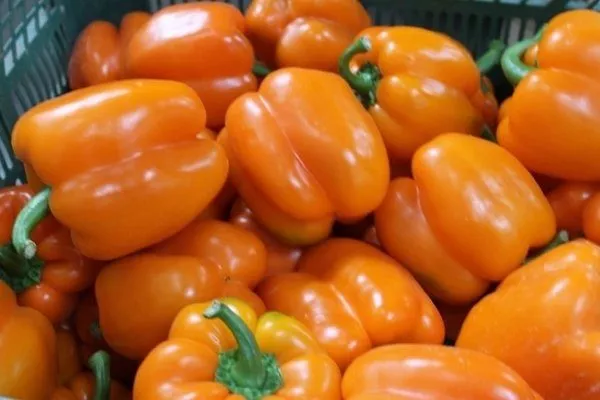
Orange Miracle Pepper
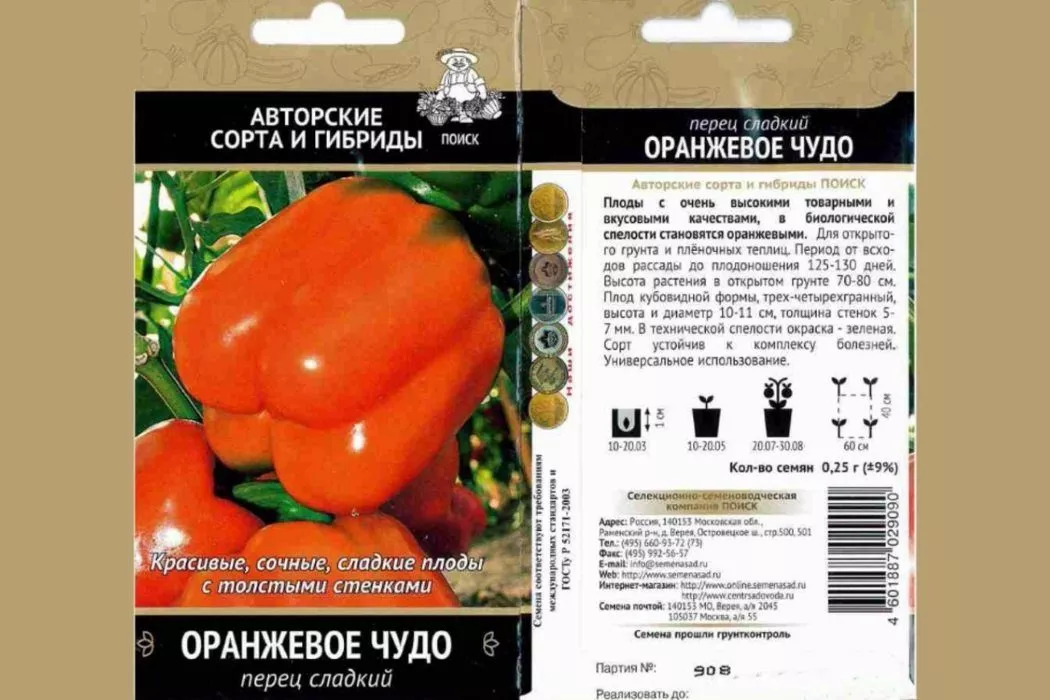
Orange Miracle Pepper Seeds
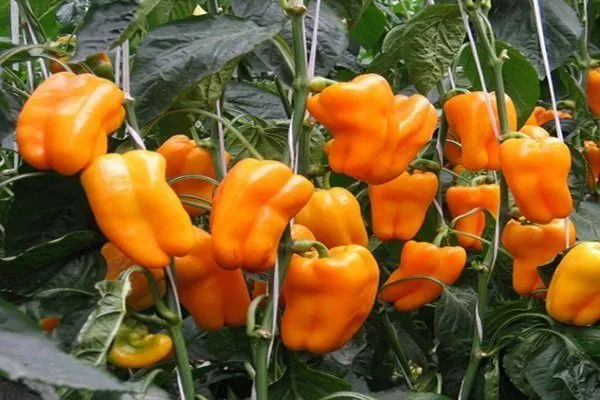
The Orange Miracle pepper bush is tall, but takes up little space in the garden.
Origin of the Orange Miracle pepper variety
This hybrid was created by crossing other pepper varieties (there were so many of them, it's very difficult to determine the primary "parents"). The Orange Miracle has inherited all the best qualities of the other peppers. It originated in Holland.
Currently, the Orange Miracle pepper variety is considered one of the most popular in Russia. Many gardeners have tried growing it in their gardens, and everyone was pleased with the results.
Not all hybrid pepper varieties are certified and included in the Russian state register. Orange Miracle was added to this list in 2012. This demonstrates its importance for gardeners and summer residents not only in Russia but around the world.
Description and characteristics of the variety
The distinctive feature of the Orange Miracle pepper is that the fruits are bright orange in color and the bushes are tall.
Bush
The plant is tall and robust, yet doesn't take up much space. When grown outdoors, peppers reach a height of 2 meters, sometimes even higher. The foliage is small and richly green.
Fruit
Main characteristics of the fruits:
- cube-shaped, slightly drooping;
- large in size;
- the weight of one is about 220 g;
- juicy pulp;
- incomplete maturity – fruits are green in color, fully ripe – bright orange in color;
- excellent sweet taste.
Productivity
The Orange Miracle fruit ripens in 105 days, at which point they can be picked from the plant. Interestingly, the fruits, once picked, continue to ripen at home for another week.
Harvest at the technical maturity stage, as this promotes the formation of new ovaries on the bushes. Orange Miracle is characterized by a high yield – 14-16 kg per square meter.
Difference from other varieties
This hybrid differs from other pepper varieties in its large fruits, whose walls are very strong and juicy. The flesh is tasty and aromatic. A distinctive feature is its resistance to diseases, specifically the tobacco mosaic virus. This is something other pepper varieties cannot boast.
- ✓ Resistance to tobacco mosaic virus confirmed by field trials.
- ✓ Fruits retain their taste when stored for up to 4 weeks.
Agricultural cultivation techniques
Growing any pepper variety begins with preparing the seeds for sowing. The seeds must be disinfected with a weak solution of potassium permanganate; aloe vera juice can also be used. This procedure kills bacteria in the seeds and strengthens the seeds' immunity.
- ✓ Optimum soil temperature for seed germination: +25…+30°C.
- ✓ Critical soil acidity level: not lower than pH 6.0.
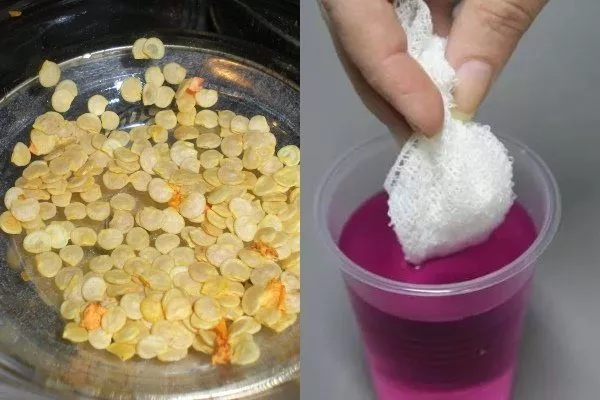
After processing, rinse the seeds under running water and you can plant them in prepared containers.
Preparing containers
Grow each Orange Miracle pepper seedling in a separate pot, otherwise there's a risk of damaging the plant's root system. Poke holes in the containers to allow excess moisture to drain quickly and easily.
Be sure to place a drainage layer at the bottom of the pots.
Soil preparation
Before planting the seeds, fill the pots with light soil consisting of sand (1 part), humus (2 parts) and ordinary soil (1 part).
It's a good idea to disinfect the soil first. Read on to find out how to do this correctly. Here.
Lightly water the soil and plant the seedlings at a depth of 3 cm. This will allow the root system to develop properly and quickly. Then, cover the seeds with a small amount of soil and compact them lightly.
Maintain a temperature of 25 degrees Celsius in the seedling room. This will help improve germination. Once the seedlings emerge, lower the temperature to 16 degrees Celsius.
Seedling
Seeds are sown for seedlings The last week of February. Don't plant the seeds too deep; cover the planting pots with plastic wrap or glass.
Picking
Pricking out is only necessary if you planted the seedlings in a single box or large pot. This process involves transplanting the seedlings into individual containers. Pricking out occurs after two true leaves appear.
Plant the seeds immediately in separate containers so that the pepper's root system is not damaged during transplanting.
Transplantation into open ground
Before transplanting seedlings into open soil, harden them off by placing them outside in the fresh air two weeks before transplanting. First for an hour, then for 2-3 hours, and so on.
Landing
In the fall, add organic fertilizer such as humus or peat to the soil. Pay particular attention to the soil's acidity; it shouldn't be too low (around 3-4%). Otherwise, you'll need to add lime.
Transplant the finished seedlings when they have fully developed five leaves and are 15 cm tall. Transplant them into the greenhouse using a 0.5 x 0.5 m spacing. Immediately provide supports for tying the plants. Leave approximately 0.6 m between the open soil and 0.4 m between the potting holes. Also prepare the supports.
Garter
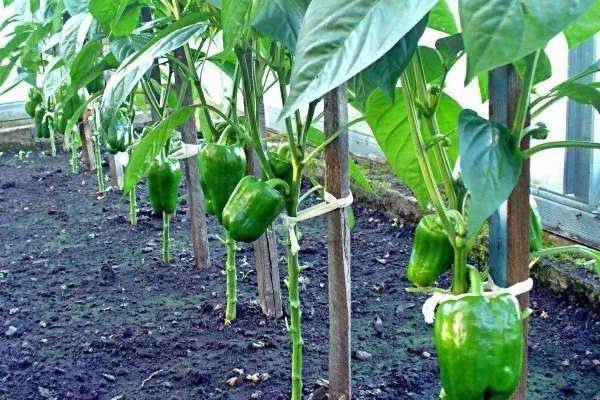
This variety of sweet pepper requires rigid supports because the plants grow tall and need something to lean on.
Orange Miracle pepper does not require shaping.
Watering
Watering is the most important aspect of pepper care. Regularly monitor soil moisture to prevent root rot. Water once every three days, and only in the morning or evening. Otherwise, the water will evaporate too quickly.
The Orange Miracle bell pepper, grown in a greenhouse, requires regular foliar spraying, as dry air prevents the plant from fully developing ovaries and fruits.
Mulching and loosening
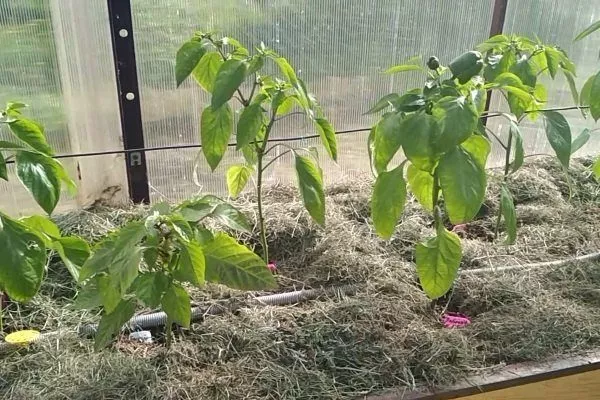
After thoroughly watering your peppers, remove all excess weeds and loosen the soil. Mulch is also important; use peat, straw, or sawdust as a mulch.
You can learn everything about soil mulching from this article.
Top dressing
Fertilization is standard for all pepper varieties and is carried out 3 times during the growing season:
- During the period of formation of the first shoots. Add phosphorus micronutrients to accelerate pepper growth and development. Read more about fertilizing pepper seedlings on the pages of our website.
- During the period of ovary formation. It consists of potassium fertilizers, which help speed up the process of their formation.
- During the fruiting period. Fertilizers consist of calcium and nitrogen, thanks to which the size of the fruit increases significantly and the ripening process accelerates.
Diseases and pests
The most dangerous insect for peppers is aphids. Regular treatments are necessary to protect peppers from these pests. Orange Miracles are immune to other diseases and pests; the plant has a genetic immunity to them.
Features of growing in a greenhouse
Growing sweet peppers in open ground and in a greenhouse has its own characteristics, let's consider the main ones rules for caring for the variety in a greenhouse:
- Regular watering. Without moisture, the variety stops growing. While in open soil, the plant can obtain water from rain, in a greenhouse, it will require your help. Due to a lack of moisture, the plants will grow stunted, and the entire crop will be small and poorly developed.
- High air humidity. The Orange Miracle pepper variety doesn't thrive in dry greenhouse conditions. Mist the plants regularly to prevent the air and soil around them from drying out.
- FertilizationThis pepper variety is very large, so it won't grow fully and vigorously without fertilizer. Just don't overdo it with nitrogen fertilizers, otherwise you'll get nothing but dense foliage.
- Temperature conditions. Maintain a constant temperature. Orange Miracle peppers grow well at temperatures between 25 and 30 degrees Celsius.
This pepper variety is very sensitive to temperature changes; when it drops to +13 degrees, the plant stops growing and developing altogether.
Take all these rules into account when growing this crop; in regions with a weak and unstable climate, provide additional mandatory heating.
Advantages and disadvantages
The Orange Miracle pepper variety has its pros and cons, let's consider them.
Advantages of this variety:
- Rapid fruit ripening. The first harvest can be obtained 105 days after germination. Under good growing conditions, the ripening period is reduced to 95 days;
- does not require special care, it can be easily grown in any area;
- perfectly tolerates various negative environmental factors, for example, frequent heavy rains;
- pepper has a pleasant and rich taste;
- During storage, the taste of the fruit does not change;
- strong immunity to many types of diseases.
Disadvantages of this variety:
- plants grow chaotically if they are not supported;
- The bushes need abundant watering, especially on dry days.
Reviews
The Orange Miracle pepper variety is excellent for growing not only outdoors but also in greenhouses. It has virtually no drawbacks, but boasts a host of advantages: excellent flavor, beautiful appearance, relatively early ripening, and strong immunity.