
The Lastochka sweet pepper variety is considered low-maintenance and high-yielding. Farmers love the plant for its ability to adapt to any climate and sudden weather changes. Its thick skin allows for long-term storage. The simultaneous ripening of the fruits allows for a single harvest.
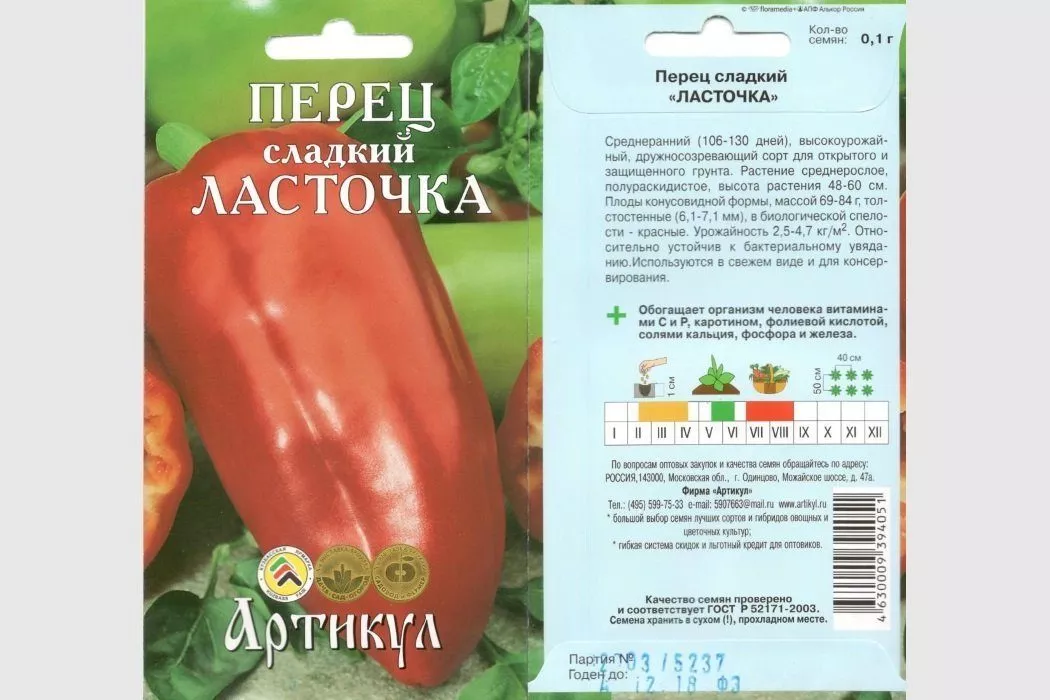
Seeds of the Lastochka pepper variety
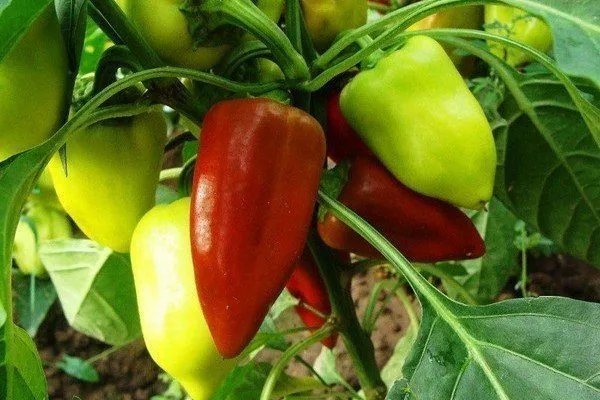
Sweet pepper variety Lastochka is characterized by high productivity
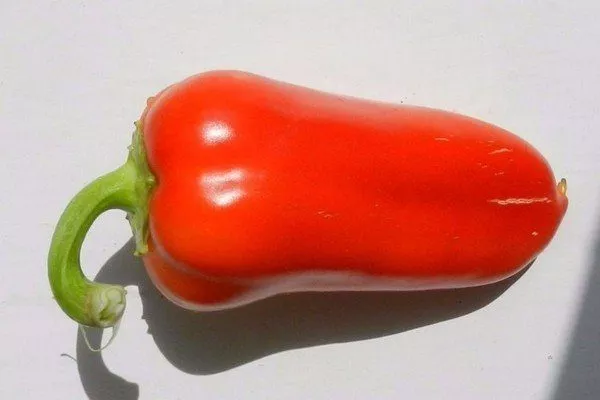
Pepper Swallow ripens very quickly
History of the Lastochka pepper variety
Originating in Moldova, the breeders were scientists at the Transnistrian Institute of Agriculture. In 1970, the breeders applied to register this variety in the state registry. In 1974, the plant standard was approved and it was approved for cultivation throughout Russia, except for the Central Region.
Currently, numerous companies engaged in breeding work in Russia are responsible for the preservation of this plant. Some time later, breeders created another pepper variety – Golden Swallow. Although the plants share a similar name and are bred by the same scientist, their characteristics and productivity are still distinct.
Today, the swallow beak is extremely popular among farmers; some even suggest that the plant received its name due to the surprising shape of its fruits – in the form of a swallow's beak.
Description and characteristics of pepper
The unique feature of the Swallow pepper is its ability to be grown in any climate. It can be planted in a greenhouse or in the open ground.
Scientists prove that the Lastochka pepper is a healthy variety, containing a huge amount of essential nutrients. Vitamins B and C play a key role. It is also low in calories: 43 kcal per 100 g. Peppers normalize the gastrointestinal tract and improve cardiovascular function.
The plant reaches a height of 0.7 m. Each pepper produces approximately 10 large pods. The plants are leafy and require support. The leaves are large, rich green, and have wrinkles on the surface.
The Lastochka pepper ripens very quickly, reaching technical maturity after 110 days.
Description of fruits
| Name | Ripening period | Productivity | Disease resistance |
|---|---|---|---|
| Martin | 110 days | 6-7 kg/m² | High |
| Golden swallow | 120 days | 5-6 kg/m² | Average |
The main characteristics of the Swallow pepper pods:
- cone-shaped, individual specimens oval-shaped;
- during technical maturity the color is light green, during biological maturity – red;
- wall thickness – 70 mm;
- pod weight from 60 to 110 g;
- the peel is not thick, the surface is smooth;
- fruit length 0.1 m.
Productivity
The Lastochka sweet pepper variety is highly productive, making it prized by farmers. Approximately 6-7 kg of fruit can be harvested per square meter.
Suitable region and climate
Sweet peppers are naturally heat-loving, so they're best grown in the south. They're also suitable for northern regions, but only for growing in greenhouses.
For good growth, the plant requires temperatures between 21 and 26 degrees Celsius, with nighttime temperatures not falling below 17 and 20 degrees Celsius. Soil temperatures should be no lower than 19 degrees Celsius. Lower temperatures result in reduced yields, wilting leaves, and ultimately, the Swallowtail's demise. Drought and temperatures above 34 degrees Celsius also negatively impact the plant.
- ✓ Optimum soil temperature for planting: not lower than +19°C.
- ✓ Required daylight hours: at least 13 hours.
To ensure peppers begin bearing fruit quickly and produce a consistent harvest, it's important to maintain at least 13 hours of daylight. Special supplemental lamps are used for growing seedlings in March.
Advantages and disadvantages
The Lastochka pepper variety, like other varieties of the crop, has both advantages and disadvantages, and these must be taken into account when growing the plant.
Benefits of Swallow pepper:
- a large number of useful microelements, the product is suitable even for diabetics;
- can grow in any climate zone, the main thing is to choose the right place for planting;
- high-yielding;
- has a decorative appearance;
- can be used not only fresh, but also for canning.
Disadvantages of the variety:
- too high, supports need to be installed;
- demanding of soil composition;
- It is possible to grow it in open soil, but it is very difficult.
Landing features
A bountiful harvest can only be achieved with proper planting. There are several key stages, each with its own unique characteristics and nuances.
Seed preparation
The most important thing is to sow the Lastochka pepper seeds on time. If you delay, the plant will develop later and therefore won't produce the expected harvest. The seedlings will only emerge after two months, so sow the seeds in mid-February. If you're planting the seedlings directly into open ground, it's best to sow the seeds in early March.
- Selecting seeds: Use only those that sink to the bottom of the salt solution.
- Disinfection: soak the seeds in a 1% solution of potassium permanganate for 20 minutes.
- Germination: Place seeds on damp cheesecloth until sprouts appear.
To ensure a high germination rate, select the seeds carefully. First, inspect them carefully, discarding the bad ones and keeping the good ones. Add 1 tablespoon of salt to a container of water and place all the seeds in the solution. Soak the seeds in this mixture for about 15 minutes. Discard any seeds that float to the top. They are of poor quality and will not germinate.
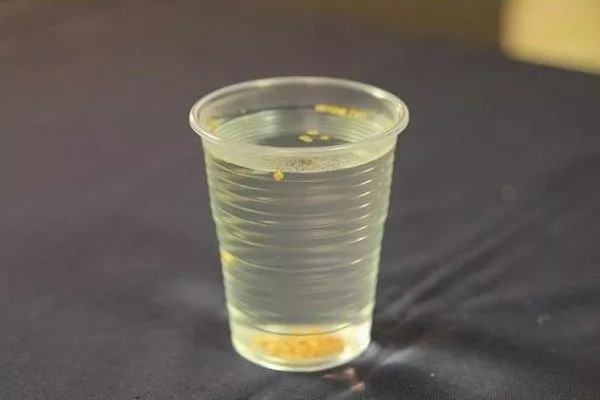
Rinse the seeds under running water and dry. To prevent the development of various diseases, treat the seeds by placing them in a weak solution of potassium permanganate (1%), soaking them for 20 minutes, and then rinsing. This procedure will not only strengthen the plant's immune system and prevent future infections but also increase the pepper's resilience to adverse weather conditions.
You can germinate the seeds in advance - place them on damp gauze, and plant them as soon as the sprouts appear.
Sowing seeds for seedlings
Prepare the containers and fill them with potting soil, making small holes about 15 mm deep. Place one seed in each, leaving at least 3 cm between plants. Swallowtail does not tolerate transplanting or pricking out, so it's best to sow the seeds directly into individual pots.
Use peat tablets, then you can plant pepper seedlings in the ground along with them.
Growing seedlings
If you sown the seeds in a large box, transplant them after two leaves have formed. To do this, take 0.5-liter cups and transplant one seedling per cup. Place the seedlings on a sunny windowsill.
As soon as the outside temperature rises to 15–18 degrees Celsius, harden off the seedlings. Leave them on the balcony overnight. Water the plants with warm water once a week. After a week, apply mineral fertilizer.
Planting seedlings in open ground
Almost all gardeners base their decisions on the appearance of the seedlings; as soon as the sprouts become strong and develop a rich green mass, the peppers are planted.
The plant is transplanted into open ground when buds appear on the seedling. At this time, the air temperature becomes favorable, and the plant will begin to develop rapidly. Before planting the seedlings, fertilize the soil with mineral or organic fertilizer. Swallowtail loves potassium, so it's best to add this element.
Plant the seedlings so that they are at least 0.4 m apart. Don't plant them too deep; first fill the hole with cool water and then plant the seedlings. Water again after a week.
To reduce moisture evaporation, cover the seedlings on hot days; at the same time, you will protect the foliage from the negative effects of sunlight.
Care and cultivation
General care for the Lastochka pepper isn't much different from that for other vegetable crops. It involves timely watering, loosening the soil, mulching, and fertilizing.
Watering and fertilizing
Water the plants only with warm, settled water. A week after planting, water every four days. Also, keep the soil surface dry and prevent the soil crust from drying out. Water more frequently during the fruiting and flowering stages.
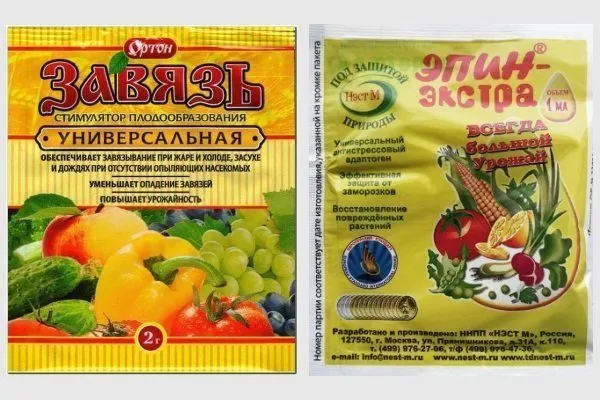
If you need to boost your vegetables' foliage, use the "Growth" product, or you can substitute it with urea dissolved in water. You can increase the number of ovaries with the "Ovary" stimulator. "Epin-Extra" will help improve the overall health of your plants.
Bush formation
Greenhouse plant care also includes pruning and shaping the pepper plant. This is done by shaping the plant into several stems. Avoid overcrowding. Peppers that are pruned earlier will begin to bear fruit earlier and more abundantly.
It's important to understand that shaping pepper plants can often be both beneficial and harmful. Pruning increases the risk of pests and diseases.
When growing this variety, be careful not to let the bushes become overgrown. Pinch the tops when you feel they no longer need to grow upward. After this process, the plant will begin to grow side branches, which will bear fruit. Also, prune off any lower shoots, leaving only strong, sturdy shoots with flowers at the top of the plant.
Weeding and loosening
Weeds are harmful not only to the plot as a whole but also to individual crops in particular. Weeding and removing weeds should be done simultaneously with loosening the root zone of the pepper. The root system of the pepper is close to the soil surface and is easily damaged. Do not loosen the soil too deeply.
Seed collection
Seeds are essential for future cultivation of this variety. Pick a fully ripe fruit, wash it, cut it in half, and remove the seeds. Dry them; they will serve as excellent planting material next year.
Harvesting and storage
The stems of the Leaflet pepper are very thin and fragile, and they can be easily damaged. To avoid this, harvest the fruit carefully and attentively. Begin harvesting as soon as fruiting begins, and you can harvest daily, depending on the number of plants growing in your area and their maturity stage.
If the weather conditions are favorable, that is, with warm, windless weather and short periods of rainfall, then throughout the season you can get approximately 6 kg of sweet peppers per 1 square meter.
The Lastochka variety is a classic early variety, very popular among gardeners. You can see what it looks like in this video:
How to increase crop yield?
The highest possible pepper yield can be achieved by following the recommendations of experienced gardeners. Here are some of them:
- Place the supports to which the seedlings will be tied into the ground before planting the plants. This way, you won't damage the pepper's root system while digging the stakes into the ground.
- Peppers love moisture, but during heavy and prolonged rains, cover the sprouts with film, otherwise they will begin to rot.
- Overwatering the root system will only cause harm, primarily by increasing the risk of various diseases.
- Remove the first flowers that appear on the upper fork of the branches.
- Collect the first harvest at the stage of technical maturity, and the rest as desired.
- Don't forget about the need to shape the bush.
- Store the fruit in the refrigerator for no longer than a month; it is better to freeze it rather than can it.
- If the soil is nutritious and there is no need to add specific fertilizers, then sprinkle the root zone of the pepper with ash; it not only acts as a fertilizer, but also protects the bushes from diseases and pests.
Diseases and pests
The Lastochka pepper variety has a strong immune system and is resistant to diseases. Its robust health even helps it resist late blight and verticillium wilt. Lastochka rarely suffers from pests such as aphids, spider mites, and slugs.
Preventative measures include regularly removing weeds from the plot, as most disease spores reside on these harmful plants. Infections can also be prevented by disinfecting the seeds and soil where the Swallow peppers are planted.
Reviews of the Lastochka pepper
The Lastochka pepper variety is one of the best representatives of this crop; it requires little care. Its abundant yield will provide gardeners with a harvest that will allow them to realize all their plans for using this vegetable.