
Claudio is one of the best hybrid peppers on the market. Bright, juicy, and aromatic, it's rich in vitamins, easy to care for, and will reward you with a bountiful harvest.
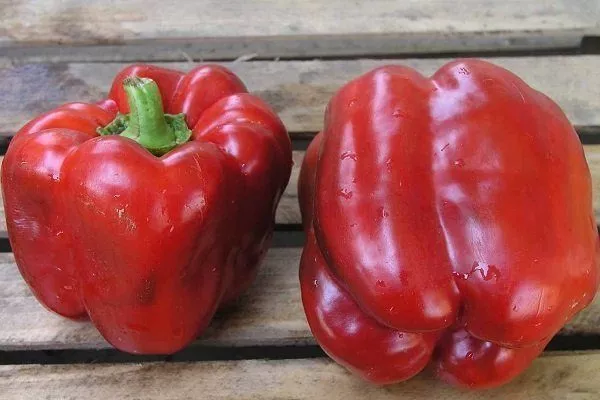
Pepper variety Claudio F1 has large fruits
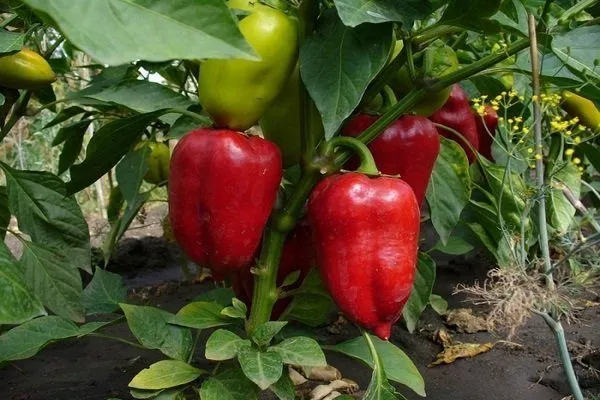
The Claudio F1 pepper variety is juicy, tasty and rich in vitamins.
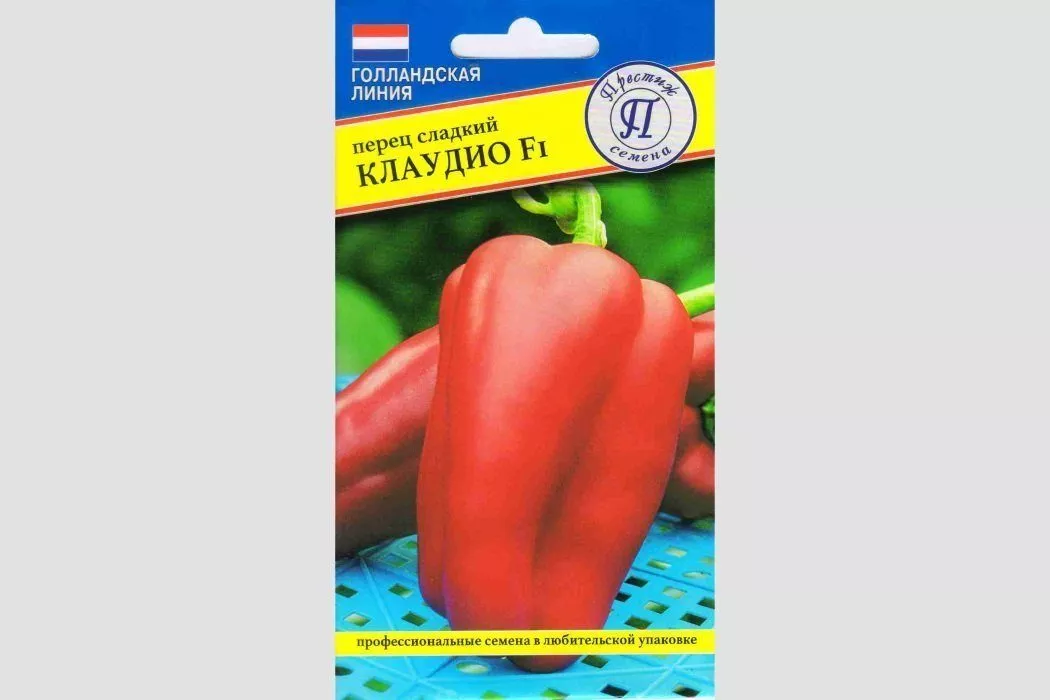
Claudio F1 pepper seeds are planted for seedlings in early March.
Origin of the Claudio F1 pepper
The Claudio F1 pepper is a hybrid of the Dutch line from NUNHEM. It is recommended for southern latitudes. It was included in the State Register of Breeding Achievements of Russia in 2007 for the North Caucasus.
Characteristics and description of the hybrid
Like any modern hybrid, Claudio has a high yield, resistance to diseases and weather changes, and excellent taste.
Description of the bush
The semi-spreading plants are upright, about 70 cm tall, and vigorous and strong. To shape the plant, side shoots are removed before the first fork. The numerous dark green leaves are above average in size and somewhat wrinkled. Each bush produces 10-12 large fruits.
Appearance of fruits
The peppers are large, reaching 250g with proper care. They are prismatic, with four seed chambers and thick walls up to 10mm, and are glossy red. The fruit averages 8cm wide and 12-14cm long. The skin is firm but thin.
Taste qualities
Claudio is renowned for its excellent flavor. The rich, aromatic flesh is very tender and delicious.
- ✓ High resistance to tobacco mosaic, which is rare among peppers.
- ✓ The ability of fruits to ripen after harvesting, which increases their shelf life.
Features of the variety and application
In southern regions, the pepper is considered an early ripening variety; further north, it's more of a mid-late variety. When harvested as technically ripe green peppers, Claudio stores well and transports well. Under these conditions, it ripens in about two months. Once harvested, red peppers require quick processing or consumption.
Vegetables are versatile in use: they are excellent fresh in salads and vegetable slices, retain an impeccable taste after heat treatment, and are good for freezing and canning.
Agricultural technology for growing Claudio F1 pepper
Careful care of the plants will allow you to get good yields of up to 464 c/ha with large, juicy fruits.
Seed preparation
The optimal period for sowing seedlings is considered to be the end of February – the first days of March.
Before sale, producers treat planting material with a special nutrient solution; in this case, no preparation is required.
Seeds covered with a colored shell do not require soaking.
If you are harvesting peppercorns yourself or purchasing unprepared ones, carry out pre-planting preparation:
- Place the seeds in a glass of water at a temperature of approximately 50 degrees;
- After swelling, wrap them in a damp cloth;
- Place in a warm place for 3 days.
Such manipulations stimulate the emergence of sprouts.
Preparing for landing
Preparation for planting includes several stages:
- To sow the seedlings, purchase a special seedling soil or prepare it yourself. To do this, combine equal parts humus, sand, and garden soil. Add wood ash at a rate of 1 tablespoon per 3 cups of the mixture. You can also use peat pots; in this case, no additional soil preparation is required.
- To disinfect, bake the soil in the oven for half an hour at a temperature of 160 degrees.
- Fill the planting containers with soil. Ideally, containers with drainage holes, placed in a watering tray, will be suitable for seedlings.
- Water the soil before planting the seeds or spray generously with a spray bottle afterward.
- Place the seed material into the soil to a depth of 1-2 cm, 2-3 seeds at a time, in order to leave the strongest sprout later.
- After planting, cover the containers with film or glass and leave in a warm place until the first shoots appear.
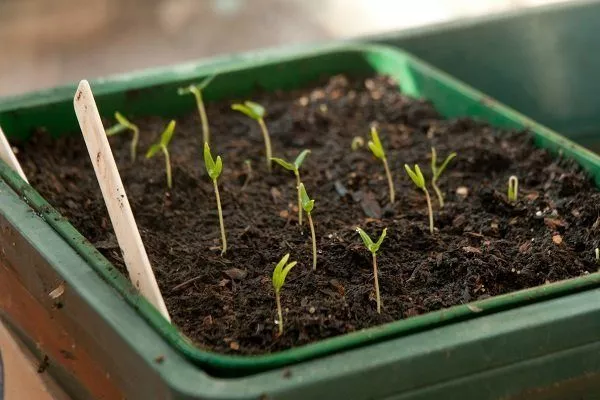
Find out more about when and how to sow pepper seedlings at pages of our website.
Seedling period and conditions
When the seeds germinate, the covering material is removed and the seedlings are left in good light.
For several weeks, you can provide additional light using phytolamps, turning them off only at night.
During daylight hours, the temperature is maintained at 25 degrees Celsius, and at night, around 12 degrees Celsius. Grown peppers are hardened off by lowering the daytime temperature to 17-18 degrees Celsius for a week.
To maintain optimal humidity, spray the plants with warm water. Be sure to let the water settle before watering. Cold water will stress the seedlings and may cause stunted growth or disease.
When the second leaf appears, it's a good idea to fertilize the plant. Use liquid Fertika or Agricola. Or prepare a solution yourself using superphosphate (125 g), potassium salt (30 g), and urea (50 g) per bucket of water. Fertilize the soil again after two weeks.
Find out when and how to feed pepper seedlings next article.
Planting peppers
After the first buds form, the seedlings are ready for transplanting into greenhouses or open ground. This usually occurs by the end of May, when the average daily temperature does not drop below 15°C.
- ✓ The optimal soil temperature for planting seedlings should be at least +15°C at a depth of 10 cm.
- ✓ To prevent fungal diseases, it is necessary to ensure good air circulation around the plants, avoiding dense plantings.
Claudio F1 prefers slightly acidic soil. Prepare it in advance. The most suitable predecessors are cucumbers, carrots, onions, or zucchini. Basil makes a favorable companion.
Do not plant peppers in a place where tomatoes, eggplants or potatoes were grown the previous year.
In the fall, the future planting site is dug over and fertilized. Add 50 grams of superphosphate and potassium sulfate per square meter, along with 5 kg of compost. In the spring, before planting, add 30 grams of ammonium nitrate per square meter.
To transplant peppers into the ground:
- Considering the spreading nature of the plants, stick to a planting pattern of 40x70 cm.
- Place a tablespoon of fertilizer containing phosphorus, potassium and nitrogen into each planting hole beforehand.
- Place young plants in the holes and cover with soil up to the level of the root collar.
- Water the seedlings generously.
- If possible, mulch the plantings with peat.
Watering
Although the Claudio hybrid is drought-resistant, timely watering has a positive effect on the quality of the fruit.
Before flowering, peppers are watered weekly and quite generously, then every 3-4 days, 15 liters per 1 sq. m.
The water must be settled and warm. The best time to water is after sunset. After watering, loosen the top layer of soil.
Top dressing
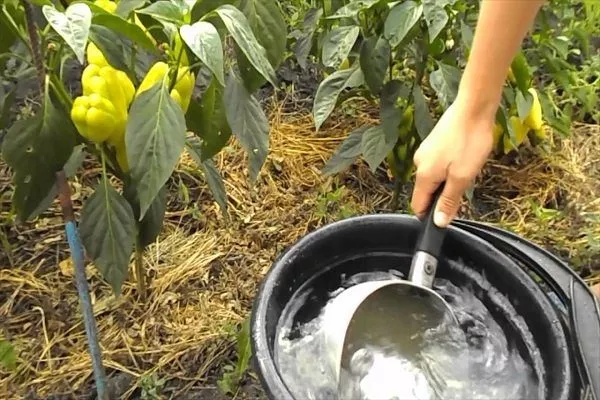
Plants are fed 2-4 times per season. A 1:10 chicken manure solution is applied to the roots twice. Before flowering, potassium nitrate is useful. During fruiting and flowering, fertilize with potassium, magnesium, and phosphates or complex fertilizers. Potassium supplements are beneficial as the peppers ripen.
There are some signs that can help you determine what your plant is not getting:
- dry edges of leaves and their curling – lack of potassium;
- small matte castings - little nitrogen;
- purple tint on the underside of the leaf – lack of phosphorus.
Resistance to diseases and pests
For strong immunity of peppers, the first priority is to adhere to proper agricultural practices:
- crop rotation taking into account the preferences of predecessors;
- weeding;
- maintaining adequate humidity;
- thinning and removing damaged leaves;
- treatment of plants at the first signs of disease.
The main diseases can be divided into 3 types:
- fungal;
- bacterial;
- viral.
To combat fungi (late blight, anthracnose, white and gray mold, brown spot, and verticillium wilt), use modern treatments such as Oxychom, Fundazol, Previkur, and Barrier. Bordeaux mixture is effective against anthracnose. Follow package directions carefully when using.
Diseases caused by bacteria are treated with copper sulfate (wet fruit rot and bacterial cancer).
Claudio F1 has excellent resistance to one of the most dangerous viruses, tobacco mosaic. However, if infected, the plant is treated with Chrysomalum. Viral stolbur can be controlled by spraying with skim milk or whey. Another disease of this species, spotted wilt, can be treated with Fundazol.
Claudio pepper may also be of interest to some pests:
- Aphid. Wood ash or tobacco dust are excellent remedies. Spraying with infused wormwood or tansy has also proven effective.
- Spider mite. The best defense will be infusions of dandelions, onion or garlic peels.
- Wireworms. They are attracted to sweet root vegetables, which will make a wonderful bait.
- Slugs. Ground hot pepper and mustard powder will help in the fight. Buried beer cans also work well.
- Colorado potato beetle and mole cricket. The best option is to kill the insects themselves. Commercial pesticides can be used, but take into account the decay time of the poisons to avoid fruit poisoning.
- Whitefly. These insects are washed away with water, and after harvesting, the plants are burned. Beer traps can be used as a temporary solution.
Advantages and disadvantages
The undoubted advantages of Claudio F1 include:
- high fruit yields;
- excellent taste characteristics;
- high transportability;
- versatility of growing conditions;
- wide use of the crop;
- resistance to weather changes and diseases;
- pepper size and attractive presentation.
The main disadvantages include:
- short shelf life of ripe red fruits;
- frequent pest infestation;
- long period of maturation from technical to biological;
- sensitivity to high humidity.
An overview of the Claudio F1 variety, as well as cultivation secrets, can be found in the following video:
Reviews
Some may be put off by Claudio F1's tendency to be susceptible to pests, but if you take responsibility for what you plant, the unrivaled taste of the harvest will more than compensate for the expense.