
The Chinese Lantern pepper, or Chinese Lanterns, appeared relatively recently – in 2007. The hybrid was developed by the renowned company "Agrofirma Sedek." Several authors contributed: Anatoly Nikitovich Lukyanenko, Irina Nikolaevna Dubinina, and Sergey Vladimirovich Dubinin.
Description
Despite its youth, the Chinese lantern is already popular and in demand due to its high yield and excellent taste. The fruits contain a wealth of nutrients and have the following external characteristics:
- Bush. It is a low-growing plant, reaching a height of 40 to 50 cm. It is bushy yet compact, with strong, sturdy shoots. The bush type is dense. The leaves are dark green and large, with a slight wrinkle.
- Fruit. The type is tomato-shaped and large. Weight ranges from 130 to 250 g, and the wall thickness is 8 mm. The shape is round-cylindrical, the skin is dense, smooth, and shiny. The number of seed chambers is 3-4. The color is classic red, the flesh is juicy and meaty.
- Taste. Quite sweet, with hints of honey, which distinguishes this variety from other peppers.
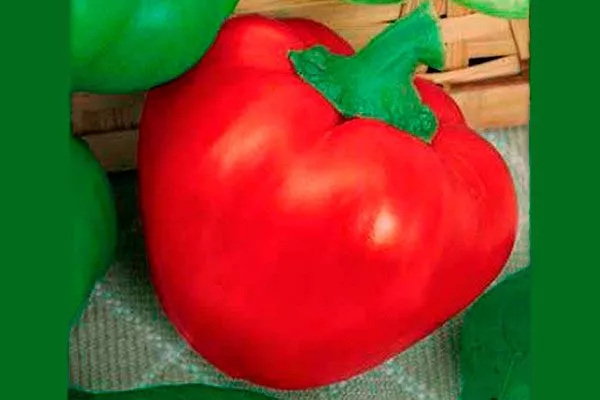
Chinese lanterns are versatile. Besides being eaten fresh, they can be used in hot dishes and cold appetizers, canned, and frozen. They're also excellent for baking and barbecues because the skin doesn't crack.
Characteristics
This variety belongs to the Rotunda (Gogoshar) group, which means the fruit ripens 15 days later. Therefore, the planting time is slightly earlier than for other peppers.
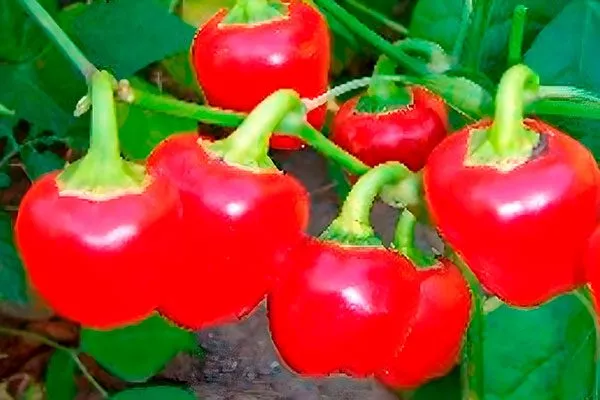
It has the following characteristic features:
- Ripening period. Considered a mid-late variety, it takes 110 to 115 days from the first shoots to technical maturity. Fruiting begins in early July, but the harvest is usually in July and August.
- Resistance to adverse weather conditions. The plant tolerates both hot summers and cooler temperatures. Temperature fluctuations do not affect its development.
- Where it is grown. It is intended for all regions of Russia: in the south and central parts it is transplanted into open ground, in the middle zone and in the north – into greenhouses.
- Productivity. This variety is considered high-yielding, yielding 6.5 to 7.5 kg of juicy fruit per square meter. In greenhouse conditions, the yield can be even higher.
Growing and care
Planting is carried out exclusively by seedlings. Seeds are sown in early February. Transplanting is done in late May or early
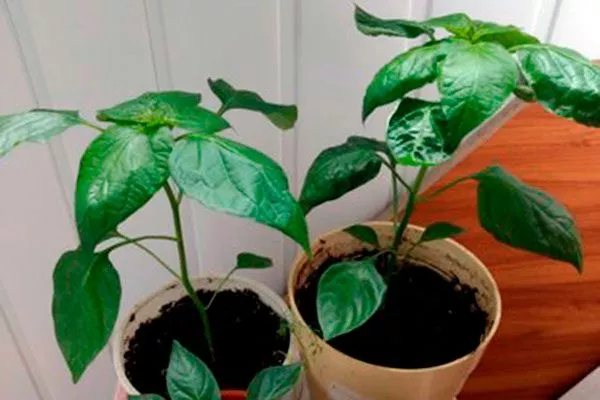 There are some features that are important to consider:
- the optimal temperature for seedlings is +25 degrees;
- the best predecessors in the greenhouse and open beds are cabbage, carrots, pumpkin, peas, beets;
- the worst predecessors are beans and cucumbers;
- transplant scheme – 40x40 cm;
- the optimal area is well-lit by the sun without drafts;
- partial shade is also allowed;
- watering – once every 7-10 days, but abundantly;
- The best fertilizers are nitrogen ones.
Reviews
The Chinese Lantern pepper is a new variety that has already gained popularity among our gardeners. It is characterized by its complete ease of care and ability to withstand extreme temperature fluctuations. It boasts high yields and a unique flavor profile.