
The Karas pepper, the work of Siberian breeders, is a young hybrid distinguished by its two-tone coloring. It belongs to the sweet pepper group with a mid-early ripening period. The seeds are most often sold by the agrotechnical company "Semena Alaya."
Characteristics of the appearance of the plant and fruits
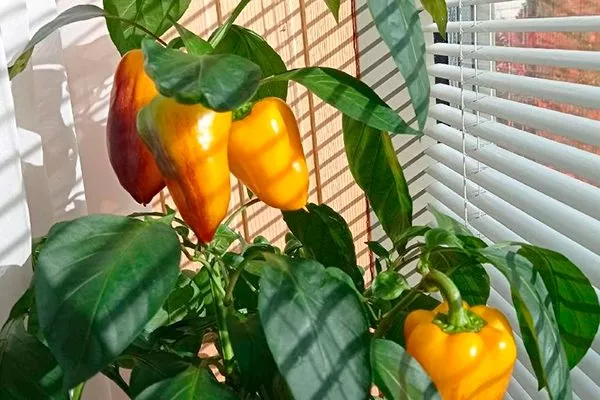
The hybrid is a long-fruited and low-growing plant that has its own special features:
- the height of the bush is from 30 to 45 cm;
- shoots are dense and almost straight;
- leaves – large, trapezoidal and leathery, distinguished by a green hue with a cold malachite-silver coating;
- the root system is very branched and powerful;
- fruits are elongated, cone-shaped and large;
- weight – minimum 200 g, maximum 400 g;
- the lower part of the pepper is slightly rounded;
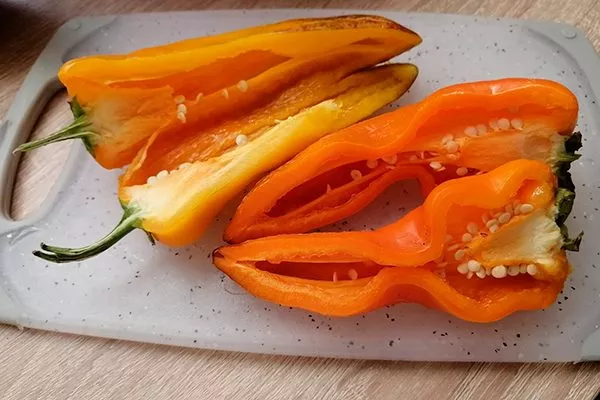
- wall thickness – from 7 to 8 mm;
- the pulp is juicy and sweet, with a slight crunch;
- aroma – pronounced, has fruity-peppery notes;
- The skin is glossy, dense, and does not crack.
Purpose and taste
Thanks to their fruity notes and rich flavor, the peppers have a wide range of uses, including being used in sauces for meat dishes. Peppers are eaten fresh, frozen, and processed for winter storage.
Ripening time
A minimum of 95 days should pass from seedling formation to harvest. Under less favorable conditions, this time can increase to 105-110 days. The optimal months are August and September.
Pros and cons
Being a hybrid, pepper is considered resistant to many pests and some diseases.
Landing rules
The variety has no requirements for its location – it produces fruit well both in the shade and in full sun, but soil composition is important. Black soil is best. If it's unavailable, you'll need to enrich it with loam or sandy loam. To achieve this, add organic matter to the soil during autumn tilling – 12 kg per square meter, and be sure to include mineral fertilizers and wood ash.
- ✓ The optimal soil pH should be in the range of 6.0-6.8 to ensure maximum nutrient availability.
- ✓ The soil must be well-drained to avoid water stagnation and the development of fungal diseases.
Other features to be aware of:
- Two weeks before transplanting the seedlings, the future beds are treated first with Trichopolum, then with liquid mullein and nitroammophoska;
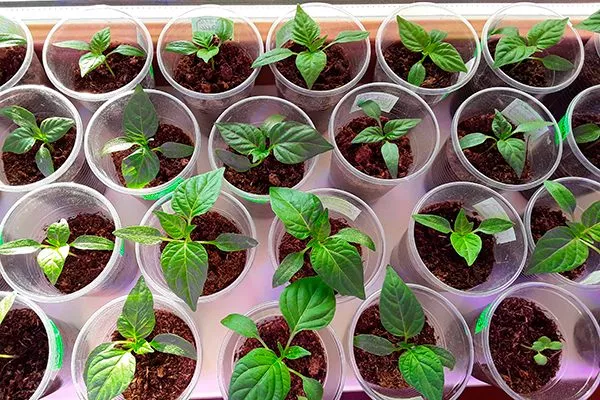
- the seeds need to be kept in Epin or aloe and germinated in a closed jar for 3 days;
- the depth of planting material is 1 cm;
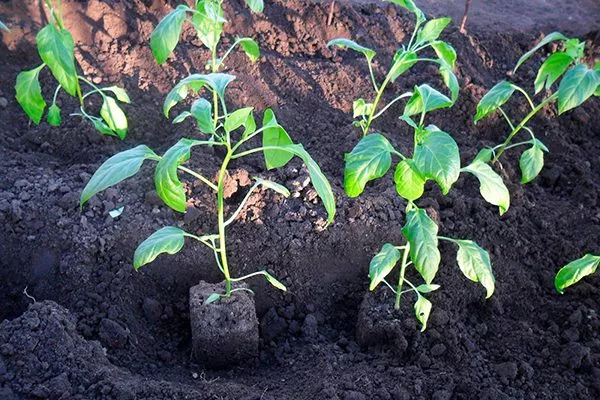
- The seedlings are transplanted after the formation of 8 true leaves.
Basics of cultivation
The Karas pepper has special requirements when growing:
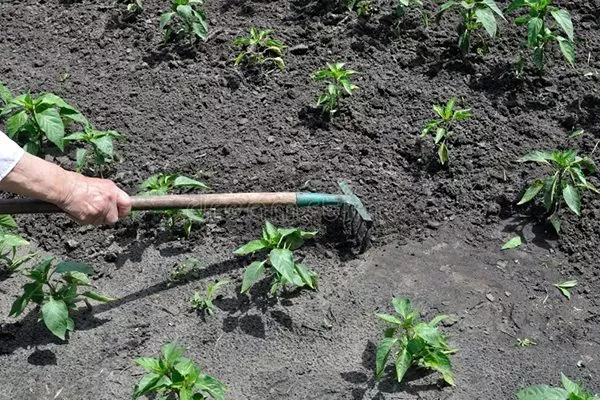
- mandatory loosening and removal of weeds once a week;
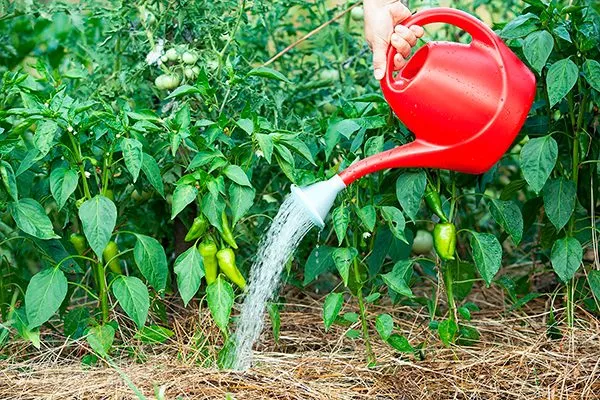
- watering should be drip and carried out mainly in the evening, when the sun is at the sunset stage;
- the rate of water application per bush is 3-3.5 l;
- frequency of humidification – once every 2-3 days.
Since the hybrid requires an increased level of fertility, fertilizing is carried out as follows:
- 10 days after transplanting into a greenhouse or open ground, azophoska and wood ash are required;
- During budding, potassium sulfate, liquid bird droppings and monophosphate are added;
- When fruits ripen, manure infusion and potassium magnesium sulfate are used.
Diseases and pests
Pepper is subject to only three problems:
- Blackleg. The cause is often improperly selected soil (too heavy) and overwatering. It manifests itself as damage to the root zone of the stem—at first, it becomes covered with black spots, but as the disease progresses, it dies completely. The bush dies. Fundazol is used for early treatment.
- Tobacco mosaic. This is a fungal disease that affects both young and old bushes. The fungus is transmitted by insects and wind. Symptoms include leaves covered with necrotic spots in a mosaic pattern. Treatment includes Lamador and Farmayod.
- Spider mite. Its infestation is provoked by overcrowding and prolonged drought. It can be detected by light spots on the undersides of leaves and web marks. To control it, use Sunmite and Oberon.
- ✓ The first signs of damage are the appearance of small yellow dots on the leaves, which then merge into large spots.
- ✓ If the infection is severe, the leaves may turn completely yellow and fall off.
Harvesting times and methods
If you plan on long-distance transportation, harvest the fruit before it reaches full ripeness. It's best to cut it with sharp pruning shears before watering.
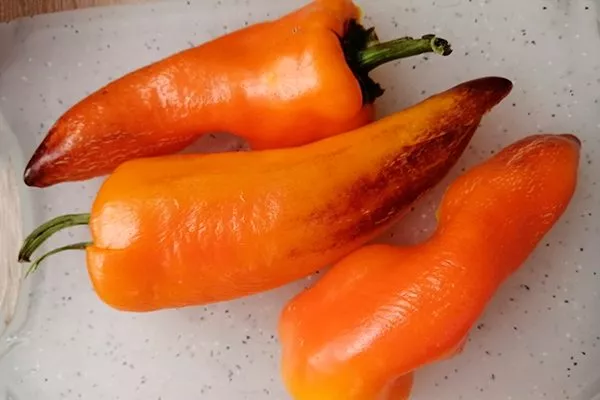
The Karas pepper is a high-yielding, yellow-hued hybrid that resists most diseases and pests. However, to avoid problems, it's important to strictly adhere to proper agricultural practices and create the most favorable growing conditions, especially soil fertility.