
Growing Kapiya peppers is easy, even for novice gardeners. This sweet pepper variety, with its exquisite flavor and juicy flesh, will be a true highlight of the garden and a source of inspiration for culinary experiments. Providing the plant with proper care will ensure bountiful harvests.
What are capias and the variety of varieties
Cape pepper has gained worldwide recognition for its nutritional value and exquisite flavor. Breeders have developed numerous varieties that attract the attention of gardeners.
| Variety | Ripening period | Length of fruits | Color at biological maturity | Wall thickness |
|---|---|---|---|---|
| Aconcagua pepper | Average | 20-60 cm | Orange-red | 3-4 mm |
| Delfina | Early | 12-15 cm | Dark red | 7-8 mm |
| Ecstasy | Early | 25-30 cm | Red | 4-5 mm |
| Slonovo uvo | Late | 18-20 cm | Dark red | 7 mm |
| Yellow capia | Early | 25 cm | Bright yellow | 4-5 mm |
Aconcagua pepper, Argentina
The plant reaches a height of 60 to 90 cm and is considered a mid-season variety. One of the largest sweet pepper varieties, native to Argentina, it produces exceptionally large fruits, ranging from 20 to 60 cm in diameter and weighing 150 to 350 g. The fruit wall thickness is 3-4 mm.
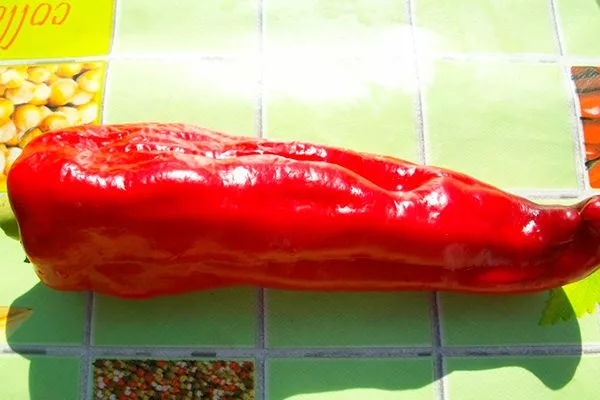
The fruit is cylindrical in shape, with rich orange-red hues, revealing its deformations. The flesh of this pepper is juicy, sweet, and has a distinct aroma.
Delfina sweet pepper, Serbia
This early-ripening variety is suitable for both open-air and greenhouse cultivation. The fruits are fleshy, 12-15 cm long and 5-6 cm in diameter.
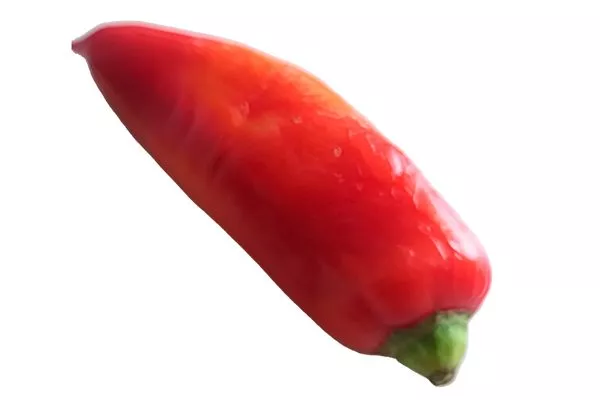
At technical maturity, they are light green, and when ripe, they acquire a dark red color. The average fruit weight ranges from 130 to 160 g, and the wall thickness reaches 7-8 mm.
Sweet pepper Ekstaza, Serbia
This early variety is high-yielding and suitable for growing indoors. The fruits are shaped like goat's horns and are distinguished by their sweet and tasty interior. They reach 25-30 cm in length, weighing an average of 130 g and are 4-5 cm wide.
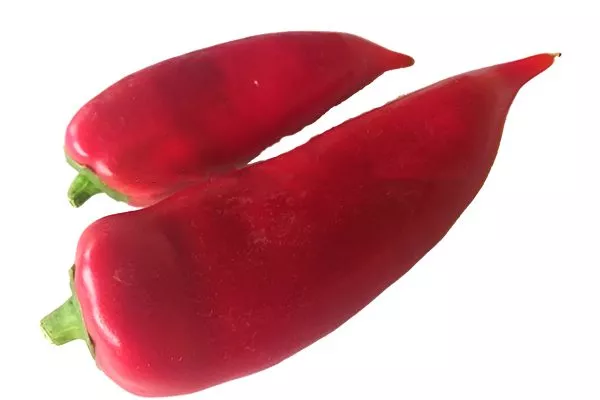
At technical maturity, the fruits are light green, turning red when fully ripe. This variety is ideal for growing indoors, ensuring early ripening and excellent fruit quality.
Sweet pepper Slonovo uvo, Serbia
This late-ripening variety is characterized by narrowly conical fruits. At technical maturity, the peppers are green, and at biological maturity, they are dark red. Each fruit weighs between 160 and 250 g, with a wall thickness of 7 mm.
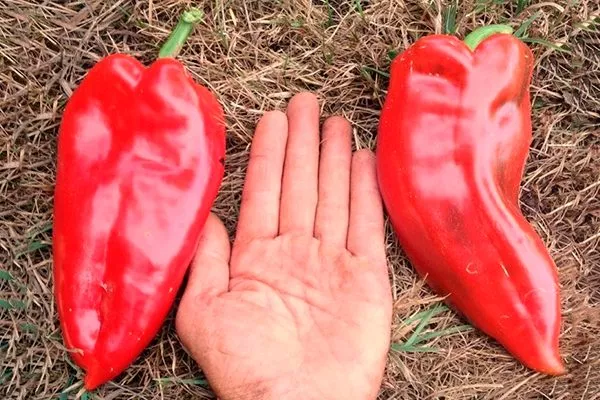
The fruits have a moderate width in the middle part, namely 10-12 cm, and a length of 18 to 20 cm. A distinctive feature is the presence of a characteristic hook at the end of each fruit.
Sweet pepper Amanda, Serbia
This variety is early maturing (ripening in 85-90 days). Fruit weight ranges from 120 to 160 g. The peppers are cone-shaped with a pointed tip, fleshy, and divided into three chambers.
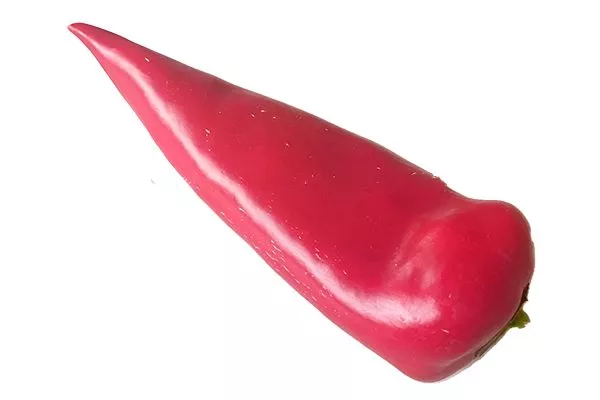
The length of the fruits ranges from 9 to 13 cm, the diameter is 7-8 cm. At technical ripeness, they acquire a milky color, and at biological ripeness, a red tint.
Sweet pepper Cherry wine
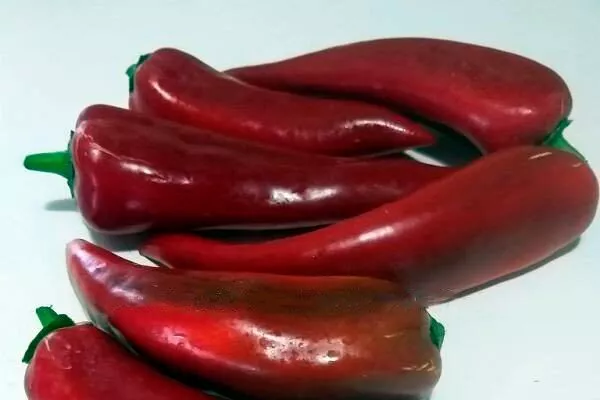
This early-ripening variety is a collectible developed through folk selection. Fully ripe, the fruits have a dark cherry hue, an elongated shape, and thick walls. The flesh is rich in juice, crisp, and has a pleasant aroma and distinct sweetness.
Sweet peppers Dolce de Spain
The fruits of this mid-season variety are very large, measuring 20-25 cm in length and 6-7 cm in width at the stalk. They have a conical-cylindrical shape, ribbed surfaces, and a rounded end.
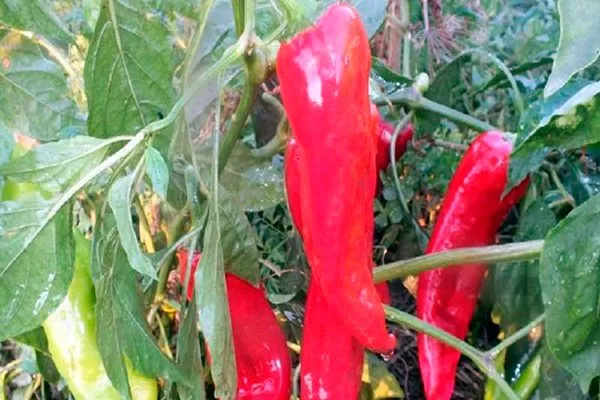
The fruit wall thickness is 4-5 mm. At technical maturity, the pepper is green, and at biological maturity, it is fiery red.
Sweet pepper Danube
This early-ripening variety is highly productive. Plants reach a height of up to 90 cm, are semi-spreading, and bear medium-sized foliage. The fruits are uniform in shape, firm, and easy to transport. The flesh is juicy, soft, crisp, and aromatic.
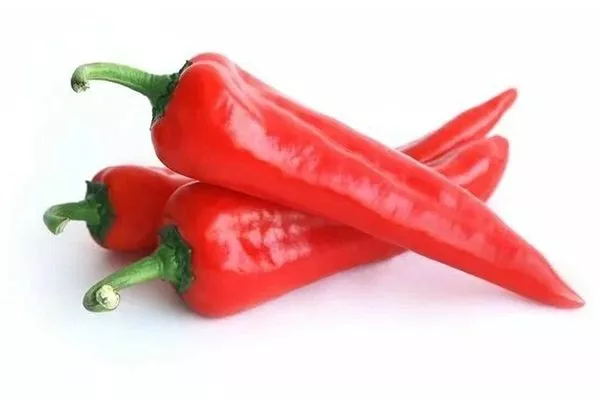
At the technical stage of ripening, the fruits are yellow, and when fully ripe, they acquire a red tint. This variety has excellent taste.
Sweet pepper Capia lutea
This early-ripening variety is characterized by high yields, with a period from germination to first harvest of 90-100 days. The fruits are notable for their considerable length, reaching up to 25 cm, with a wall thickness of 4-5 mm, and an average weight of 200-230 g.
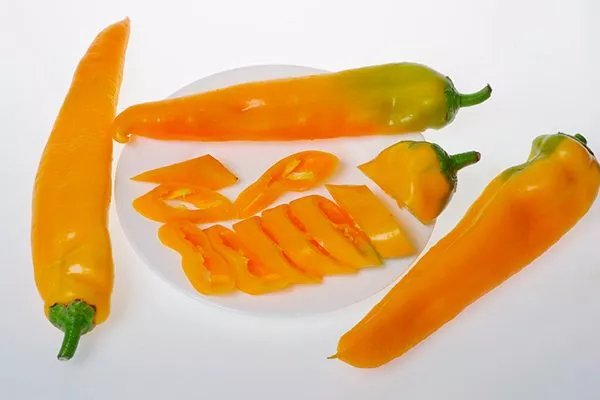
Peppers have a dense texture. When ripe, they are light green, and when ripe, they turn bright yellow. They are distinguished by their high sweetness, aroma, and vitamin C content.
Kurtovska kapiya sweet pepper, Bulgaria
Plants of this variety grow from 50 to 70 cm in height, are highly resistant to diseases and pests, and tolerate summer heat well. In Bulgaria, Kurtovska Kapiya is considered a mid-early variety.
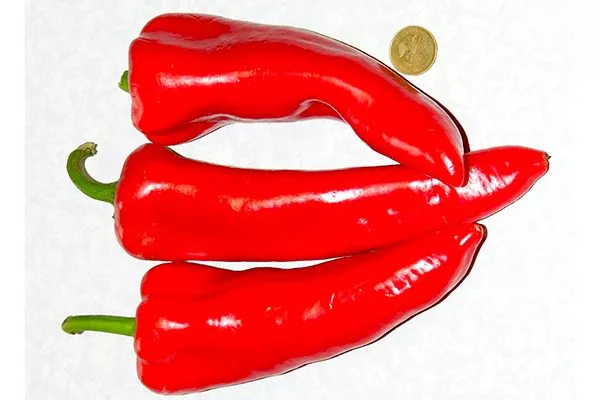
The fruits are large, elongated, and slightly flattened, reaching 12 to 16 cm in length, sometimes even up to 18 cm. They have an excellent flavor and aroma. Bright red and shiny, these peppers are not only healthy but also quite tasty.
Sweet pepper Paprika
This new variety of sweet pepper, a trunk-shaped pepper, belongs to the "Paprika" cultivar. Its elongated fruits are shaped like hot peppers, but have thinner walls, approximately 3 mm, and contain more dry matter than their standard-shaped sweet relatives.
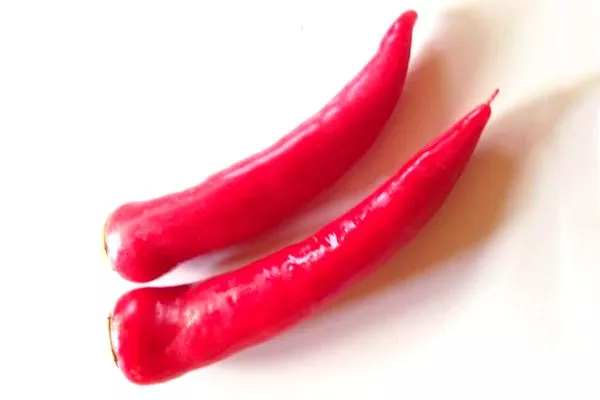
They have higher levels of capsaicin, which gives them a more vibrant and rich flavor and aroma. These fruits are especially popular among pepper lovers.
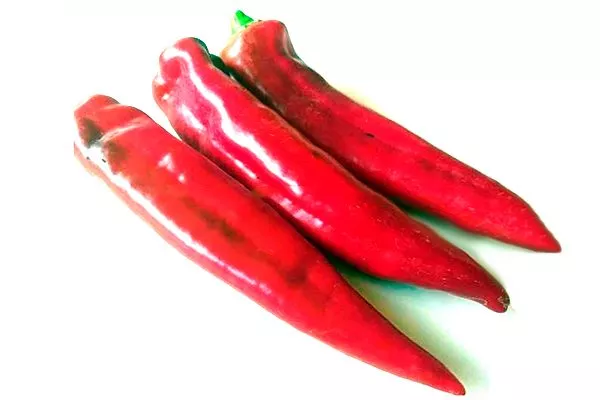
Sweet pepper Roman
This early-ripening variety is characterized by a bush 55-65 cm tall. The upward-facing fruits are trunk-shaped, shiny, dark red, and reach a length of up to 14-16 cm, weighing from 120 to 350 g.
Sweet pepper Sofia kapiya
The fruits of the Sofia kapia are distinguished by their unusual shape, as they grow downwards, reaching a length of 12 to 16 cm. Their shape resembles a two- or three-chambered fruit, with a base width of 5 to 7 cm, and a rounded and slightly concave end.
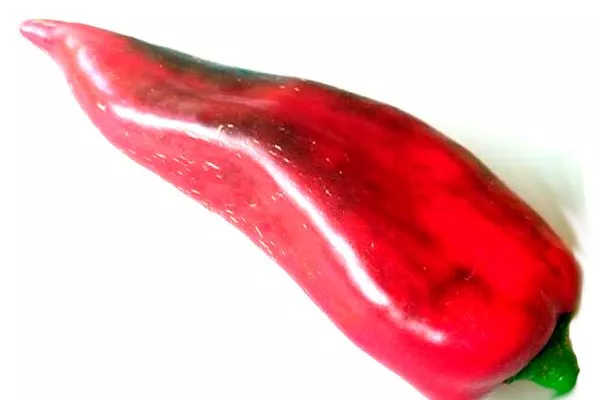
Palaničko's miracle
The pepper plant is a medium-sized bush, reaching a height of up to 70 cm in open ground and 100 cm in greenhouses. The compact bush makes it easy to care for and maintain its shape.
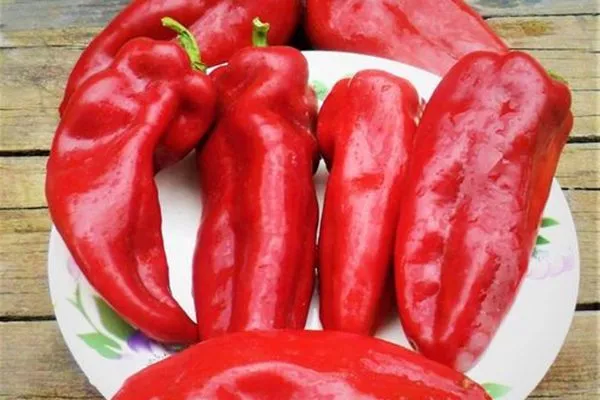
The fruits of this variety are quite large, weighing up to 400 g. They are conical in shape, with a pointed tip. Their deep red color makes them highly appealing to consumers.
History of selection of the Kapiya variety
Many vegetable growers claim that this pepper variety was created by Bulgarian breeders, but in fact, it is the result of Turkish selection, and its creator is the agricultural company May Tohumculuk.
This pepper variety was included in the Russian State Register in 2010 and is recommended for outdoor cultivation. The description provided by the cultivar's originator does not include information on planting in greenhouses or plastic tunnels.
Cultivation regions
According to information provided in the Russian State Register, the Kapia bell pepper is suitable for cultivation in most Russian regions, including the Moscow region and central Russia.
Description of bushes
Kapia bell pepper plants have a strong, vigorous structure and can reach heights of 60 to 90 cm when grown in plastic greenhouses. In garden beds, they rarely exceed 70 cm in height, yet they remain compact.
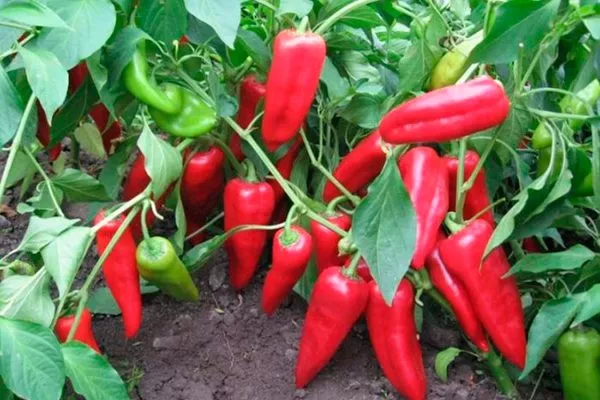
The shoots of the Kapiya pepper are erect and abundantly covered with leaves. The leaves are medium-sized, oval-elongated, with pointed tips and sparse, fine serrations along the edges. The leaf blades are smooth, glossy, and have prominent veins and a rich emerald hue.
Flowers appear in clusters of 3-5 per cluster; they are female. Therefore, the presence of other pollinators is necessary for fertilization of this pepper variety.
Description of fruits
Ripe Kapiya bell peppers are elongated and cone-shaped with a pointed lower tip. The skin is smooth, even, and has a characteristic sheen and is fairly dense. The flesh is juicy and fleshy, containing 2-3 seed chambers containing a moderate number of seeds.
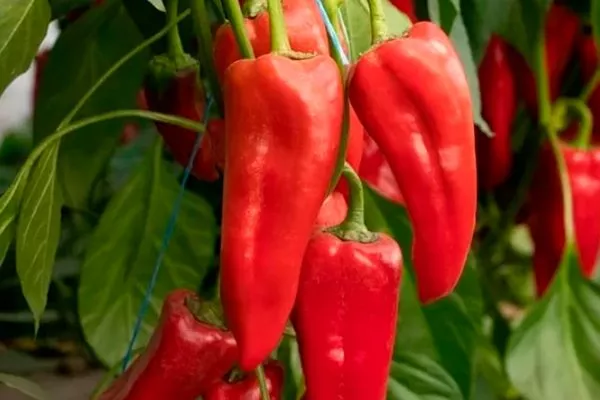
The fruits can reach a length of 14-15 cm and a diameter of about 10 cm. The walls of the peppers are quite thick – up to 6 mm. The average weight of ripe fruits is 65-100 g. They are positioned tip down on the plant.
At the initial stage of ripening, they are dark green, which changes to bright red as they mature. Ripe peppers have a sweet, non-bitter flavor with a pleasant, rich aroma.
Main characteristics
Kapiya peppers grown outdoors mature on average in 3-4 months from seedling emergence. Plants of this variety are resilient to adverse weather conditions. The plants are rarely susceptible to disease and insect attacks.
Productivity
When grown outdoors, Kapiya bell peppers can yield up to 5 kg of ripe fruit per square meter. In plastic greenhouses, yields can be even higher. The recommended planting density is 3-5 plants per square meter.
Application of fruits
The harvested fruits are versatile: they are used for stuffing, added to first and second courses, and in salads.
Peppers are used in canning: they are pickled whole or chopped, added to other vegetables, and also included in various winter preparations.
Diseases and pests
This pepper variety is characterized by high resistance to most diseases, including fungal infections. Currently, there is no information on harmful insects that can harm this vegetable plant.
Advantages and disadvantages of the variety
The Kapiya bell pepper is distinguished by its distinct sweetness and rich, pleasant aroma, making it a distinctive feature. Its flavor is devoid of bitterness.
This variety is specifically designed for a variety of culinary applications, although its uses can range from fresh consumption to canning, roasting over a fire, and use in a variety of dinner menus.
Other advantages of the variety:
- Convenient shape of fruits. The narrow fruits are ideal for jars during canning and pots during stuffing.
- Appearance of the harvest. Excellent performance, which makes it attractive.
- Structure of the pericarp. The fleshiness and juicy structure of the pericarp improve the shelf life and transportability of the fruit.
- Origin of seeds. It is not a hybrid, which allows gardeners to collect seeds and grow them in subsequent seasons.
- Productivity. It has a good yield, although it does not reach record levels.
Among the disadvantages, agronomists point out the need to tie up the bush, since this increases the risk of reduced yield.
Growing
Caring for the Kapia pepper doesn't require any special skills or procedures. Caring for the plant involves regular watering, fertilizing, loosening the soil, removing weeds, and shaping the bush.
How to properly plant sweet pepper seedlings?
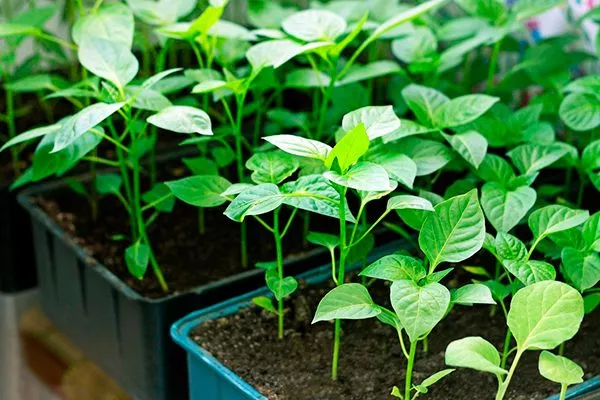
It's recommended to sow Kapiya pepper seeds for seedlings in individual cups to avoid the need for transplanting, which can delay plant development by two weeks. Sowing in individual cups allows for pre-germination of the seeds on a damp cloth.
Helpful tips:
- Grow Kapiya pepper seedlings from February 20 to March 10. The optimal air temperature for rapid germination is 26-28°C, with the seeds planted at a depth of 1 cm.
- Peppers germinate 6-15 days after sowing. To ensure rapid and uniform germination, the room temperature should range from 23 to 28°C. At temperatures below 15°C, the pepper seeds will not germinate.
- Once the seedlings emerge, move the container to a windowsill or provide artificial light for 12 hours a day. Apply the first fertilizer using a growth stimulant.
- Day 1-5: Maintain temperature at +26-28°C until germination
- Day 6-14: Temperature drops to +20-22°C during the day
- Day 15-21: First feeding with complex fertilizer (NPK 10-10-10)
- Day 30-35: Beginning of hardening in the open air
- Day 45-50: Transplanting into the ground at a soil temperature of +16°C
Schedule of work with seedlings
Two months after sowing, the seedlings can be transplanted into open ground. Before planting, be sure to harden them outdoors for 14 days. Beginning of Form
Further care of the Kapiya pepper
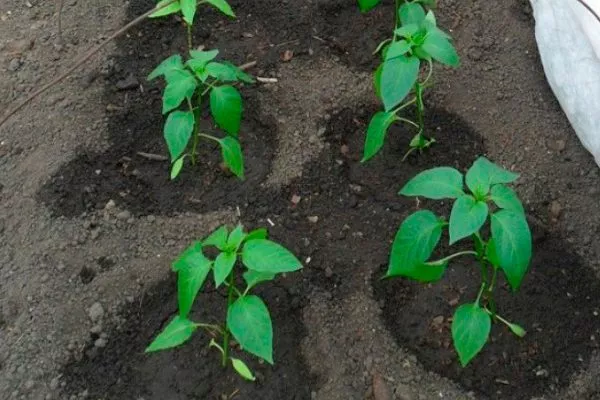
Caring for planted peppers involves standard agricultural practices: regular watering, fertilizing, loosening the soil, and removing weeds. This is important for a good harvest and disease resistance.
- ✓ Watering in the morning (before 10:00) or in the evening (after 18:00)
- ✓ Soil moisture control (not higher than 80%)
- ✓ Fertilizing every 14 days during the growing season
- ✓ Removing lower leaves up to the first fork
- ✓ Preventive treatment against late blight
Irrigation regime
Water this pepper variety thoroughly every 3-5 days, depending on weather conditions. Avoid overwatering. Water in the evening with warm, settled water, directly at the roots of the plants. Avoid allowing water to drip onto the foliage and shoots.
Loosening and weeding
After rain and watering, loosen the soil around the pepper's roots to improve oxygen and moisture flow to the root system. Be sure to remove all weeds, including the roots.
Mulching
After watering and loosening the soil, cover the root zone with a layer of humus as mulch. This prevents rapid evaporation of moisture from the soil. Furthermore, this layer of mulch will further enrich the soil and provide nutrients for the peppers.
Top dressing
You can use various fertilizers to feed your Kapiya pepper, providing the plants with the necessary nutrients. It's important to monitor the soil and the needs of the plant. Here are some types of fertilizers you can use:
- Complex mineral fertilizers. They are used to provide plants with all essential macro- and micronutrients. They are suitable for regular application to the soil during the growing season.
- Organic fertilizers (manure, humus). Natural sources of nutrients that improve soil structure and enrich it with organic matter.
- Potassium-phosphorus fertilizers. Important for fruit formation and stem strengthening. Apply before flowering and during fruit formation.
- Nitrogen fertilizers. They promote foliage growth and overall plant development. They are applied early in the growing season.
- Microelements. Fertilizers containing iron, copper, zinc and other micronutrients can be important for maintaining plant health.
Follow recommended fertilizer dosage and application schedules to prevent soil from becoming waterlogged.
Kapiya Pepper: Reviews from Vegetable Growers
Growing Kapia peppers is a rewarding and fruitful activity that can bring not only the joy of caring for the plants but also a bountiful harvest of delicious and aromatic peppers. By following these helpful tips, you'll create the perfect conditions for your pepper to thrive and enjoy its unique flavor.