
The Kakadu sweet pepper produces fruit of a unique appearance, a favorite among many farmers and gardeners. Its bright and aromatic pods will not only delight you but also provide the whole family with a sweet, juicy harvest.
The History of Kakadu Pepper
Kakadu is an F1 hybrid. It was developed by Gavrish breeders, with scientists from the Moscow Research Institute also participating in the development. This pepper is specifically designed for greenhouse cultivation.
An application to add the variety to the state register was submitted in 2003. A year later, the pepper was officially recognized, given a clear standard, and approved for cultivation.
The plant can be grown throughout the European part of Russia. In this region, pepper exhibits its best qualities and demonstrates the highest productivity. It is less useful in the Urals. However, farmers don't pay much attention to this, trying to grow it in every corner of the country.
Experienced gardeners even manage to grow the plant outdoors in Siberia. Some farmers aren't thrilled with the variety's productivity, but it remains a leader among its peers to this day.
2015 was the year a new cultivar, the Yellow Cockatoo, was created. It differs from its "red brother" in the color and shape of its pods.
Description and characteristics
The plants grow to a height of 1.5 meters, so they require support. The first harvest reaches technical maturity at 130 days after germination. This figure is specified in the state register, but gardeners report that technical maturity occurs earlier.
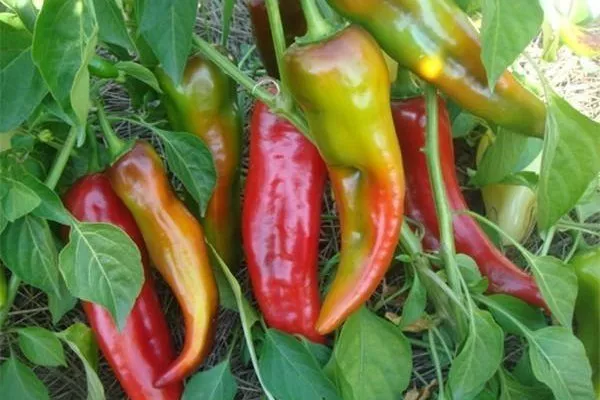
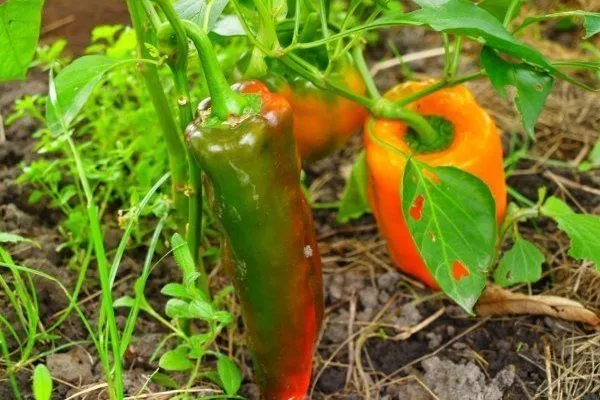
This variety is loved for its unusually shaped pods, curved like a beak. The color at technical maturity is dark green, and at biological maturity, it's bright red. The walls are approximately 7 mm thick, and the flavor is delicate, characteristically peppery.
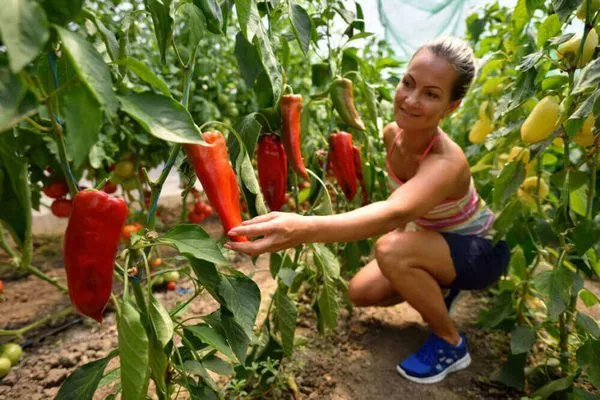
The pod reaches 0.3 m in length and weighs 0.2 kg, with some pods weighing 0.5 kg. Approximately 9 kg of yield can be harvested from 1 square meter, with one plant yielding 3 kg. Approximately 12-15 pods grow on a bush. To avoid disappointment with the productivity of this hybrid, it is necessary to thin the ovaries in a timely manner; otherwise, the plant will produce numerous fruits, but all of them will be miniature.
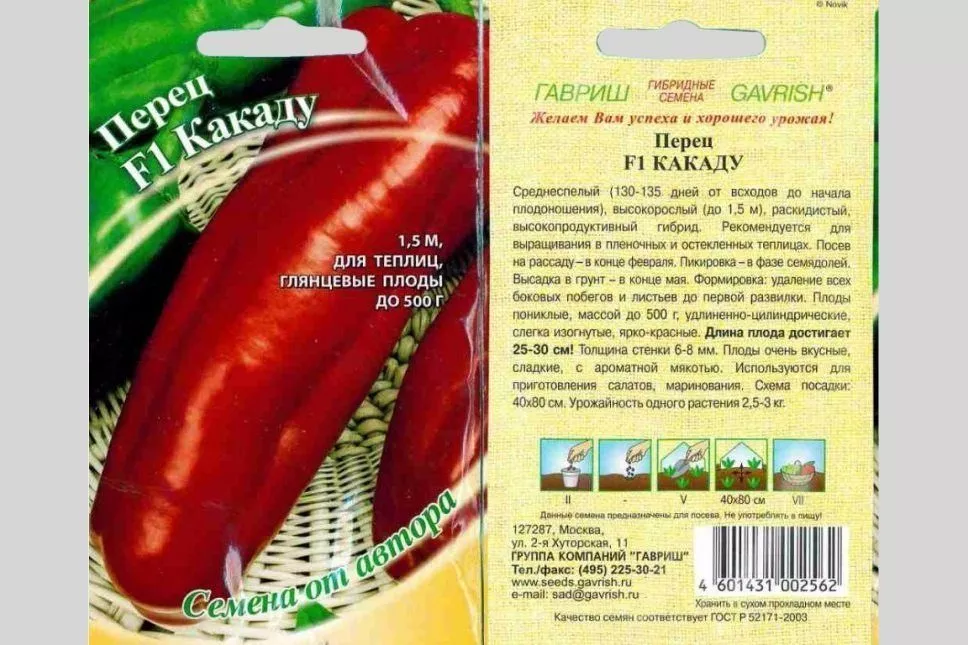
Kakadu pepper variety seeds
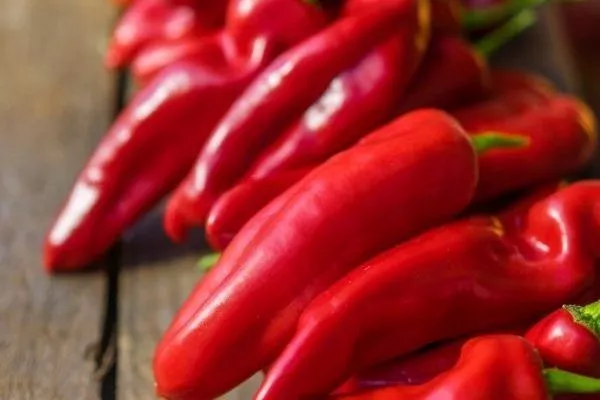
Fruits are up to 30 cm long, weigh up to 500 g, wall thickness is 6-8 mm
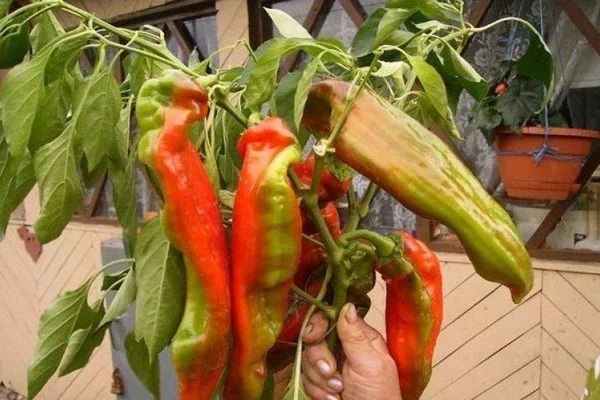
The variety is named for the unusual shape of the pods, they are curved like a beak.
Advantages and disadvantages
The Kakadu sweet pepper, like other representatives of the crop, has pros and cons, which must be taken into account when growing the plant.
Advantages of the Kakadu variety:
- unusual appearance of fruits;
- excellent taste;
- productivity at the highest level;
- strong immunity.
Disadvantages of the variety:
- a very tall bush, take this fact into account when planting so that the plants do not grow too close to each other;
- When grown in close proximity, the plant begins to shed its crop;
- the bush takes up most of the greenhouse soil;
- When planting in open ground, the wind breaks the branches of the pepper, so you need to choose the right place for growing;
- The variety is not suitable for lecho.
Features of agricultural cultivation technology
Grow in a greenhouse This hybrid is not very difficult, but you will have to constantly monitor the development of the seedlings and create the necessary conditions for them.
Seed preparation
To obtain high-quality seedlings, carefully select the planting material and prepare the soil for planting. This should be done as early as late February. Kakadu pepper seeds are delicate and sensitive, and they quickly lose their germination capacity.
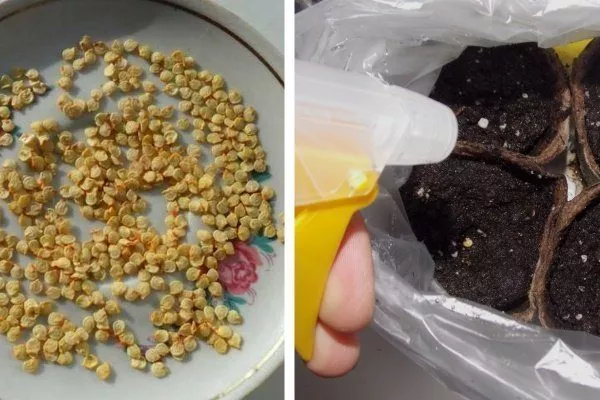
Algorithm for preparing seeds for planting:
- Careful selection of seed material. Inspect all the peppercorns and select the best ones. Next, prepare a salt solution (1 liter of water + 40 g of salt). Submerge the peppercorns in it and leave them for about 10 minutes. The good seeds will sink to the bottom, while the bad ones will float to the top. Remove the seeds, rinse them under water, and dry them.
- Disinfection. Make a solution of water and a small amount of potassium permanganate. Soak the planting material in the solution for 15 minutes. Then rinse and dry.
- Enrichment with useful microelements. Carry out this procedure two days before sowing the seeds in pots. Place the seeds in a cheesecloth bag and soak them in a special solution containing microelements. Leave them there for about a day, then remove and dry (no need to rinse).
- Germination. This method works very well; the seeds begin to sprout within 24 hours. Place the seeds in cheesecloth, dampen it slightly, and place in a warm place. Plant the seeds only in moist soil.
By following these simple steps, you will immediately obtain material suitable for sowing.
Sowing seeds for seedlings
You can use peat tablets, wooden boxes are also suitable. Soil for sowing seeds for seedlings The soil should be as fertile and loose as possible. Sow the seeds at a depth of 15 mm, cover the containers with plastic wrap or glass, and place them in a warm, windless place.
The key to high-quality seedlings is properly prepared seeds and planted correctly. After sowing, monitor the seeds, especially during germination. For the first 2-3 days, keep the seedlings near a heater or radiator, then move them to a window for direct sunlight.
- ✓ Optimum temperature for seed germination: +24…+26°C during the day and +15…+17°C at night.
- ✓ The need to provide additional illumination of seedlings with phytolamps to ensure at least 13 hours of daylight.
For plant growth, maintain a temperature of 24 to 26 degrees Celsius, dropping it to 15 to 17 degrees Celsius at night. Seedlings thrive on light, so it's recommended to provide supplemental lighting with phytolamps. Daylight hours should be no shorter than 13 hours.
The video below clearly demonstrates how to plant Kakadu F1 sweet pepper seeds:
Growing seedlings
Seedlings can be placed not only on the south side of the room; east- and west-facing windowsills are also suitable. Plants should be watered as the soil dries out. Use only warm, settled water; cold water will kill them. Water either early in the morning or late in the evening.
Picking seedlings
If you planted the seedlings in a large wooden box, then after the first two true leaves appear, the plants need to be pricked out, that is, transplanted into separate containers.
Pricking out is often done 2-3 weeks after the first seedlings emerge. Transplant very carefully to avoid damaging the pepper's root system; otherwise, restoring the seedling will be virtually impossible.
At first, protect the seedlings from direct sunlight, then place them in a bright and cool place.
Feeding seedlings
Growing Kakadu seedlings requires fertilization. Fertilize for the first time when the seedlings have two leaves. Apply urea, phosphate, potassium salt, and water. Fertilize again two weeks later, using the same fertilizer.
Harden off the seedlings two days before transplanting them into a greenhouse or open soil. Bring them outdoors for short periods, but ensure the temperature does not drop below 13 degrees Celsius.
Transplanting seedlings into open ground
The timing of transplanting seedlings depends on the growing region: in southern regions, in late May or early June; in northern regions, 14 days later. The area should be as sunny as possible. If the soil in the garden is heavy or poor, add compost (5 liters per 1.5 square meters) and wood ash (0.5 liters per 1 square meter).
| Parameter | Meaning |
|---|---|
| Minimum temperature for growth | +13°C |
| Optimal distance between plants | 0.5 m |
Dig up the soil and create beds in which to plant the seedlings in a staggered pattern. Leave approximately 0.5 m between seedlings within a row and 1 m between rows. Planting too closely will lead to disease and a poor harvest.
Caring for Kakadu Peppers
The plant's yield depends on how well it's cared for. Without proper care, the pepper won't surprise you with its unusually shaped fruits.
Watering and fertilizing
Fertilize peppers with complex and organic fertilizers. Apply the first fertilizer two weeks after planting outdoors or in a greenhouse. Urea can be used, but manure is more reliable; dilute it 1:15 with water. Use this mixture only to water the area around the trunk.
The second application of fertilizer is carried out during the flowering and fruit set season. In addition to manure, you can use cow manure; mix it with water (1:10) and pour it into trenches dug near the plants.
Treating pepper leaves and buds with an ash infusion (400 ml per bucket) is beneficial. A third application of fertilizer is made with liquid chicken manure when the Kakadu hybrid begins to bear fruit.
Water seedlings at least once a week, or every other day in a greenhouse. Use only warm, settled water, otherwise the plants will become diseased and die. After watering, loosen the soil to improve air and moisture absorption.
Mulch plays an important role; use turf soil or humus as a material.
Pruning shoots
Without proper bush training, you won't get a good harvest. Perform the first pruning when the seedlings are just starting to emerge. After the first 5-6 leaves have formed, pinch off the top growth point. This will encourage the plant to develop side shoots, which will eventually produce fruit. After transplanting into open soil, trim off any side shoots that form between the nodes, leaving a 20 mm stump intact.
Harvesting and storage
Plants will yield more if the fruit is harvested at technical rather than biological maturity. This advice is especially important for the first fruits; don't let them turn red on the bush, otherwise they will inhibit the development of new ovaries.
Pods harvested at the technical ripeness stage have a longer shelf life. They taste similar to red pods, but are more beneficial. The Kakadu pepper variety has a unique purpose. The fruits are juicy and delicious, suitable for a variety of dishes and preserves.
They're not particularly convenient for stuffing due to their curved appearance and large size. They're best used in salads and appetizers. Freezing is the best storage option.
Diseases and pests
Even timely care never guarantees 100% protection from pests and diseases. Cockatoos have a strong immune system, but one disease—late blight—can still disable them and even lead to their death.
Preventive measures:
- do not thicken the plantings;
- pull out all diseased shoots at the initial stage of the disease;
- use fungicides.
If the watering schedule is disrupted or the temperature changes, the plant may be attacked by blossom-end rot. Treat the bushes with calcium nitrate.
The most dangerous pests are spider mites and aphids. Use folk remedies to combat them. For example, an ash solution has proven effective, and you can also use specialized insect control chemicals.
The use of special chemicals is unacceptable at the stage of pod formation.
Gardeners' reviews of the Kakadu pepper
The Kakadu hybrid is an excellent pepper with a strong personality; you have to try to please it, otherwise you won't see a harvest. Be sure to fertilize it regularly, train the plant, and avoid growing it in areas that aren't suitable for it. Monitor the development of the seedlings and transplant them correctly.