
Many gardeners love the Gogoshary pepper. It has a unique shape and high yield. Its flavor changes depending on the vegetables planted nearby. It's easy to preserve, store, and transport. Those who haven't yet grown this variety will certainly fall in love with its ease of care and excellent qualities.
Origin of the Gogoshary pepper variety
The Gogoshary sweet pepper cultivar was developed at the Moldovan Research Institute of Vegetable Growing through breeding efforts. Researchers have honed the new variety's resistance to many diseases and its pleasant flavor.
Pepper is widely grown in Moldova, western and southern Ukraine, and northern Romania. It is often called "ratunda pepper."
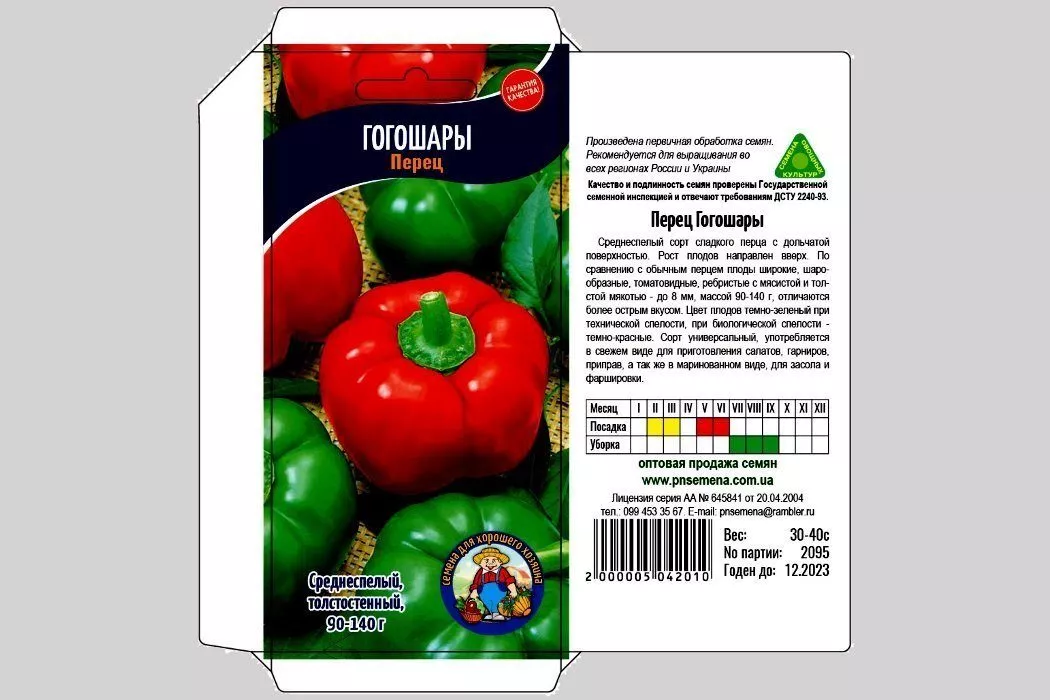
Gogoshary pepper seeds
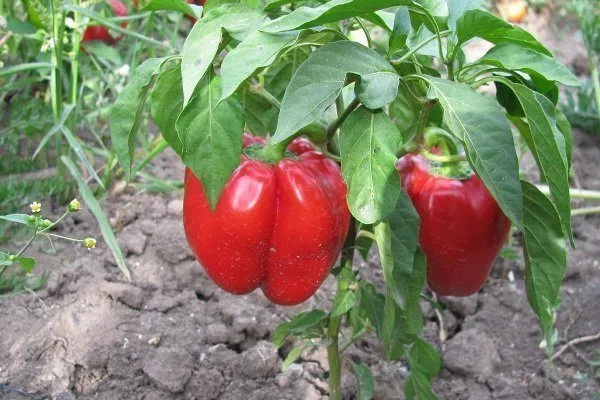
Gogoshary pepper bush
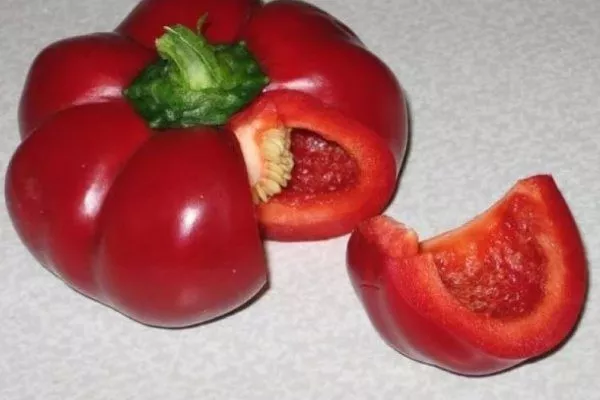
Gogoshary pepper takes on the flavor of its neighboring vegetables
Description and characteristics
This is a very heat-loving plant. It can be planted outdoors in warm climates. In other regions of the country, greenhouse cultivation is the only option. The growing temperature should not fall below 16 degrees Celsius. Cold temperatures can cause shoots to freeze, and flowers and ovaries to fall off.
The growing period is 100 to 130 days. The yield is good. When grown in a greenhouse with proper care, you can get up to 9 kg per square meter.
Description of bushes
This pepper variety grows on short, compact bushes with moderate branching. They can reach a height of 50 cm and a width of up to 45 cm.
You can grow the tree without additional support. Experienced gardeners recommend placing stakes under the branches during a bountiful harvest to prevent them from breaking under the weight of the fruit. The branches are fragile, so additional support is helpful.
Characteristics of fruits
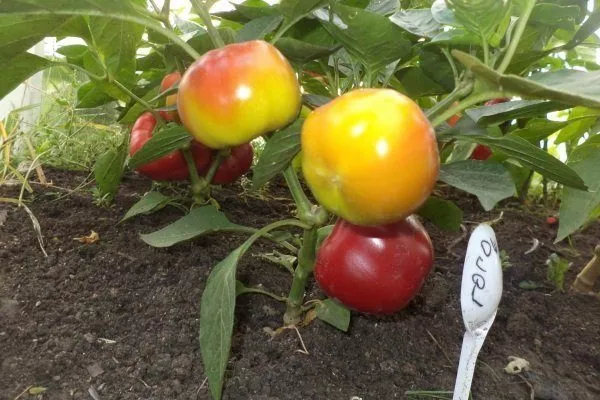
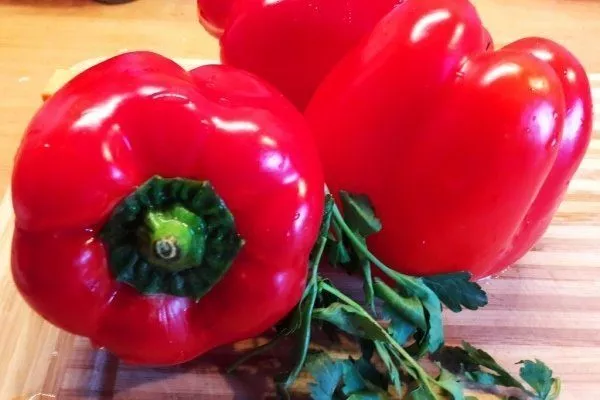
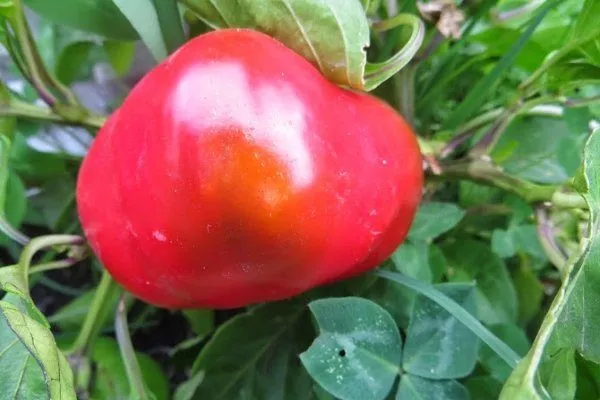
Gogoshary peppers produce small, flattened fruits that resemble pumpkins. They are ribbed and have four chambers. They come in red, yellow, or orange.
The main advantages of the fruits:
- juicy dense pulp up to 1 cm thick;
- convenient weight from 50 to 140 g;
- the taste is sweet without bitterness;
- low calorie content;
- high vitamin content;
- gradually ripen when collected.
The peppers have a strong and sturdy stalk, which is why many of the fruits point upwards.
Application
Homemakers prefer the Gogoshary pepper variety for its unusual shape and thick, fleshy wall. It can be used in first and second courses, baked, made into sauces, and marinated in the classic style or with honey.
The small seed chamber makes stuffing the pepper impossible, but there are recipes for this. Gogoshary peppers are stuffed not only with meat, but also with stewed apples and zucchini and onions with lemon.
This pepper variety keeps fresh for a long time in a cool place. It's picked unripe, before its green color begins to change to red or yellow. It will gradually ripen, and it's time to eat. For storage, the peppers can be cut and frozen.
The Gogoshary pepper is an easy-to-grow and easy-to-use variety. For this reason, it's popular with gardeners and a favorite among homeowners.
Varieties
The variety has many variations, allowing gardeners to choose the right one for their needs. Characteristics vary by color, appearance, ripening time, and fruit weight.
| Name | Ripening period, days | Fruit weight, g | Thickness of pulp, cm |
|---|---|---|---|
| Rotunda | 100-130 | 120 | 0.5-0.7 |
| Ruby | 100-130 | 150 | 1 |
| Kolobok | 135 | 150 | 1 |
| Olenka | 100-130 | 150 | 1 |
| Candy | 90 | 60 | 0.7 |
| Fragrant Golden Jubilee | 100-130 | 200 | 1 |
| The Original Kolobok | 130 | 130-190 | 0.6 |
| Golden Tamara | 135 | 220 | 1 |
| Rich Ruby | 180 | 190 | 1 |
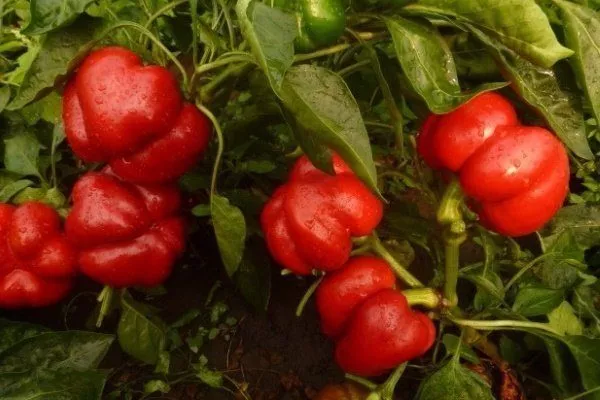
Rotunda
A classic representative of the variety. The fruit is bright red, and its shape resembles a small pumpkin, as it is flattened at the top and bottom. The taste Rotunda pepper The peppers are distinguished by their distinctive pungency, but lack bitterness. The fruit walls are thin, ranging from 0.5 to 0.7 cm, and the average pepper weight is up to 120 g.
Ruby
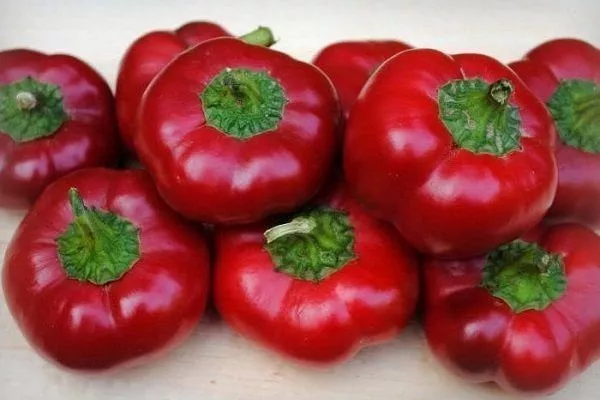
This variety can tolerate lower temperatures. The fruits are round with pronounced ribs. The color ranges from dark red to brown. The fruit walls are juicy and fleshy, reaching 1 cm in thickness. The average pepper weight is up to 150 g.
Kolobok
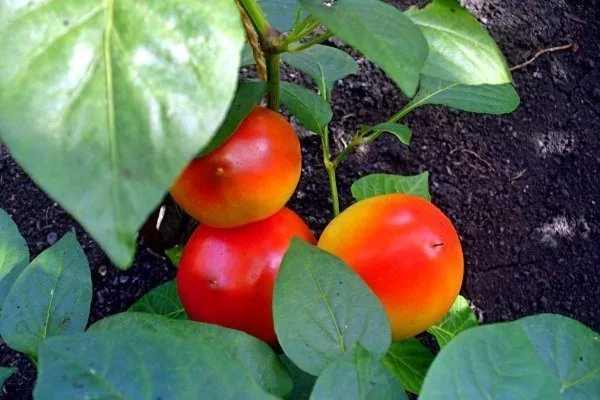
The fruits are spherical, up to 8 cm tall, and weigh approximately 150 g. They reach maturity 135 days after sowing. The flesh is dense and juicy, over 1 cm thick.
The peppers are initially green, turning red as they ripen. The yield is average, up to 4 kg per square meter. The flavor is sweet. They are excellent for canning, as they retain their shape during cooking.
Olenka
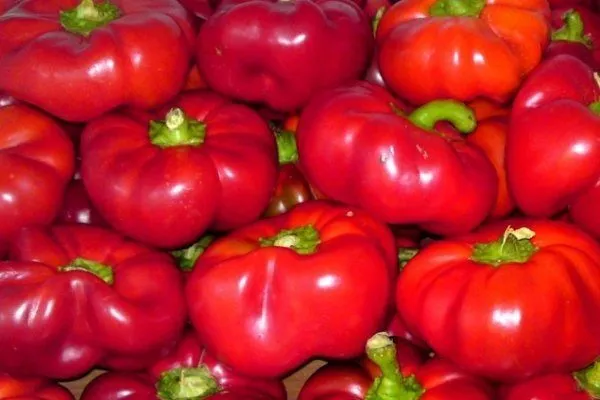
A high-yielding variety, yielding up to 9 kg of peppers per square meter. Experts recommend growing this variety in a greenhouse. The fruit color changes from green to burgundy as it ripens, and the flesh has a sweet flavor with a pleasant aftertaste. It is successfully used fresh and canned.
Candy
The fruits are small, weighing up to 60 g. They have a distinctive shape—wide at the top and tapering to a pointed tip at the bottom. The flesh is sweet, and the fruit walls are up to 7 mm thick. When cut, a distinctive, pleasant aroma is noticeable.
An early-ripening variety, it takes 90 days to mature. It has increased disease resistance. With proper care, a single plant can yield up to 1.5 kg of vegetables. Peppers of this variety are often canned whole.
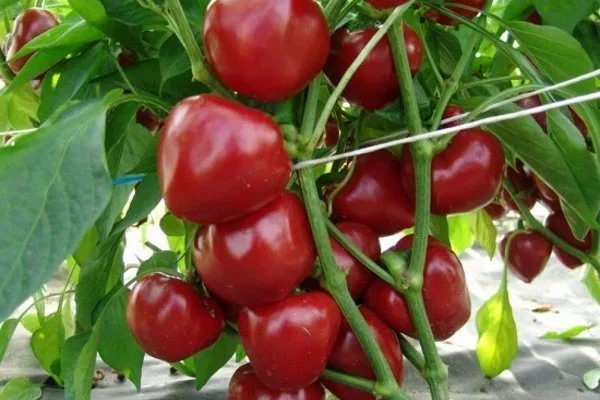
Fragrant Golden Jubilee
The fruits are round with slightly defined ribs. Each pepper weighs over 200 g. The flesh is sweet and juicy. When young, the fruit is green, turning a yellow-orange hue as it ripens.
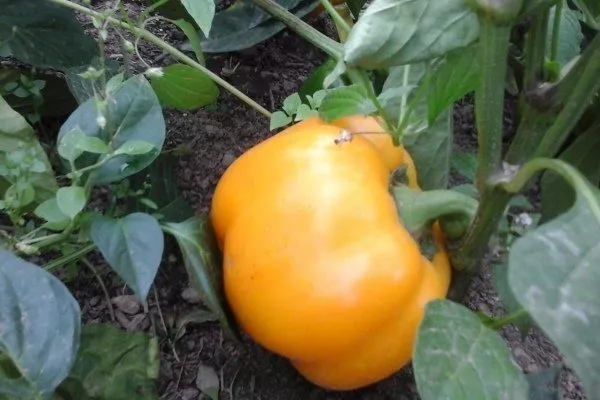
The Original Kolobok
This variety grows small, up to 40 cm tall. Fruit forms early and stores well in a cool place. Ripening time is 130 days. The fruits are smooth, weighing from 130 to 190 g. The flesh is juicy and dense, up to 6 mm thick. Up to 10 kg of this pepper variety can be grown per square meter.
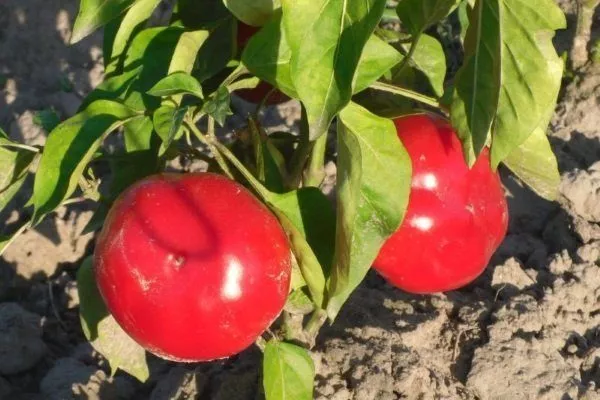
Golden Tamara
Large fruits weighing up to 220 g. The flesh is juicy, with walls over 1 cm thick. Ripe peppers have a light green hue. Ripening time is 135 days. High yield. 1 square meter can yield 8 kg of vegetables.
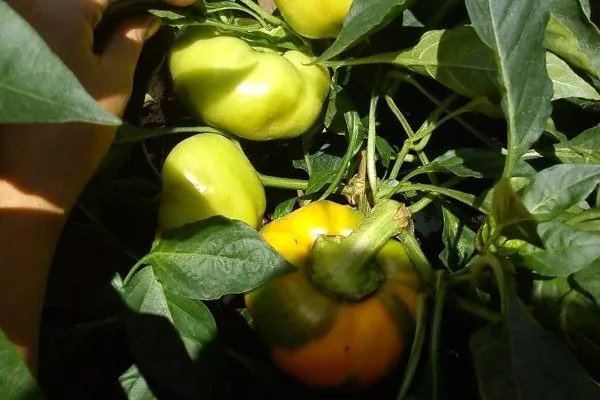
Rich Ruby
It ripens slowly, taking up to 180 days. It has a unique aroma and pleasant flavor. A good harvest is obtained only in the southern regions. The fruit weighs up to 190 g, and the flesh is up to 1 cm thick.
Features of cultivation
To ensure a good harvest, it's important to consider all the nuances of the variety when planning your cultivation. The main characteristic of Gogoshary peppers is their easy pollination. To achieve a pure flavor, plant this variety away from other pepper varieties.
Deadlines
The optimal growing time will vary for each region, depending on the climate. Gogoshary peppers are mid-season varieties and should mature in approximately 90 days at home. Experienced vegetable growers recommend sow seeds for seedlings 10-15 days earlier than other pepper varieties. The best time to plant is late February to early March.
Seedlings should be transplanted into the ground when the soil temperature reaches 16 degrees Celsius (61 degrees Fahrenheit). This is typically between mid-May and June. Seedlings can be planted in a greenhouse or open ground.
The readiness of seedlings can be determined by their appearance:
- the stem became dense and grew up to 10 cm;
- 4 true leaves appeared;
- the root system is sufficiently developed.
Under these conditions, the seedlings will successfully adapt to the new location and take root well.
Preparing the land
The soil for seedlings must be fertile, as this determines the number of fruits and their taste. You can buy a potting mix at the store, but it's better to make your own.
To do this, use meadow soil, cow manure compost, and river sand in a 3:3:3 ratio. The manure and soil will ensure good fertility, while the sand will ensure reliable drainage. Mix the ingredients and pour them into prepared containers.
Regular communal containers aren't suitable for Gogoshary peppers. Their root system is very sensitive and doesn't tolerate transplanting. Damage to the roots will stunt the plant's growth. It's better to use individual plastic pallets or peat pots.
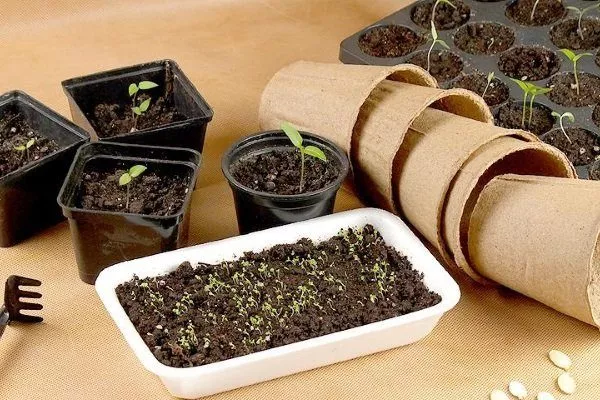
Before planting seedlings the soil is disinfectedTo get rid of bacteria, there are several ways to do this:
- steaming;
- solution of potassium permanganate;
- by calcining in the oven.
To steam the soil, pour boiling water over it and let it cool. Apply the potassium permanganate solution the day before sowing. Take a grain of potassium permanganate and dissolve it in warm water until you have a saturated solution. Pour it over the soil and let the water drain.
To heat, spread the soil on a baking sheet to a depth of no more than 10 cm. Heat for 20 minutes at 30 degrees Celsius. Allow the soil to cool, then sow the seeds.
Preparing and sowing seeds
Before planting, you need to calibrate the seeds and select good, high-quality ones. Take 1 liter of water and dissolve 1 tablespoon of salt in it. Drop the pepper seeds into the water and shake them. Good, full-bodied seeds that will produce high-quality shoots will sink to the bottom. Empty seeds will float. Discard them along with the water, and use the ones that remain at the bottom.
Seeds should be treated before sowing. This procedure will eliminate pathogens and stimulate the physiological processes necessary for growth.
Algorithm for preparing Gogoshary pepper seeds:
- Place the seeds in a weak solution of potassium permanganate for 30 minutes.
- Place the seeds on paper towels for 10 minutes.
- Place 2 layers of cotton cloth or gauze in a saucer, pour in water, and put pepper seeds in there.
- After two days, the seed coat will crack and they can be planted in the ground. These seeds cannot be stored.
- Use a pencil to make 2 cm deep furrows in the prepared soil. Plant the seeds 5 cm apart and cover with soil.
- Place the containers with seedlings in a well-lit place, maintain the optimal temperature for growing from +24 to +26 degrees.
- Daylight hours can be extended if desired using lamps for seedlings.
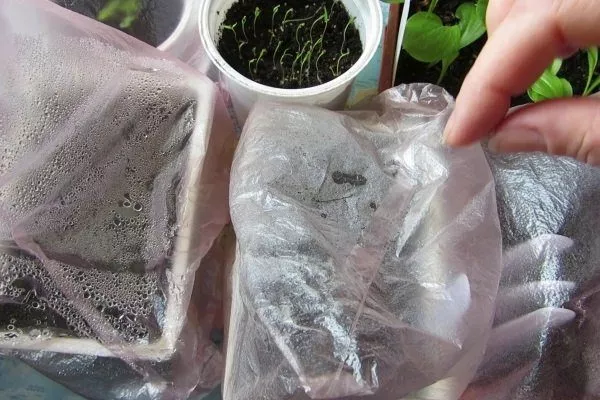
Experts do not recommend moving containers with seedlings to brighter locations. It's better to create a greenhouse effect by placing glass or plastic over them. Once the first shoots emerge, the greenhouse is no longer necessary.
Picking seedlings and care
To ensure good root development and prevent the plant from becoming too elongated, it's necessary to transplant it. This should be done after the third leaf emerges. Carefully lift the seedling, along with the root ball, and transfer it to a separate container filled with fertile soil.
After transplanting, young peppers may appear droopy due to stress. To help them adjust to their new surroundings, place the seedling containers in partial shade. Normal growth will return within a week.
Watering
During the first month of growth, watering should be minimal. During this period, pepper seedlings are particularly vulnerable to the fungal disease "blackleg." This dangerous disease can destroy all seedlings within 24 hours. Causes include low temperatures and waterlogged soil.
For seedlings, minimal root watering is sufficient. Early morning and evening are the best times. The water should be settled and warm. The leaves should remain dry. As the plant grows and develops foliage, the risk of this disease subsides. Watering can be done more frequently, three times a week.
Transplanting seedlings into the ground
Two weeks before transplanting outdoors, harden off the seedlings. To do this, take the containers with the seedlings outside for a while or open the windows. Increase the amount of time spent hardening off the seedlings each day.
- ✓ Optimum soil temperature for transplanting seedlings: not lower than +16°C.
- ✓ Distance between plants when planting: at least 60 cm between rows and 5-6 plants per 1 sq. m.
When the daytime and nighttime temperatures remain at 16°C (61°F), and the period of night frosts has passed, you can plant the seedlings outdoors. No more than 5-6 plants should be placed per square meter. Leave 60 cm between rows.
Temperature and lighting
Heat-loving peppers thrive in temperatures between 24 and 26 degrees Celsius. If these temperatures drop below this level, plant growth slows, and flowers and ovaries may fall off.
Gogoshary peppers are very demanding when it comes to light. Their yield increases in sunny summers, but declines in cloudy weather. Vegetable growers do not recommend planting them in the shade of spreading trees.
Growing the Gogoshary pepper variety outdoors
Gardeners get high yields of peppers if they follow basic agricultural practices.
Watering and fertilizing
To produce a bountiful harvest, peppers require not only watering but also irrigation. Consistent watering promotes the development of a strong root system, good plant growth, and fruit formation.
After transplanting into the ground, water the peppers every 10 days. Each plant requires up to 3 liters of water. Watering methods include sprinkler and drip irrigation.
In hot weather, leaves lose moisture, reducing the flow of nutrients to them. They wilt and dry out. Low humidity and high temperatures cause flowers to drop and fruiting to cease.
Sprinkling can remedy the situation. This increases the air humidity around the plant to 70%, cools the soil, restores leaf elasticity, and reactivates all vital processes.
- First feeding: 2 weeks after transplanting into the ground, using fertilizer based on bird droppings.
- Second feeding: 4 weeks after the first, using nettle fertilizer.
Plants are fertilized twice during the summer with liquid fertilizer. The most effective fertilizers are:
- on bird droppings;
- on nettles.
Fertilizers made from bird droppings
To make bird droppings fertilizer, take half a bucket of dry or liquid droppings. Add water and stir. Cover the top tightly to prevent nitrogen from escaping, and place in a sunny spot. Stir the contents daily to ensure proper fermentation.
After a week, the fertilizer is ready. It needs to be diluted to avoid burning the plant roots. Use 0.5 liters of concentrated bird droppings fertilizer per 10 liters of water. After mixing, water at the roots. One bush requires 2 liters of fertilizer per application.
Fertilizers on nettles
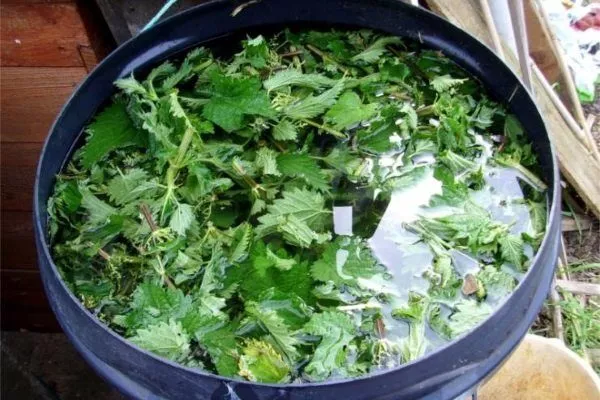
To make nettle fertilizer, place the plant in a barrel halfway full. Add water to the top and close the lid. Place in a sunny, wind-free spot. Stir the contents daily to release carbon dioxide.
After 10 days, the fertilizer will be fully prepared. Immediately before use, it should be diluted with water at a ratio of 1:10. Each bush requires 2 liters of solution.
Liquid fertilizers are convenient to use in the garden. They're easy to prepare at home and can be applied as needed over a long period of time.
Hilling and loosening the soil
After transplanting into open ground, the plants need to be loosened periodically. This saturates the soil with oxygen and helps kill weeds. Loosening is done between rows, and for the root zone, mulchingThe roots of this plant are too close to the surface and can be damaged when loosening the soil.
The first weeding is done two weeks after planting in open ground, and the second should be done two weeks later. Hilling is also done during this process. This is necessary to encourage additional shoots to form at the roots, which increases the plant's yield. Subsequent weeding is done as needed. When loosening, it's important not to disturb the mound created by hilling.
Formation and care of bushes
As the pepper plant develops, it's important to regulate its growth and fruit set. The more fruit the plant produces, the smaller the peppers will be. If you want to grow larger fruits, you should trim off any excess fruit. It's recommended to remove all flowers from the peppers in the first half of August, as they won't have time to ripen before the cold weather sets in.
If temperatures rise above 30 degrees Celsius in July, the flowers of Gogoshary peppers will become sterile. Fruit will not form. To avoid this, cover the plant beds with white agrofibre (spunbond). This will shade and cool the peppers.
Harvesting and storage
The first fruits ripen by mid-July. It's best to pick them so they don't delay the development of subsequent peppers. Store the harvested vegetables in a cool, dry place.
If you need to transport Gogoshary peppers long distances, delay their ripening. In this case, pick unripe, green peppers and store them in perforated cardboard boxes. After a few weeks, the peppers will acquire the variety's characteristic yellow or red hues.
Prevention of diseases and pests
To obtain a good pepper harvest, it is necessary to carry out preventive measures against diseases and pests:
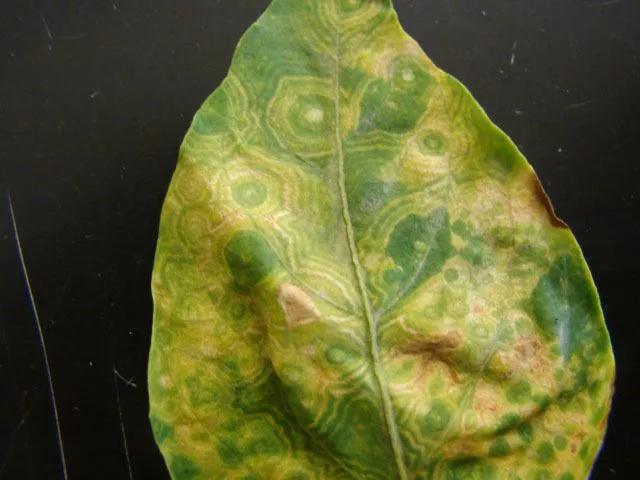
- Spotted wiltTo prevent the disease, grow resistant varieties and destroy weeds that contribute to the spread of the disease.
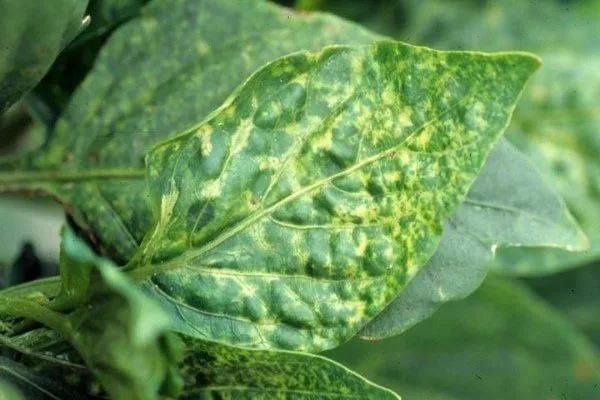
- Cucumber mosaicTo prevent this, disinfect seeds before planting, weed, and use insecticides.
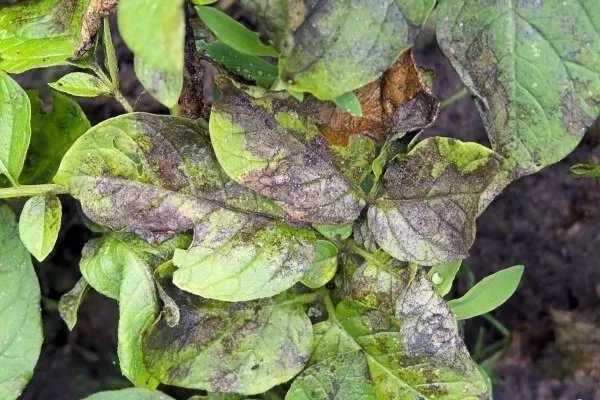
- PhytoplasmosisTo be safe, remove the affected bush from the garden bed and treat it with an insecticide.
- Bacterial spotFor prevention, follow these guidelines. crop rotation, treat with copper-based fungicides.
- AphidTo destroy them, treat with "Karate" and "Karbofos".
- Spider miteTo combat the pest, spray "Actellic" and "Fufanron".
- SlugsSprinkle the soil of the beds with dry lime or mustard powder.
Spotted wilt of pepper
Cucumber mosaic on pepper
Phytoplasmosis on pepper
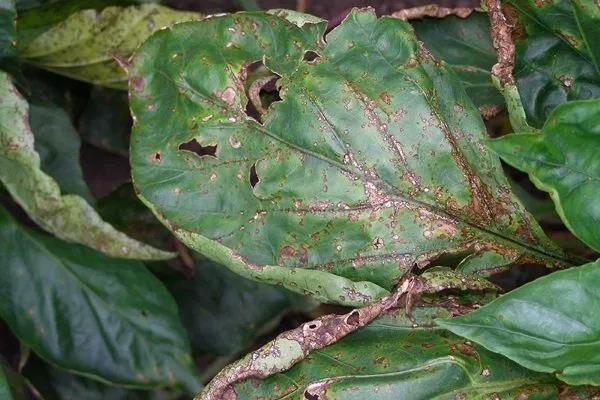
Bacterial spot of pepper
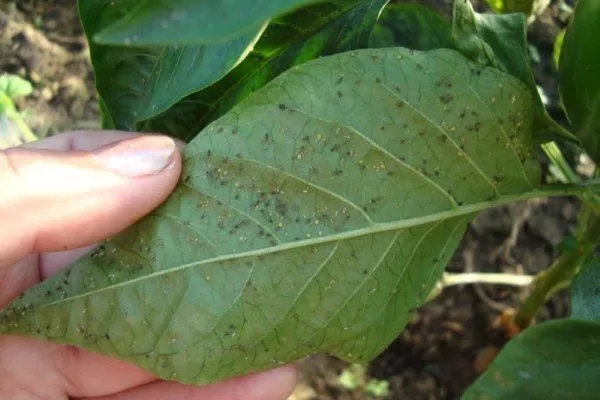
Aphids on a pepper leaf
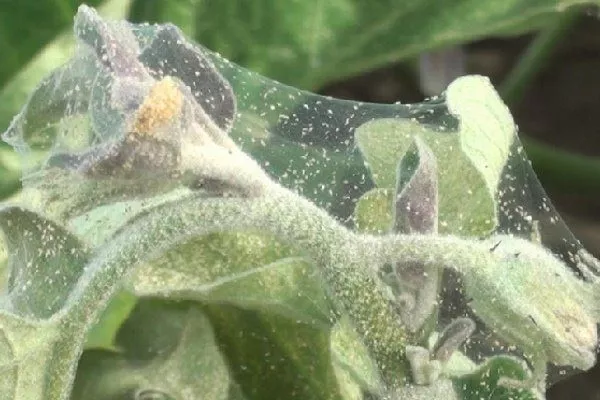
Spider mite on pepper
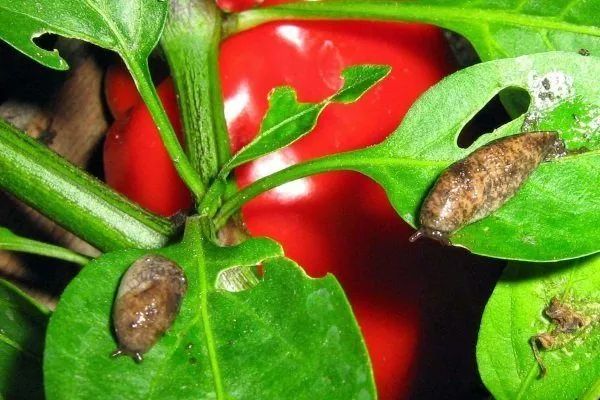
Slugs on peppers
Advantages and disadvantages
Each variety has its own pros and cons. The following are noteworthy advantages:
- compact bushes;
- excellent taste characteristics;
- neat shape of fruits;
- high yield;
- mid-season;
- wide application;
- resistance to diseases such as fusarium, rot, viral mosaic;
- ability to ripen after being picked;
- suitability for storage and transportation
- low calorie content;
- easy care.
The variety has some disadvantages:
- the need for regular fertilization;
- drought intolerance;
- unacceptability of poor lighting;
- brittleness of stems;
- susceptibility to pests.
Disadvantages can be corrected by proper plant care.
Reviews
The Gogoshary pepper is popular among gardeners due to its high yield, excellent flavor, and unique appearance. Many beginners try planting it in their gardens. This comprehensive information will help you properly care for it and get a bountiful vegetable harvest.