
One of the most popular and affordable bell pepper varieties is the Gemini. The word comes from English and means "twins." The variety likely received this name due to the striking resemblance of all the fruits growing on the bushes. You'll learn about this bell pepper's other characteristics and care recommendations in this article.
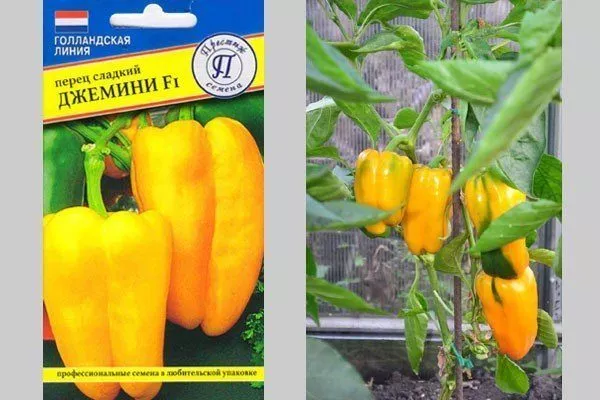
Early Gemini pepper
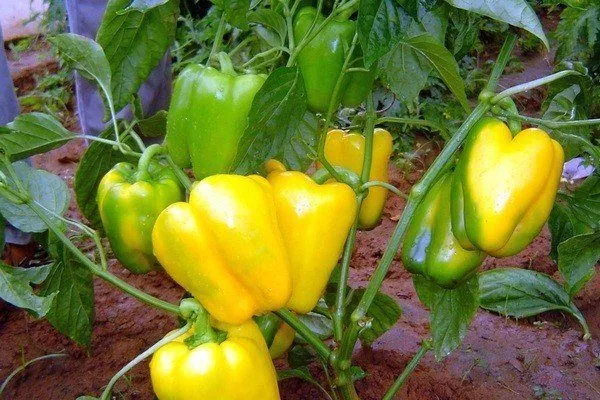
Gemini pepper on the bush
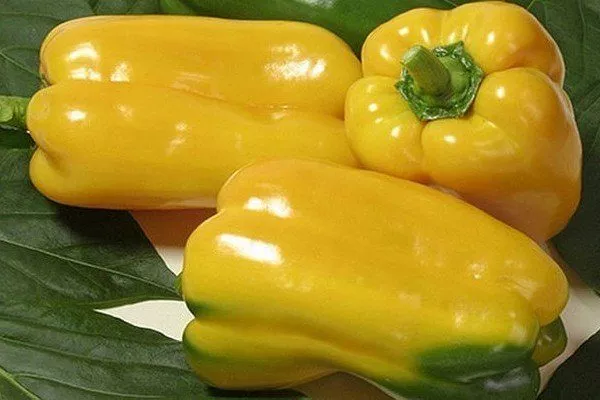
The average weight of peppers grown in open ground is 240 g, in a greenhouse – 320 g
Features and characteristics of the variety
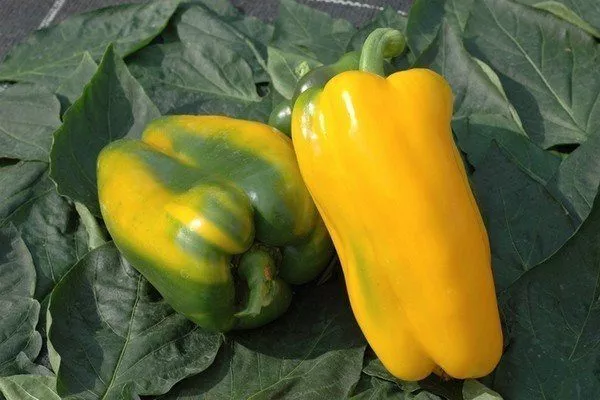
Almost every gardener knows about the Gemini pepper. It has its own distinctive characteristics that make it stand out among other pepper varieties. This vegetable has a bright yellow (canary yellow) color. It is renowned for its high yields, juicy flavor, excellent presentation, and ease of care.
Bushes
The shrub is medium-sized and fairly compact. It has moderate foliage and is not sprawling. Its maximum height is approximately 65 cm.
The foliage is quite large, with a gray-green tint. The large size of the leaves helps protect the peppers from the sun. A single plant can produce no more than nine ripening peppers.
Fruit
Peppers have thick walls, which can reach 8 ml. Technical ripeness is characterized by the fruit turning a muted greenish color. Biological ripeness can be determined by the fruit's deep yellow hue.
The fruit's length and width are almost identical, around 17 cm. Growing conditions for the Gemini pepper bush influence the pepper's weight. For example, the average fruit weight for open-grown plants is 240 g, while that for greenhouse-grown plants is 320 g.
The pepper has a thin skin and delicate flesh. It has a sweet flavor with a hint of bitterness.
Productivity
This bell pepper variety produces high yields, approximately 300 centners per 100 acres of land. Currently, only the "Gift of Moldova" variety can produce such a yield. However, its fruits are much smaller and take slightly longer to ripen.
Find out how Gemini peppers and other sweet Dutch large-fruited hybrids grow in a greenhouse in this video:
Resistance to diseases and pests
This pepper variety has good resistance to various viral diseases, including potato virus. This vegetable crop adapts well to even the most unfavorable climates.
Advantages and disadvantages of Gemini pepper
Each vegetable variety has both positive and negative qualities. Let's start with the advantages of the Gemini pepper variety:
- rapid ripening of fruits;
- all fruits ripen at the same time;
- excellent presentation;
- large size of peppers;
- juicy flesh with crispy skin;
- sweet and pleasant tasting fruits;
- the compactness of the bushes allows them to be planted even in the smallest area;
- rich harvest;
- the ability of a plant to adapt to unfavorable weather conditions;
- immunity to viruses and infections;
- versatility in use (salad preparation, canning, etc.).
Despite a significant number of advantages, this variety still has some disadvantages:
- Fruit development depends largely on the quality and frequency of fertilizer application. Without additional fertilization, pepper skins become thinner and the flesh loses its juiciness.
- The 'Gemini' pepper's shoots are quite fragile. This often leads to the bush breaking off due to the impressive size of the fruits. The plant requires additional support.
- Uneven coloring of peppers is common in the Gemini variety. Uneven fruit coloring reduces the marketability of the vegetable crop.
Growing rules
Growing Dutch pepper is not as difficult as it might seem at first glance, because, as mentioned earlier, the breeder managed to develop a variety that is easy to care for.
Those who choose Gemini peppers should remember that the seeds of this variety do not retain genetic material. This means the fruit will undergo mutations, changing skin color and size. Therefore, it is necessary to purchase seeds every year.
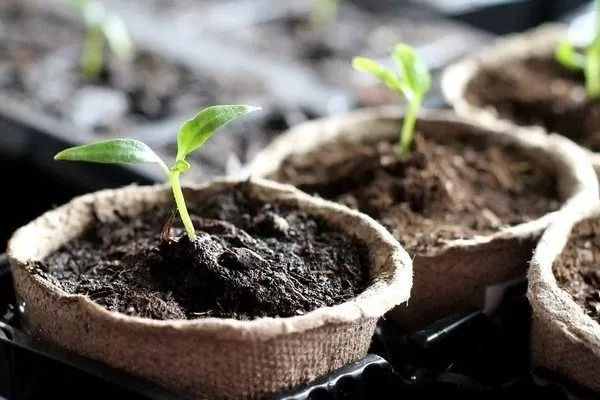
Growing seedlings
It's a good idea to prepare a separate peat pot for each seed. This will prevent the seedlings from having to be transplanted in the future, as they don't tolerate transplanting very well.
This variety is very heat-loving and depends on light, especially in the early stages of its life. For two weeks after planting, maintain the temperature between 25 and 30 degrees Celsius.
- ✓ Soil pH should be between 6.0-6.8 for optimal nutrient absorption.
- ✓ The soil should contain at least 3% organic matter to ensure good structure and water holding capacity.
Timing, sowing, optimal soil
To grow this variety, you'll need very light soil. It must have two key qualities: be nutrient-rich and have excellent drainage.
You can prepare the soil for seedlings yourself at home. To do this, mix humus, soil, and sand in a 2:1:1 ratio. After filling the seedling containers with soil, ensure the required temperature is maintained between 25 and 29 degrees Celsius.
If a transplant is planned in the future peppers in the greenhouse If you're planning to plant bell pepper seeds in a garden bed or a garden bed, it's best to sow them in early March. Place the seeds in slightly moist soil and cover with soil. Each hole should be no more than 3 cm deep. Otherwise, the seedlings will take longer to mature.
How sow pepper seeds for seedlings, is discussed in more detail in the next article.
Caring for seedlings
Caring for seedlings involves maintaining the required soil moisture and temperature. If all recommendations are followed, the first sprouts will begin to appear as early as 12-14 days. Keep in mind that bell peppers are very sensitive to lack of light, so consider purchasing a fluorescent lamp. Bell peppers require 12 hours of daylight. Insufficient light can cause the plant to deform.
When three leaves appear on the seedling, add mineral fertilizer to the soil. To prepare it, you'll need potassium (1 g), superphosphate (3 g), ammonium nitrate (3 g), and water (1 l). Apply this fertilizer every 14 days until the bushes are planted in the beds.
The following video will help you grow healthy Gemini pepper seedlings:
Planting seedlings in open ground
On the 50th day, transplant the peppers into open ground. The planting time for the seedlings depends on the growing conditions for the variety. For example, if the plants are to be grown in a greenhouse, the recommended transplanting date is late May. For open-air cultivation, plant the pepper seedlings in the first week of July.
The main indicator that a plant needs repotting is its height. It should be between 15 and 19 cm. Each bush should have at least 6 to 7 mature leaves. Inflorescences and flower buds may already be appearing on the plant.
It's worth noting that keeping seedlings for too long can lead to the bush not taking root when planted in open ground and eventually beginning to wither.
When planting peppers, ensure the soil is fertile, pre-fertilized, and loose. Remember to practice crop rotation. The best soil to plant peppers in is a location previously occupied by cabbage, legumes, and grains.
Planting this pepper variety isn't any different from simply planting it in the soil. Make small holes in the soil and fertilize them with mineral fertilizer. Then, transplant the peppers into the holes directly with the soil ball. Apply a light mulch around the hole and water the seedlings.
Caring for Gemini Peppers
As mentioned earlier, the Gemini pepper variety is easy to care for and maintain. However, like any other vegetable crop, it requires timely watering, mulching, and fertilization.
Watering
Water your peppers exclusively with warm, settled water. It's recommended to water in the morning. This will allow the moisture to remain in the soil throughout the day, rather than evaporating due to sun exposure.
Water no more than once every 5 days. Overly wet soil can encourage the emergence and proliferation of harmful insects.
| Fertilizer type | Recommended quantity | Frequency of application |
|---|---|---|
| Organic (compost) | 5 kg/m² | Before landing |
| Mineral (NPK) | 30 g/m² | Every 14 days |
Top dressing
Fertilize seedlings three times during the season, no more. Avoid overfeeding, even with nutrients. The first application is made seven days after transplanting. The second application, when flower buds appear, is made with a fertilizer containing phosphorus and potassium. The final stage of fertilization is the formation of the pepper.
It's worth mentioning that this variety is categorically intolerant to chlorine. Therefore, if possible, avoid using mineral fertilizers containing this chemical.
Maturation
The Gemini variety, like other bell peppers, undergoes two stages of ripening: technical and biological. The technical stage is characterized by a light greenish tint to the skin, while the biological stage produces its famous canary yellow hue.
To speed up the ripening process, technically ripe peppers are picked from the bushes and placed in a dark, warm place. After a couple of days, the peppers will acquire their beautiful color and be ready to eat. Artificial ripening significantly speeds up the harvesting process.
Harvesting and storage
Peppers must be picked with extreme care to avoid damaging the bush branches. Delaying harvesting can stunt the growth of subsequent plants. Four to six harvests of bell peppers are typically harvested during the growing season. The final harvest occurs a couple of days before the first frost.
Properly sorting this variety of peppers is a crucial component of storage. Start by sorting the fruits based on ripeness and size. Like many other vegetables, Gemini bell peppers have a short shelf life, meaning they don't retain their marketable appearance for long periods of time.
Without proper care, peppers will begin to rot within three days. To prevent this, follow these recommendations:
- Select peppers for storage without any damage (cracks, scratches, dents and spots).
- Only technically ripe fruits are suitable for long-term storage.
- Pay attention to the walls of the peppers. If the bush produces thin-walled fruits, it's recommended to store them in the freezer.
- Peppers stored for storage require a little pre-preparation. This can be accomplished by simply cutting off the stem.
- For convenient storage, various containers are used. These can be a wooden crate or a simple plastic bag. The latter is preferable, as carbon dioxide is produced when the bag is sealed. It is a well-known fact that carbon dioxide can displace oxygen. This creates a kind of "microclimate" inside the bag, allowing any product to retain its flavor and appearance.
Gemini peppers can also be stored in baskets or on shelves in a basement. The only requirement is maintaining a consistent temperature, between 9 and 12 degrees Celsius.
Humidity levels should be at least 85%. Regular paper can be used as an alternative to plastic bags. Bell peppers wrapped in paper can retain their flavor and fresh appearance for up to two months.
Another equally important aspect of storing Gemini peppers is odor. The fruit of this variety is extremely sensitive to foreign odors and absorbs them quite easily. Make sure the container you plan to store the peppers in is completely clean.
Pepper Reviews
The Gemini bell pepper variety is very popular among gardeners. Reviews of this variety are overwhelmingly positive. Its popularity stems from its incredibly beautiful yellow skin. Gardeners prefer Gemini to other varieties due to its juicy flesh and large size.