
Pepper diseases can lead to complete crop losses. Therefore, it's important to promptly notice signs of damage, recognize specific diseases, and know the appropriate treatment methods and products. To do this, carefully study the information on the diseases common to pepper plants.
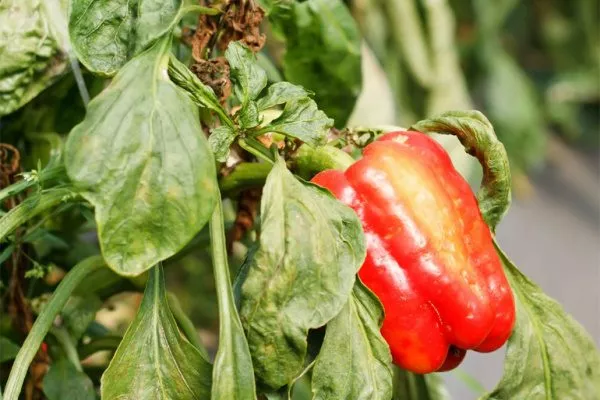
Classification of diseases
Peppers, regardless of variety, pungency, wall thickness, color, and other characteristics, belong to the Solanaceae group of crops. This group includes tomatoes, eggplants, potatoes, nightshades, and so on, so peppers are susceptible to diseases common to all these plants.
There is also a difference—it lies in the specific culture's response to a particular disease. Pathologies are classified in a standard way:
- bacterial:
- fungal;
- viral;
- physiological, that is, non-infectious.
Depending on the type, medications and methods of treatment and prevention are selected.
Diseases of pepper seedlings
Pepper seedlings are particularly susceptible to disease, as the shoots' immune systems are not yet fully developed. Consequently, the plants are weak and defenseless, so they require the utmost care.
The following diseases are typical for seedlings:
- rot - apical, soft bacterial, gray and white;
- blackleg;
- fusarium;
- late blight;
- powdery mildew;
- Cladosporiosis;
- sclerocinia;
- tobacco mosaic;
- Verticillium wilt and fulminant bacterial wilt;
- stolbur;
- black spot;
- bacterial cancer.
Fungal diseases
Fungal infections are the most common among crops of various types. This is due to the remarkable resilience of pathogens. They can survive for years in soil, on garden tools, etc., so it's important to take timely measures to prevent infection.
Late blight
The infection is caused by the fungus Phytophthora capsici Leonian. The disease occurs when conditions are unfavorable for the crop and is least common in northern regions, but is also common in the south.
Peculiarities:
- North, Middle Belt, Central part of Russia. In cool climates, infection occurs due to diseased nightshade neighbors.
- Southern latitudes. The disease is triggered by excessively hot weather, especially in the second half of summer, when widespread infestation occurs. Seedlings also suffer in warm conditions.
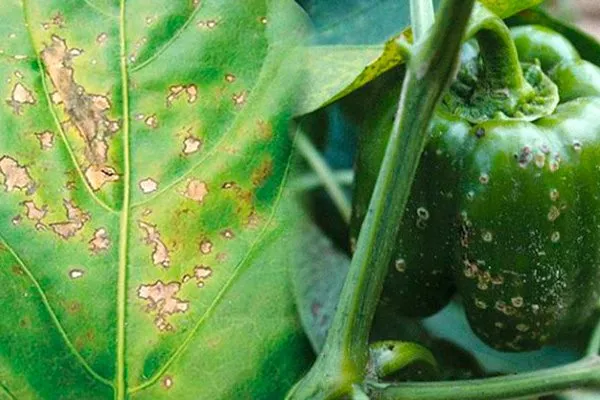
How to recognize late blight:
- At the initial stage, the stems are covered with brown ring stripes, the edges of which look torn;
- in the middle of the cycle, the fungus spreads to the foliage, where brownish-brown spots form that do not have clear edges - they subsequently merge together;
- at the penultimate stage, the fetus is affected - small brown spots are noted;
- At the last stage, the leaves turn black and the peppers become soft and dented.
Methods of treatment with drugs:
- the product is applied to the root zone every 10 days;
- Spraying is carried out once every ten days.
Recommended solutions:
- Previcur;
- Consento;
- Bordeaux mixture;
- Quadris;
- Bravo;
- Metaxil;
- Baktofit;
- Fitosporin;
- Trichodermin;
- Oxychom;
- Barrier;
- Alirin-B;
- Pseudobacterin.
- ✓ The optimal temperature for treating plants should be within 18-22°C to avoid leaf burns.
- ✓ Air humidity during treatment should not exceed 70% to ensure effective absorption of the preparations.
It's important to alternate biological products with fungicides. Experts recommend adding a small amount of starch, liquid gelatin, or full-fat milk to the working solutions to prevent the treatment from dripping onto the ground and instead remaining on the plant.
Gardeners also recommend the following remedies:
- saline solution - 250 g of salt per 10 liters of water;
- human tablets Trichopolum - 20 pcs. per 10 liters of water.
Anthracnose
The disease is caused by the fungus Colletotrichum. It is considered a serious threat to plants with already formed fruit. It occurs in conditions of high humidity and high temperatures, acidic soil, and a lack of phosphorus and potassium.
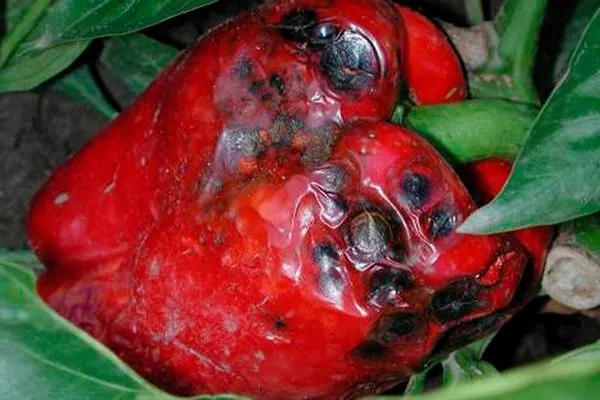
How it manifests itself:
- formation of brown spots first,
- then the color turns brown;
- then an orange-colored coating forms on the spots.
Foliage and fruit are affected, eventually falling off. The disease spreads rapidly, so it's often impossible to save the bushes. Therefore, intervention must begin in the early stages.
For treatment, spraying with the following agents is used:
- Anthracol;
- Falcon;
- copper-based preparations or a solution of 10 liters of water and 40 g of copper oxychloride;
- 1% Bordeaux mixture;
- 1% colloidal sulfur;
- Cumulus DF.
In the final stages, plants are completely destroyed by burning.
Rhizoctonia
Peppers are affected by the fungus Rhizoctonia solani, which can survive its spores in the soil for many years. The pathogen is most active during the final stage of fruit ripening, but can also appear during the seedling stage. High humidity and cool weather conditions are the factors that cause the disease to develop rapidly.
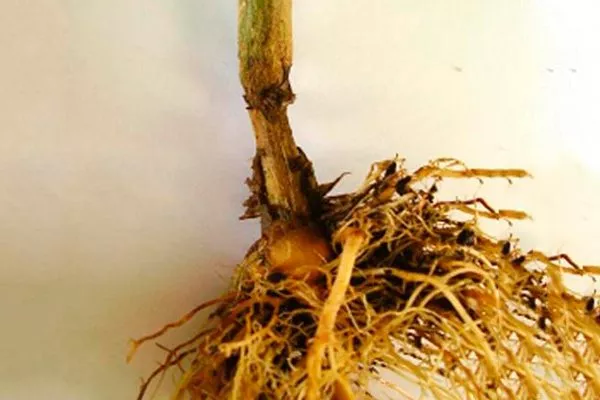
Signs:
- formation of a ring-shaped dark brown spot on the stem part near the root collar;
- the formation of a putrefactive structure, which results in a dent.
Such fruits are prohibited for consumption; they are picked along with the bush and burned to prevent further spread of infection.
The disease is incurable, so it's important to take preventative measures. For example, disinfecting the soil, planting material, and so on.
Cladosporiosis
The disease is caused by the fungus Fulvia fulva, which thrives in humid, unventilated environments. Therefore, greenhouse peppers are particularly susceptible.
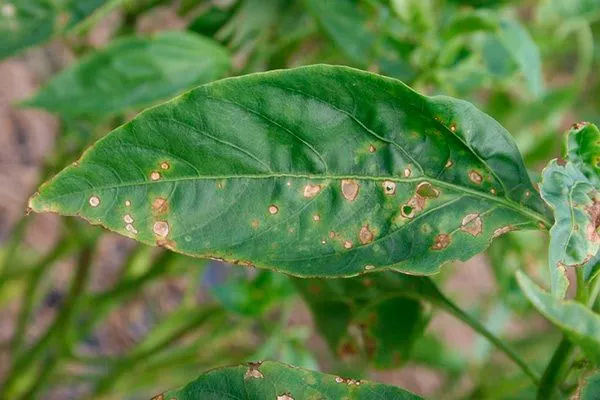
Cladosporiosis is accompanied by the following symptoms:
- first dots appear on the leaf blades, then spots of yellow and brown tint;
- A velvety grey coating forms on the inside of the green mass.
The lower tiers of plants are most often affected. Treatment options:
- Barrier;
- Ordan;
- Gamair;
- Fundazim;
- Hom;
- Barrier.
It is essential to pick off the affected elements from the bush and destroy them.
Blackleg
This disease is classified as root rot and occurs due to poor watering practices (when humidity is too high). If the pepper is a seedling, the culprits are fungi of the Olpidium and Rhizoctonia genus. In mature plants, the culprits are Erwinia.
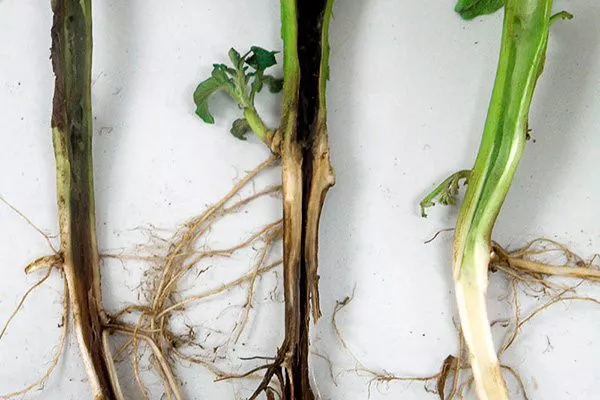
How to identify blackleg:
- drying and rotting of the lower part of the stem;
- softening of the trunk;
- plant growth arrest;
- formation of dark spots on the stem and yellow spots on the leaves in the upper part.
How to treat:
- the soil is filled with a solution of potassium permanganate in medium concentration;
- Spraying the bush with copper-based preparations and Fitosporin, according to the instructions.
Fusarium
The causative agent is the Fusarium fungus, which is common among virtually all crops. It is a very dangerous disease, as it progresses rapidly—from infection to plant death, it takes 2 to 3 weeks.
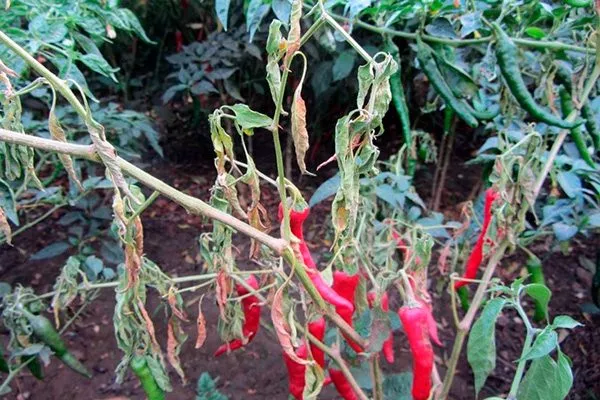
What are the symptoms of fusarium?
- the upper tier of leaves is slightly wilted;
- the plant turns yellowish;
- brown but dry spots form on the fruits, which over time turn dark brown;
- sporulation of a pink hue is noted;
- tissue death occurs, after which the bush quickly falls and dies.
What is the best treatment method?
- Maxim;
- Vitaros;
- Topsin;
- Fundazol;
- Fitosporin;
- Trichodermin;
- Baktofit.
Alternaria
Pepper disease most often occurs in northern latitudes, occasionally in the south, and is unheard of in the central part of the country. The pathogen is localized exclusively on planting material and plant debris, which is where infection occurs.
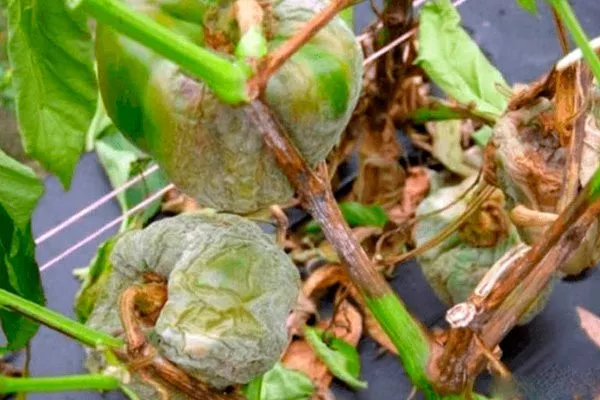
The bacterium is quite resilient, easily surviving drought and frost. Death occurs only at temperatures above 55°C. Dampness and warmth are favorable conditions for the microbes to thrive. This pepper disease occurs both in greenhouses and in the open field.
Symptoms appear throughout the growing season. They are as follows:
- angular spots on the leaves (along the veins) - their color is light yellow, but the edges have a dark border;
- leaf fall after spots turn black and edges turn yellow;
- the stem is affected by the same spots, only in this case the spots are not round, but elongated;
- the fruits are covered with convex spots of black color, with a border with a watery structure;
- as alternaria progresses, ulcers form and the edges become green;
- a process of rotting occurs, manifesting itself first from the inside of the peppercorns, then from the outside.
Treatment methods:
- at the initial stage:
- Baktofit;
- Gamair;
- Planriz;
- Fitosporin.
- at late:
- OxyHom;
- Kartocide;
- Hom;
- Bordeaux mixture.
Spray the bushes once every 10 days. The number of treatments depends on the stage of the disease. On average, this is 2-4 times.
White rot
Sclerotinia (also known as white rot) is rare in Siberia and the Urals, but is common in the South and other regions. It is caused by the fungus Sclerotinia sclerotiorum, which is transmitted by cicadas.
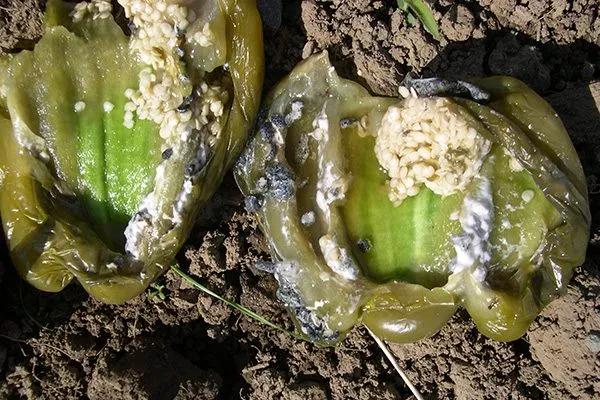
Symptoms:
- a whitish coating begins to appear near the root collar;
- If no action is taken, a black thickening will form inside the stem – in these areas, fungi will grow, which will have a negative impact on the entire plant;
- the leaves become light green;
- The fruits are also covered with a snow-white coating.
To combat the disease, the following means are used:
- Topaz;
- Previcur;
- Ridomil Gold;
- Topsin.
The soil must be treated with a solution of Fitosporin.
Gray mold
This is root rot. Pepper disease is common in greenhouses, especially if the greenhouse has been left in one place for a long time and not disinfected. The cause is unfavorable conditions, specifically high humidity, heat, and poor ventilation.
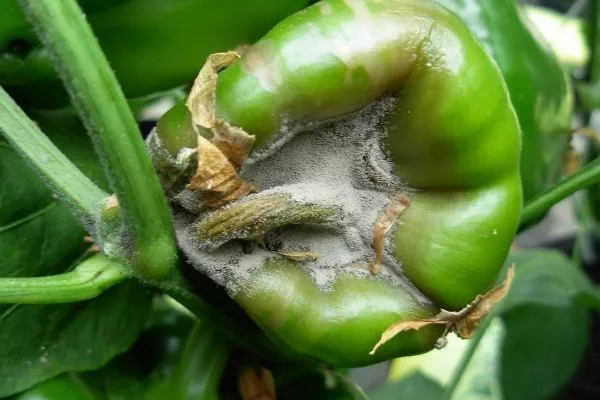
The fungus is localized on one of the three components of the crop - the stem, flowers, fruits, or on two or three at the same time.
How to recognize gray mold:
- Stems. The bush dies completely and immediately. First, brownish-gray spots appear at the base. They have a slimy, oozing texture. The pathogen then moves up the stem, and the spots turn dark gray.
- Fruit. Only peppercorns are affected. The spots are green-olive in color and are located near the stem or on the sides. The pepper's walls soften and fill with a watery liquid, resulting in a gray coating from the sporulation.
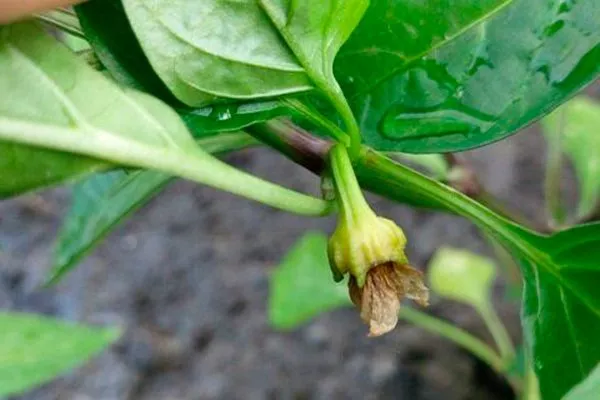
- Flowers. The fungus localizes in the receptacle area, which becomes soft and subsequently rots. This contributes to tissue necrosis and flower loss.
How to treat:
- Gamair, Glyokladin or Trichodermin - biological products;
- Euparen, Topsin M or Bayleton are fungicides.
The stems must be cleaned and then sprinkled with powdered chalk.
Powdery mildew
The most common disease of nightshade crops, it occurs due to infection by the fungus Leveillula taurica. Greenhouse-grown plants are particularly susceptible to powdery mildew.
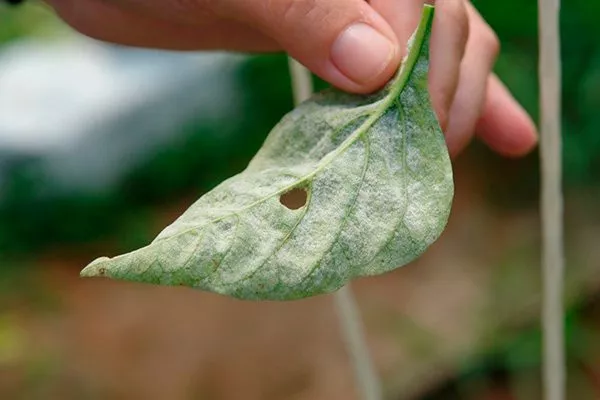
How it manifests itself:
- at the initial stage, curved spots are formed;
- then they become covered with a white coating;
- then the leaves turn yellow;
- then the green mass becomes deformed, dries out, and falls off.
Fruits are affected only in advanced forms of the disease.
The following remedies are suitable for treatment:
- Fundazol;
- Topsin;
- Hom;
- Fitosporin;
- Bordeaux mixture.
Verticillium wilt
The disease develops when three types of fungi are present: Verticillium spp., V. albo-atrum, and Verticillium dahliae. Verticillium wilt typically progresses from the underside of the plant to the top, causing the bush to become bald at the base and center as it progresses.
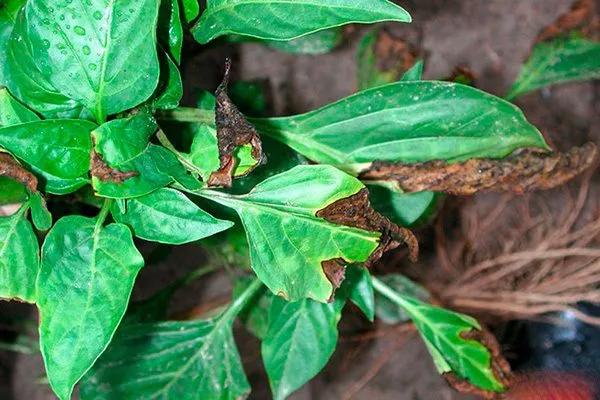
Unlike other fungal infections, in this case, favorable factors are low humidity and temperatures above +25 degrees.
Signs:
- the foliage does not develop and the bush stops growing;
- the green mass turns yellow;
- the leaves dry out and fall off.
The following fungicides are used for treatment:
- Topsin;
- Previcur;
- Fundazol.
Bacterial diseases
Bacterial infections often present similarly to fungal infections, making accurate diagnosis difficult. However, there are ways to detect the presence of bacteria.
Lightning-fast withering
The disease is caused by the bacterium Ralstonia solanacearum, which causes the sudden wilting of hot or sweet pepper plants. How it manifests itself:
- the leaves, as well as the stems, become wilted;
- then the green part of the bush takes on a discolored appearance;
- A white, slimy discharge appears on the stems and shoots (to see this, make an incision).
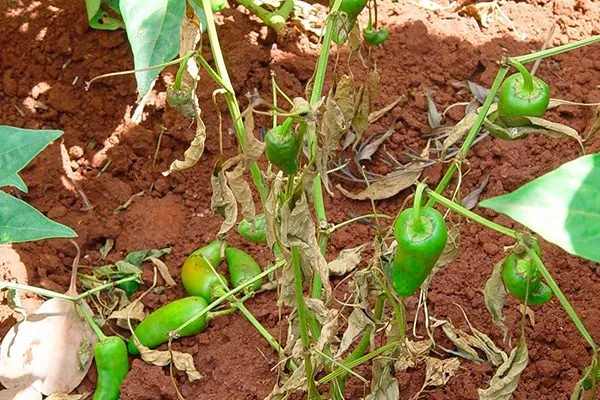
It is impossible to cure the disease, but it is important to immediately uproot the affected plants and treat the soil with a solution of Fitolavin.
Black bacterial spot
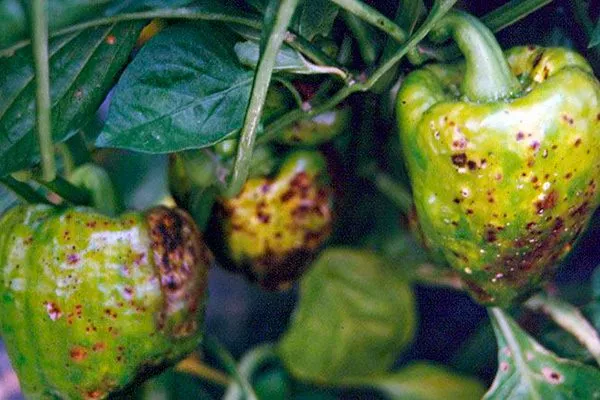
The disease is characterized by infection with bacteria of the genus Xanthomonas euvesicatoria. It is most often activated by hot or rainy weather conditions.
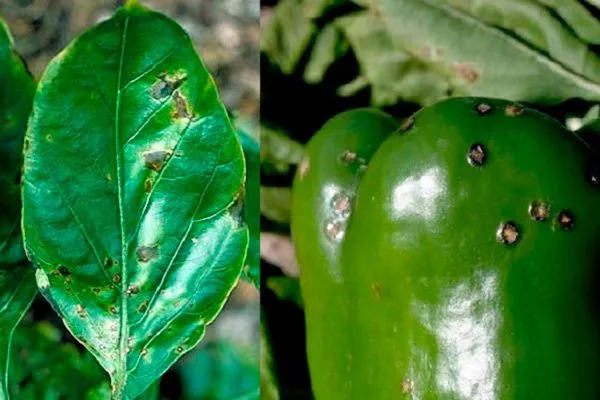
Black bacterial spot is detected by the following symptoms:
- leaves and stems are affected by black spots that rapidly spread throughout the green mass;
- a yellowish border forms around the spots;
- the bacteria then spreads throughout the fruit, the surface of which becomes rough to the touch;
- In the places where the spots are on the peppers, ulcers form, and signs of decay appear (softness, odor, etc.).
Powerful fungicides, such as Abiga-Peak, are used for treatment. In the early stages, treatment with Bordeaux mixture is performed.
Soft rot
The disease typically affects fruits, but in advanced stages, the bacteria can also spread to vegetation. Various pathogens from the genera Pectobacterium and Dickeya are involved.
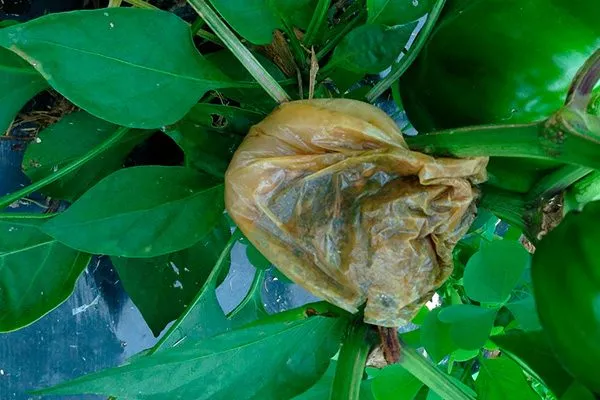
The main symptoms of soft rot:
- spots with a watery structure appear on the fruits;
- then indentations are formed;
- then a strong putrid stench arises;
- at the last stage, the stems and leaves become colorless;
- the interior of the shoots becomes hollow.
There are no treatment methods provided, so it is important to treat the seedlings with a solution made from the drug Fitosporin.
Bacterial cancer
Bacterial canker is caused by the pathogen Clavibacter michiganensis, which is activated by high soil moisture and elevated air temperatures. Crowded plantings are also a negative factor.
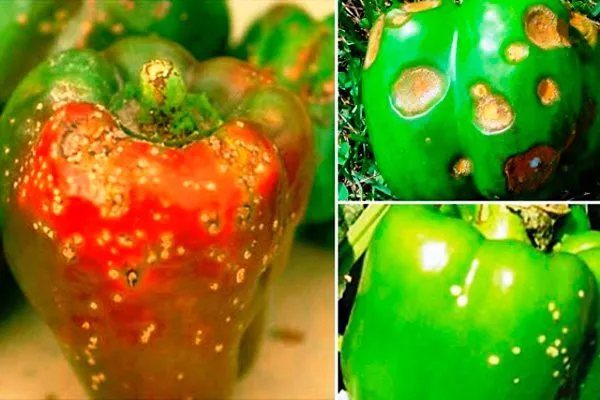
How to recognize bacterial cancer:
- the surface of the fruit becomes covered with dark brown spots;
- If you cut a pepper in half, you can see light spots inside;
- over time, small inclusions transform into a solid spot, which becomes covered with a dry crust;
- the leaves become discolored and fall off the bush;
- then necrotic spots are observed on the green mass, which contribute to the death of the plant.
The following is used to treat bushes:
- copper sulfate;
- Fitolavin;
- Thiram;
- copper-containing products.
Viral infections
Viruses are transmitted to plants by birds and insects. Most often, it is impossible to cure the bushes, as other, more complex and dangerous diseases accompany the viral infection.
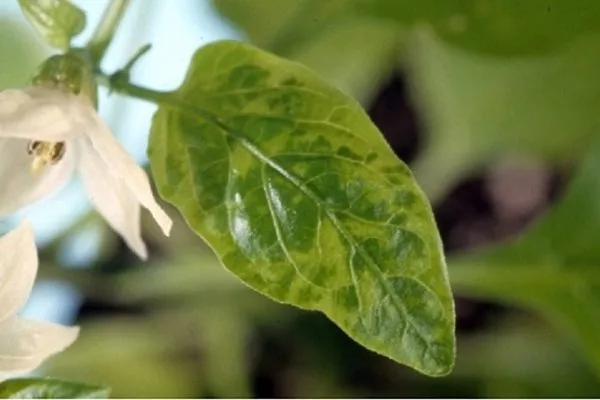
- ✓ Viral diseases are often accompanied by a mosaic pattern on the leaves, which is not observed with fungal or bacterial infections.
- ✓ Rapid wilting of a plant without visible signs of rot may indicate a viral infection.
What viral diseases affect peppers?
- Tobacco mosaic. This disease is dangerous for peppers grown in greenhouses. Symptoms are easy to identify: the destruction of chlorophyll by the pathogen Tobacco mosaic virus causes marbled spots to form. These spots appear on the leaf blade.
Next, necrosis and complete destruction of the plant occurs.

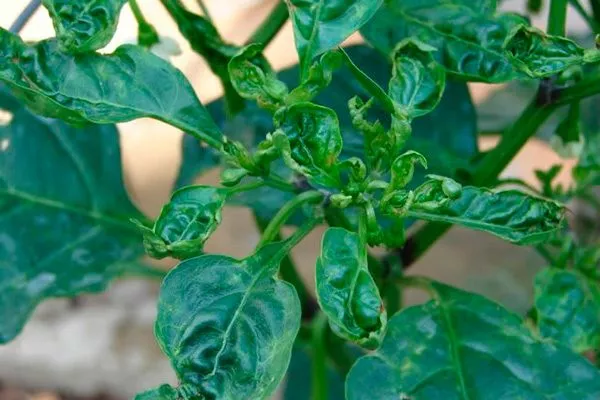
- Leaf curl. Another disease that can't be cured, so you'll have to uproot and burn your pepper plants. The main symptoms depend on the type of leaf curl:
- brown - when budding, the leaves not only begin to curl, but also turn brown, starting with the lower leaves;
- dwarf - the leaves become deformed, the grown pepper stops developing, and new ovaries do not appear;
- yellow – all green mass turns yellow, the bush completely stops growing.
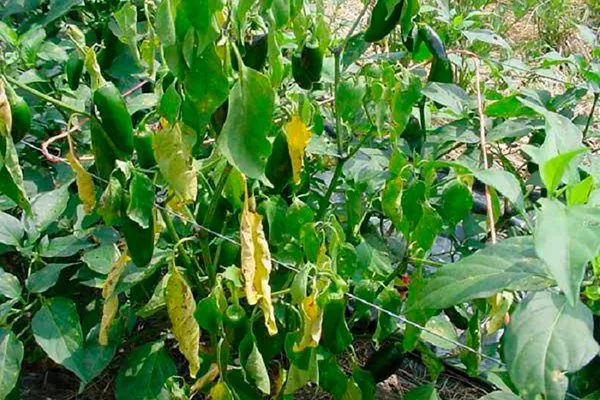
- Stolbur. Another name for this disease is phytoplasmosis or mycoplasmosis, as it is a conditionally viral disease. Treatment is pointless, so preventative disinfection is necessary. After destroying the bushes, the soil is treated with fungicides.
Symptoms:- the leaves on the top of the bush become corrugated;
- the green mass dries out;
- the peppers grow, but they are too small in size and have an ugly shape;
- Over time, the virus spreads throughout the bush.
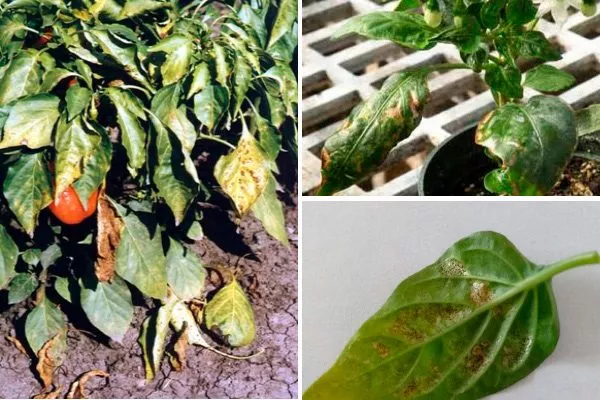
- Strick. The plant is affected by a virus of the same name, which manifests itself as the formation of red streaks on shoots and leaves. Over time, the green foliage becomes deformed and wilts.
Non-communicable diseases
These pathological disorders include physiological diseases, that is, those that arise due to the gardener's fault. Specifically, when they fail to follow the care and agricultural requirements for pepper crops.
Most often the reasons are the following:
- lack of nutrients – potassium, phosphorus, calcium, etc.;
- over-watering of the soil or, conversely, insufficient watering;
- cold drafts;
- lack of fresh air (oxygen deficiency) in greenhouse conditions.
What are these diseases and how to fight them:
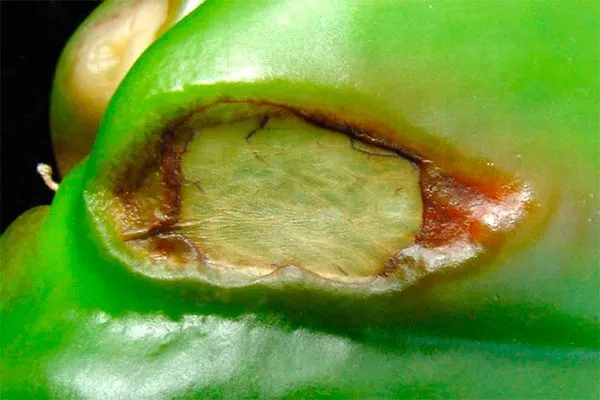
- Sunburn. The cause is an incorrect planting site. Planting peppers in areas exposed to direct midday sunlight is prohibited. The only solution is to replant the seedlings or create an artificial shelter. Affected parts are then pruned.
How it manifests itself:- whitish spots form on the peppers, they wrinkle and then rot;
- Silvery spots appear on the leaves.
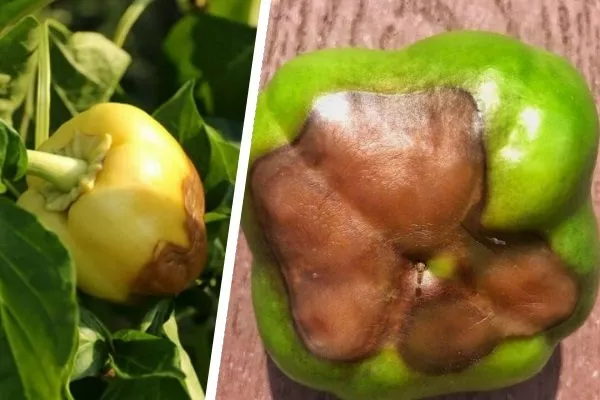
- Blossom-end rot. It most often affects sweet pepper varieties and is found in northern regions. The main cause is a calcium deficiency. The disease is more common when sweet peppers are grown in greenhouses. Treatment involves applying calcium fertilizers or treating the plant with a 0.3-0.4% calcium chloride solution.
You can also use fast-acting drugs - Calbit C, Vuxal Calcium.
Signs of calcium deficiency:- on a still green pepper, a light brown spot forms in the area of the top or tip;
- as it progresses, it increases in size and darkens;
- the fruit becomes wrinkled;
- indentations appear, after which the vegetable tissue dries out;
- Sometimes, on the contrary, the fruit ripens too quickly, but hardness and an unpleasant taste develop.
Preventive measures:- timely and correct watering;
- loosening the soil after each watering;
- use of mulch;
- Feeding peppers with a nutrient solution (dissolve 2 tablespoons of calcium nitrate and 2 tablespoons of potassium carbonate in 10 liters of water - this amount is calculated for 1 plant).
- Subcutaneous spotting. The cause of the problem is an imbalance between nutrients (nitrogen-potassium-calcium), due to which calcium ceases to be absorbed by the plant tissues and cells.
Treatment is identical to the previous case, but in this case there is a specific symptom: black spots ranging in size from 1 to 10 mm appear on ripe fruits.
- Dying off of shoot tips and ovaries. There are many causes of this disease, but the symptoms are similar: necrosis of the ovaries and tissues. The problem is addressed based on the underlying cause. What triggers it:
- excess of nitrogenous substances;
- deficiency of phosphorus, potassium;
- lack of boron, calcium.
- Dropping peppers. Not only the fruits, but also the ovaries, are falling off. This is caused by a lack of nutrients, oxygen, and the presence of fungal and other diseases.
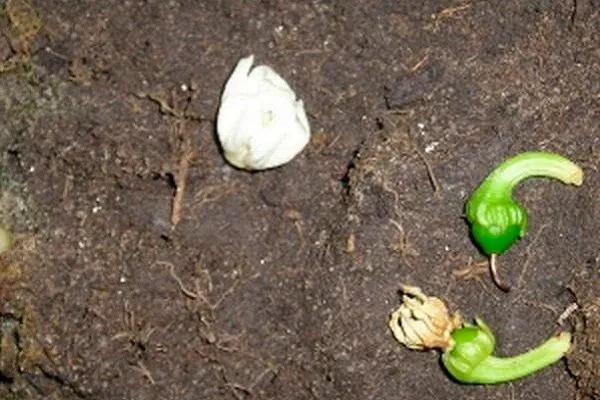
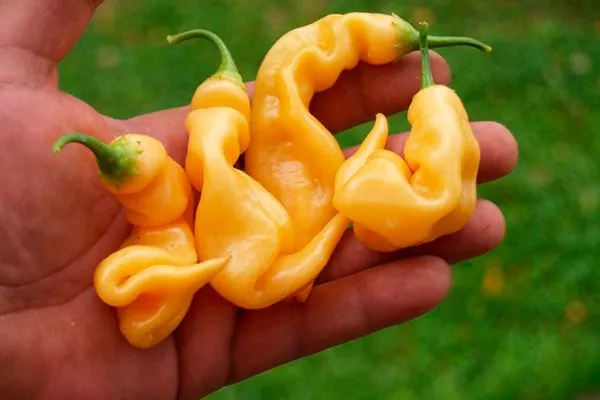
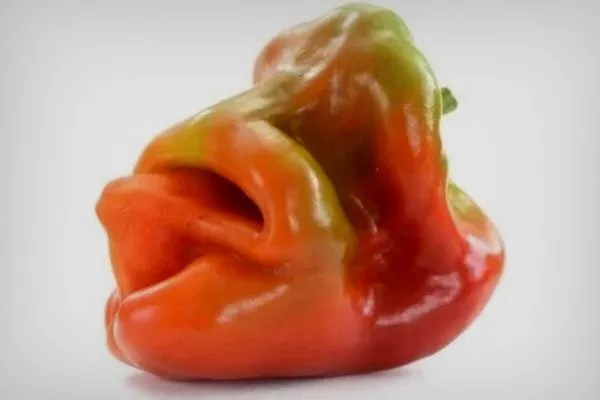
- Fruit deformation due to excess nitrogen. If a gardener applies too much nitrogen fertilizer, the plant grows, meaning only the foliage and trunk grow. But the fruits are left without adequate nutrition, as they require potassium, phosphorus, and calcium. This causes the peppers to become deformed.
- Fruit deformation due to temperature changes. Sudden temperature changes should not be allowed, as delicate fruits, especially in the initial stages of formation, are too sensitive to such changes.
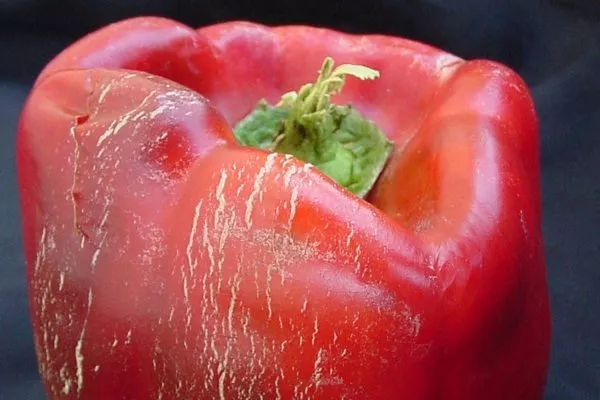
- Cracks in pepper fruits.If the weather is dry but humidity rises sharply, small cracks may appear on the fruit. The degree of susceptibility to this condition varies depending on the specific variety.
To tone and strengthen the skin of fruits, spray the leaves of plants with fertilizers containing potassium (for example, Urea).
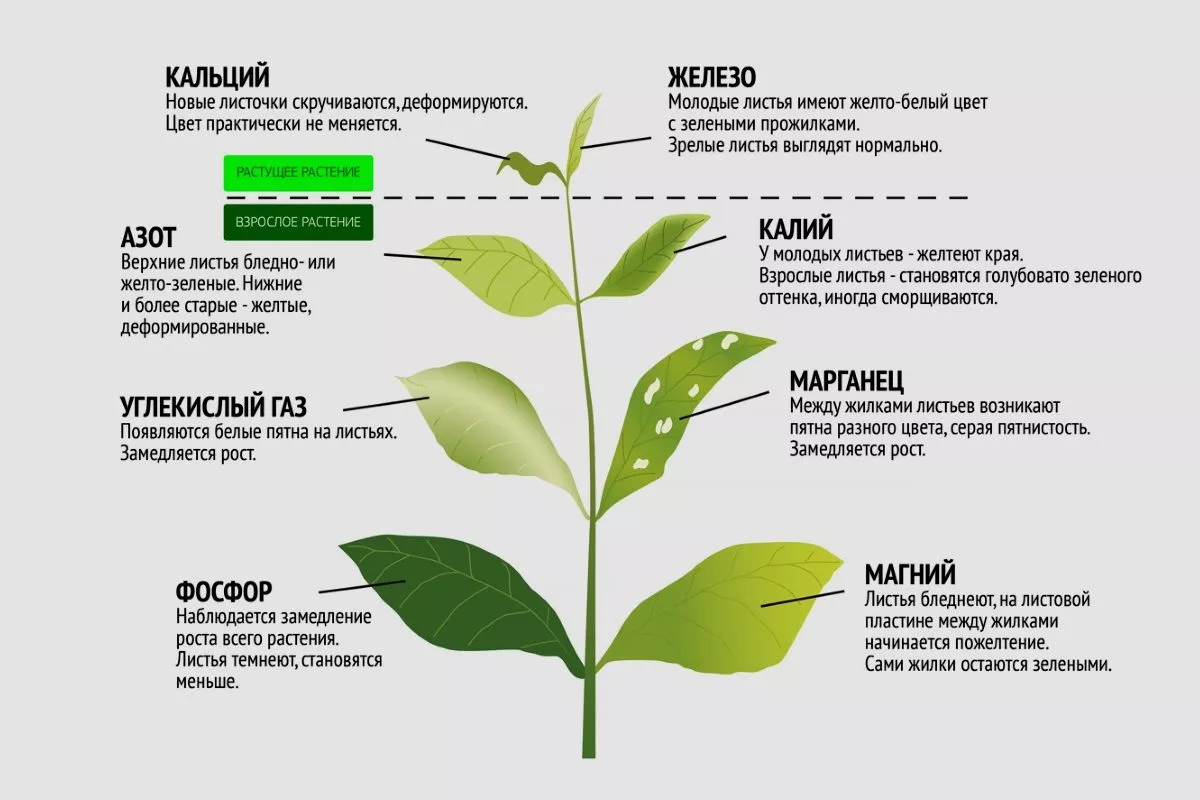
Lack of power supply
Determining the nutrient your pepper is lacking is easy. To do this, carefully examine the plant. Each nutrient deficiency manifests itself with characteristic symptoms:
- Nitrogen. Plant growth slows. Shoots become small, thin, and short. Leaves take on a light yellow-green hue, eventually turning completely yellow. Chlorosis appears at the edges of older foliage, which then affects the younger leaves as well.
The lower leaves begin to die off. The peppers rarely bloom. The fruit walls are thin, and the seed chamber is small. The peppers themselves often become deformed. - Phosphorus. The plant has a poorly developed root system. The stem is stiff and hard. The shoots are thin and short. The leaves are narrow, small, and very fragile, gray-green in color, and may take on a purple tint (depending on the variety).
The lower leaves die off much prematurely. Flowering is weak or absent altogether. Small fruits form late and become deformed. - Potassium. The lower leaves darken. Plant growth and development slows. The leaves are blue-green, the edges become lighter, and may die. Flowering is weak, and the fruits are small and deformed.
- Bor. The plant begins to wilt, and the leaves and stem become severely deformed. The leaves take on a red or yellow tint, and the edges begin to curl. The stem becomes thick and brittle. Flowering is weak, and the fruits are deformed.
- Magnesium. Discoloration of leaves occurs between the veins.
- Manganese. Chlorosis (discoloration) is present on young foliage and gradually spreads to the lower part of the plant.
- Molybdenum. The leaves are very elongated. Chlorotic spots are visible on the leaf blade, which gradually become necrotic and turn white-gray.
- Sulfur. The leaves are initially a healthy green, but over time they quickly begin to turn yellow. The stem is woody and slender.
- Calcium. Dry rot of fruits develops.
- Iron. On young leaves, severe chlorosis develops near the veins.
Pests and methods of control
Peppers are sometimes attacked by pests, which can completely destroy the crop, so pay attention not only to signs of disease but also to the presence of insects. Sweet and hot peppers are susceptible to the following pests:
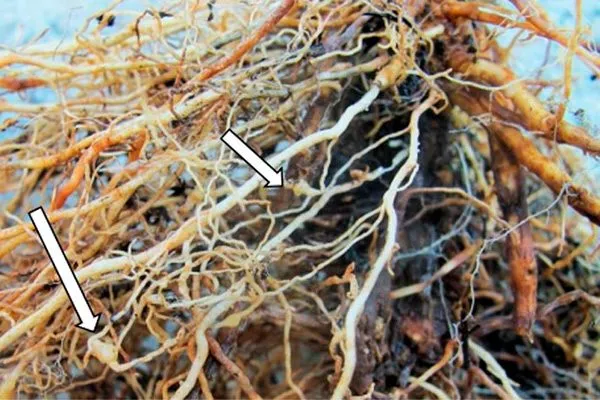
- Nematodes. They can be stem, root, or leaf-borne. On sweet peppers, the worm most often attacks the roots, so there are no obvious symptoms. Vidat and Nematophagin-Mycopro are used for control.
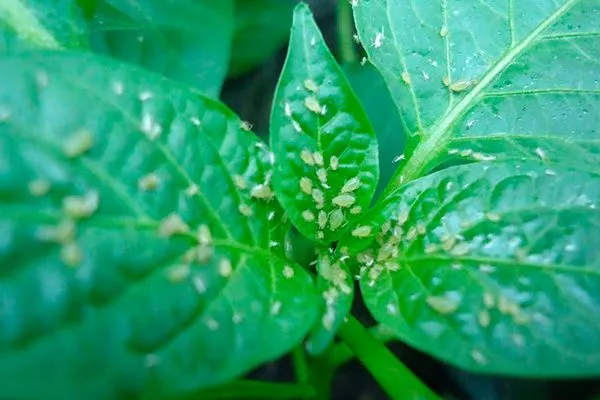
- Aphid. Rarely seen on peppers in open ground, it's more common in greenhouses. The main symptoms are curled leaves and a white, sticky coating. Control measures include Actellic, Inta-Vir, Fitoverm, and similar products.
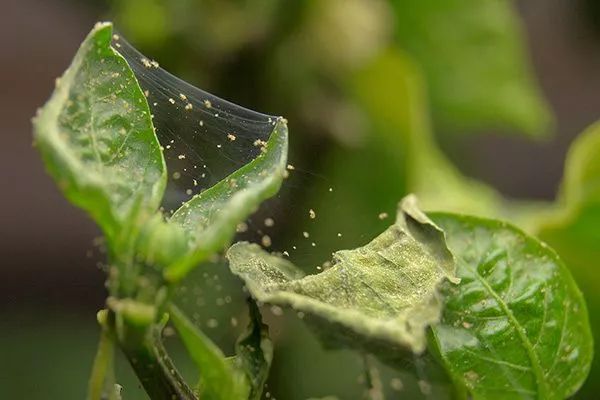
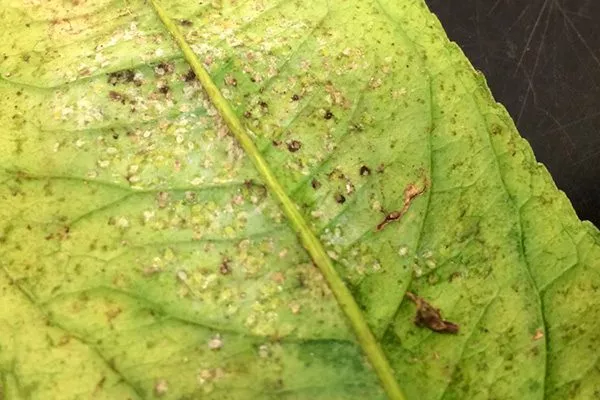
- Spider mite. It can be found during hot weather. The mite's presence causes yellow spots and a grayish coating (resembling a layer of dust) to appear on the leaves. A closer look reveals a fine web. Treatment includes Karbofos, Antikleshch, Vermitek, and Sanmite.
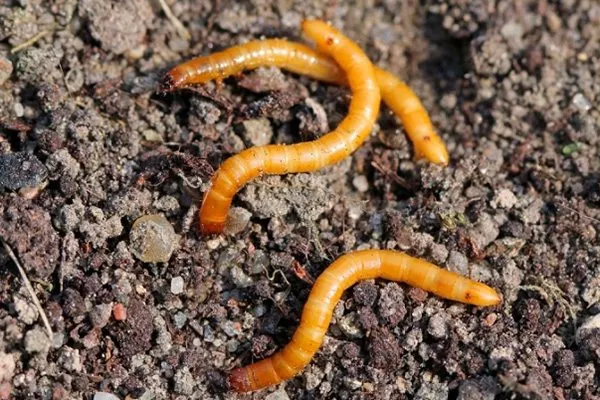
- Wireworm. This is a click beetle that lives in the soil at the root level of pepper plants. Therefore, it is the roots that are attacked, causing the plant to dry out and die. It's best to sow green manure next to peppers.
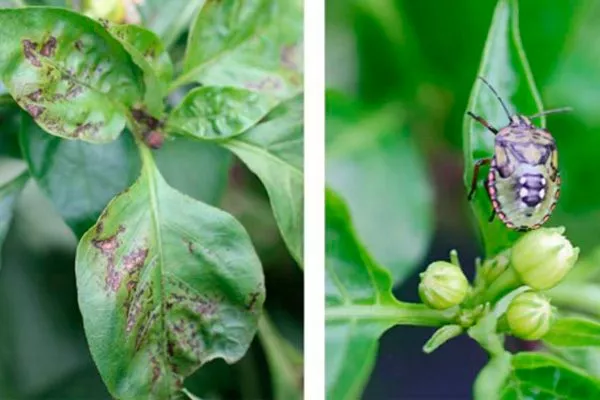
- Bedbugs. They feed on the fruit and, when the skin is punctured, inject a poison that is toxic to humans. Signs include a distinctive odor, rotting peppers, and, upon close inspection, microscopic punctures. Any insecticide designed to kill aphids and whiteflies can be used.
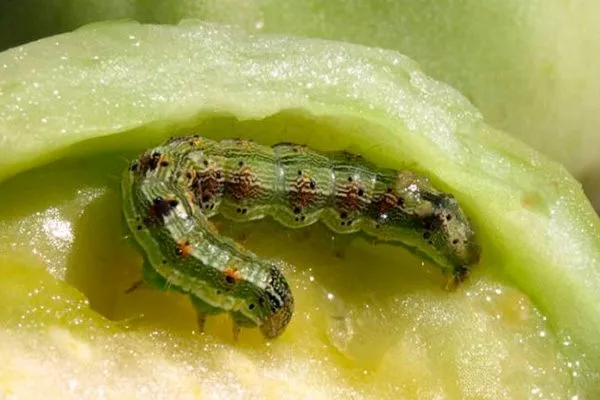
- Scoop. These are caterpillars that live on roots and stems. They are active only at night, hiding in the soil, so only the gnawed areas are visible. Alatar, Decis Profi, and Gerold are used for control.
- Thrips. Their presence is indicated by deformed leaves, yellow spots, and flower drop. Use Fitoverm and Aktara.
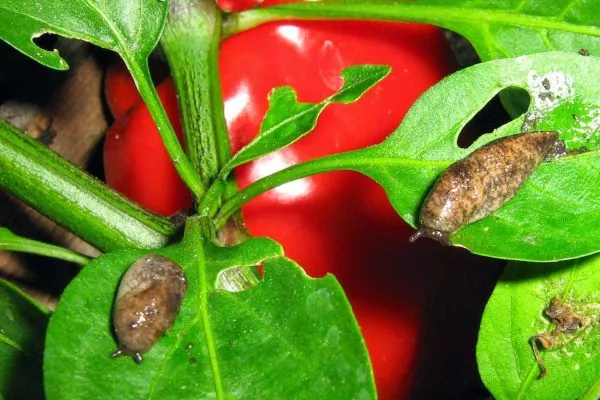
- Slugs. The pest chews through the leaf blade, leaving a slippery trail. Slug Eater and Thunderstorm Meta are used for control.
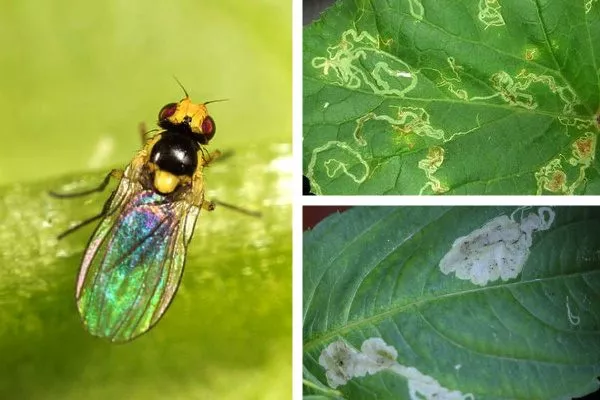
- Nightshade leaf miner. The parasite itself poses no danger, as its larvae chew on the foliage. To eradicate it, you'll need to buy Spinosad, Vermitek, Varant, or Tianid.
Disease prevention
It's easier to prevent diseases or pest infestations than to resort to various treatments later. This requires not only time but also money. Each disease has specific preventative measures.
Despite this, there are also general rules:
- dig up the soil in the root zone;
- plant peppers after beans and onions, not nightshades;
- do not allow overwatering;
- ventilate greenhouses;
- Apply fertilizers in a timely manner and strictly adhere to the dosage;
- inspect fruits and bushes regularly;
- If you notice any initial signs, begin treatment immediately;
- Disinfect the soil, garden tools, seedling pots, greenhouse surfaces, and disinfect planting material.
If you adhere to all agricultural practices, problems will not arise. Remember that there are a huge number of pepper diseases, and each variety requires a specific approach, so consider the variety's characteristics and learn to recognize specific diseases by their symptoms.
The peppers were rotting right before my eyes. Thanks to your article with the clear photos—from them and the description of the symptoms, I determined it was gray mold. I bought Trichodermin on your advice, and it really helped. Otherwise, I followed your instructions here—the remaining peppers were completely saved. My wife, however, said the entire harvest would be ruined.