
The Atlant sweet pepper is a huge hit with farmers, renowned for its excellent flavor and responsiveness to fertilizer. The plant's low growth and spreading habit make it attractive to gardeners.
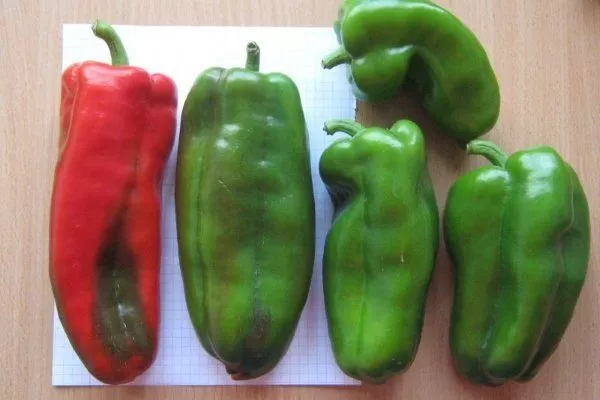
Peppers of the Atlant variety
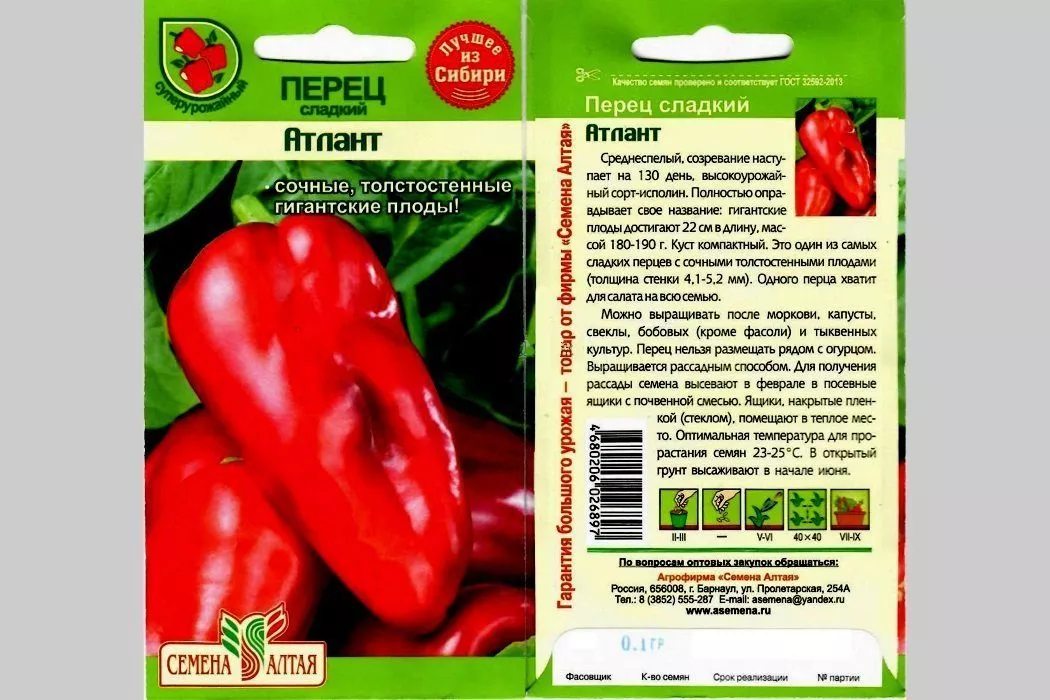
Atlant pepper seeds
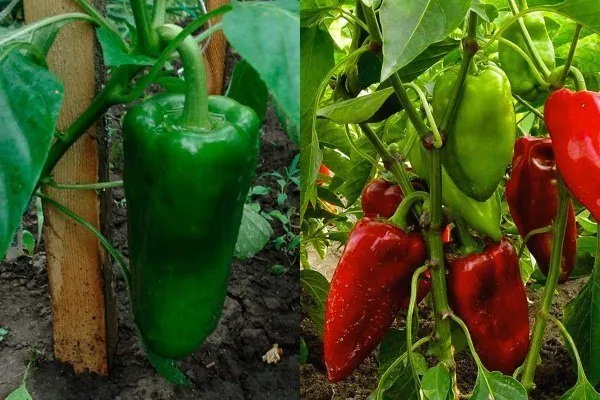
The bushes of the Atlant pepper are low-growing and not spreading.
History of origin
The exact origin story is unclear. The true Atlant variety is cuboid in shape and was created by the breeding company "Poisk." This plant was added to the state register in 2007 and approved for cultivation throughout the Russian Federation. "Poisk" is responsible for the plant's safety.
In stores, you might be offered the Atlant hybrid, created by "Russian City." A cross-breeding variety under this name is also available, but it's neither a cultivar nor a hybrid.
Description and characteristics of the Atlant pepper
The main characteristics of the Atlanta variety are its tough skin, excellent transportability, high yield, and large fruit size. The pods are popularly known as "giants."
| Name | Ripening period | Yield (kg/m2) | Bush height (cm) |
|---|---|---|---|
| Atlas | Average | 5 | 100 |
| Atlant F1 | Early | 6 | 100 |
Bush characteristics
The bush is small, reaching a maximum height of 1 m, with sparse, bright green foliage. The Atlant variety is classified as a semi-standard or semi-spreading variety.
Taste qualities and description of fruits
The pepper produces large fruits, approximately 22 cm long and 10 cm wide, weighing 150 g each. The pods are elongated, with a smooth, unruffled surface and a bright red hue. The flesh is juicy but not stringy. The pepper contains vitamin C and minerals. The fruits are two-chambered, although some are three-chambered, containing numerous seeds.
The maximum documented weight of the Atlas fruit is 0.4 kg.
The Atlant variety has several varieties. They all differ from each other depending on their producer. Many seeds indicate that it is a cultivar, meaning gardeners can grow the plant themselves from their own seeds.
The varieties vary in ripening time, with early and mid-season Atlantes being distinguished. Regardless of the grower, however, all fruits are gigantic and the flesh delicious.
Productivity
This variety is characterized by high yields. Technical maturity occurs approximately 4 months after planting, biological maturity occurs 20 days later, and the growing season lasts 2-2.5 months.
From 1 square meter of land you can collect about 5 kg of harvest.
Scope of application
Gardeners value the Atlant pepper not only for its appearance and flavor, but also for its many uses. The pods can be eaten fresh, frozen, canned, stuffed, and much more. There are no restrictions or precautions; the pods remain fresh and maintain their appearance in all dishes.
The difference between the Atlant F1 variety and hybrid
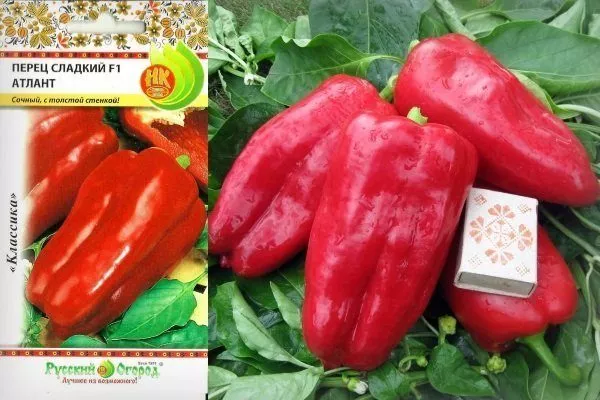
Atlant F1 is a first-generation hybrid, surpassing many varieties in its productivity. Because it is a hybrid, the plant is virtually impossible to cultivate, meaning the resulting seeds are unsuitable for growing. However, despite this, it is significantly different from "purebred" varieties.
Distinctive characteristics of the Atlant F1 hybrid:
- the pods are more elongated;
- can be grown both in a greenhouse and in open soil;
- the ripening period is 1 month shorter than that of the “purebred” variety;
- the yield is high – about 6 kg of fruit can be collected from 1 sq. m., when grown in a greenhouse the figure is higher;
- The taste is excellent, the aroma is characteristically peppery.
Many farmers grow the Atlant variety, but there are also those who prefer its hybrid.
Agricultural technology for growing the variety
Atlantis is considered a cultivar, so growing it in your garden isn't that difficult. Just follow the basic requirements and recommendations of experienced gardeners.
Seed preparation
First, select the seeds: keep the best ones and discard the poor ones. Then, place the seeds in a salt solution (1 teaspoon per 0.5 parts water). Soak them for about 15 minutes; the good ones will sink to the bottom, while the poor ones will float. Transfer the seeds to plain water for a couple of hours.
Once the seeds have swollen, place them in a weak, light pink solution of potassium permanganate for 15 minutes. Rinse them under cold water and place them in water with a growth stimulant. Ideally, leave the seeds in the solution for 12 hours. Gardeners recommend "Zircon" or "Epin-Extra." Dilute the solution according to the instructions. This procedure increases the shelf life of the seeds.
The germination period of seeds of the Atlant variety is 5 years.
Preparing soil and containers
Peppers grow and thrive if the seeds are not planted in open ground, but rather grown from seedlings. For planting, it's best to use simple plastic cups or a large wooden box. Sow the seeds in early February.
For planting, prepare containers with drainage holes. A drainage layer prevents root rot and also helps remove excess moisture. Use expanded clay, pebbles, or small bricks.
As for the soil mixture, it's best to use soil for peppers or houseplants. You can make your own by mixing humus and river sand. Add ash to the substrate; it will significantly increase the germination rate of the sprouts.
Place the soil into the trays very carefully, and do not press it down under any circumstances. It must remain loose. Otherwise, the seeds will not germinate.
Planting seedlings, timing
The earlier you plant your seedlings, the better. The deadline is the last week of March, but this only applies to regions where warm weather arrives late. If you're growing peppers in the southern regions of the country, then plant seeds for seedlings already in February.
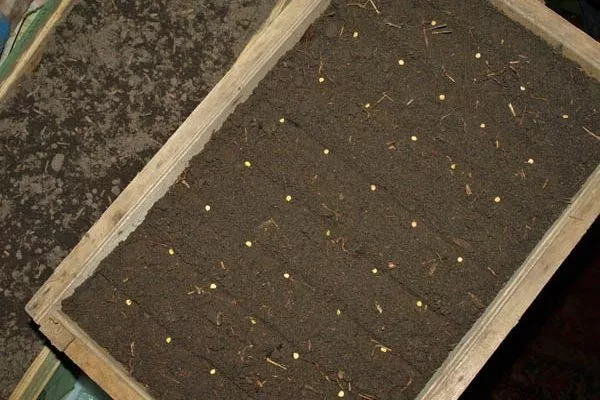
Before planting, spray the prepared soil with a weak solution of potassium permanganate. The distance from the soil surface to the edge of the container should be more than 20 mm.
In each container, use a pencil or stick to make small furrows about 10-15 mm deep. If you sow the seeds deeper, they may not germinate. Space the furrows 6 cm apart. Do not place dry seedlings in the holes. Soak them first.
Carefully place the seeds into the furrows and water them with room-temperature water using a spray bottle. Avoid using too much water, as this will wash away the seeds.
Growing seedlings
Cover the seedlings with plastic film, or glass is an option. The covering material should allow light to pass through. Peppers also thrive in warmth, so place the seedlings in a warm, well-lit area. Initially, keep the plants near a radiator or heater.
Check the soil daily, and don't let it dry out. Ventilate the seedlings a couple of times a week. As soon as the peppers begin to sprout, move the containers to the windowsill.
- ✓ Maintain soil temperature at least +18°C for optimal seed germination.
- ✓ Provide seedlings with 12-14 hours of light per day, using phytolamps if necessary.
The main thing is to monitor the amount of sunlight; it should be sufficient. If it's not enough, add artificial lighting. Avoid freezing the sprouts near a cold window; the normal temperature range is 24 to 28 degrees Celsius. At night, the temperature should be 21 to 25 degrees Celsius.
Planting in a greenhouse and open ground
The timing of planting seedlings depends on their intended use. For example, if you plan to can the peppers in the future, plant the seedlings when they're 25-45 days old. Care should be taken not to damage the roots during transplanting. They shouldn't break or fall off when removed from the container.
The Atlant variety is considered a perennial, so it can be planted directly in a greenhouse. In warmer climates, it is recommended to grow the plant in open ground for about five years. After a few years, the bush can be moved to a greenhouse.
The planting pattern depends on the irrigation method. For rainwatering: 0.6 x 0.25 m; for drip irrigation: 0.8 x 0.5 x 0.2 m. A denser pattern is recommended for this plant variety.
Approximately 62-76 thousand plants can be planted on 1 hectare of land.
Before planting seedlings, check the weather forecast. Avoid planting before frost, prolonged rainfall, or hail. After planting, cover the seedlings with plastic to prevent them from freezing.
Atlant has a unique property: if you plant it in a greenhouse in early March, you'll get two harvests per season. The second harvest is much more abundant than the first.
Watering and fertilizing
During the growing season the bush they feed Twice. Use a nitrogen mixture. Dilute manure in 10 liters of water, avoiding direct contact with the roots. It burns them. Before bud formation, feed the bush with a phosphorus-potassium mixture. "Autumn" produces excellent results; it contains mostly potassium and phosphates.
Use only room-temperature water for watering. Otherwise, the plant will stop growing and become ill. The water temperature should not exceed 30 degrees Celsius. This pepper variety loves water; it should be added three times a week. During dry periods, water daily.
Processing of shoots
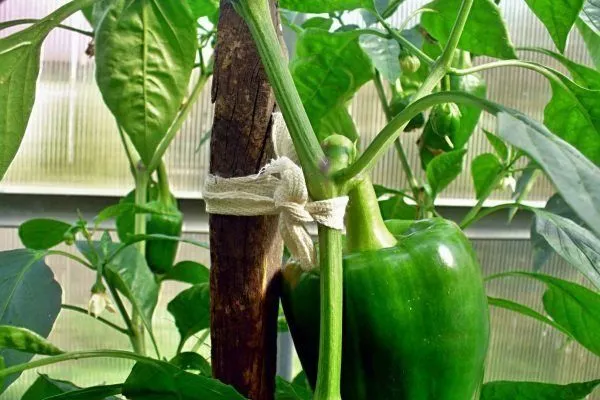
Atlant doesn't require any shoot priming. It does require staking. Although the plant isn't particularly tall, it still needs support. Construct it from branches, not thick boards. The stem is tied to these, and the stakes help prevent the plant from breaking in gusty winds.
Harvesting, storage and propagation for seeds
The harvest is green at technical maturity and red or burgundy at biological maturity. The fruits can be transported over long distances.
When you cut the pod open, you'll find 2-3 chambers inside, almost completely filled with seeds. Remove them, dry them thoroughly, and soak them in a solution of potassium permanganate. Remove and dry. After applying a growth stimulating mixture and disinfecting, the seeds are ready for planting.
Diseases and pests to which the Atlant pepper is susceptible
This pepper is resistant to pests, bacteria, and viruses. To prevent this, spray the plants regularly, but avoid contact with the pods; otherwise, they will no longer be suitable for consumption.
Advantages and disadvantages of the variety
Pepper Atlant, like other varieties of the crop, has both advantages and disadvantages, which must be taken into account when growing the plant.
Advantages of the variety:
- opportunity growing in a greenhouse and in open ground;
- undemanding in care;
- high yield;
- versatility of fruit use;
- attractive appearance;
- large fruits;
- juicy pulp;
- the ability to adapt to any region and climate;
- strong immunity.
Disadvantages of the variety:
- needs support;
- it can easily be confused with the Antant F1 hybrid;
- a large number of seeds.
Reviews
The Atlant sweet pepper is a variety that produces gigantic fruits. It's easy to care for and grow, too. The key is to select the right seeds and plant them in time to ensure a bountiful harvest.