
For decades, the Agapovsky pepper has remained popular among Russian vegetable growers due to its pleasant flavor, attractive fruit, and ease of cultivation. It is successfully grown both commercially and in private gardens.
Who developed the variety and when?
It was developed by a team of breeders including Agapov A.S., Pyshnaya O.N., Syukalova A.A., Cheremushkina N.P., and Mamedov M.I. The variety boasts high yields and productivity. In 1995, it was included in the State Register.
Description of the Agapovsky pepper variety
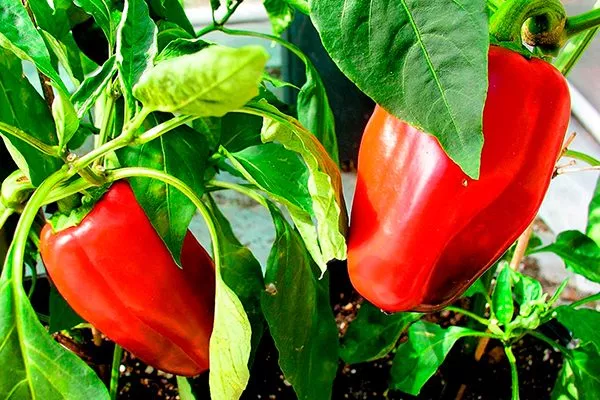
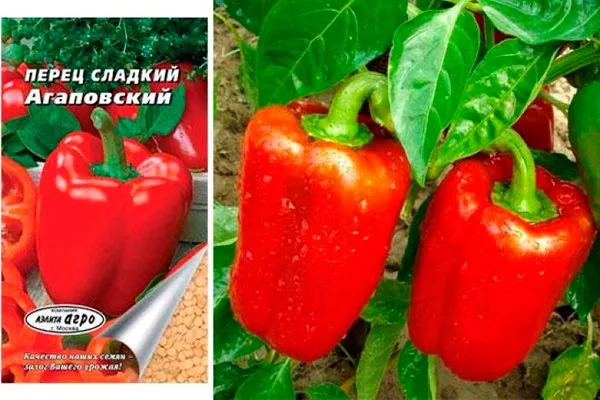
The Agapovsky variety is particularly attractive. Its robust bushes are literally covered with beautiful, uniform, and fragrant fruits. The bush's size allows it to be successfully grown both in greenhouses and outdoors.
Weight, color and shape of fruits
They are characterized by a uniform distribution along the shoots. The skin is thin, and the wall thickness is 5-7 mm. Inside, there are 3-4 seed nests. At the technical stage of ripeness, the fruit is dark green, and when fully ripe, it turns bright red.
Height and bushiness
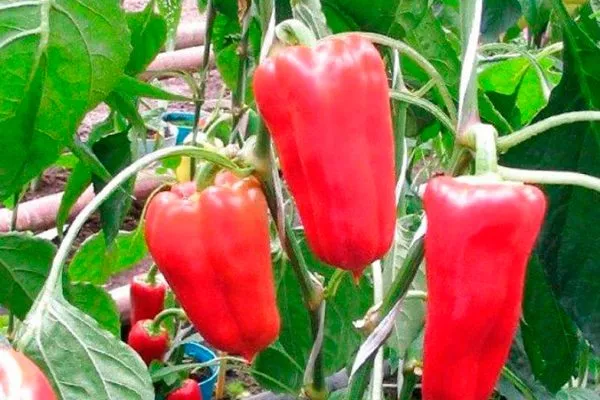
The bushes are medium-sized, approximately 60-100 cm tall, depending on the growing method. In open ground, they are usually more compact, while in greenhouses they can reach a height of up to 1 m. They have good foliage, with large, dark green leaves. The peppers ripen downward.
Characteristics of the Agapovsky pepper
It boasts excellent flavor, high yields, early ripening, and good disease and pest resistance. This versatile variety is suitable not only for fresh consumption but also for canning and other long-term storage methods.
Agapovsky pepper yield
It is characterized by excellent productivity. Up to 10 kg of ripe fruit can be harvested from 1 square meter of planting area. If grown in a greenhouse, the yield will be higher.
Fruiting period
This variety is considered an early-ripening variety. Fruits begin to ripen approximately 100-120 days after germination.
Disease resistance
It exhibits good resistance to most diseases. When grown outdoors, it is much less susceptible to disease than in greenhouses. The crop is not attractive to the Colorado potato beetle, and is only occasionally of interest to cottonmouth moths, nematodes, aphids, and whiteflies.
Growing regions
Despite its tolerance to fluctuations in humidity and temperature, cultivation is recommended only within photoperiod zones 2 and 3. These zones cover the regions from Leningrad to Vologda and from Belgorod to Kursk. The species thrives in Yakutia and Khakassia.
Pros and cons of the variety
This crop is deservedly popular among vegetable growers due to its numerous advantages. Among its merits are the following:
Features of planting and growing
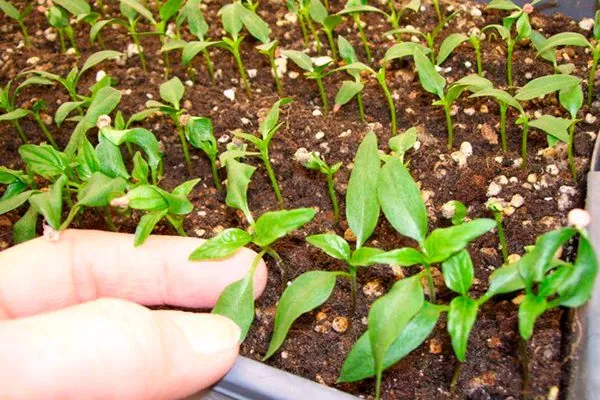
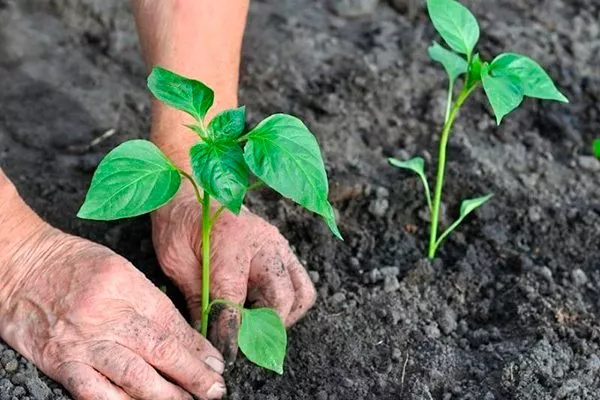
Sow seeds for seedlings in the last ten days of February. Before sowing, disinfect the soil and planting material. Seedlings ready for planting outdoors should have 7-9 full-fledged leaves. Two weeks before planting, take the plants outside to harden off.
- ✓ The optimal soil temperature for sowing seeds should not be below +18°C.
- ✓ To prevent blossom-end rot, it is necessary to maintain the calcium level in the soil using calcium nitrate in a proportion of 1 tablespoon per 10 liters of water.
| Type of feeding | Periodicity | Efficiency |
|---|---|---|
| Chicken manure | Every 14 days | High |
| Superphosphate | Every 14 days | Average |
| Complex mineral fertilizers | Every 14 days | High |
Recommendations for growing and care:
- When marking out soil holes, keep in mind that to ensure large vegetable crops, it's important to avoid planting too close together. Leave 40-50 cm between plants and 60 cm between rows.
- The shallow root system requires regular watering. Water in the evening, 2-3 times a week. Use warm, sun-warmed water.
- Fertilize every 14 days using a solution of chicken manure, superphosphate or complex mineral fertilizers.
- Form the bush into two trunks, pinching the bud at the first fork. Pruning the bud promotes good branching, an increased number of shoots, and a more abundant harvest.
- Mulching between rows solves several problems simultaneously: it improves the structure of the soil, prevents crust formation, inhibits weed growth and enriches the soil.
Prevention of diseases and pests
Thanks to its strong immunity, preventative spraying is not necessary. To maximize protection for your garden beds, follow these guidelines:
- Remove weeds in a timely manner.
- Avoid dense plantings.
- Treat seeds before planting.
- Ensure good ventilation in the greenhouse.
To protect against pests, use tobacco dust, garlic or wormwood infusion, and wood ash. Marigolds or calendula planted nearby effectively repel insects.
Harvest time
At 8 cm in length, they are ready to be harvested by the end of July. In warm conditions, they ripen for an additional 15-25 days, reaching biological maturity in approximately 140 days. The harvested crop can be stored in the refrigerator for an extended period, ensuring the preservation of their freshness and quality.
Analogues
| Name | Ripening period | Disease resistance | Growing regions |
|---|---|---|---|
| Agapovsky | 100-120 days | High | Leningrad, Vologda, Belgorod, Kursk regions, Yakutia, Khakassia |
| Little Red Riding Hood F1 | 110-120 days | Average | Central regions of Russia |
| Viking | 100-120 days | High | Northwestern regions of Russia |
| Red Bull F1 | 100 days | Average | Southern regions of Russia |
| Red cube F1 | Mid-season | High | Central and Southern regions of Russia |
| California Miracle | 110-150 days | High | All regions of Russia |
There are sweet pepper cultivars similar to the Agapovsky variety in appearance and characteristics. Similar varieties are listed below:
- Little Red Riding Hood F1. A mid-early hybrid. It produces cube-shaped, scarlet fruits weighing up to 200 g. Ripening takes 110-120 days. Yields 8-10 kg per square meter. Improper staking can cause stem deformation.
- Viking. A cultivar with prismatic, red fruits (150-200 g). Biological maturity occurs in 100-120 days. It has gained popularity due to its high resistance to diseases and pests.
- Red Bull F1. An early hybrid with red, cube-shaped peppers weighing 130-170 g. The first harvest is 100 days later. The plant is vigorous but requires pinching, as the stems can break under the weight of the peppers.
- Red cube F1. A mid-season variety with bright red fruits and juicy, sweet flesh. The bushes reach 60-70 cm in height, yielding 6.8-7.6 kg per square meter.
- California miracle. A tall bush with red, thick-walled, cube-shaped peppers. Technical maturity occurs in 110-115 days, with full maturity occurring in up to 150 days. This cultivar is disease-resistant.
The description and characteristics of sweet Agapovsky are not inferior to similar varieties, and in some cases even surpass them.
Reviews from those who planted Agapovsky pepper
The Agapovsky pepper is a reliable variety, recognized and appreciated by most vegetable growers. Its popularity has reached significant heights, and it is widely grown in various regions of Russia due to its excellent fruit characteristics and relatively easy care.