Loading Posts...

Features of the Umbrella squash, the subtleties of agricultural technology

The Umbrella Pattypan squash is an ideal choice for vegetable growers seeking a bountiful harvest. This variety boasts resistance to various diseases and pests, making it a leader among pumpkin and vegetable crops. However, it's important to follow proper agronomic practices to achieve the best results.

Introduction to the variety

The Umbrella squash is a compact variety suitable for both fresh consumption and canning. The average yield per square meter in garden beds reaches 3 kg, while commercial yields range from 4.5-5 kg ​​in the same space.

Other characteristic features:

  • One of the advantages of this variety is its cold resistance – it can tolerate low temperatures and light frosts.
  • The variety is renowned for its resistance to diseases and insects, which allows it to be cultivated without the use of chemical plant protection products.
  • The period until full ripening is only 35-50 days.
Suitable for cultivation in various climatic zones, including the Northern, Northwestern, Central, Volga-Vyatka, Central Black Earth, North Caucasian, Middle Volga, Lower Volga, Ural, West Siberian, East Siberian and Far Eastern regions.

Umbrella squash

When and by whom was it selected?

The Zontik pattypan squash, also known as Zontik, was developed in 1988 at the Kuban Experimental Station, a branch of the Federal Research Center of the N. I. Vavilov All-Russian Institute of Plant Genetic Resources. In 1993, this variety received permission to cultivate in the Central Black Earth Region.

The specificity of the bushes and cucumbers, taste

This variety produces large fruits, weighing between 600 and 1400 grams. The fruits are snow-white, and the flesh is also white and firm. The pumpkins have a sweet taste. The bushes do not branch and have a bushy growth habit.
squash fruits

Growing and care

The time for sowing squash varies depending on the climatic conditions of the region and the cultivation method:

  • In most cases, seeds for seedlings are sown in April and transplanted into open ground between May and June.
  • If you decide to sow seeds directly into the soil, it is best to do this after May 12-18.

Growing features:

  • Prefers sunny areas that are protected from gusts of wind.
  • The recommended distance between plants is 60-65 by 60-70 cm.
  • It is important that the soil is well fertilized and has a neutral acidity, as this will have a beneficial effect on the development of the crop.
  • It is recommended to use film to protect against possible night frosts.
  • Requires regular watering, but avoid over-watering the soil.
Precautions when watering
  • × Avoid watering in the evening to prevent the development of fungal diseases.
  • × Do not use cold water directly from a well or borehole, let it warm up to ambient temperature.
For the full growth and development of the plant, periodic fertilizing is also important, carried out according to the standard scheme for zucchini and squash.

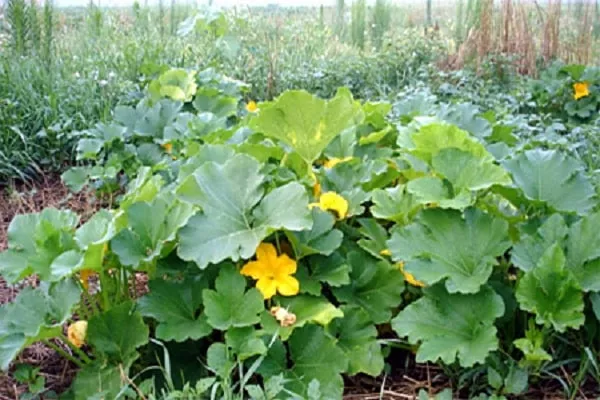
growing squash

Reviews

Victoria Maryanova, 47 years old, Voronezh.
Umbrellas are vigorous plants with abundant ovaries. They produce strong and resilient seedlings with abundant fruit. However, there are some downsides: slugs and snails will not miss the opportunity to feast on such a treat. Therefore, it is very important to plan for this.
Nikita Ugorov, 42 years old, Lipetsk.
The choice of high-quality seeds and a suitable variety was successful. The plants turned out to be very strong. We used chicken manure as fertilizer, which, as with the zucchini, fed the squash several times during flowering. The Umbrella squash developed quickly. The fruits are tender and delicious.
Andrey Kramarov, 56 years old, Rostov-on-Don.
This was our first time growing the Umbrella squash. We always covered the plants at night. As a result, they produced some pretty decent-looking fruits. They were medium-sized, not as large as the manufacturer claimed. A few small ovaries rotted before they had a chance to grow. But we were able to fry and even pickle the remaining fruits, recaptured from snails and slugs.

The Umbrella Pattypan squash is a variety that delights with its early ripening and excellent flavor. It is resistant to cold and disease. The plant grows as a bush or semi-bush. The fruits are white or greenish, cup-shaped, with serrated edges, and the surface can be either smooth or slightly ribbed.

Frequently Asked Questions

What type of fertilizer is best for feeding the Umbrella squash?

Can this variety be grown in a greenhouse to speed up ripening?

What companion plants will increase the yield of the Umbrella squash?

How to control slugs and snails without chemicals?

Why can ovaries rot before they have time to grow?

What is the optimal fruit size for harvesting to prolong fruiting?

Can drip irrigation be used for this variety?

How to prepare seeds before sowing to improve germination?

What folk remedies are effective against fungal diseases?

Why can fruits lose sweetness?

What is the minimum temperature threshold for planting seedlings in the ground?

Is it possible to grow Umbrella squash in containers on the balcony?

How often should you loosen the soil around the bushes?

What signs indicate the need for urgent feeding?

How to extend the shelf life of fresh fruits?

Comments: 0
Hide form
Add a comment

Add a comment

Loading Posts...

Tomatoes

Apple trees

Raspberry