
The Synishka pattypan squash is very popular among gardeners in our country. This early-ripening and productive variety has earned the trust of gardeners thanks to its excellent taste, disease resistance, and ease of care. It's important to carefully study all the growing details of this vegetable and ensure proper care to ensure bountiful harvests.
Introduction to the variety
The Synishka pattypan squash is ideal for culinary enthusiasts and gardeners seeking high-quality, delicious vegetables. The seeds have an excellent germination rate of 97%.
Specificity of bushes and cucumbers
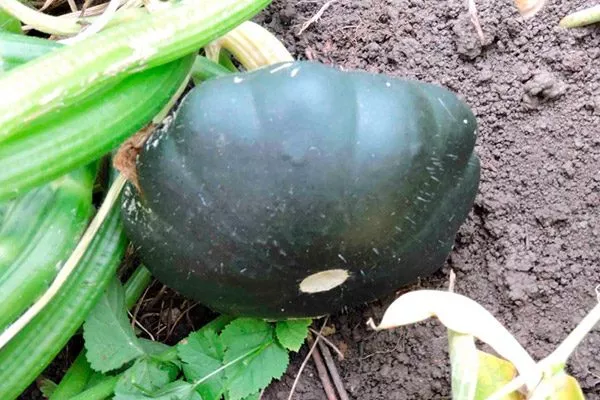
This compact, bushy plant produces vigorous female flowers. The fruits are green, with tender, crisp, cream-colored flesh, weighing 300-350 g.
How to plant and grow squash correctly?
The crop is propagated by seeds, which are harvested from fully ripened fruits to save money. Cultivation is permitted both through seedlings and by direct sowing of seeds in open ground.
- ✓ Check the expiration date of the seeds; the optimal shelf life is no more than 4 years.
- ✓ Pay attention to the manufacturer; give preference to proven agricultural firms.
Before planting, prepare the planting material. Here are a few ways:
- Soak the seeds in a growth stimulant solution for 24 hours, then rinse them with water and wrap them in damp cheesecloth. Leave them for 48 hours at 20-25°C.
- Warm the seeds for 5-6 hours at 50-60°C to reduce the risk of plants becoming infected with viral infections that are untreatable.
- To harden, place them in bags and keep them at 18-20°C for 6 hours, then at 0-1°C for about 24 hours. Before sowing, treat the seeds in a 1% potassium permanganate solution, then rinse them in clean water and dry.
At the end of May, when the soil prepared in the fall has warmed up well and the threat of frost has passed, level the ground with a rake, remove weeds, form beds and dig holes measuring 70x70 cm so that the plantings are not too dense.
Sow the seeds at a depth of about 8 cm, several per hole. Cover them with soil, water gently, firm the soil, and cover with plastic wrap until the first shoots appear.
Caring for the crop involves performing simple agricultural measures:
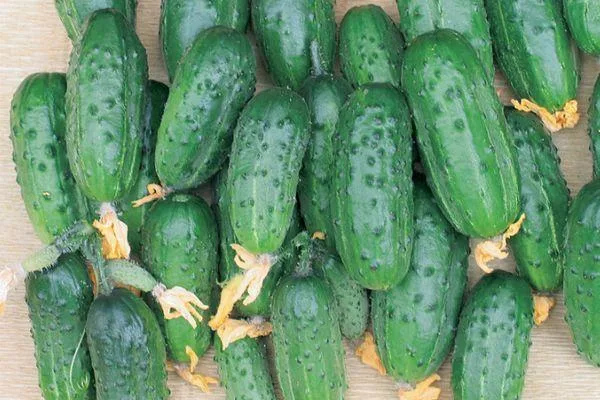
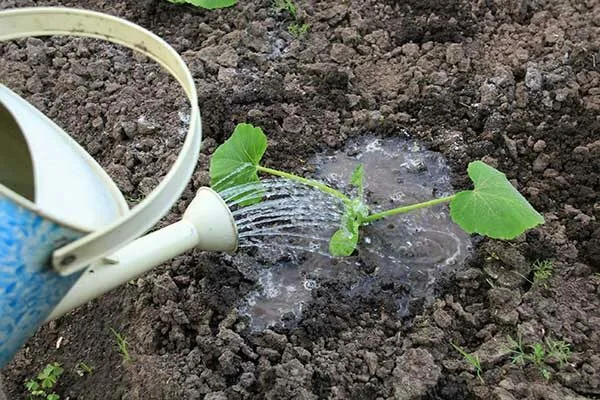
- Watering. Water the bushes regularly, especially during active growth and fruiting. Apply water at the roots, avoiding contact with the leaves to prevent fungal diseases. The water should be warm (22-25°C) and settled.
Carry out this procedure in the morning or evening, when the sun is not too strong. Watering frequency depends on weather conditions, but is typically 1-2 times a week. During dry periods, increase the amount. - Top dressing. Vegetables respond well to fertilizing several times per season. Feed the bush for the first time 2-3 weeks after planting, using organic fertilizers such as mullein or bird droppings diluted in water.
During flowering and fruiting, use complex mineral fertilizers containing phosphorus and potassium. Add wood ash—it improves the flavor of vegetables and increases their resistance to disease. - Loosening and removing weeds. After each watering or rain, loosen the soil around the plants to ensure oxygen reaches the roots and prevent a crust from forming on the surface of the soil.
Carefully loosen the soil to avoid damaging the root system. At the same time, remove weeds that may shade the plants and rob the soil of nutrients. - Mulching. To maintain soil moisture and reduce weeds, mulch your garden beds using straw, grass clippings, or peat. This helps maintain a stable soil temperature.
- ✓ Bright, uniformly colored leaves without spots.
- ✓ Sustainable growth and development without delays.
Pests and diseases
Squash, like other vegetable crops, can be susceptible to pests and diseases. Proper care and timely protection will help maintain plant health and ensure a bountiful harvest.
There is a risk of the following problems:
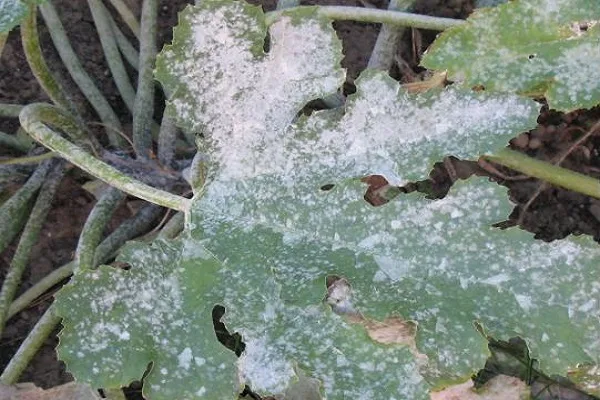
- Powdery mildew. A white or grayish coating appears on all parts. The foliage begins to yellow and dry out, which slows plant growth and reduces the quality of the fruit. Spray the bushes with a fungicide solution (such as Topaz or Fundazol) or folk remedies such as a solution of baking soda and soap.
- Anthracnose. The appearance of yellow or brown spots on leaves and stems, which eventually develop into ulcers. This can lead to plant death and reduced yield.
Use fungicides (such as Bordeaux mixture or Previcur). Remove and burn any affected parts. - Root rot. Plants wilt, leaves turn yellow, and roots rot. Bushes may die, especially in the early stages of growth.
Treat the soil with fungicides before planting, improve drainage, and reduce watering at the first signs of disease. Use biological products such as Trichodermin. - Bacteriosis. Water-soaked spots appear on the leaves, which eventually develop into dry ulcers. The disease spreads quickly and can destroy the entire crop. Spray the plants with Bordeaux mixture.
- Aphid. Small green or black insects that feed on plant sap. Leaves curl, turn yellow, and develop a sticky coating.
Spray seedlings with a soap solution, garlic infusion, or tobacco dust. For severe infestations, use insecticides (Aktara, Fitoverm). - Spider mite. Small pinpoint punctures on the leaves, a fine web on the underside. They turn yellow and fall off.
Treat with garlic or onion peel infusion. In case of severe infestation, use acaricides (Fitoverm, Actellic). - Whitefly. Small white flies on the underside of leaves that suck out the juice, causing them to turn yellow and dry out.
Spray the plantings with tobacco or garlic infusion. In case of widespread infestation, use insecticides (Confidor, Iskra). - Snails and slugs. They eat leaves and fruits, leaving silvery trails. Use natural barriers (chalk, ash) or special products (Groza, Slizneed).
To prevent diseases and pests, practice crop rotation, do not plant squash in the same place year after year, keep the beds clean, and promptly remove plant debris.
Reviews
The Synishka Pattypan squash is an excellent choice for those looking to add variety to their table and brighten their garden with vibrant, delicious vegetables. This variety not only boasts consistent productivity but is also easy to care for, making it suitable even for novice gardeners. It only takes minimal attention to reap bountiful harvests.