
Solnyshko is a mid-season squash variety. Gardeners love it for its consistent yield, the attractive appearance of its fruits, and their wonderful, delicious flavor. This variety is of interest not only to homeowners and farmers growing vegetables for sale, but also to healthy eaters, young mothers, and those who enjoy decorating their gardens.
Introduction to the variety and characteristics
Solnyshko is a member of a group of varieties and hybrids characterized by a medium ripening period. Its fruits ripen 58-69 days after emergence. Their yield is uniform and long-lasting. Yields are stable throughout the entire fruiting period, ranging from 19,500-26,500 kg per hectare.
Other characteristics of the variety include:
- average heat resistance;
- moderate drought resistance;
- ability to withstand a slight decrease in temperature;
- average resistance to powdery mildew, both true and false.
When and by whom was it bred?
The cultivar of the saucer pumpkin (also known as the pattypan squash) was developed in 1995 as a result of breeding work conducted by the Federal Research Center of the All-Russian Institute of Plant Genetic Resources named after N.I. Vavilov. The authorship belongs to G.A. Tehanovich.
In 1997, Solnyshko was added to the Russian Federation state register. It is intended for cultivation in private household plots and small farms located in the following regions of the country:
- Northern;
- North-West;
- Central;
- Volga-Vyatka;
- Central Black Earth Region;
- North Caucasian;
- Middle Volga;
- Lower Volga;
- Ural;
- West Siberian;
- East Siberian;
- Far Eastern.
The specificity of the bushes and cucumbers, taste
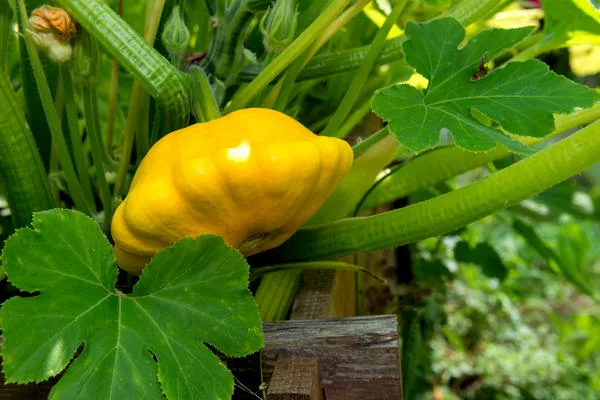
Plants of the Solnyshko variety are compact and do not tend to branch. The foliage covering them is medium-sized, green, pentagonal, and slightly dissected.
The bushes produce single flowers. The male flowers open first, followed by the female flowers. Pollination is carried out by bees. A single plant produces up to 15 medium-sized fruits.
The pattypan squash variety has the following characteristics:
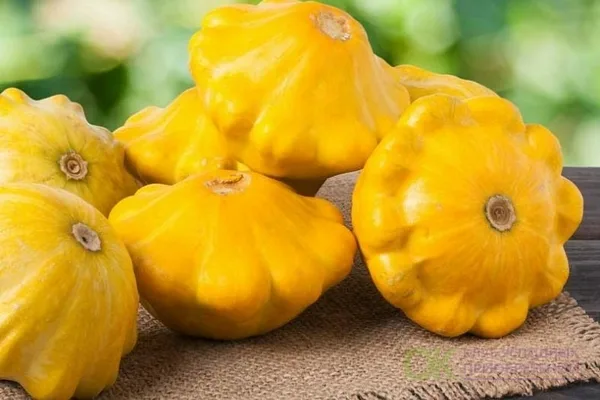
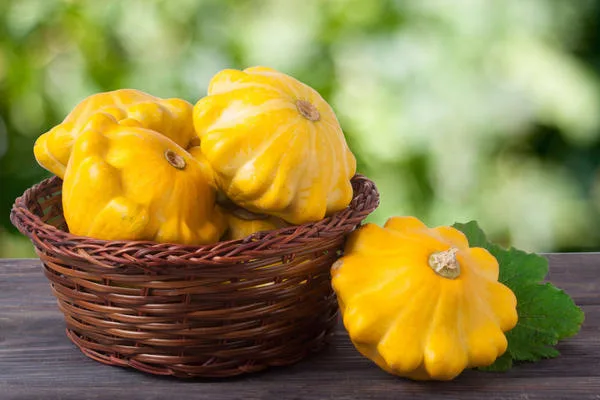
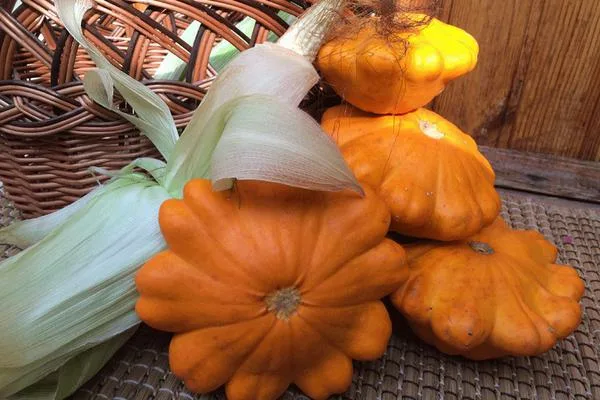
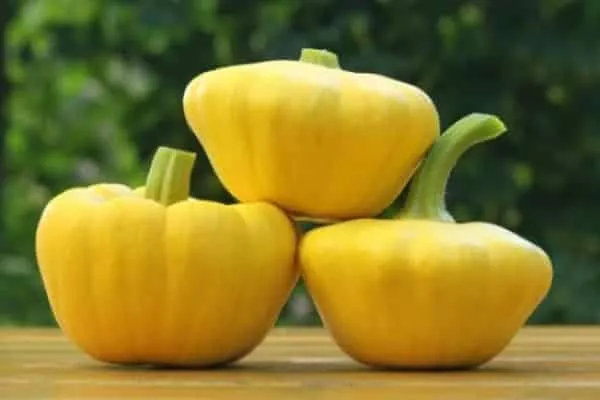
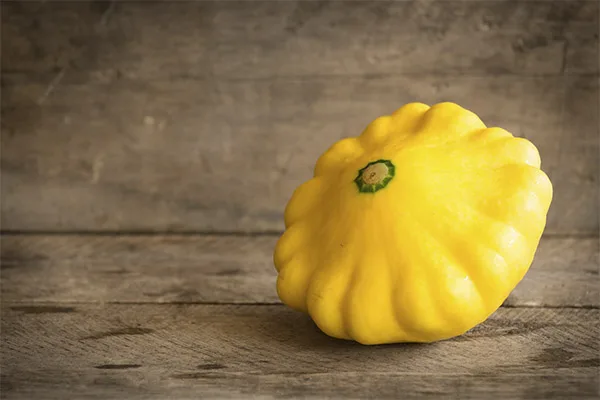
- plate-shaped with a wavy edge;
- weight - 250-300 g;
- deep yellow color (technical maturity), which becomes bright orange in fully ripe specimens;
- smooth thin skin;
- cream-colored flesh, juicy, with a fairly dense consistency, containing 6.9% dry matter and 3% sugars.
- ✓ The fruits of the Solnyshko variety have the unique ability to retain the brightness of their color even after heat treatment.
- ✓ The variety demonstrates increased resistance to short-term temperature drops down to +5°C.
The fruits have a pleasant and delicate taste, which includes sweetness and a subtle nutty note.
Methods of application
The Solnyshko variety's harvest has versatile uses. It's used not only in home cooking and canning, but also as a decorative garden ornament.
In cooking
Housewives use sunny fruits to prepare various everyday dishes:
- side dishes, in particular vegetable stew;
- soups and cream soups;
- casseroles;
- snacks;
- salads;
- puree intended for baby food.
They can be boiled, stewed, fried, stuffed, or baked. They make dishes more filling, delicious, and healthy, adding a decorative touch. They can be paired with meat, fish, other vegetables, and garden greens. Spices and herbs add a more piquant and vibrant flavor.
Squash is also suitable for making preparations for the winter:
- canned;
- salty;
- frozen.
Pickling or marinating them keeps them firm and crispy, enhancing their flavor. Freezing preserves their freshness and nutrients for up to 10 months.
Sunny squash is an original decorative element.
This vegetable variety looks quite decorative not only when the bushes are in bloom, when large, crown-shaped flowers bloom, but also when the fruits are ripening. The fruits of this variety are quite decorative, visually resembling suns.
Gardeners affectionately call this vegetable "sun pumpkin" and use it to decorate their plots. It's planted not only in the garden but also in flowerbeds near the house. It looks harmonious when planted with other flowers and ornamental plants. It can also be used as an accent element in a composition.
Beneficial properties
Squash is a healthy food product suitable for dietary and baby food. Its flesh is rich in many nutrients that are beneficial for human health:
- vitamins (ascorbic acid, retinol, tocopherol, phylloquinone or vitamin K, components of the B vitamin group, nicotinic acid);
- minerals (the fruits contain calcium, potassium, iron, magnesium, silicon, cobalt, copper, manganese, selenium and others).
The calorie content of this vegetable is 19 kcal/100 g. It is rich in dietary fiber and contains a fair amount of water in its pulp. In addition to carbohydrates (83%), it contains protein (12%) and fat (5%).
By eating dishes made from the Solnyshko squash, you will experience many healing effects:
- strengthening the immune system;
- improving visual acuity;
- improving the condition of skin and hair;
- reducing the level of bad cholesterol in the blood;
- strengthening the heart, preventing the development of cardiovascular pathologies.
Analogues
| Name | Ripening period | Disease resistance | Fruit shape |
|---|---|---|---|
| Sun | 58-69 days | Average | Plate-shaped with a wavy edge |
| Sunny bunny | Early ripening | High | Plate-shaped with a wavy edge |
| Orange | Early ripening | High | Plate-shaped with a wavy edge |
This vegetable crop has several similar varieties:
- Sunny bunny — an early-ripening, disease-resistant crop that grows as a branchless, bushy plant. Its fruits are covered with golden-yellow skin and weigh up to 300 g. The yield is 15 kg per bush. This variety is suitable for all purposes.

- Orange — a bush variety of squash with an early ripening season. The fruits are golden-red in color and are disc-shaped with a wavy edge. They weigh up to 500 g. The flesh has a sweet flavor. The variety is resistant to powdery mildew. Uses: home cooking and canning.
Seed producers of the variety
The seed material for this varietal variety of squash is produced for sale by domestic agricultural firms and breeding and seed companies, known in the market under the following trade names:
- Globe Seeds;
- "Ural Estate"
- "Ural summer resident";
- "Aelita".
Tips for growing squash
Growing this vegetable crop isn't particularly complicated. Gardeners grow it in one of two ways:
- seedlings, accelerating harvesting;
- seedless, which involves direct sowing of seeds into garden soil.
- ✓ The optimal soil temperature for sowing Solnyshko squash seeds should be at least +12°C.
- ✓ To increase seed germination, it is recommended to pre-soak the seeds in a solution of potassium permanganate (0.1%) for 30 minutes.
Sow Solnyshko seeds for seedlings in the second half of April. Plant them in peat pots filled with nutritious soil mix. Transplant the seedlings to the garden in early June. Make sure the site you choose for the bed is well-drained, protected from the wind, and has fertile soil.
Plant the squash seedlings in pre-dug holes, 10-12 cm deep. Transfer the plants with the soil ball or plant them directly into the hole without removing them from the peat pot. Follow the planting pattern:
- 70x70 cm or 60x60 cm, if there is little space in the garden bed;
- chessboard order;
- planting density: up to 5 bushes per 1 sq. m.
If you prefer growing this sunny vegetable without seedlings, begin sowing seeds after the danger of frost has passed. The optimal time is the last ten days of May and the first ten days of June. Follow the 70x70 cm pattern. The seeding depth depends on the soil type:
- 5-6 cm - for light soil;
- 3-4 cm - for heavy (clay) soil.
Caring for a squash planting consists of 3 mandatory procedures:
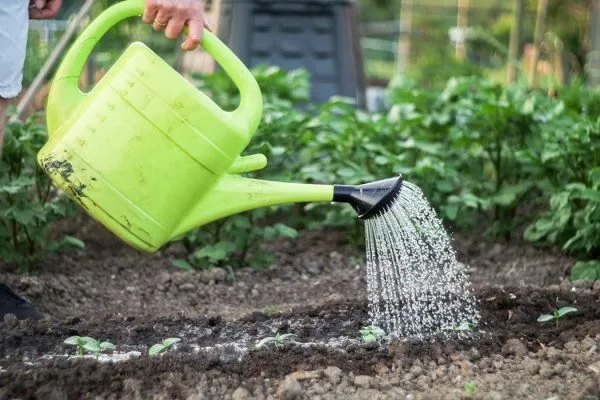
- GlazeThis vegetable crop loves moisture. Water it frequently and thoroughly, using warm, settled water. Before flowering, water the bed once a week. Water consumption is 10 liters per square meter.
Once buds appear on the bushes, double the watering frequency (keeping the same water consumption). Plants need especially high moisture levels during the fruiting season. - Weeding. Remove weeds from your garden regularly and promptly. They deprive squash plants of nutrients and moisture, provide a breeding ground for harmful insects, and increase the risk of infection.
- Top dressingWhen growing Solnyshko, be sure to fertilize the soil beneath the bushes to increase productivity and improve the quality of the fruit. Apply at least two fertilizer applications per season. Squash grown outdoors especially require additional nutrition.
Feed them with a solution of mullein (at the beginning of the growing season), superphosphate, potassium or ammonium sulfate.
Diseases and pests
Solnyshko is a variety relatively resistant to powdery mildew, both true and false. Its planting is threatened by other fungal diseases, such as white rot and anthracnose. There's also always a risk of insect infestation.
To prevent the Solnyshko squash from being damaged by diseases and harmful insects, follow these preventative measures:
- Grow the vegetable in fertile, loose soil with neutral acidity;
- water the soil with a solution of potassium permanganate (5%) before sowing seeds;
- do not violate crop rotation rules;
- do not allow the planting to become too dense, remove weeds in a timely manner;
- as a preventative measure, spray the plants in the garden bed with a solution of Bordeaux mixture (1%, apply the product before flowering), Fitosporin-M or Topsin;
- treat the bushes with garlic infusion with the addition of potassium permanganate to repel insects;
- Don't neglect feeding.
Positive and negative qualities
Gardeners value the "Solnyshko" squash variety for its many advantages. However, this vegetable variety also has a few drawbacks.
Reviews
Solnyshko is a squash variety popular with Russian gardeners. Its bushes are renowned for their decorative qualities. They are moderately cold-hardy and resistant to powdery mildew. The fruits are beautiful, have a delicious flavor, and are rich in vitamins. They are suitable for dietary dishes and baby food.