
The pattypan squash is an interesting plant, similar to the zucchini but with a unique appearance. This vegetable is used in a variety of dishes, including canning and pickling.
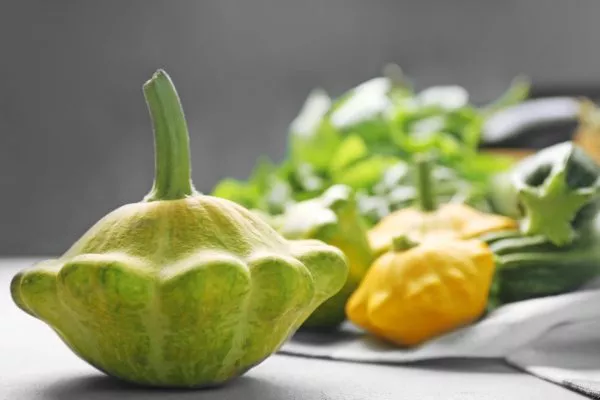
Description of squash
The pattypan squash is a herbaceous annual plant that grows as a bush or semi-bush. It has large, stiff leaves and single, unisexual, monoecious flowers colored yellow.
- ✓ The optimal soil temperature for planting should be at least 10°C.
- ✓ The distance between plants should be 70-80 cm to ensure sufficient space for growth.
Squash fruits are either plate-shaped or bell-shaped, depending on the variety. The skin can be white, green, yellow, purple, or variegated. Some varieties also have spots and stripes on the skin.
The fruits are prized for their flavor, as they can be stewed, fried, pickled, and salted. Squash tastes similar to zucchini, but they have a more delicate flavor, more reminiscent of asparagus or artichokes.
Pattypan squash is a dietary product recommended for stomach, liver, and kidney ailments, as well as atherosclerosis. It has strong diuretic properties, helping to flush out excess fluid and salt from the body.
Benefits and harms
Young squash is considered the most delicious and nutritious. The fruit contains 4 to 12% dry matter and is also rich in pectin, sugar, crude protein, and fat. Most interestingly, the sugars in the fruit are in the form of fructose and glucose, making them easily digestible.
Squash also contains mineral salts: potassium, phosphorus, and calcium. The fruit is rich in sodium, cobalt, titanium, lithium, aluminum, iron, molybdenum, zinc, and other microelements. They also contain vitamins B1 and B2, and the yellow fruits are rich in ascorbic acid and carotene.
100g of squash contains 18 kcal. Due to its low calorie content and high fiber content, it is recommended for dieters.
The fruits help normalize metabolism and help with heart, kidney, and liver problems. The crop is also useful for the prevention and treatment of hypertension, anemia, and atherosclerosis.
Scientists have found that eating orange squash helps remove cholesterol from the body.
It also contains lutein, which is almost five times more than other varieties. When this component enters the bloodstream, it acts as an antioxidant: it prevents blood clots, strengthens the immune system, and neutralizes free radicals.
Overall, squash is a safe vegetable, rarely causing allergic reactions or unpleasant symptoms. However, excessive consumption can trigger various health problems:
- diarrhea;
- dehydration;
- frequent urination;
- flatulence.
This product is not recommended for people with chronic dyspepsia. Canned squash is not recommended for children, and marinades containing sugar are strictly prohibited for diabetics. People with kidney failure and kidney stones should also avoid this fruit.
What is the difference between a squash and a zucchini?
U zucchini There are some differences between the squash and the pattypan squash. They are only somewhat similar in appearance and taste, but they are significantly different.
Zucchini qualities:
- the fruit has an oblong shape;
- the length of a well-ripened product can reach 50 cm;
- the pulp is tender, juicy, moderately dense;
- used for eating food at any stage of ripeness;
- retain their beneficial properties for a long time after being removed from the vine;
- It can be consumed raw, in the form of juice or as an ingredient in a salad;
- universal application.
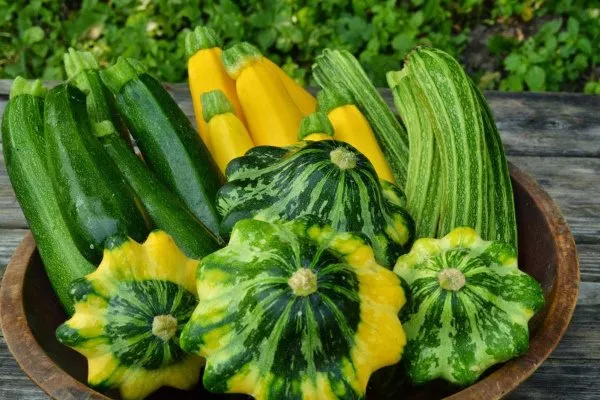
Qualities of squash:
- the fruit has a saucer-shaped, bell-shaped or star-shaped configuration;
- the fruit diameter does not exceed 8-12 cm;
- the pulp is porous, dryish;
- not suitable for consumption at the stage of physical maturity;
- requires heat treatment before use;
- most often used for canning.
Thus, there is a significant difference between zucchini and pattypan squash in shape, size and suitability for consumption.
| Parameter | Squash | Zucchini |
|---|---|---|
| Caloric content (per 100 g) | 18 kcal | 17 kcal |
| Fiber content (per 100 g) | 1.2 g | 1.0 g |
The flavor characteristics of different types of squash
| Name | Fruit shape | Peel color | Taste qualities |
|---|---|---|---|
| White pattypan squash | Plate-shaped | White | Delicate, sweetish |
| Yellow squash | Bell-shaped | Yellow | Delicate, with a nutty flavor |
| Green squash | Plate-shaped | Green | Delicate, with mushroom notes |
| Purple squash | Bell-shaped | Violet | Delicate, sweetish |
| Variegated pattypan squash | Plate-shaped | Motley | Delicate, with a nutty flavor |
There are many varieties of squashYou can use white, yellow, green, and other varieties of squash, but they don't differ much in taste.
Raw pattypan squash resembles zucchini, but is more tender, slightly sweet, and has a nutty and delicious porcini mushroom flavor. To enhance the nutty and mushroomy flavor, simply fry the vegetable in sunflower or olive oil.
If you want to impress your guests with your culinary skills and have them admire the appearance of your dish, use squash with different skin colors for cooking.
What to cook with squash?
Squash is used in a variety of dishes. This vegetable is used for frying, stewing, pickling, and canning. The dishes are tender and juicy, and their flavor is unique and delightful.
Fried squash
This is an easy-to-prepare dish that requires a minimum of ingredients and time.
Ingredients (for 6 servings):
- squash – 600 g;
- flour – 6 tbsp;
- onions – 2 pcs.;
- vegetable oil – 6 tbsp;
- butter – 2 tbsp;
- salt - a pinch;
- dill – 1 bunch.
Method of preparation:
- Prepare all the necessary products.
- Cut the squash into cubes, roll in flour and add salt.
- Heat the butter and vegetable oil. Add the squash pieces and fry in a generous amount of oil over medium heat for 3-4 minutes until golden brown.
- Turn the pieces over and fry for another 2 minutes on the other side. Place the cooked slices on a plate.
- Peel and finely chop the onion. Fry in the remaining oil until golden brown, 2-3 minutes.
- Place the onions on top of the fried squash.
- Finely chop the dill and sprinkle it over the finished squash.

Canned squash
Canned squash is a wonderful dish that will please everyone. It's a real lifesaver on the holiday table and a delight throughout the winter.
Ingredients for a 2-liter jar:
- squash – 1.5 kg;
- cherry tomatoes – 300 g.
- For the marinade:
- sugar – 1 tbsp;
- salt – 1 tbsp;
- dried star anise – 2 pcs.;
- white peppercorns – 10 pcs.;
- caraway seeds – 1 tsp;
- bay leaf – 3-4 pcs.;
- garlic – 3-4 cloves;
- vinegar 70% - 1.5 tbsp.
Preparation:
- Wash the vegetables, dry them and put them in a jar, add garlic.
- Pour boiling water over the mixture. After 10-15 minutes, drain the water and pour boiling water over it again.
- Add all the marinade ingredients except the vinegar to the water. Bring to a boil, pour into the jar with the squash, add the vinegar, and seal with a lid.
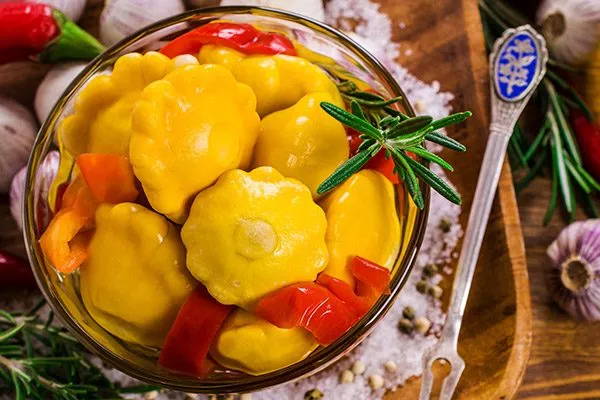
Stuffed squash
Stuffed squash looks very attractive, and the dish tastes quite unusual.
Ingredients (for 6 servings):
- medium-sized squash – 6 pcs.;
- beef or pork – 800 g;
- onions – 4 pcs.;
- sour cream – 200 ml;
- butter – 150 g;
- garlic – 4 cloves;
- salt – 2 tsp;
- ground black pepper – 0.5 tsp.
Preparation:
- Prepare all the necessary products.
- Wash the squash, cut off the tops, and carefully remove the seeds, removing any fibrous tissue. Rub the inside of the squash with garlic.
- Rinse the meat under cold running water, remove films and tendons, and mince.
- Peel the onion, wash and finely chop it, and fry it in hot butter along with the meat. This process takes about 20 minutes.
- Add salt and pepper. Remove from heat and stir, adding sour cream.
- Preheat the oven.
- Stuff the squash with the prepared filling. Brush the outside with the remaining butter, cover with the cut-off tops, and carefully arrange them on a baking sheet.
- Bake the dish in an oven preheated to 200 degrees Celsius for about 60 minutes. The vegetables should become soft.

Stewed squash
This dish is very easy to prepare. Combined with other vegetables, pattypan squash makes an ideal accompaniment to meat or can be enjoyed as a main course.
Ingredients (for 6 servings):
- young squash – 750 g;
- onions – 3 pcs.;
- small carrots – 2 pcs.;
- tomato paste – 1.5 tbsp. l.;
- parsley and spinach - 1 bunch each;
- salt – 1.5 tsp;
- ground black pepper – 0.5 tsp.
Preparation:
- Prepare all the necessary products.
- Wash the squash, peel and cut into thin slices.
- Do the same with the carrots.
- Peel the onion and cut into half rings.
- Finely chop the herbs.
- Heat vegetable oil in a frying pan. Fry the onion over medium heat until golden brown, about 5-7 minutes.
- Add tomato paste and stir.
- Place the squash and carrots in the pan, add salt and pepper, and mix thoroughly.
- Pour in a little water and simmer under a lid for half an hour until done.
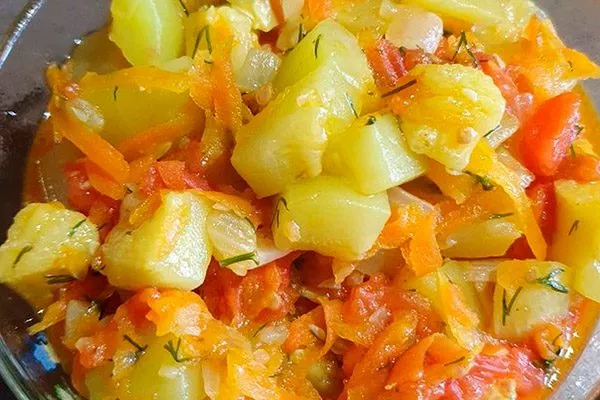
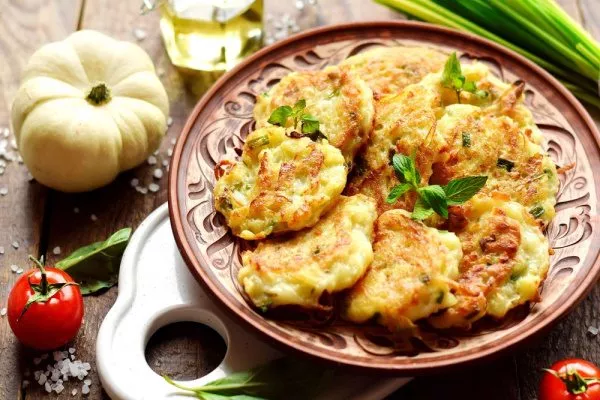
Squash pancakes
Squash pancakes are a very simple, quick, and delicious dish. They can be served with jam, honey, or sour cream.
Ingredients (for 6 servings):
- squash – 400 g;
- flour – 250 g;
- sugar – 4 tbsp;
- eggs – 1 pc.;
- salt – 0.5 tsp;
- soda - a pinch;
- vegetable oil – for frying.
Preparation:
- Wash and peel the squash. Cut into pieces and remove the seeds. Grate on the finest grater.
- Add the egg.
- Add salt, sugar, and baking soda. Mix thoroughly.
- Add flour and mix well until all lumps are dissolved.
- Heat a frying pan with vegetable oil.
- Use a spoon to scoop up some dough and place it on the pan.
- Fry the pancakes on both sides over medium heat until golden brown, about 1-2 minutes.
Squash is a delicious fruit, good for you, and virtually harmless. You can prepare a variety of dishes with this vegetable, which is especially helpful when you're on a diet.