
Squash is a wonderful fruit that can be eaten fresh, frozen, dried, and canned. With proper cultivation and care, you can reap a bountiful and consistent harvest.
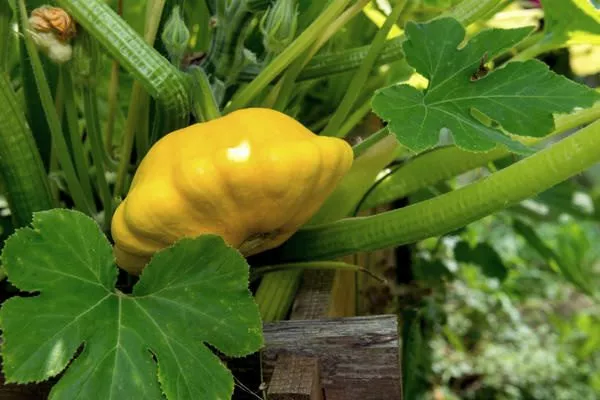
Description of squash
This annual plant grows as a compact bush or semi-bush. It belongs to the cucurbitaceae family, closely related to pumpkin and squash. It has short vines and large, slightly stiff leaves with sparse hairs.
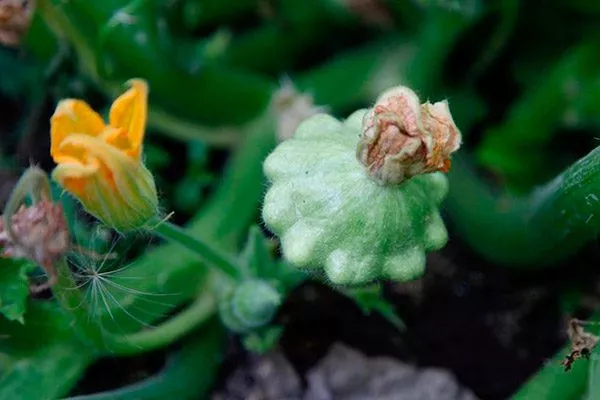
The squash has single, golden-yellow, bell-shaped flowers. The flowers are unisexual, so insects or a gardener's help is needed to set fruit.
The squash fruit is a pumpkin, ranging in diameter from 7-10 cm to 25-30 cm. A single squash weighs between 250 and 1000 g. The larger the squash grows, the rougher its skin. If harvesting is delayed, the flesh will become soft and lose its flavor.
Typically, squash has a white, light green or dark green skin, but breeders have developed varieties with yellow, purple, orange, and variegated skin. The shape of the fruit resembles a bowl or plate.
The fruit has tender flesh with a slightly nutty flavor. Some gourmets note that the taste of squash is similar to artichokes or asparagus.
Varieties of varieties
Most breeders have worked hard to create varieties of squashBreeders have developed varieties that differ in shape, color, and other characteristic qualities.
There are several varieties of white-skinned squash. Breeders have developed the following varieties:
- White 13. Mid-season ripening. The first fruits can ripen as early as two months after germination. This is a bushy, highly branched variety. The fruits are white-skinned, disc-shaped, with serrated edges, and weigh up to 500 g.
- Disk. An early-ripening variety, producing fruit in just 68-70 days after germination. A bushy plant, forming two lateral shoots. The disc-shaped fruit has a serrated edge. Squash squashes average about 400 g in weight. They have a thin white skin and tender flesh.
- UFO White. An early-ripening variety. The fruits ripen in just 45 days after germination. The bushes are compact, and the fruits are bowl-shaped. The squash averages 1,000 g in weight. The flesh is medium-dense and fibrous.
Breeders also highlight varieties with bright yellow-orange skin. These include the following:
- Tabolinsky. A mid-season variety. The first fruits ripen 60 days after germination. Medium-sized bushes with a semi-long main stem. The fruits are plate-shaped, weighing approximately 300 g. The flesh is creamy.
- UFO Orange. An early-ripening variety. Fruit appears just 45 days after the first shoots emerge. A single squash weighs up to 500 g. This plate-shaped vegetable has a yellowish hue and firm, slightly juicy flesh.
- Umbrella. An early-ripening variety, the fruits ripen 50 days after the first shoots emerge. A bushy plant with bell-shaped or cup-shaped fruits with slightly serrated edges. Each fruit weighs an average of 400 g.
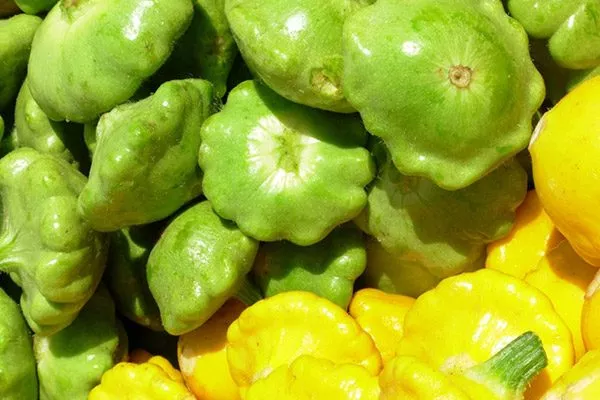
There are three main varieties of dark green squash. These include:
- Chunga-Changa. An early-ripening variety, bearing its first fruits just 45 days after germination. A compact, bushy plant with sparse foliage. The saucer-shaped fruits with dark green skin weigh approximately 300 g. The flesh is creamy and juicy.
- Loaf. An early-ripening variety. The fruits ripen 60 days after the first shoots emerge. A compact plant with plate-shaped fruits with a barely noticeable scalloped edge. The skin is greenish.
- F1 Tango. An early-ripening hybrid variety. The first fruits ripen 40 days after emergence. This bushy plant produces saucer-shaped fruits with greenish or yellowish skin. They average 300 g in weight. The flesh is greenish and medium-firm.
Among the large number of varieties, you can choose the most suitable variety for planting on your site.
Planting a plant with seeds
Squash can be propagated by seed. To avoid the expense of store-bought seeds, you can collect them from well-ripened squash. You can also grow the vegetable outdoors by planting seedlings or by sowing seeds directly into the ground.
Before planting, it's essential to prepare the seeds. There are several ways:
- Soak the seeds in a growth stimulator solution for 24 hours, then rinse thoroughly with water and wrap in damp gauze, leaving them for 48 hours at a temperature of 20-25 ºC.
- You can also prepare seeds for sowing in another way: warm them for 5-6 hours at 50-60ºC. This will reduce the risk of vegetable contamination with viral infections, which cannot be treated.
- Some gardeners use another tried-and-true method: seed hardening. Place the seeds in bags and keep them at 18-20ºC for 6 hours, then at 0-1ºC for about 24 hours. Before sowing, disinfect the seeds in a 1% potassium permanganate solution, then rinse in clean water and dry.
- At the end of May, when the well-prepared soil from the fall has warmed up and spring frosts have passed, level the soil with a rake, remove weeds, form the beds, and dig holes measuring 70 x 70 cm. This will prevent the plantings from being too close together.
- ✓ The optimal soil temperature for planting seeds should be at least 12°C at a depth of 10 cm.
- ✓ To prevent fungal diseases, ensure good air circulation around the plants, avoiding dense plantings.
Growing squash from seedlings
Experienced gardeners know that squash planted from seeds ripens more slowly than those grown from seedlings. A higher yield is guaranteed for those grown in a greenhouse or under plastic.
How to properly care for seedlings?
To get an early squash harvest, you need to use seedlings. Vegetables are planted as seedlings in late April.
Use plastic cups:
- Place several seeds in each container and cover with a 4 cm layer of humus and forest ash.
- Cover the seeds with glass and keep at 30 ºC until germination.
- Once the first shoots emerge, remove the glass and reduce the temperature to 22ºC (72ºF) during the day and 18ºC (64ºF) at night. If you neglect the temperature regime, the seedlings will stretch upward and expend excess energy. This will prevent the root system from fully developing.
- After a week, return to the previous temperature.
- Moisten the soil regularly and apply fertilizer.
After ten days, fertilize the seedlings with a solution of cow dung with the addition of superphosphate infusion: dilute 1 kg of cow dung and 15 g of superphosphate in 10 liters of water. Mix the ingredients and let sit for 24 hours. Before sowing the seedlings in the soil, fertilize them again with a nitrophoska solution (50 g per 10 liters of water).
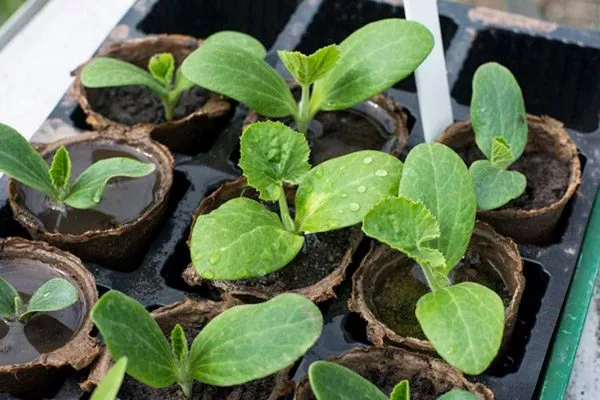
Timing and rules for planting seedlings in open ground
Squash seedlings are planted in open ground in late April or early May, when there's no risk of returning night frosts. To provide protection, cover the seeds with plastic. You can use thin spunbond, which doesn't require a frame; simply lay it on top of the seedlings.
You can plant the seedlings when they have a few leaves. Do this early in the morning or after sunset. This will reduce the risk of the plants wilting. Shade and water the seedlings immediately.
Place the squash at a distance of 80 cm so that the plants do not interfere with each other and do not experience a lack of sun.
How to prepare for landing?
To plant squash quickly and efficiently, it's important to follow a few recommendations. First and foremost, know the planting timing and soil preparation guidelines.
Timing of sowing seeds in open ground
Squash is a heat-loving crop that is planted outdoors in late May or early June. Sowing dates can be significantly extended, and you can get an early harvest if you grow squash from seedlings, in heated beds, or by insulating the beds from the sides before sowing.
Warm beds should be prepared in the fall. This compact greenhouse should be regularly ventilated, and the seedlings or sprouts should be watered with warm water containing biofungicides (they will protect the vegetable roots from fungal and bacterial infections). Remove the cover when warm weather stabilizes.
Peculiarities of soil preparation
The area where the squash will be planted should be sheltered from strong winds and located on the sunny side, in the southern or southwestern direction, where the groundwater is deep.
Loose chernozem and loamy soils are suitable for planting, but the soil must be alkaline. Squash is not suited to highly acidic soil. To neutralize this, use wood ash.
Squash thrives in areas previously planted with cabbage, onions, radishes, greens, carrots, tomatoes, potatoes, peas, and other vegetables. Avoid planting squash in areas previously planted with zucchini, cucumbers, or pumpkins.
Start preparing in the fall: dig up the soil together with rotted manure and mineral fertilizers:
- Add 2 kg of organic matter, 15 g of potassium sulfate, 15 g of superphosphate, 30 g of wood ash per 1 sq. m to the peat soil, digging it to a depth of 25 cm.
- In the fall, add 2 kg of peat, humus and sawdust, 15 g of superphosphate, and 30 g of wood ash per 1 sq. m to clay soil by digging it to a depth of 20 cm.
- For sandy soil, add 30 kg of turf, 30 kg of turf, 3 kg of sawdust, 3 kg of humus, and a mixture that is added to clay soil per 1 square meter for digging.
- Add 2 kg of sawdust, 15 g of superphosphate, and 30 g of wood ash per 1 sq. m of black soil during digging.
In the spring, a week before planting, water the beds with a solution prepared from 30 g of Agricola-5 and 10 liters of water, calculating the volume of the resulting solution at a ratio of 3 liters per 1 square meter. After the procedure, cover the bed with plastic film, removing it only on the day of planting the seedlings in the soil.
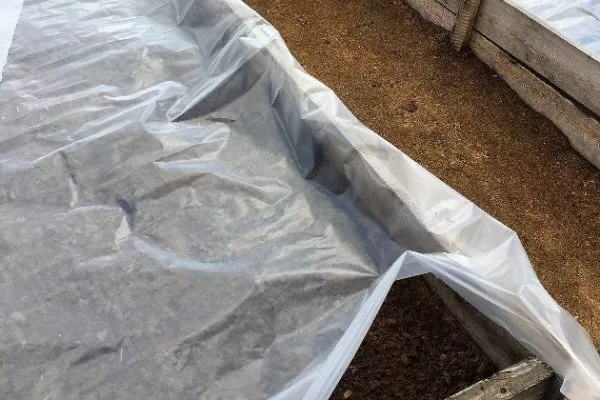
Autumn preparation
Growing squash requires following certain rules. Prepare the plot for sowing in the fall. After removing the previous crop and its plant debris, loosen the bed to encourage weeds to emerge. After two weeks, dig the plot to a depth of 25 cm and remove all weeds.
Add manure (10 kg per 1 sq. m), humus, or compost (5 kg per 1 sq. m) to the soil under cultivation. For heavy soils, it is recommended to use a larger amount of organic fertilizer.
Spring training
When spring arrives, loosen the light soil. Carry out the first loosening to a depth of 15 cm, and the second to a depth of 10 cm before sowing the seeds. Also remove any emerging weeds at this stage. When digging, add organic and mineral fertilizers: up to 6 kg of humus or compost, 40 g of superphosphate, and 25 g of potassium nitrate.
Distribute the fertilizer evenly over the entire area and compact it into the bottom while digging. Create drainage, ridges, and raised beds in low areas. The beds should be 100 x 30 cm. The ridges should be no more than 35 cm high and spaced 80 cm apart.
Fertilizing the soil and preparing seeds before planting
You can grow squash from seedlings or seeds. Regardless of which method you choose, be sure to prepare the seeds ahead of time:
Prick the seeds in the oven at 50°C. This will ensure multiple female flowers, which will later produce ovaries. Another way to warm the seeds is to spread them out on cardboard or a radiator and leave them for 7 days.
After warming, treat the seeds in a weak solution of potassium permanganate. Then leave to germinate for 2 days.
Seeds will germinate faster if you soak them in a growth stimulant. Experienced gardeners recommend using aloe vera juice diluted with water for this procedure. You can also purchase ready-made stimulants such as "Energen" and "Bud."
Pattypan squash in the garden: combination with other plants
Before planting squash, you need to know which crops are safe to plant next to them. It's absolutely not recommended to grow squash next to zucchini and potatoes, as they share common diseases and pests. Cucumbers should also be avoided as neighbors, as they can cross-pollinate.
Caring for squash in open ground
Care procedures include fertilizing and topdressing, watering, staking, and removing dead flowers. Following all recommendations will ensure a good harvest and high-quality fruit.
Fertilizers and top dressing: what and when to use
Ground-grown squash require two fertilizations. Before flowering, apply 15-25 g of double superphosphate, 20-30 g of potassium sulfate, and 20-30 g of ammonium sulfate per square meter.
During the fruit ripening period, apply fertilizer prepared in the following manner to every 1 m2: dissolve 40-50 g of superphosphate and potassium sulfate, 20-25 g of ammonium sulfate in 10 liters of water.
As organic fertilizers, you can use a solution of mullein (1 kg per 10 l per 1 sq. m) or chicken manure (20 kg per 10 l per 1 sq. m).
Watering rules
While the seedlings are establishing roots, frequent watering is required. Squash should also be watered generously during the fruiting period. Use settled, warm water. Apply 6-8 liters of water per square meter every 5-6 days until flowering begins, and 8-10 liters per square meter every 3-4 days during flowering and fruit set.
Apply water at the roots or in a specially made furrow around each plant to prevent moisture from reaching the leaves, buds, and flowers. Such intensive watering will quickly expose the roots, and mulching the area is necessary to protect them during the growing season.
Removal of barren flowers and whiskers
At the beginning of flowering, squash often produce only male flowers, called sterile flowers. These should be removed to ensure the development and bloom of female flowers with ovaries.
When fruit begins to form, trim off runners and excess leaves. This will ensure the plant focuses all its energy on fruit production.
Is a garter necessary?
Squash plants require support. Growing on a vertical trellis is considered most effective. The procedure is the same as with cucumbers:
- Lateral shoots up to a height of 50 cm should be removed, up to a height of 100 cm, one node should be left.
- Pinch off the side branches and shoots bearing fruit, leaving a few shoots after reaching the height of the trellis, usually after 2 months of growing.
- Wrap the main shoot twice around a horizontal trellis, tie it to it with hemp rope, and let the top hang freely.
The final step is pinching at a height of 50 cm from the soil surface.
Diseases and pests of squash
Squash can be susceptible to diseases and pests. The following are common problems:
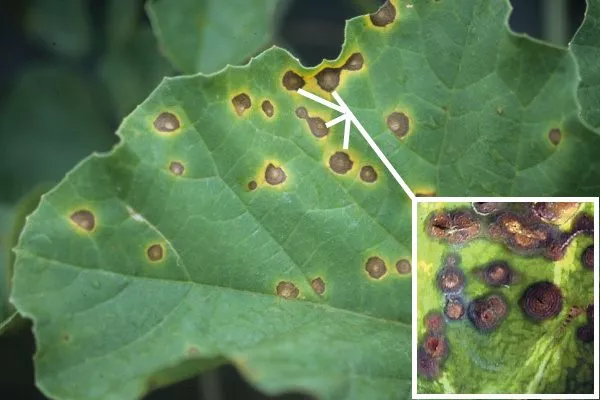
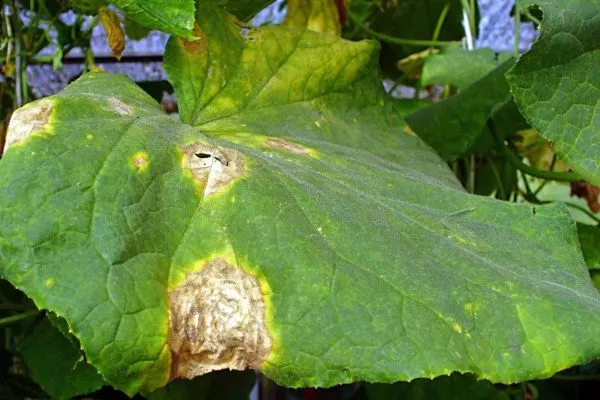
- Anthracnose. Weeping, yellowish spots appear on leaves and fruits, later developing into dark brown, ulcer-like areas. A pink coating of fungal spores appears on the veins of the leaves, spreading to the stems, fruits, and petioles. By autumn, the leaves turn black. The fungus is especially active in damp weather.

- Ascochytosis. Rapidly enlarging brown, round spots appear at shoot nodes, on stems, and on leaves. This leads to the drying out of the affected areas and the eventual death of the plant.
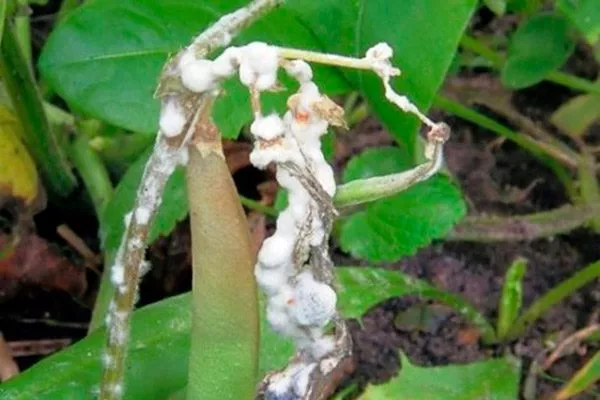
- White rot. Light brown spots form on the stems and leaves, which eventually develop into deep ulcers covered with pink mucus. These can later affect the squash fruit. High humidity facilitates the development of the disease.
- Powdery mildew. A light-colored coating forms on the upper surface of the leaves, causing them to dry out prematurely. Fruit and stems can also be affected.
- Black mold. Yellow-brown spots appear between the leaf veins, followed by a dark coating containing fungal spores. After the spots dry, holes form on the leaves.
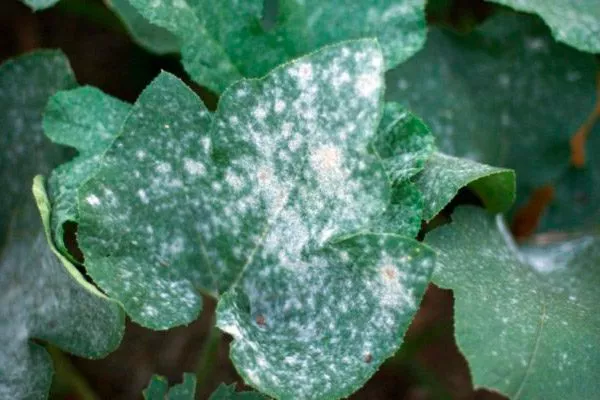
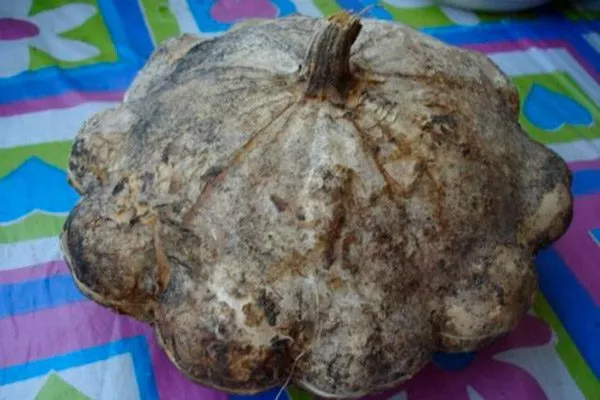
Many pathogenic fungi are intolerant to copper compounds, so fungicides are recommended for control. You can use tried-and-true remedies such as Bordeaux mixture and copper sulfate, or try modern products such as Horus, Kuprozan, Topaz, and Skor.
Squash can also suffer from pest attacks. The following insects are known:
- Owls. They lay eggs, which hatch into caterpillars. They consume the above-ground parts of the plant and gnaw at its roots. To get rid of the pest, it is recommended to use the product "Fufanon."
- Slugs. They pose a danger to young plants because they completely devour the leaves, leaving huge holes. In case of a massive slug infestation, use products such as Meta, Groza, and Slizneed.
- Melon aphid. It leaves marks on shoots, flowers, and ovaries, and attacks the undersides of leaves, causing them to curl and wrinkle. General-purpose insecticides such as Inta-Vir, Confidor-Maxi, and Iskra-Bio are used for control.
- Spider mite. It weaves webs around leaves, buds, and fruit ovaries. Acaricides such as Neoron, Sanmite, and Vertimek are used for control.
- Inspect plants regularly for signs of pests, especially the undersides of leaves.
- If pests are detected, immediately treat the plants with an appropriate insecticide, following the instructions for use.
- For prevention, use biological control methods, such as attracting natural enemies of pests.
If you detect diseases and insect infestations early, you'll have time to apply treatments that will protect the plant and allow the fruit to continue to develop.
Harvesting and storage
Squash is harvested when the fruit reaches technical maturity—the skin becomes soft and waxy, and the seeds inside are small and soft. Squash is eaten unripe, like cucumbers and zucchini.
Harvest 2-3 times a week: cut the squashes with the stems attached. The fruits should not be overripe, as this can cause the core to become loose. Pick the last fruits before frost, and compost the tops of healthy plants.
The fruit can be stored at a temperature of 10ºC for no more than 10 days. Squash with hardened skin at the biological maturity stage should be stored in a dark, dry, cool, well-ventilated area. The fruits should not touch each other.
The pattypan squash is an interesting pumpkin, more reminiscent of a zucchini, though its flavor is similar to eggplant. It lacks bitterness, making it suitable for a variety of culinary creations.