
The Groshik Patisson is an ultra-early variety, whose main characteristic is its miniature fruits. Growing it requires no special knowledge or skills, and the quantity and quality of the fruits is truly rewarding.
Description of the variety
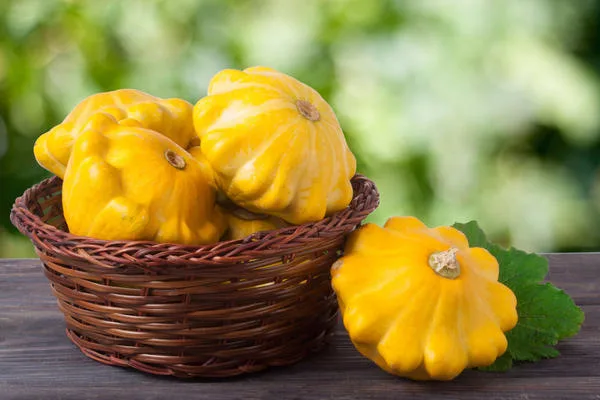
The Groshik squash plant is compact and bushy. Female flowers predominate. The fruit is yellow and saucer-shaped. Each fruit weighs 20-30 g and is 5 cm in diameter. The skin is thin, and the flesh is medium-dense and creamy.
Who and when bred the Groshik squash?
The Groshik variety possesses unique characteristics and is considered a "super hit" by growers. However, it remains unclear who developed this unusual gherkin variety. It may have been developed by the Aelita agricultural firm, which sells Groshik seeds directly from the grower.
There is also information that the variety was developed by breeders from the Transnistrian Research Institute of Agriculture.
Purpose and taste
The Groshik pattypan squash has an excellent flavor that unfolds beautifully both when cooked and when preserved in various ways. Small pattypan squashes can be canned, pickled, and are also suitable for freezing.
This small-fruited variety is useful in cooking. Small squashes are used in appetizers and salads, and they also serve as stylish garnishes for dishes.
Productivity and ripening time
This small-fruited variety belongs to the ultra-early group. From germination to ripening of the first fruits takes 38 to 40 days. The average yield is approximately 10 kg/sq. m.
Pros and cons
If gardeners prefer large fruits, this variety isn't suitable—they grow too small. But for those who prefer small-fruited squash, Groshik is just the thing. Moreover, it has many advantages that no gardener will miss:
Flaws:
Landing features
In the south, Groshik pattypan squash is grown primarily by direct sowing. The warmer the climate in the region and the earlier the spring, the earlier the sowing. The average planting time is May.
- ✓ The soil temperature for sowing should not be below +14°C.
- ✓ The seed sowing depth varies depending on the soil type: on light soils – 3 cm, on heavy soils – 5 cm.
Seedlings are sown in late April or early May. The seedlings are grown for about a month and planted when the soil warms to 14–16°C.
Features of planting the Groshik squash:
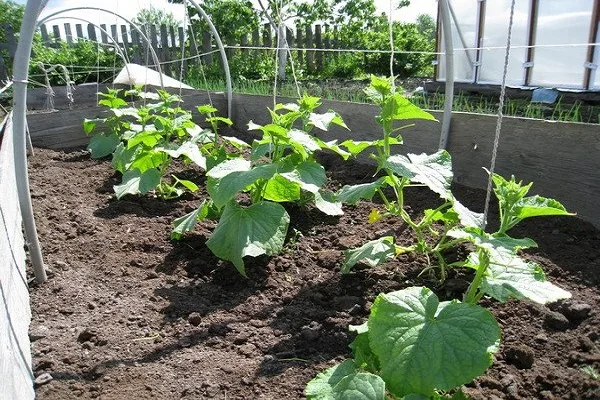
- For planting, choose a warm, well-lit and ventilated place.
- The soil should be loose, fertile, and rich in organic matter. In the fall, the area is dug over to a depth of a spade and fertilized.
- The seeds are planted at a depth of 3-5 cm. Two to three seeds are planted per hole. The looser the soil, the shallower the sowing depth. After germination, remove any excess seedlings, leaving the strongest ones—one in each hole.
- With the seedling method, the seedling growing period is 20-30 days.
- Optimal planting pattern: 70x70 cm.
- It is recommended to cover the plantings with film at night, as the crop is very heat-loving and can be killed by recurrent frosts.
Care and cultivation
The variety is characterized by average heat and drought resistance, so it requires increased attention to irrigation during hot and dry periods.
Care features:
- For irrigation, use settled, sun-warmed water (22…25°C). Watering frequency before flowering is every 5-6 days, with a water rate of 6-8 liters per square meter. During flowering and fruit set, watering frequency increases to once every 3-4 days, with a water rate of 8-10 liters per square meter.
Water the squash carefully, pouring water at the roots so that drops don't fall on the flowers or leaves. To prevent water from running off the plant, make furrows around it beforehand and pour water into them. - Hilling and loosening the squash beds isn't necessary. Weeding can be done a couple of times. If the roots are exposed, cover the soil with humus or regular garden soil.
- Before flowering, pattypan squash are fed with complex fertilizers, such as Vegeta (2 tablespoons, at a rate of 5 l/sq. m). At the beginning and during fruiting, apply Agricola Forward and Nitrophoska (2 and 1 tablespoon, respectively, at a rate of 3 l per bush).
Disease and pest control
This variety is resistant to most diseases that affect squash. Problems can arise with severe violations of agricultural practices, as well as prolonged damp weather and watering the beds with cold water. Most commonly, the variety is attacked by powdery mildew, mosaic, anthracnose, and root rot (white rot, gray rot, and gray rot).
- ✓ Resistance to most diseases, except in cases of gross violation of agricultural technology.
- ✓ Slug activity at night requires additional protective measures.
Slugs pose the greatest threat to squash pests, especially at night, as they actively feed on the leaves and fruit of squash. Various traps are used to control them. Plants can also be attacked by melon aphids, spider mites, whiteflies, and cutworms.
Squash is usually grown without the use of chemicals. This strong and resilient crop rarely suffers from disease. Insecticides and fungicides are used only in cases of severe infestation.
Collection rules
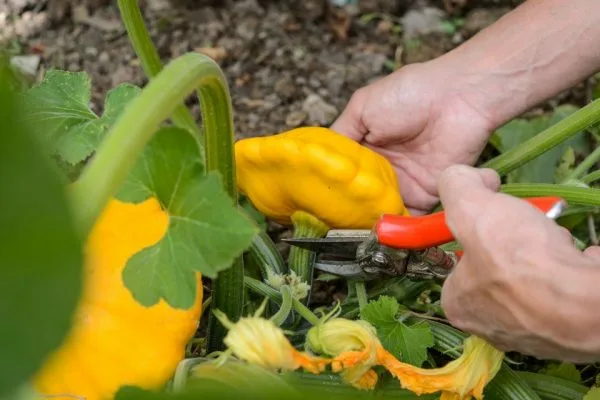
Squash, like cucumbers and zucchini, is eaten unripe. They are harvested when they reach technical ripeness. At this stage, the fruit is covered with a waxy coating, the skin is tender, and the seeds are small and soft. The fruit is harvested every 2-3 days, cutting them off along with the stems.
Reviews
The Groshik Pattypan squash will appeal to anyone who enjoys unusual varieties and canned vegetables. This remarkable variety is appealing not only for its vibrant color and flavor, but also for its excellent agronomic characteristics.