
Cheburashka is a squash variety popular among Russian gardeners. It is prized for its early maturity and excellent yield. It is grown in open gardens throughout the Russian Federation. It is also well known among summer residents in Belarus and Ukraine.
Introduction to the variety
Cheburashka is characterized by early ripening of its fruits. They are harvested 39 days after germination. In unfavorable weather, the growing season extends to 45 days. The vegetables reach technical maturity 7-8 days earlier than other varieties, including the standard Disk.
This squash variety produces fruit abundantly and uniformly. Their yield figures are as follows:
- up to 43,300 kg per 1 hectare of planting (in industrial cultivation);
- Gardeners who cultivate the variety for personal consumption obtain 4.1-4.3 kg per 1 sq. m.
Cheburashka is distinguished by its cold resistance. Its bushes are not affected by low temperatures or short-term frosts. However, in cold and damp summers, they have a lower fruit set rate due to difficulties with pollination, which involves bees. Their yield decreases.
- ✓ Resistance to short-term frosts down to -1°C.
- ✓ High lighting requirements: at least 6 hours of direct sunlight per day.
Originators
| Name | Ripening period (days) | Yield (kg/m2) | Cold resistance |
|---|---|---|---|
| Cheburashka | 39-45 | 4.1-4.3 | High |
| Pearl | 40-50 | 4.0 | Average |
| Disk | 45-55 | 3.5-4.0 | High |
The variety was born in 1996 thanks to the efforts of the staff of the Federal Scientific Center for Vegetable Growing:
- Kushnereva V.P.;
- Khimich G. A.
Breeders succeeded in developing a high-yielding vegetable variety that was resistant to disease and cold. In 1998, it was added to the Russian Federation State Register after successfully passing variety trials. It was approved for cultivation in private households and farms.
Cheburashka grows and bears fruit successfully almost everywhere. It is recommended for cultivation in the following regions of the Russian Federation:
- Northern;
- North-West;
- Central;
- Volga-Vyatka;
- Central Black Earth Region;
- North Caucasian;
- Middle Volga;
- Lower Volga;
- Ural;
- West Siberian;
- East Siberian;
- Far Eastern.
Characteristic features of the appearance of the plant and fruits
The bushes of this cultivar are vigorous and spreading. They tend to form numerous primary shoots (up to 8). The main stem length is up to 1 m. The foliage is medium-sized, dark green, pentagonal, and moderately dissected.
Flowers on Cheburashka bushes are solitary. Those that appear in the first days of flowering are male. Lateral shoots produce female inflorescences. Fertilization requires the help of pollinating insects. This variety is pollinated by bees.
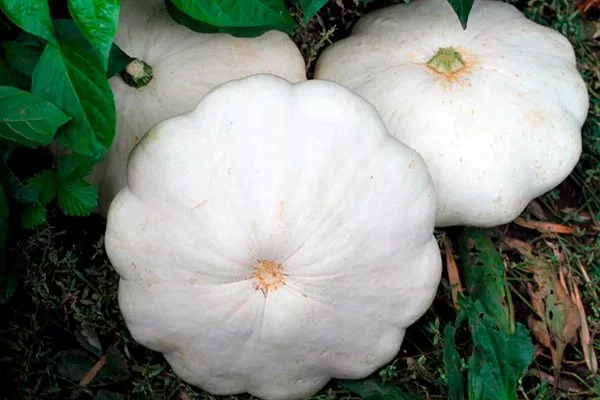
The fruits of this variety have the following characteristics:
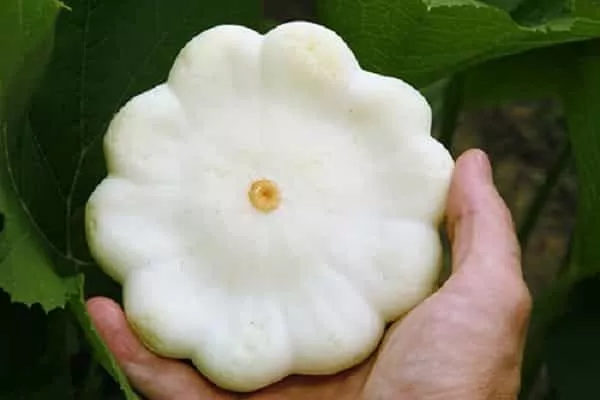
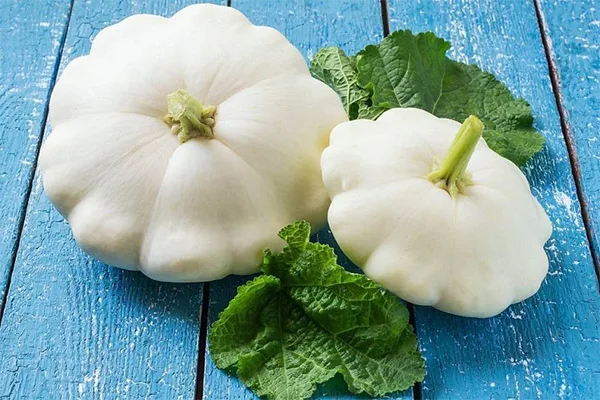
- flat-round shape, reminiscent of a plate;
- single scallops;
- diameter - 15-20 cm;
- weight - 200-400 g;
- thin and soft skin of white color, with a smooth surface;
- the pulp is white, juicy, crispy, tender, rich in vitamins and minerals, containing 5.3% dry matter and 3.1% sugars;
- small oval seeds of a yellowish hue.
Purpose and taste
The Cheburashka squash has a bland taste. Housewives use it in various dishes (fried, stewed, boiled), as well as for canning.
The fruits are most delicious when they're in the milky stage of ripeness, when they're covered in a delicate, thin skin and the seeds are small and very soft. Gardeners deliberately harvest them from the garden when they're unripe. They wait until they're fully ripe to harvest the seeds for next year's planting.
Analogues
The Cheburashka variety has several analogues that have similar characteristics:
- PearlIt is distinguished by its early maturity and bushy plant form. Yields 4 kg per square meter. It produces fruits covered with white skin with a slight greenish tint. Each fruit weighs 300 g. Uses: canning, home cooking.
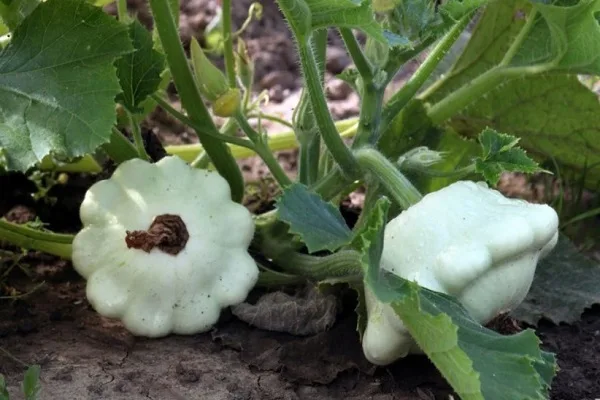
- DiskThis early-ripening, disease- and cold-resistant variety produces a high yield. The plants grow as bushes. The fruits are covered with a creamy-white skin and weigh 200-300 g. The variety is suitable for all purposes.
Tips for growing squash
There are two ways to grow the Cheburashka squash:
- direct sowing of seeds into garden soil;
- seedlings, allowing you to get the harvest earlier.
- ✓ The soil temperature for sowing should not be below +10°C.
- ✓ The optimal air temperature for growth and fruiting is +20…+25°С.
This variety's seeds germinate quickly and have a good germination rate. The sprouts emerge evenly.
Requirements
This vegetable crop grows well in sunny garden areas with light shade at midday, protected from drafts and strong winds, and with deep groundwater. It requires soils with the following characteristics:
- fertile;
- loamy, clayey, chernozem;
- neutral in acidity, with a pH of 6.5-7.
If the soil in your garden is acidic, before sowing squash seeds, be sure to deacidify it by adding the following substances:
- wood ash (consumption - 200 g per 1 sq. m);
- complex phosphorus-potassium fertilizer Argumin, which has a deoxidizing effect.
To improve the fertility of your garden soil, enrich it with organic matter during autumn tilling: compost, humus, and vermicompost. Fertilizer can also be added to the holes when sowing seeds or planting seedlings.
How many days does it take for the seeds to germinate?
Sprouts appear 7-10 days after sowing the Cheburashka seeds. To increase germination and speed up seedling emergence, soak the seeds for 24 hours. Add a growth stimulant to the water.
After soaking, rinse the seeds and leave them on a damp cloth to germinate. In a warm, dark place, they will germinate within 2 days. Begin sowing immediately. Plant the seeds 3-5 cm deep.
When and at what distance to plant in the ground?
Plant Cheburashka seeds in the garden bed at the following times:
- at the end of April or at the beginning of May, after the threat of recurrent frosts has passed;
- It is preferable to transfer the seedlings to the garden later - at the end of May or in the first week of June.
When sowing seeds or planting squash seedlings, stick to a 70x70 cm (or 60x70 cm) pattern. Plant no more than four plants per square meter of garden space.
Watering
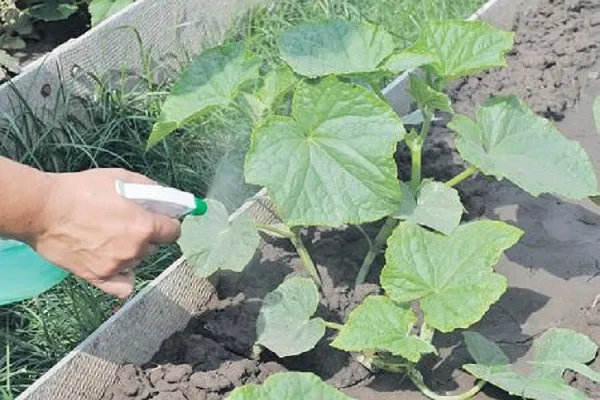
Water vegetable seedlings frequently and thoroughly. Mature plants also require a lot of moisture during fruit formation. Use settled, warm water for irrigation. The water temperature should be at least 23°C.
The watering regime for Cheburashka is as follows:
- Once every 7 days, using 10 liters per 1 sq. m of planting - after transferring the seedlings to the garden bed until the moment the flower ovary appears on them;
- 2 times every 7 days, using 10 liters per 1 sq. m - during the flowering and fruiting period of plants.
Follow irrigation rules to ensure healthy vegetable crops:
- pour water under the roots;
- do not allow moisture to come into contact with leaves and flowers;
- Monitor the appearance of your bushes to prevent overwatering;
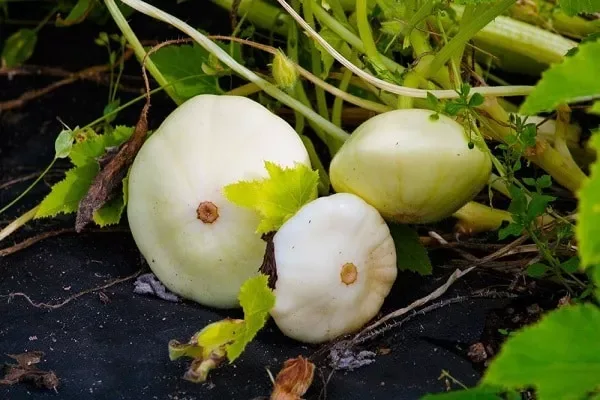
- To prevent fruit from rotting, place plywood or dry straw underneath them;
- Half an hour after watering, loosen the beds and weed them;
- Mulch the space between the rows after watering, using straw, sawdust or peat to better retain moisture in the soil.
What and when to feed?
During the growing season, apply 2-3 fertilizers using double superphosphate, potassium sulfate, or ammonium sulfate. Squash also respond well to organic fertilizer. Combine fertilizing with watering.
When fertilizing Cheburashka plantings, follow the following scheme:
- 1 week after planting the seedlings in the garden bed, feed the plants with a solution of mullein (1:10) or chicken manure (1:20);
- before the appearance of flower ovaries, use mineral compositions dissolved in 10 liters of water: double superphosphate (15-25 g), potassium sulfate (20-30 g), ammonium sulfate (20-30 g);
- During the fruiting period, re-apply the same mineral compositions (20 g of each per 10 liters of water) or a solution of cow manure (1:10).
Diseases and pests
Cheburashka squash plants rarely get sick and are relatively resistant to pest attacks. If care instructions are not followed or adverse weather conditions occur, the plants may suffer from the following diseases:
- white rot;
- powdery mildew;
- anthracnose.
If you detect a fungal infection, destroy the source. To prevent the disease in your squash planting, follow these guidelines:
- Grow vegetable crops in soil with the right composition and suitable acidity;
- for preventative purposes, before planting seedlings or sowing seeds, treat the soil with a solution of potassium permanganate (concentration - 5%);
- adhere to crop rotation standards;
- do not thicken the planting;
- carry out preventive spraying of plants with a solution of Bordeaux mixture (concentration - 1%, apply before flowering), fungicides such as Fitosporin-M or Topsin, as well as folk remedies: garlic infusion with the addition of potassium permanganate (100 g of finely chopped garlic, 10 liters of water, 1 g of potassium permanganate), yeast solution (100 g per 10 liters, let it brew for 24 hours);
- Feed the plants in a timely manner.
Reviews
Cheburashka is an early variety with large, attractive fruits. Its harvest is valued not only for its excellent presentation but also for its versatility. It is suitable for various dishes, pickling, and marinating. The plants are resistant to diseases and pests, and the yield is high.