
The Zozulya variety has been known for decades. It has been listed in the Russian State Register since 1977. Zozulya is suitable for most Russian regions and offers many advantages. Proper cultivation will help achieve high yields and the desired flavor.
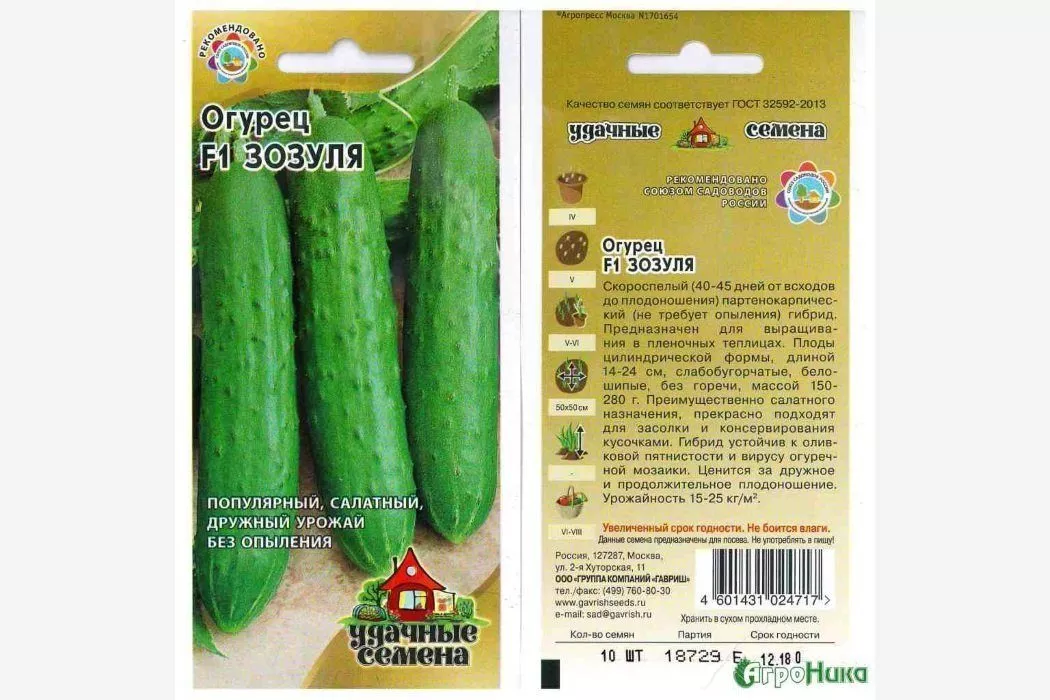
Zozulya variety seeds
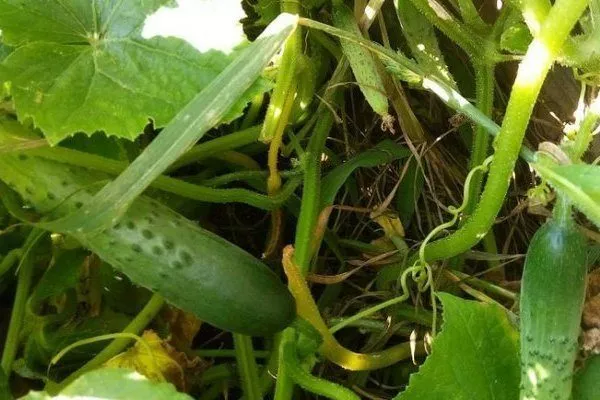
Ripening of Zozulya cucumbers
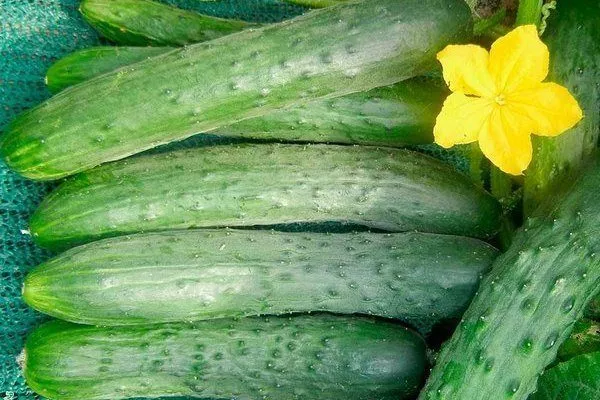
Cucumbers of the Zozulya variety
Description of cucumber varieties
Zozulya is a hybrid variety. It was developed at the V. I. Edelstein Vegetable Experimental Station.
The plant is a weakly climbing and partially parthenocarpic plant—pollination is not required for fruit formation, although it does increase yield. It is an easy-to-grow crop and tolerates adverse weather conditions well. Zozulya can be grown both indoors and outdoors.
Zozulya cucumbers are characterized by a cylindrical shape and dark green color. A slight curve may be present. The fruits feature sparse, large tubercles, distinct longitudinal stripes, light furrows, and white spines.
Zozulya cucumbers are attractive with their thin skin and dense, juicy, sweet flesh with an excellent flavor. The fruits reach 14-24 cm in length and weigh an average of 160-300 g.
The Zozulya variety produces a decent yield. Up to 10-15 kg of cucumbers can be harvested per square meter in the first month. Subsequently, the yield increases to 20 kg and beyond.
Advantages and disadvantages
Zozulya has been a popular variety for nearly half a century. This is due to its many advantages:
- unpretentiousness;
- resistance to adverse weather conditions;
- partial parthenocarpy;
- limited lateral branching – no pinching or side-shooting required;
- high responsiveness to fertilizers;
- resistance to fungal and viral diseases;
- long-term fruiting;
- high yield;
- long-term preservation of marketable appearance without yellowing;
- excellent taste;
- universal use - fresh, for canning.
Zozulya has practically no disadvantages.
These include lower yields when grown in open ground and unsuitability for pickling, which does not exclude other methods of preservation.
Soil requirements
When growing cucumbers, it's important to choose the right site. It should be level and sunny, preferably protected from north winds.
- ✓ The optimal soil temperature for planting should not be below 15°C.
- ✓ The soil pH level should be between 6.0-7.0 to ensure better absorption of nutrients.
Soil characteristics are equally important: lightness, fertility, and a neutral pH. If the soil is of poor quality, a 15-20 cm layer of substrate should be applied. For this purpose, use:
- peat soil – 5 parts;
- humus – 3 parts;
- turf soil - 2 parts.
Before planting, regardless of soil characteristics, it must be disinfected. For this purpose, use potassium permanganate crystals—3 grams of crystals per 10-liter bucket. To prepare the solution, use hot water. Use a watering can with a spray nozzle for thorough watering.
Rules for sowing seeds and planting seedlings
When growing Zozulya, it's preferable to do so from seedlings. If this isn't possible, the seeds can be planted directly in the soil under a plastic cover. The entire process follows this algorithm:
- Soaking. This is done to discard seeds—throw away any that float to the surface—these seeds won't germinate anyway. Soaking should be done for no longer than an hour—half an hour is enough.
- The selected seeds should be rinsed, wrapped in a damp cloth, and placed in a warm place. Keep them there for up to three days, until they sprout. Then, begin sowing immediately.
- In the prepared soil, make holes 30-35 cm apart. Place a handful of humus, 0.5 teaspoon of potassium salt, and 0.5 teaspoon of superphosphate in each hole. Add 0.4-0.5 liters of water to each hole after adding the fertilizer.
- Place the seeds in holes, three at a time. Once the moisture has been absorbed, cover the holes with dry soil.
- After germination, thin out the plants – only one, but the strongest specimen, should remain in the hole.
Sowing seeds in protected soil is carried out when the temperature in the greenhouse is not below 20 degrees.
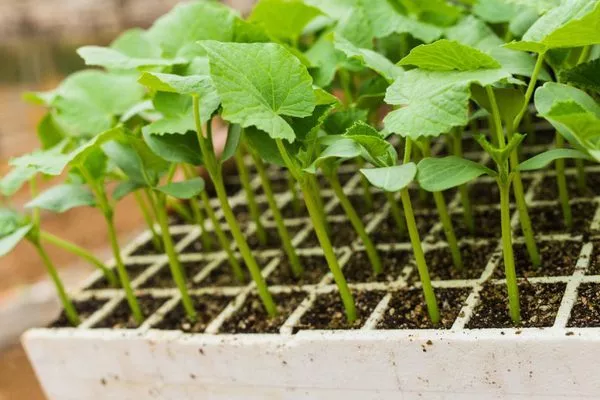
When using the Zozulya variety, most gardeners prefer growing seedlingsIn this case, special attention must be paid to seed preparation to maximize germination. It's important to follow these steps:
- Warming. This process should begin 7-8 weeks before sowing. To do this, place the seed packets in a warm place—a temperature of 27-30 degrees Celsius, for example, near a heating device. Warming can also be accomplished using the express method of three days. To do this, raise the temperature to 40 degrees Celsius.
- Calibration. The procedure is similar to culling when planting seeds: fill with clean water and discard any material that doesn't sink to the bottom of the container.
- Germination. Leave the seeds in a damp cloth for several days. The temperature should be maintained at 28-30 degrees Celsius. After germination, plant the seedlings.
- For seedlings, you can use special trays or cups. It is recommended to fill them with a greenhouse potting mix. Until the seedlings emerge, the temperature should be kept at 25-28 degrees Celsius. After the first true leaf appears, lower it to 20-22 degrees Celsius, otherwise the seedlings will stretch.
- Regular watering and sufficient daylight (at least 13 hours) are essential. Periodic ventilation is essential.
- The seedlings can be planted in the greenhouse in about three weeks. It's best to plan this for the third ten days of May.
- To plant the seedlings, dig holes up to 15 cm deep. Add fertilizer: 0.5 teaspoon of compost, potassium salt, and superphosphate. Fill the holes with water to the brim. Plant the seedlings with the root ball intact. Add soil and compact it lightly. Plant the seedlings to the same depth as in the pots (cups).
Post-planting care
After planting, caring for Zozulya is quite simple. This involves regular weeding and shallow loosening of the spaces between the rows. This is best done after watering.
Zozulya requires plenty of moisture, so water generously throughout the season. Even a short drought will reduce the number of ovaries. It is recommended to use half a liter of water for young plants and a liter for mature bushes. Before flowering, water every 5-6 days, and after flowering, 2-3 times a week.
It's recommended to use warm water for watering Zozulya cucumbers. If the water is cold or insufficient, the fruit will become bitter.
For crop fertilization Use organic and mineral fertilizers. Combined formulations are most effective. They should be applied not only to the roots but also to the foliage. The following schedule is recommended:
- First true leaf stage. Use nitrophoska and chicken manure. Pour the dry manure into the same amount of water and let it steep in a tightly sealed container for 0.5-1 week. Add a glass of the resulting infusion to a 10-liter bucket of water, and dissolve nitrophoska (1 tablespoon). Apply 2-2.5 liters of fertilizer under each bush.
- Second true leaf stage. Prepare a solution: add water, potassium sulfate (1 teaspoon), and chicken manure infusion (0.5 l) to a 10-liter bucket. Apply 2-2.5 l under each bush, repeating after 2-3 weeks.
- Flowering begins. Dissolve nitrate (20 g) or urea (40 g) in 10 liters of water. Use the resulting solution for spraying.
- The first feeding should be carried out 2 weeks after planting the seedlings, using a solution of mullein (1:10).
- The second feeding should be carried out at the beginning of flowering, using a complex mineral fertilizer with a predominance of potassium.
- The third feeding should be carried out during the period of active fruiting, using an ash solution (200 g per 10 l of water).
How to achieve a bountiful harvest?
Zozulya is a partially parthenocarpic plant. It will produce a small, but unpollinated, harvest. This can be increased by adding a pollinator—2-3 male plants per row.
Proper plant cultivation is essential for a bountiful harvest. Zozulya is suitable for open ground, but produces the best results in greenhouses and hotbeds.
To stimulate the harvest, it's important to harvest it correctly. It's recommended to do this at least every 3-5 days. This technique promotes the formation of more new fruits.
Learn how to get a bountiful cucumber harvest in open ground and greenhouses in this video:
Diseases and their prevention
Zozulya is characterized by sufficient resistance to diseases, but some problems cannot be ruled out:
- AscochytosisWater-soaked spots with black dots appear on the stems and leaf petioles. The stems become dry and spongy, and the leaves become covered with brown spots with black dots. Prevention requires regular ventilation of the greenhouse, treatment of plants with fungicides, and burning of diseased specimens.
- AnthracnoseSymptoms include round brown spots on leaves, sunken brown areas on the stem, bitterness, and rapid rotting of the fruit. Prevention is the same as for ascochyta blight.
- BacteriosisIt manifests itself as angular brown spots on the leaves, followed by the formation of holes. The fruits become distorted and waterlogged, and ulcers develop. Prevention requires thorough seed treatment, optimal greenhouse temperature and humidity, and Bordeaux mixture spraying (dissolve 10 g of lime and copper sulfate in a liter of water).
- Downy mildewIt manifests itself as yellow spots and a purple coating on the leaves, which turn inward and dry out. Prevention involves treating the seeds, ensuring the proper microclimate in the greenhouse, and using fungicides.
- Powdery mildewIt manifests itself as a white coating on the leaves, gradually spreading to the outer surfaces and darkening. The fruits become unsightly and bitter. As a preventative measure, it's necessary to treat the seeds, disinfect the greenhouse, maintain a stable microclimate, and spray with fungicides.
- AphidThese black or greenish insects are easily visible. They cause leaf bumps and curling, stunting plant growth. Insecticides such as Arrivo and Decis should be used.
Harvesting and storage rules
When harvesting, the fruits must be picked carefully to avoid damaging the plant. This should be done by pinching the stems with your fingernails.
The harvested cucumbers are immediately placed in boxes and stored in the refrigerator or another cool place. Cucumbers can last up to a week in these conditions. For best preservation, it's recommended to place a container of water nearby, but avoid getting the cucumbers themselves wet.
Zozulya is eaten fresh. The cucumbers can be used for pickling, but they are not suitable for salting, as they quickly become soft.
Zozulya is a cucumber variety that has been known and in demand for several decades. It is better to grow in a greenhouseto increase its yield. Other factors also influence yield, including proper sowing, subsequent care, and disease prevention. Zozulya is grown for food and sale, while other varieties are preferred for canning.