
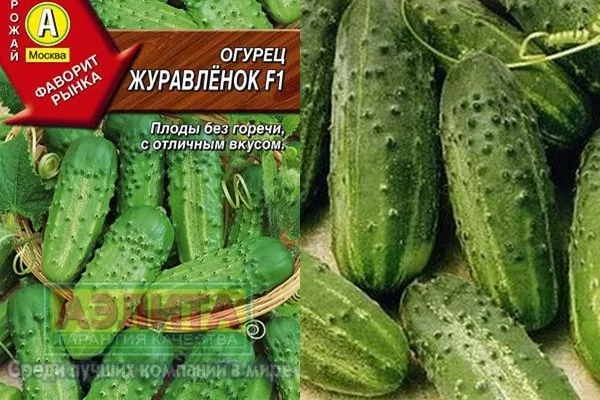
Zhuravlenok F1 is a domestic hybrid with an intermediate ripening period. This cucumber variety is characterized by early maturity and belongs to the group of tall-growing cucumbers. Zhuravlenok's fruits are small, ribbed, and have excellent flavor.
Introduction to the variety
For a novice gardener, growing the Zhuravlenok cucumber variety is easy – it easily tolerates a variety of conditions and requires little care. The Zhuravlenok F1 variety is renowned for its high table value. It is renowned for its generous yields and is suitable for growing in cooler climates.
Originators
The development of a new hybrid variety was entrusted to specialists from the Scientific Institute of Fruit and Vegetable Growing. In 1995, L. Yakimenko, N. Medvedeva, and A. Medvedev began the process of crossing local cucumber varieties.
The variety was registered in the State Register the following year, 1996, and from that time on, gardeners gained access to seed material.
Characteristics of the appearance of the plant and cucumbers
The Zhuravlenok cucumber is a determinate variety, characterized by rapid growth and requiring constant support on a trellis. The varietal characteristics are as follows:
- The height of the main stem ranges from 150 to 190-200 cm.
- The bush has a complex weave and forms three to five lateral branches.
- The main stem develops relatively weakly, while fruiting occurs thanks to rapidly growing lateral shoots.
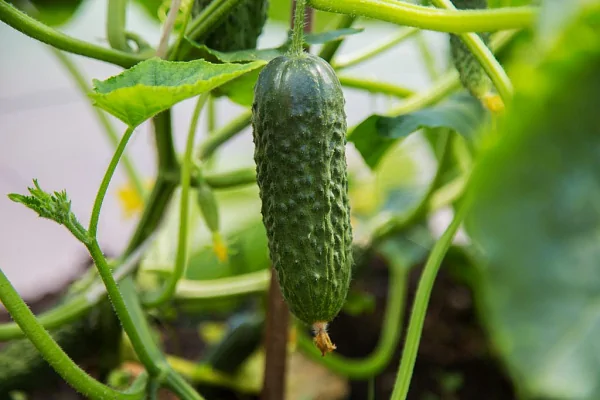
- The leaf blades are oval, smooth, and bright green. They are slightly dissected.
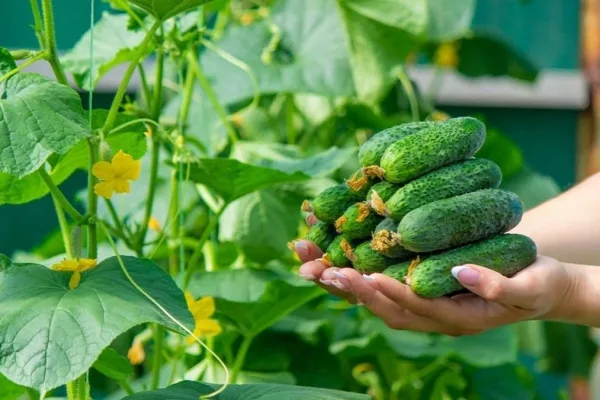
- Fruits with insignificant parameters – they reach a maximum length of 12-12.5 cm and a weight of 90-115 g.
- Their shape is elliptical, with an uneven surface covered with large tuberculate formations (in multiple quantities).
- The peel has black spines.
- The main tone is green with light lines and blurred outlines.
- The skin of the fruit is very thin.
- The pulp is dense and crispy.
Taste and purpose
Zhuravlenok cucumbers have an excellent sweet flavor without any bitterness and a vibrant cucumber aroma. This cucumber variety is intended for table use. The cucumbers are excellent for fresh-picked consumption, for example, in salads and slices, as well as for pickling.
Composition, benefits
The caloric content of this variety does not exceed 14 calories per 100 g. Cucumber contains vitamins A, B1, B2, B4, B5, B6, B9, C, E, H, K, PP, beta-carotene, as well as minerals: potassium, calcium, silicon, magnesium, sodium, phosphorus, iron, iodine, copper, selenium, fluorine, zinc.
Regular inclusion of fruits in the diet has a beneficial effect on health:
- improves water-salt metabolism;
- stimulates metabolism;
- dilates blood vessels;
- stabilizes blood pressure;
- promotes the breakdown of cholesterol deposits;
- helps to dissolve stones and sand in the kidneys;
- regulates the function of the pancreas;
- improves blood counts.
When ripe, the yield
Zhuravlenok varieties are distinguished by their early ripening. From sowing to harvesting, ripe cucumbers take 48-55 days, and the harvest is from July 5th to 10th. The main advantage of this hybrid is its long harvest period, which continues until the onset of cold weather.
This crop produces a surprisingly rich harvest—an average of 7 to 12 kg of cucumbers per square meter. The Zhuravlenok hybrid is bee-pollinated.
Planting cucumbers
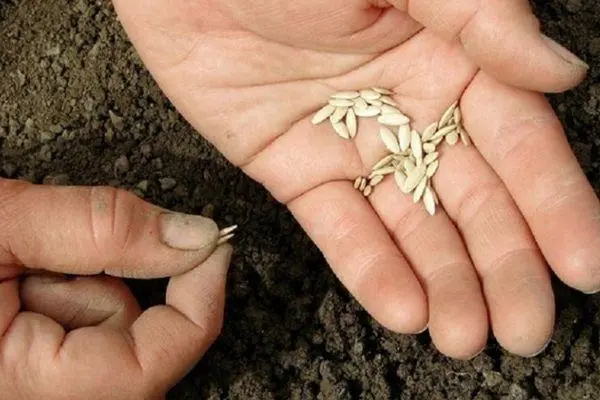
To achieve a successful harvest, gardeners must carefully select and purchase seeds for planting. This should be done exclusively at specialized seed stores.
- ✓ Check the expiration date of the seeds, ideally no more than 2 years from the date of collection.
- ✓ Make sure there is a quality certificate or documents confirming the grade.
- ✓ Pay attention to the storage conditions of the seeds before purchasing them – they must be dry and protected from direct sunlight.
Schematic methods of seed/seedling arrangement
There are several popular methods for planting cucumber seeds that gardeners prefer:
- Square nest system. This method is suitable for sowing over large areas. Each hole should be spaced 70-75 cm apart, with the depth of each hole no more than 8-10 cm. Place 13-15 seeds in each hole, and after the first shoots emerge, select 4-5 of the strongest seedlings.
- Row technique. This method is the simplest and most applicable for planting cucumbers in a regular garden. Create a long furrow, evenly distribute the seeds at least 10-12 cm apart, then cover with soil and thoroughly water.
- Double-sided tape technology. At least three rows are formed in the garden plot, with a spacing of 150-160 cm between them. Seeds are sown in a dug trench and then irrigated.
By seed method
In southern Russia, direct sowing of cucumbers begins between May 20 and 25, while in central Russia, this occurs between June 5 and 10. Select a site with a southern exposure, protected from strong winds. The recommended soil temperature during sowing is at least 16-18°C.
Other important nuances:
- Preparing the area for cucumbers begins in the fall: dig the soil and add compost—10 to 14 kg per square meter is sufficient, depending on the fertility of the area. In the spring, loosen the soil and fertilize it with composted chicken manure at a rate of 8-10 liters per square meter.
- Agribusiness experts recommend sowing green manure crops in early spring. Rye, oats, clover, lupine, beans, or peas are the most common choices. These plants are excellent soil amendments, improve soil structure, enrich it with nitrogen, and act as a protective mulch.
- When the green manure reaches a height of 1 to 15 cm, make holes in the beds right among them and sow cucumber seeds to a depth of 2.5-3 cm at intervals of 20-25 cm.
- The soil is carefully poured onto the seeds and the plantings are covered with halves of plastic bottles, which are removed after the seedlings appear.
Green manure also provides protection for young cucumber plants from strong winds and direct sunlight. As soon as the cucumbers begin to grow, the green manure should be mown down.
By seedling method
Starting on April 20th, the seedling planting process begins. To do this, create a soil mixture of equal parts peat and compost/humus, adding one part wood ash. Add 25-30 g of superphosphate and 300 g of turf to a bucket of this mixture. Mix everything thoroughly and soak it in a concentrated solution of potassium permanganate to prevent infection.
- ✓ Maintain the temperature in the room with seedlings within the range of +20-22°C during the day and +16-18°C at night.
- ✓ Provide seedlings with 12-14 hours of light per day, using phytolamps if necessary.
After this, proceed according to the instructions:
- Pour the moist soil evenly into peat or plastic containers with a capacity of at least 500-600 ml, where the seedlings will continue to grow.
- Plant the seedlings one at a time to a depth of 2.5 cm, then cover the surface with plastic sheeting and wait for germination. The first green shoots appear on average in 4-5 days at room temperature of 25-26°C.
- Once the seeds sprout, remove the plastic wrap and move the seedlings to a well-lit windowsill. Water the seedlings frequently to keep the substrate moist at all times.
- Feed the seedlings. Use specialized fertilizers such as Bud, Ideal, and Barrier.
- To strengthen the immunity of cucumber seedlings, treat them with a mixture of milk and iodine. Add 500 ml of low-fat milk and 5 drops of iodine to 5 liters of water. Use the resulting solution to spray the seedlings.
Cucumber seedlings are transferred to greenhouse conditions in the last days of May, and they are transplanted into open ground in the first days of June.
Peculiarities:
- To plant cucumbers, follow a 50x60 or 60x70 cm pattern; in a greenhouse, place three bushes, and in open ground, four per 1 sq. m.
- To plant seeds, make holes 18-23 cm deep, which are then watered with boiling water or a hot solution of potassium permanganate.
- After the soil has cooled, seedlings are planted in them.
- The surface of the soil is covered with mulch, which can be made from peat, sawdust, straw or agrofibre, to prevent the appearance of weeds and retain moisture.

Peculiarities
The Zhuravlenok F1 crop can be grown both in a greenhouse and directly in the soil. Spring is the ideal time to begin sowing in a greenhouse, with April being the best month. However, it is recommended to transition to open ground after May 20th.
Preparing a growing site requires care and professionalism. There should be no traces of weeds, and the soil must be fertilized and thoroughly mixed. This is a key step in preparation. Equally important is ensuring adequate soil moisture before planting seedlings or sowing seeds into the prepared holes.
Caring for cucumbers
The hybrid cucumbers I chose are easy to care for. However, to achieve maximum results, it's important to understand and follow certain cultivation guidelines. This way, you'll get a healthy and bountiful harvest.
Watering
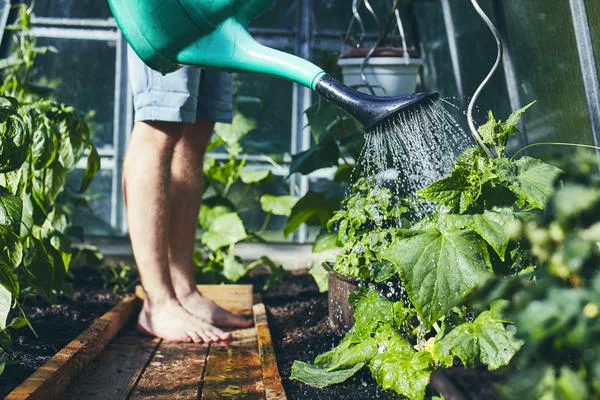
Moisten the entire surface of the bed, which is a key aspect of proper watering. Use only settled water, ideally warm. It can be heated naturally (by the sun) or artificially (on a stove).
Other subtleties:
- It's important to ensure the soil layer is saturated to a depth of 20-25 cm, avoiding overwatering. Assessing the soil condition is the basis for determining the required volume of water for cucumbers, which should not be left in constant stagnant water, which can damage the root system.
- Watering at night or during periods of intense sunlight is not recommended, as nighttime watering can lead to mold, while daytime watering can cause foliage burn. It's best to moisten the soil in the morning so that the cucumbers are dry by midday.
- Irrigation water should not contain excess chlorine, which can negatively impact cucumbers. Therefore, settled water is a reliable option for irrigation.
Garter and shaping of bushes
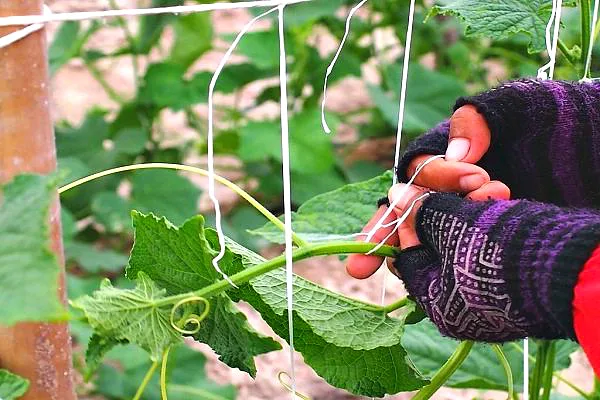
When planting cucumbers outdoors, it's important to adhere to one basic principle: regulate shoot growth by pinching them when they begin to actively develop. This is the only technique required.
If you need to prevent excessive stem growth, you can carefully drape it over a trellis to prevent it from growing too high. This is precisely why structures are used, allowing you to create a convenient and efficient plant placement system.
Top dressing
To feed cucumbers, typically use 30-40 g of mineral complexes per 8-10 liters of water, at a rate of approximately 3 liters of solution per square meter. Fertilizing is necessary even if the soil was prepared in advance in the fall.
Don't forget about mineral fertilizers after planting cucumbers, so that they grow well and the fruits delight you with their quantity and taste.
Hilling
As for hilling, cucumbers usually do not require it, since their root system is quite superficial and easily damaged.
Possible difficulties
Pollination difficulties may arise when growing the Zhuravlenok variety in greenhouses. A solution is to leave all openings and doors open to attract bees, or to transfer pollen by hand.
When greenhouse temperatures rise above 30-33°C, pollen loses its fertility. Therefore, a key task for gardeners is to ensure the required temperature environment.
Don't forget about humidity in the room - it promotes the development of putrefactive processes, so install a ventilation system or simply ventilate the room.
Typical diseases and pests, resistance
During the development of the hybrid cucumber variety, specialists paid special attention to its resistance to a wide range of diseases common to this crop. Zhuravlenok is resistant to powdery mildew, cucumber mosaic, and bacterial infections.
Difficulties you may encounter:
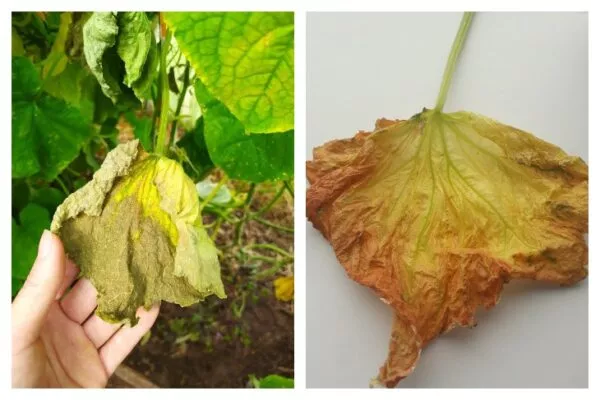
- Root rot and downy mildew can be serious problems for the Zhuravlenok plant. To combat root rot, wood ash is added to the soil around the roots during planting. As a preventative measure against downy mildew, treating the bushes with fungicides, such as Fitosporin, is recommended.
- Insect pests that can harm cucumbers include aphids, whiteflies, slugs, and snails. Aphids can be controlled with folk remedies (such as a mixture of onions and garlic) or with specialized chemicals.
To combat snails and slugs, experienced gardeners use special traps, such as boards or pieces of slate, under which the pests hide during the day. The traps are placed throughout the garden, making it easier to collect the pests by hand.
Harvesting and use of the crop
For winter storage, it's recommended to choose cucumbers harvested at the milky stage of ripeness—they're the most delicious and crispy when preserved. Harvest regularly in the morning to prevent over-ripening and loss of flavor.
The fruits of the hybrid have good resistance to transportation and can be stored in a constantly ventilated and cool place for up to three months.
Pros and cons
This variety is undemanding regarding soil conditions. But it has many other advantages:
Flaws:
Gardeners' reviews
The hybrid Zhuravlenok variety is popular with gardeners due to its excellent taste and ease of care. Some gardeners note that these cucumbers surpass parthenocarpic varieties in flavor and aroma. However, when grown in a greenhouse, certain difficulties may arise due to high humidity (ventilation is necessary).