
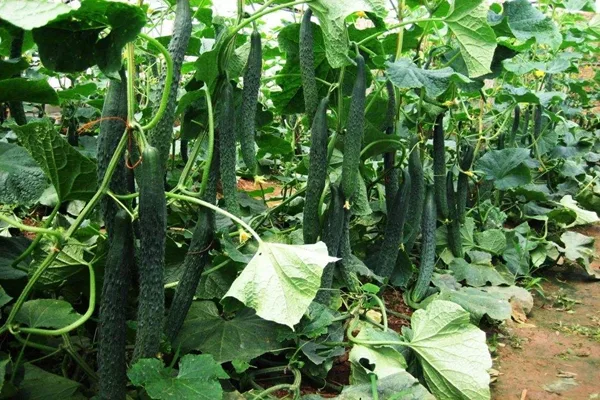
Green Snake F1 is an unusual representative of the mid-late cucumber hybrid category. It attracts gardening enthusiasts with its unusual fruit shape, remarkable flavor, and long and abundant fruiting. It is grown in open garden plots under temporary plastic cover.
Introduction to the variety
The hybrid is partially parthenocarpic. Its bushes produce predominantly female flowers, but they are not self-fertile. They require bees for pollination, making this vegetable variety poorly suited for greenhouse or hotbed cultivation.
Originators
The authorship belongs to the employees of the Research Institute of Vegetable Crop Selection and the GavrishSem agricultural firm:
- Gavrish S. F.;
- Portyankin A.E.;
- Shamshina A. V.;
- Shevkunov V.N.;
- Khomchenko N. N.;
- Surovova T. Ya.;
- Pluzhnik I.S.
In 2011, the Green Snake was approved for cultivation in the following regions of the Russian Federation:
- Northern;
- North-West;
- Central;
- Volga-Vyatka;
- Central Black Earth Region;
- North Caucasian;
- Middle Volga;
- Lower Volga;
- Ural;
- West Siberian;
- East Siberian;
- Far Eastern.
External characteristics of the plant and cucumbers
The hybrid's bushes are indeterminate and characterized by vigorous growth. They are distinguished by the following external features:
- powerful structure;
- medium degree of branching;
- foliage: medium-sized, green;
- Flowers: bright yellow, female.
- ✓ High resistance to cucumber mosaic virus, cladosporiosis, powdery mildew.
- ✓ Average resistance to downy mildew.
- ✓ Cluster type of fruiting with simultaneous ripening of 3-4 cucumbers in a node.
Green Snake plants produce fruit in clusters (a bouquet-type fruiting pattern). Each node produces 3-4 cucumbers, which ripen simultaneously.
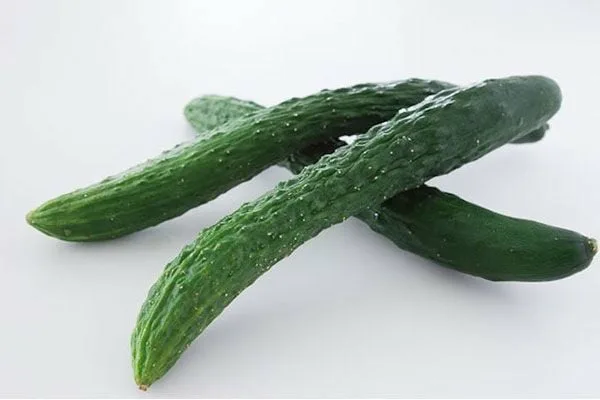
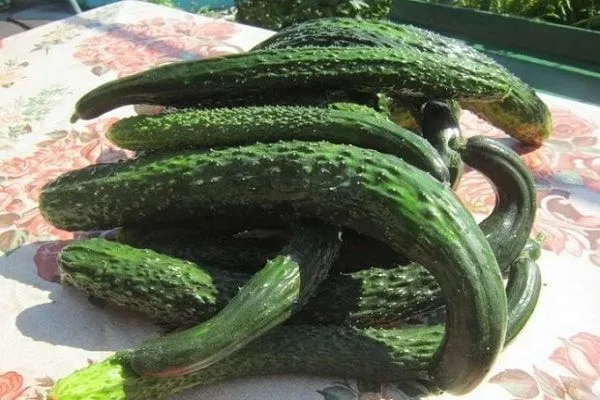
The fruits are distinguished by their large size and unusual snake-like shape, which gives this hybrid cucumber variety its name. They possess the following characteristics:
- length - 50-60 cm;
- diameter - up to 4 cm;
- weight - from 120 g to 300 g (some specimens reach a weight of 400 g);
- elongated cylindrical shape, curved, with a short handle;
- dark green in color with a pattern of short stripes and spots of the same color but a different shade;
- large tuberculate surface with sparsely spaced tubercles;
- light brown spiny pubescence;
- thin and delicate skin;
- pulp, which is distinguished by its density, juiciness and pronounced cucumber aroma;
- absence of voids inside the pulp;
- small seed chambers.
Taste and purpose
Snake cucumbers have excellent flavor. Their flesh is sweet, quite tender, and crisp, with a rich juice content. There's not a hint of bitterness. The rich, fresh aroma makes the fruit even more delicious.
These cucumbers are also suitable for adding to other dishes:
- cold soups (okroshka, kholodnik, botvinya);
- vegetable stew;
- sushi;
- canapés and sandwiches.
They are also suitable for garnishing side dishes and making sauces. These cucumbers are delicious not only fresh but also pickled, combined with various spices and herbs.
Ripening time and yield
Green Snake is a mid-late variety and hybrid of this vegetable crop. The crop ripens within 48-50 days after germination.
Its mass harvest occurs from June to August. Fruiting is long and abundant. Gardeners harvest up to 30 kg of snake-shaped cucumbers per square meter.
Health benefits and uses of Green Snake
This vegetable variety is beneficial for the health of the consumer. It is rich in vitamins (A, B1, H, E, C, PP, K), minerals such as calcium, potassium, magnesium, phosphorus, iodine, iron, manganese, copper, cobalt, zinc, and others. It is low in calories (12.2 kcal/100 g fresh). It contains no proteins or fats.
Eating the fruits of the Green Snake has healing effects:
- strengthening the immune system due to the high content of ascorbic acid and other vitamins;
- stimulating digestion due to the high fiber content of fruits;
- increased appetite;
- removal of toxins from the body;
- maintaining normal levels of hydration in the body;
- relief from swelling (the product has diuretic properties);
- strengthening the nervous system;
- good for the kidneys;
- good for the heart, as cucumbers contain a lot of potassium;
- weight loss (the product is suitable for dietary nutrition).
Growing and care
Grow the Green Snake cucumber using one of two methods:
- seedling;
- seedless, which involves direct sowing of seeds into garden soil.
Follow the rules for planting and caring for vegetable crops to ensure strong, healthy bushes that produce a bountiful harvest.
Requirements
The hybrid variety of cucumber is demanding regarding its growing conditions:
- LightingGreen snakeroot loves light, but does not tolerate direct sunlight on its foliage and stems (this is especially true for delicate seedlings). Select sunny areas of the garden for planting, with light shade at midday.
- SoilTo obtain a good harvest, grow vegetables in fertile, loose, breathable soil that retains moisture well and has a pH close to neutral.
- Temperature conditionsCucumbers are heat-loving. They stop growing at temperatures below 15°C. Grow seedlings at 15-20°C. The optimal temperature for cucumber plant growth and fruiting is 25°C.
Provide temporary film cover for the hybrid planting to protect the seedlings from the cold after they are transferred to the garden and to protect them from direct sunlight.
Sowing and transplanting
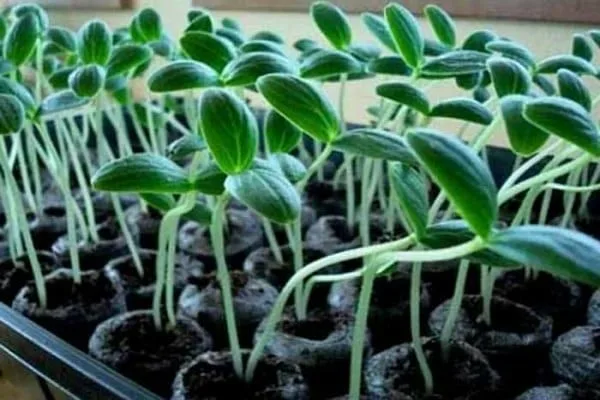
Sow seeds to obtain seedlings in late April (30 days before transplanting them into the garden). Transplant the cucumber hybrid seedlings into the garden in late May or early June. By this time, the plants should already have 3-4 true leaves.
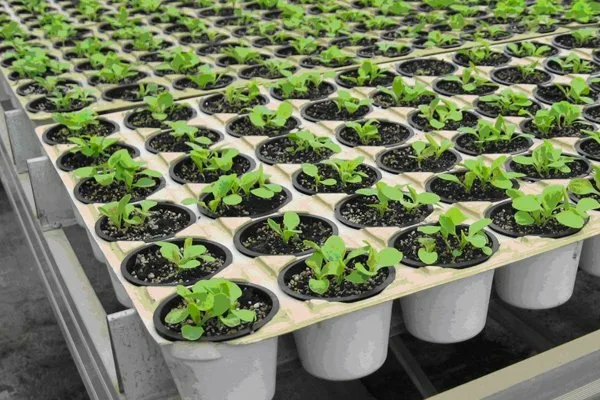
Use peat pots and the right soil for growing seedlings (cultivated soil rich in rotted manure, peat, or compost is suitable). Before sowing, soak and germinate the seeds. Plant one seed in each container filled with potting mix, planting it 1.5 cm deep.
Choose the right plot of land for cucumber planting. It must meet the following requirements:
- be even;
- sunny;
- protected from strong winds and drafts;
- previously used for growing good predecessors of cucumbers, which vegetable growers consider to be: parsley, beans, peas, corn, onions.
When transplanting seedlings to the garden, follow this pattern:
- the distance between bushes is 30-50 cm;
- between rows - 60-100 cm;
- planting density: 5 plants per 1 sq.m.
If you prefer to grow Green Snake without seedlings, sow the seeds outdoors in May-June. Follow the manufacturer's recommended seed spacing: 30-50 x 60-100 cm.
Sow Green Snake seeds in a garden bed step by step:
- Make holes in the soil, 2-4 cm deep.
- Water the holes.
- Place 1-2 seeds in each hole. Bury them in the soil to a depth of 2-3 cm.
- Water the crops.
- Cover them with film.
Care procedures
To maximize your harvest, ensure your cucumber plants are watered regularly. They require ample watering after flowering, during fruiting, and during the peak fruiting period. Water every other day, using 9 to 12 liters of water per square meter.
After watering the hybrid, do not be lazy and carry out the following procedures:
- weed removal, which interfere with the proper development of cucumber bushes and weaken their immunity;
- loosening the inter-row spaces to a depth of up to 5 cm to increase the air and moisture permeability of the soil;
- soil mulching under plants to maintain optimal humidity and prevent weed growth.
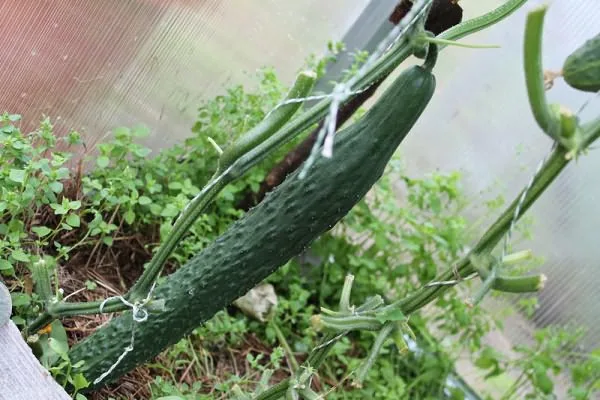
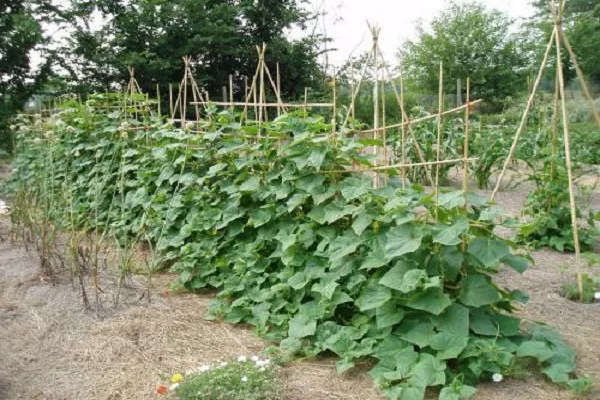
To increase the productivity of hybrid cucumbers, pinch off the main shoot after 6-7 leaves. As they grow, tie the stems to a trellis or a tall neighboring plant (corn, sunflower).
To ensure the Green Snake planting receives all the nutrients it needs, fertilize it. Fertilize four times per season, following this schedule:
- 14 days after germination Feed them with mineral compounds dissolved in water (10 l), such as ammonium nitrate (15 g), double superphosphate (20 g), and potassium sulfate (20 g). The application rate is 1 liter of nutrient solution per plant.
- During the flowering period Use a mullein solution (1:20) enriched with nitrophoska (15 g), boric acid (0.5 g), and manganese sulfate (0.3 g). It's a good idea to add wood ash (100 g) to the mixture. Apply 3 liters of liquid fertilizer per bush.
- At the time of intensive fruiting To fertilize cucumber plants, use an ash infusion (100 g per 10 l), adding mineral compounds to it: urea (50 g), potassium sulfate (40 g). Consumption is 1 l per 1 bush;
- 14 days after the third feeding Apply dry ash under the plants. Apply 100 g per plant.
Collection and storage
Green Snake cucumbers produce fruit quickly and in large quantities. Harvest them every 24 hours or daily (at least twice a week). Do not allow the cucumbers to become overgrown.
Overripe cucumbers rob the plant of nutrients. The more frequently you harvest, the faster new fruit will set.
The lifespan of a hybrid crop depends on its storage conditions:
- at room temperature - up to 1 week;
- in the refrigerator - 14 days;
- at a temperature of 0°C – up to 20 days.
Reviews
Green Snake F1 is a mid-late parthenocarpic cucumber hybrid. Thanks to its genetic makeup, it produces a bountiful harvest of long, sweet, snake-shaped fruits with a non-bitter flavor. Its plants are disease-resistant and grow in virtually any climate. The harvest is suitable for fresh consumption and summer salads.