
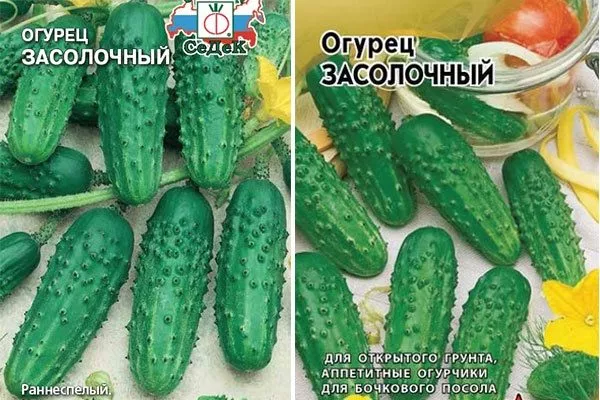
The Zasolochny cucumber is a self-pollinating variety that produces fruit especially well in sunny garden areas. This crop is highly disease-resistant and produces a harvest early. This pickling cucumber can be grown from both seeds and seedlings.
Introduction to the variety
Fresh cucumbers seem similar in taste and don't differ significantly between varieties, but not every variety is suitable for pickling and preserving. The Zasolochny cucumber is one of the most suitable for these purposes. It is included in the list of the best varieties for outdoor gardening.
Originators
In 1999, the Zasolochny cucumber variety was created by breeders L.P. Malychenko and A.M. Popova. After passing all the necessary testing and research, this variety (not a hybrid) was registered in the State Register and approved for use in 2000.
External characteristics of the plant and cucumbers
Zasolochny is a medium-sized variety. It is an indeterminate variety, meaning it requires staking to achieve the best results due to its rapid growth and branch development.
Pay attention to other varietal characteristics:
- The stems of the cucumbers are medium-sized, and the leaves are large, green in color, and characterized by a moderate degree of wrinkling.
- Zasolochny blooms in mixed varieties, meaning both male and female buds are present at the same time.
- This cucumber is not the result of hybridization. Therefore, it ripens through the natural process of cross-pollination, carried out by pollinating insects.
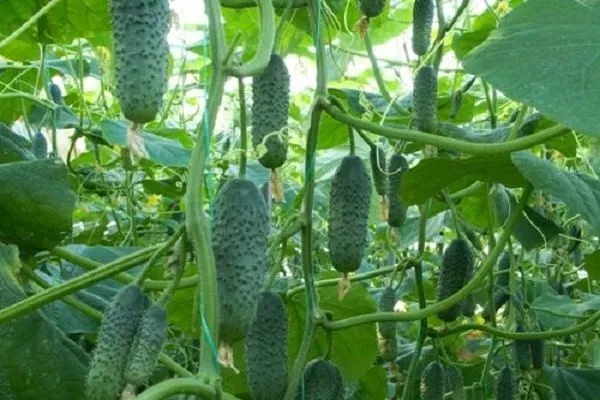
- The main shoot is moderately branched, and the lateral shoots have a long form – these plants can be grown both vertically and horizontally.
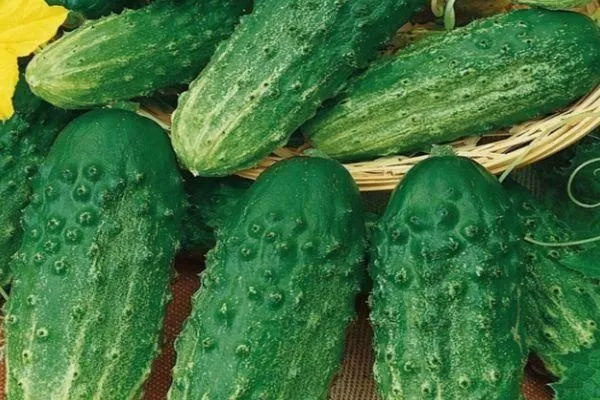
- The fruits reach a length of 11 to 11.5 cm, with an average diameter of 3.5-4.5 cm. Their weight typically ranges between 90 and 130 g.
- The cucumber is distinguished by its elongated and cylindrical shape.
- The surface of the vegetables is covered with a thick, juicy skin, which is a rich green hue. This color is complemented by lighter lines and large, yet blurred spots.
- On the fruits you can see rare but noticeable black bumps and whitish fluff.
Taste and purpose
These cucumbers have an excellent flavor, are free from bitterness, and have firm, aromatic flesh with an optimal juice content. These cucumbers are renowned for their pickling properties.
This variety has found application in all culinary applications, from fresh salads to canning. These cucumbers are ideal for fresh consumption.
When ripe, the yield
This variety is deservedly popular among gardeners due to its ability to produce its first fruitful harvest early. If all cultivation practices are followed, the harvest will appear within 43-47 days after the first shoots emerge.
This variety is characterized by generous productivity and the ability to produce large quantities of produce, making it ideal for industrial farming. Under these conditions, yields of 115-225 centners per hectare can be achieved. In open ground, maximum yields can reach 4.5-5.5 kg per square meter, with a marketability of 94-98%.
Features and tips:
- To achieve the maximum yield, it is recommended to harvest the greens at the point of technical maturity to avoid overgrowth. This period occurs when the fruit reaches a length of approximately 8-9.5 cm.
- Leaving cucumbers in the garden for too long can lead to their overgrowth and a decrease in consumer qualities.
- It's advisable to harvest every two to three days. Frequent harvesting encourages the plant to produce more fruit and last longer.
Growing and care
To successfully grow pickling cucumbers, select nutrient-rich loamy soil with a neutral pH. Effective drainage is essential. Cucumbers thrive both when planted directly in the ground and when grown in greenhouses or hotbeds.
Planting operations
To space plants between them and in rows, leave a gap of 40-50 cm. This method is used both for planting in open spaces and in greenhouse conditions.
The depth should be only 2.5-3 cm. Two seeds are placed in each hole to provide a reserve in case one of them does not sprout or is less healthy.
To the garden
Soil preparation begins well in advance, in the fall. Follow these guidelines:
- Dig the area for planting to a depth of 35-45 cm.
- Clear the area of weeds.
- Enrich with humus/compost in the amount of 22-25 kg per 1 sq. m. Add crushed charcoal (approximately 200-300 g per 1 sq. m).
- In the spring, loosen the soil again slightly with a shovel, adding potassium-phosphorus or superphosphate compounds if necessary (if the soil is excessively depleted).
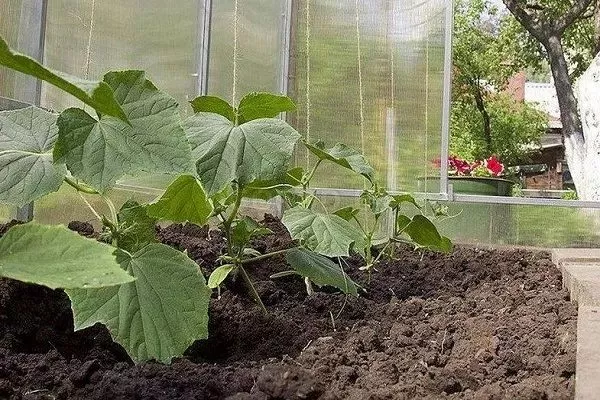
Cucumbers should be planted when the soil temperature rises to 13–16°C, which usually occurs in late May. The seeds should be treated with a growth stimulant the day before planting, and the soil should be disinfected. After planting and watering, protect the soil with plastic film or agrofibre.
Seedling technology
To ensure cucumbers ripen a week earlier, use the seedling method and plant in early May or even late April. Specific features:
- It's important to thoroughly inspect the seeds before sowing. Trusted suppliers provide pre-treated seeds. If purchasing seeds from other sellers, pre-treating them with a potassium permanganate solution is recommended.
- For seedlings, you can use peat pots or regular plastic cups with drainage at the bottom and holes for water drainage (for example, expanded clay).
- The containers should be filled with soil (preferably turf) with the addition of compost/humus and charcoal.
- The seedlings are placed in a cool, shaded area, covered with protective film. After a week, the first shoots appear, and the seedlings are moved to a brighter location, increasing the frequency of watering.
Agricultural technology
To care for plants, it's best to use soft, preferably chlorine-free, water that's slightly warm. This is critical, as cold water can damage the root system and weaken the plant's branches. It's best to water the bushes in the morning or evening.
The basic procedures include the following actions:
- With the onset of the first summer rains, watering can be reduced, especially if the rains become particularly prolonged or hot weather sets in. In such cases, the roots should be protected with a 10-20 cm deep layer of soil (hilling).
- During the budding and fruiting period, Zasolochny requires nutrient supplements. You can use traditional organic fertilizers, such as mullein or chicken manure, or complex mineral mixtures. Fertilizing should be done every 2-3 weeks.
- To ensure sufficient nutrition and proper development of the root system, it is necessary to regularly loosen the soil, simultaneously removing weeds.
- Optimal development of Zasolochny requires a careful approach to its structure. Excess and weak shoots must be removed so they don't hinder the growth of the main fruiting branches. A multi-stem technique is used, whereby after the fifth leaf appears on the main shoot, it is pruned, stimulating vigorous growth of the lateral shoots.
- Various support systems are used to support the bushes—trellises, twine, or other established methods. Pickling vines grow vertically, allowing plants to be positioned so they receive sufficient light and don't crowd each other.
With mixed garter, shoots are laid at an angle of at least 60-65 degrees in relation to the main branch.

Resistance to diseases and pests
The Zasolochny cucumber has excellent resistance to common cucumber diseases. However, excess moisture can cause root and leaf rot. In such situations, stop watering, sprinkle the affected areas with ash, and raise the leaves and stems to improve ventilation.
To prevent disease, it is recommended to treat plants prophylactically with special antifungal products. These products are available at gardening stores. Spraying should be done once during the entire growing season, no later than 20-25 days before harvest.
Advantages and disadvantages
The Zasolochny cucumber is popular among farmers due to its numerous advantages. The key advantage of this variety is its impressive productivity. When properly cared for, it produces abundant, high-quality harvests.
Other positive qualities:
This variety has its own set of disadvantages that should be considered before planting. These include:
Reviews
Zasolochny is a cucumber variety ideal for both beginner and experienced gardeners. It produces a harvest of sweet and aromatic fruits by the end of July, which is excellent for a mid-season variety. Zasolochny's fruits are resistant to transportation and retain their flavor and commercial qualities for a long time.