
The Hedgehog cucumber is a modern variety that has gained popularity due to its early maturity and resistance to adverse conditions. It performs excellently both in greenhouses and open ground, and is noted for its disease resistance and adaptability to fluctuations in temperature and humidity. Timely care is key.
Introduction to the variety
This early-ripening parthenocarpic hybrid is distinguished by its high yield and low maintenance requirements. The plants produce fruit consistently throughout the season.
This is a universal variety, valued for its stable yield and the good quality of its cucumbers – they remain fresh and tasty for a long time.
Specificity of bushes and cucumbers
The plant forms long vines with dark green leaves. The cylindrical fruits reach a length of about 8-9 cm and weigh approximately 60-80 g. The skin of the vegetables is covered with small tubercles, and the spines are black.
Taste and application
Green cucumbers are suitable for pickling, canning, and fresh eating. They boast crisp flesh and a pleasant flavor, a delicate texture, and a refreshing aroma.
When it ripens and the yield
The first green fruits appear 40-46 days after germination. With proper care, the average yield is 5-6 kg per square meter. Regular harvesting is necessary to avoid over-ripening, which can reduce their firmness and juiciness.
Difference from the Hedgehog variety
The cucumber variety "Yozhiki" differs from the "Yozhik" variety not only in its producers but also in the characteristics of its fruit. "Yozhik" was bred by a Siberian originator in 2006. The cucumbers reach a length of approximately 10-12 cm and weigh 70-90 g. This variety is prized for its cold tolerance and is suitable for growing in northern regions.
Growing rules
Growing this crop doesn't require any special skills or experience, so even a novice gardener can handle it. It's important to consider certain recommendations and follow the instructions.
- ✓ Optimum soil temperature for seed germination: +22-24°C at a depth of 4-5 cm.
- ✓ Distance between plants: 15-20 cm in a row, 75-80 cm between rows.
Requirements
To sow seeds, the soil at a depth of 4-5 cm must warm to 22-24°C. Germination is possible at lower temperatures, but the sprouts will appear weak and sickly in 7-10 days.
Orient the bed north to south, choosing a well-lit, draft-free location. Suitable predecessors include potatoes, legumes, and cabbage. The soil should be loose and well-structured, preferably sandy or light loam.
Growing seedlings
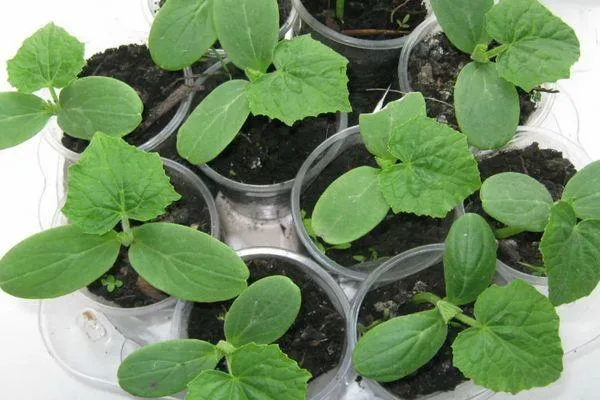
Pre-grow seedlings to get an earlier harvest. To do this, follow these recommendations:
- Lighting. The crop requires a lot of light, so use phytolamps to illuminate the seedlings.
- Soil for sowing. The optimal soil for cucumbers is loose, light, and well-aerated, which promotes the development of a strong root system. Cultivated soils with a high organic matter content, such as well-rotted manure, peat, or compost, are best.
- Sowing seeds. Make furrows up to 3 cm deep on the surface of the bed and sow the seeds into moist soil. When planting sprouted seeds, direct the sprouts upward. Place dry seeds 2-3 per furrow, maintaining the recommended spacing. Cover the seeds with soil, but do not compact them.
Follow these guidelines to grow strong seedlings that will thrive when planted in the garden.
Agricultural technology
The crop requires timely and proper care, which will positively impact the yield and quality of the cucumbers. Follow standard agricultural practices.
Transplanting
The optimal air temperature for rapid seedling adaptation is +18°C. In warm regions, plant seedlings from mid-April, and in cooler climates, wait until the end of May to avoid recurrent frosts.
Follow the planting pattern to prevent plants from shading each other and promoting disease development due to dense planting. The distance between holes should be 15-20 cm, and between rows of plants, 75-80 cm. Plant 4-5 seedlings per square meter in open ground, and 2-3 plants per square meter in a greenhouse.
Plant care and formation
After sowing, cover the area with a 1.5-2 cm layer of mulch. Once sprouts appear, thin the seedlings. In open ground, provide cover to protect plants from adverse weather conditions, such as low temperatures, prolonged rain, or strong sun, as these can reduce yield.
For watering, use warm, settled water. In hot weather, warm the water for outdoor irrigation to 25°C.
Hydration recommendations:
- Before the budding phase – once every 4-5 days.
- During the formation of ovaries and fruits - every other day.
- Water the bushes in the morning or evening.
- In hot weather, sprinkling is recommended.
To tie the plant, use thin twine or strong rope. Tie one end into a loop and pull it through the top of the plant, allowing the loop to slide freely along the stem to prevent it from breaking. Attach the other end of the rope to a crossbar or pole.
Fertilizers and dressings
The hybrid responds well to nutrient supplementation. Use organic fertilizers in solution form, using up to 2 liters of the prepared solution per bush.
Positive and negative qualities
Before growing, be sure to study all the characteristics and make sure that the hybrid has more advantages than negative qualities.
Reviews
Hedgehog cucumbers are a reliable choice for both novice and experienced vegetable growers. Their early maturity and high disease resistance make them an attractive choice for cultivation. Careful care and adherence to agricultural recommendations will ensure excellent results.