
Yozhik F1 is a mid-early hybrid cucumber variety popular with domestic gardeners and vegetable growers. Its popularity stems from its strong immunity, tolerance to temperature fluctuations, and high yield potential. It is suitable for both open garden beds and greenhouses.
Introduction to the variety
Hedgehog cucumber is a parthenocarpic vegetable. Its bushes are self-pollinating, producing predominantly female flowers and forming fruit ovaries in clusters. Each node produces several cucumbers, which ripen simultaneously. They are harvested at the pickle or gherkin stage.
The hybrid is renowned for its hardiness. Its plants are resistant to many of the adverse conditions cucumbers are exposed to during cultivation:
- temperature fluctuations;
- changes in humidity;
- diseases (downy mildew, cucumber mosaic virus, root rot).
Features of selection
The authorship belongs to the breeders:
- Meleshkina T. N.;
- Vitchenko E. F.;
- Orlova E. A.;
- Kolomnikova V. I.;
- Bechtold N.K.
In 2006, their creation was added to the Russian Federation State Register as a cucumber variety intended for cultivation in the West Siberian and East Siberian regions in open ground, temporary film shelters, unheated greenhouses, and winter shelters.
Specificity of bushes and cucumbers
Hedgehog hybrid plants belong to the determinate type. They are medium-sized, short-vine, and covered with medium-sized green foliage. They are characterized by a robust root system, moderate branching, female flowering, and clustered fruiting.
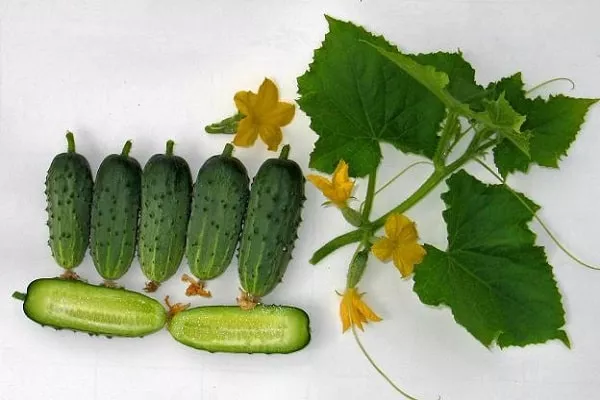
The fruits of this hybrid cucumber variety are small in size. They are distinguished by the following external characteristics:
- length indicator - 7-9 cm;
- weight - 70-108 g;
- shape close to cylindrical;
- slightly ribbed surface;
- thin skin of a rich green color, bumpy with a dense arrangement of tubercles, black-spined;
- pulp that is juicy, crunchy, and free of voids.
Taste and application
The hybrid yields quite tasty cucumbers. These cucumbers are not bitter. Their flesh has a pleasant, refreshing flavor and a wonderful crunch. Its aroma is rich and vibrant.
The use of Hedgehog fruits is universal:
- fresh consumption;
- adding to various dishes as one of the main ingredients (salads, soups, sushi, light snacks);
- pickling;
- pickling;
- pickling.

Fruiting period
This vegetable variety belongs to the mid-early cultivars and hybrids. Its growing season lasts 40-45 days (from germination to the technical maturity of the cucumbers). Fruiting occurs in July-August.
Productivity
The hybrid is characterized by excellent yield. Its yield ranges from 22,100 to 46,400 kg per hectare in commercial cultivation. Marketability is high, reaching 85-96%.
Landing features
When growing cucumbers, remember that this crop is very heat-loving. It thrives in sunny areas of the garden and requires well-warmed soil for proper development. There are two ways to grow the hybrid cucumber "Hedgehog":
- seedling method;
- direct sowing of seeds into garden soil.
Gardeners plant it in open areas of the garden or place the plants in heated (or unheated) greenhouses, as well as in tunnels and under temporary plastic covers. They adhere to the following sowing/planting times:
- the first weeks of April - sow seeds to obtain seedling bushes;
- the first days of May - the seedlings are transferred to an open bed or a greenhouse;
- The second half of May - beginning of June - sow seeds in the garden soil in the vegetable garden, growing the crop outside the greenhouse or hotbed.
The optimal temperature regime for it is as follows:
- +15-20°С — for growing seedlings;
- +25°С – for growth and fruiting of cucumber bushes.
A temperature drop or rise above the recommended values for Hedgehog seeds by the manufacturer can lead to complications when planting the hybrid:
- prolonged cold spells down to +10°C and below provoke a stop in the growth and development of bushes;
- +5°C and below is the temperature at which hybrid plants die;
- below +13-15°C in combination with high humidity is a factor leading to rotting of cucumber bushes and their infection with fungal infections;
- above +35°C - the development of vegetable crops slows down.
Site preparation
Before you plant a hybrid cucumber, choose a suitable location for it in your garden:
- If you plan to grow the crop in protected ground, make sure that the greenhouse is well lit and there are no drafts inside it;
- the open area of the garden for planting cucumbers should be sunny and windless;
- The soil in which cucumbers will grow must be loose, fertile, neutral in acidity, well aerated and moderately moist.
Prepare a place for planting the Hedgehog hybrid in the fall:
- plough it to a depth of 30 cm;
- clear away weeds and plant debris;
- fertilize with organic matter (add 8-10 kg of humus per 1 sq. m).

Planting seeds
Carry out pre-sowing preparation of seeds by performing the following activities:
- soak them in warm water for 12 hours to speed up germination;
- etch for 10-15 minutes in a solution of potassium permanganate;
- Rinse and wrap in a damp cloth, leave in a warm (+25-27°C) and dark place for several days until the seeds hatch.
Wait until the soil in the garden warms up to 12-15°C and begin sowing. Level the soil in the area. Water it with a hot solution of potassium permanganate. Form furrows 3 cm deep. Place the sprouted seeds in them, leaving 30 cm between them. Sprinkle with soil and cover the crops with plastic wrap.
- ✓ Optimum soil temperature for sowing seeds: +12-15°С.
- ✓ Seeding depth: 3 cm.
Planting seedlings
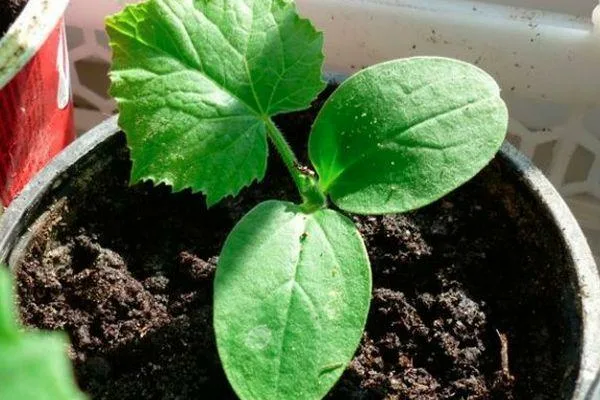
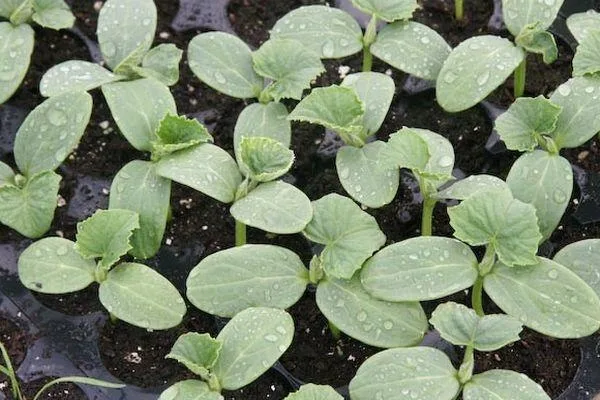
For an early harvest, grow the Yozhik hybrid from seedlings. Start sowing in the second half of March or early April, one month before you plan to transplant the seedlings to an open garden bed or greenhouse.
To avoid picking, sow seeds in individual containers filled with nutritious soil mixture:
- plastic cups with a drainage hole at the bottom;
- peat pots.
Fill the containers 2/3 full with soil. Add more as the seedlings grow. Plant the seeds to a depth of 1.5-2 cm. Finally, water the seedlings with warm water and cover them with plastic wrap. Remove the plastic wrap once the seedlings emerge.
Provide the seedlings with favorable conditions for growth:
- keep them in a bright place;
- protect from direct sunlight;
- protect from drafts;
- Maintain the room temperature at +20°C (during the day), +15°C (at night).
Planting diagram
In early May, transfer the seedlings to the garden. If you plan to grow them in a greenhouse, you can do this as early as mid-April. When planting seedlings outdoors, be sure to cover them with plastic.
Follow the planting pattern:
- the distance between rows is 50-60 cm;
- between plants - 30-35 cm.
After transplanting the seedlings, don't be lazy and mulch the soil beneath them. Cover it with a 1.5-2 cm layer of organic matter. Use sawdust, straw, or compost.
Care
The Hedgehog cucumber is weather-resistant and easy to care for. To ensure abundant, long-lasting fruiting, follow these care instructions when planting this hybrid:
- watering;
- weeding;
- loosening;
- fertilizing garden beds;
- garter and shaping of bushes.
Watering
Water the cucumber plantings only with warm, settled water. The water temperature should be no lower than 25°C. This will ensure the hybrid bushes receive the required amount of water. Excess moisture will evaporate.
On cold or cloudy days, limit watering as this will reduce the roots' ability to absorb water. Excess water in the soil will cause root rot.
The watering regime recommended by the cucumber seed producer, Hedgehog, is as follows:
- Before flowers appear on the plants, water them twice every 7 days, using 4-5 liters of water per 1 sq. m.;
- During the formation of fruit ovaries, moisten the soil under the cucumber bushes three times a week, using 8-12 liters per 1 sq. m.
Hill up the hybrid plants and loosen the soil between the rows after each watering or rain. Work the soil to a depth of up to 4 cm. This will prevent root rot and improve the soil's moisture and air permeability.
While cultivating the soil, remove weeds from the beds. Timely weeding allows for the growth of strong, healthy plants, allowing them to receive more nutrients and develop properly. This also helps prevent cucumber diseases and pests.
Garter and shaping of bushes
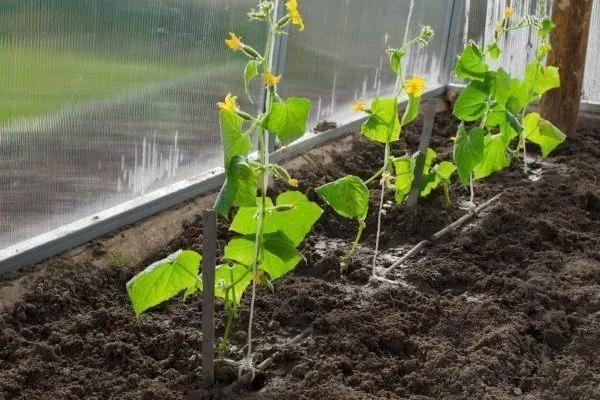
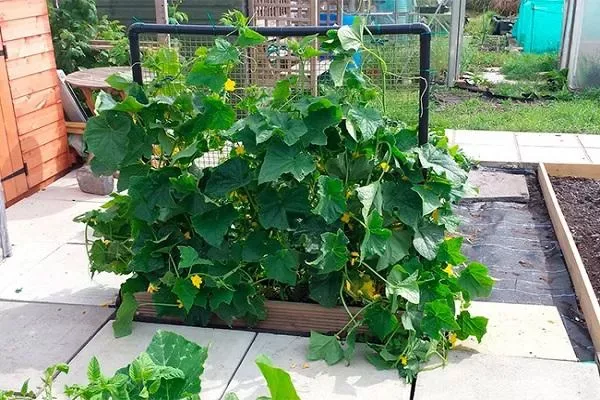
This hybrid requires staking during cultivation. Secure the cucumber vines to objects such as:
- trellis;
- count;
- tall neighboring plant (sunflower, corn).
Train your plants. If this process seems complicated, consider single-stem training. This involves removing side shoots and pinching the main stem after it has developed 6-7 leaves.
Top dressing
Feed your hybrid plants to ensure maximum yield. Use store-bought complete fertilizers, organic matter, and mineral fertilizers. Alternate between these for best results.
During the growing season, fertilize the Hedgehog planting three times:
- First time Apply fertilizer after the sprouts emerge (10-15 days after emergence). Use cow manure diluted with water (1:10) or chicken manure (1:20). Mineral fertilizers are also suitable: ammonium nitrate (20 g), potassium sulfate (10 g), superphosphate (10 g), diluted with water (10 l).
- Second time Feed the plants when buds begin to form. Use a potassium nitrate solution (30 g per 10 l) enriched with superphosphate (40 g). Organic fertilizers, such as ash infusion (250 g per 10 l of water), are also suitable.
- Third time Apply fertilizer when the bushes begin to bear fruit. Water the plants with a solution of nitrophoska (15 g per 10 l) or potassium nitrate (25 g per 10 l). You can also use a herbal infusion enriched with ash or a yeast fertilizer.
Dangerous diseases and pests
The cucumber Hedgehog shows resistance to diseases:
- root rot;
- downy mildew;
- downy mildew;
- cucumber mosaic virus.
Unfavorable growing conditions and poor care are factors that contribute to the defeat of its planting by such infections:
- root, gray or white rot;
- powdery mildew;
- ordinary mosaic;
- olive spot.
The following preventative measures will help you prevent cucumber bushes from becoming diseased:
- disinfection of seeds and garden soil;
- treatment of garden equipment with special disinfectant solutions;
- moderate irrigation of beds with warm water;
- spraying with fungicides once every 2 weeks (for treatment, use the preparations more often - once every 7-10 days);
- ventilation of greenhouses to provide fresh air.
Among the pests that most often affect the Hedgehog planting, gardeners highlight:
- spider mite;
- greenhouse whitefly;
- melon aphid.
To successfully combat parasites, resort to preventive and therapeutic measures:
- use high-quality seeds, treat them;
- do not thicken the planting;
- do weeding on time;
- get rid of plant debris, do not leave it in the garden bed;
- destroy affected parts of bushes;
- Treat cucumber plantings with insecticides; use them when insects are detected, no more than 1-2 times during the growing season.
How to collect and store correctly?
Harvest cucumbers as they ripen. During the peak fruiting period, harvest every other day or daily to encourage the formation of new cucumbers. Remove gherkins from the vines carefully, being careful not to damage the stems or the plant itself.
Positive and negative qualities
The variety has one drawback: the inability to independently prepare the seed material.
Reviews
The Hedgehog F1 is a newly bred variety enjoying high market demand. It has won over gardeners with its low maintenance and high yield. Its plants require little care and produce abundant, delicious gherkin-type fruits. Homemakers value these cucumbers for their marketability, excellent flavor, and versatility.