
The Vse Puchkom F1 cucumber is a new addition to the seed business, which has already achieved the highest popularity among vegetable varieties. This first-generation hybrid is ideal for both large-scale agricultural production and individual gardening.
Introduction to the variety
Vse Bunchom F1, a parthenocarpic hybrid, can be grown both in greenhouses and outdoors. This variety boasts excellent disease and insect resistance and produces a bountiful and long-lasting harvest.
Originators
This cucumber is the fruit of the labor of breeders from Aelita, one of Russia's leading agricultural holdings. Their efforts resulted in the creation of a highly productive hybrid with impressive flavor and optimal fruit size, making a significant contribution to global agricultural production. The exact year of hybridization is unknown.
External characteristics of the plant and cucumbers
The "Vse Buch" variety is an indeterminate cultivar, with a medium height and a semi-standard bush structure. It is characterized by the following varietal characteristics:
- The height reaches 100-120 cm. This cucumber produces few shoots, which are poorly developed and do not contribute to the strengthening of the bush or the formation of the crown.
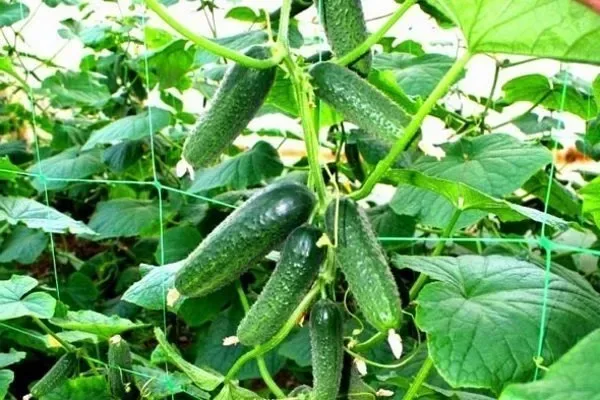
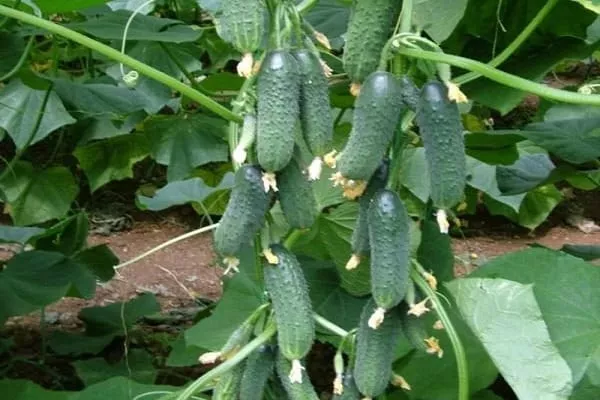
- The fruits form without pollination. Cucumbers ripen in clusters, with several fruits forming at one point, typically two to four.
- The vegetative growth of the central shoot is medium-vigorous, with a resilient fibrous structure, light green with a brown tint, and densely covered with short white hairs.
- The medium-sized leaves are arranged in pairs and gradually taper toward the apex, attached to the stem by narrow but thick petioles. The leaf blade has a wavy edge, a rough surface with noticeable veins, is dark green in color, and is sparsely pubescent.
- The root system is fibrous, spreading superficially and widely to the sides, reaching a root system diameter of 30-40 cm.
- The plant's flowers are simple, bright yellow, and female, blooming profusely.
- This variety is distinguished by its uniform cucumber shape, with the first and last fruits being the same size. Upon reaching full maturity, they do not increase in length or width; overripe cucumbers do not change color or flavor.
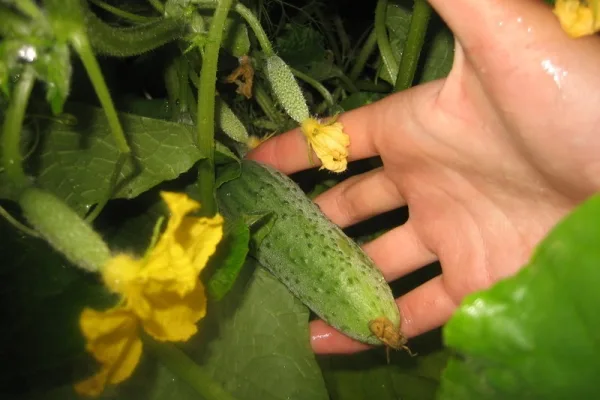
- The cucumbers are cylindrical in shape, elongated and weigh 70-100 g, reaching a maximum length of 12 cm.
- When they reach technical maturity, they are covered with a uniform dark green color, but ripe cucumbers become lighter at the base, where parallel light stripes appear.
- The skin of cucumbers is thin, but at the same time soft and durable, it easily withstands minor mechanical damage.
- The surface does not have a wax film, but is covered with small tubercles with a fleecy structure.
- The flesh is light, firm, and juicy, and the seeds are found only as small rudiments. Because of their rudimentary nature, collecting the seeds is impossible.
- All in a Bunch is recommended for commercial farming. Cucumbers of this variety can be stored for up to 10-12 days and are easily transported.
This hybrid was obtained by cross-pollination of varieties and does not contain genetically modified organisms (GMOs).
Taste and purpose
Vegetable growers who have tasted Vse Puchkom f1 note their sweetish flavor and the absence of bitterness and acidity. The small fruits are used whole for canning. After cooking, the skin color remains unchanged, and no hollow spaces form inside.
When ripe, the yield
It is characterized by mid-early ripening: the harvest is from July to August. This variety is known for its cluster-shaped fruiting, which ensures a substantial yield. Cucumbers ripen 45-50 days after the first shoots appear. To stimulate further fruiting, regular harvesting is recommended.
Productivity is independent of cultivation location—whether in a greenhouse or outdoors. A single plant can yield up to 6-8 kg of cucumbers, and 15-16 kg of fresh, crisp fruit per square meter.
To extend the harvest period, it is recommended to plant at three-week intervals. For example, plant the first batch in early May, and the second at the end.
Soil requirements
The soil must be nutritious. To achieve this, it is recommended to dig it in the fall and fertilize it with organic matter. In the spring, before planting cucumbers, clear the soil of weeds and loosen the top layer of soil.
Positive and negative qualities
To optimize the agricultural process and wisely distribute planting plots, it is necessary to thoroughly study the characteristics of each plant variety. Advantages:
The culture has only one drawback: the bush does not produce planting material.
Growing cucumbers of the Vse Puchkom variety
Cucumbers of the Vse Puchkom variety are cultivated using two main approaches:
- First - This is direct sowing of seeds into the garden bed, which is preferable in areas with a mild climate;
- Second - This is a method of preparing seedlings or growing them in greenhouse conditions, which is used in places with a cool spring climate and a short summer period.
Optimal growing conditions
This cucumber variety doesn't require a lot of ultraviolet radiation and can grow in areas with limited sunlight. In greenhouses, no additional light sources are needed for photosynthesis.
Best parameters:
- When choosing a site for outdoor cultivation, give preference to places protected from northern winds, as Vsyo Puchkom cucumbers do not like cold drafts.
- Fertile, neutral, and well-drained soil is best. Avoid planting in low-lying areas or anywhere where the soil may become waterlogged.
Preparation of the landing site should begin in advance:
- Dig over the area and, if necessary, adjust the soil acidity to neutral using lime or dolomite flour.
- Add organic mixtures and superphosphate preparations.
- Before planting cucumbers, thoroughly water the prepared area with warm water.
Direct planting in open ground
Planting can begin in late May or early June. It's important for the soil to warm to 14-16 degrees Celsius and for the threat of frost to pass. Here's how:
- For sowing, make holes 2 cm deep and place three seeds in each.
- When shoots appear from them and the cucumbers reach 4-5 cm in height, leave the strongest of them and remove the weak ones.
- Leave the interval between holes at 45-50 cm, and place 3-4 plants per 1 square meter of land.
Technology through seedlings
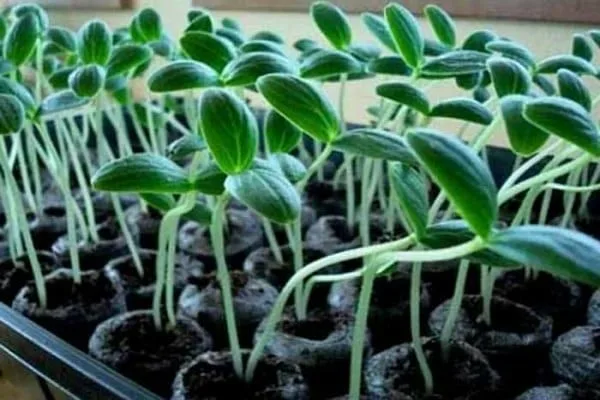
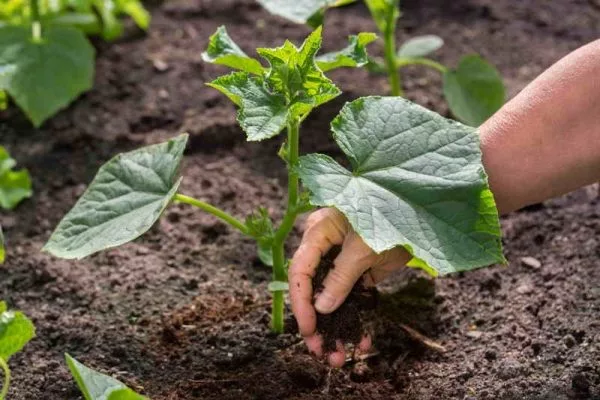
Growing the Vse Puchkom cucumber variety from seedlings allows for an earlier harvest. Seeds are sown in March in individual peat pots that don't require picking—these pots are simply planted in the soil, as cucumbers don't transplant well.
The process looks like this:
- Fill the pot with fertile soil.
- Place the seeds 1-1.5 cm deep, then cover and water.
- Place the plant in a room with a temperature of at least 22-24 degrees Celsius. Lighting should be provided for 15-17 hours per day.
- After a month, transplant the young plants to a permanent location.
The planting schedule for cucumbers in a greenhouse is identical to that used in open ground, with sowing beginning on May 15th. If the greenhouse is heated, seeds can be sown as early as early May. Sowing times depend on the climate of the specific region and the chosen growing method.
Watering
Cucumbers should be watered moderately. While the Vse Puchkom variety does not tolerate excessive waterlogging, in open beds watering is regulated based on rainfall. During dry periods, two applications per week will be sufficient.
Watering should be done in the evening, avoiding direct moisture onto the stems and leaves to prevent sunburn during the day. In greenhouse conditions, a drip irrigation system is preferable to keep the top layer of soil slightly moist.
Top dressing
To ensure a bountiful harvest, the following fertilizing is necessary:
- The first is after the appearance of four leaves with nitrogen fertilizers, for example, urea.
- The second - after three weeks with the addition of minerals.
- Organic mixtures should be added at intervals of two weeks.
- Before fruiting, it is necessary to carry out additional fertilizing with nitrogen compounds to stimulate fruit set.
- Before the last fruits ripen, it is recommended to add mineral fertilizers.
Formation
The distinctive feature of a bunch plant is that it forms around a single main stem, so it's important to remove any side shoots that grow. When two stems are left on a single plant, the following occurs:
- crop yields are falling;
- the plant may become overloaded;
- cucumbers may not be getting enough nutrition, which will lead to their inadequate development and a decrease in weight and size;
- loss of ovaries is possible.
To ensure healthy plants and a bountiful harvest, this variety requires controlled branching. Don't allow the cucumbers to become overgrown, ensuring the leaves on the main stem receive sufficient light and the clusters of ovaries receive sufficient nutrients.
Harvesting
Harvesting the fruit promptly stimulates the formation of new buds. Delicious cucumbers are those whose seeds haven't fully formed. When harvesting, keep the following in mind:
- cucumbers need to be picked every two days, and during hot periods – daily;
- do not pull them out with your hands, but cut them off so as not to damage the stem;
- Avoid over-ripening cucumbers, as this will slow down the growth of the bush;
- Cucumbers picked early in the morning stay fresh longer.
Resistance to diseases and pests
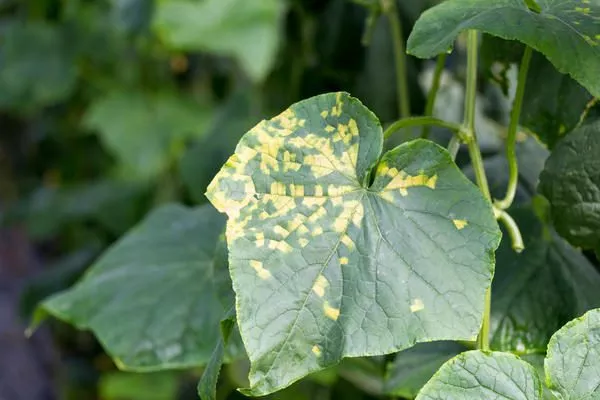
The hybrid has significant resistance to crop-associated diseases and pests. It is resistant to fungal and bacterial infections when grown outdoors. However, in greenhouses, where high humidity and warm temperatures prevail, the plant can be susceptible to anthracnose.
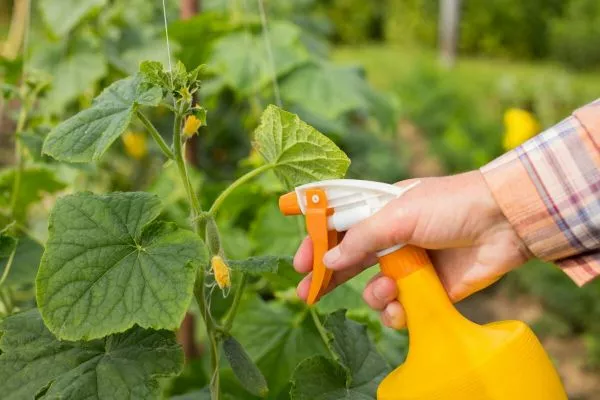
To prevent this disease, it is recommended to treat plants with a copper sulfate solution. A colloidal sulfur solution is also effective.
In greenhouses, cucumbers remain pest-free. In open ground, the most dangerous pests are moths, caterpillars, and whiteflies, which can be effectively controlled with the agrochemical Komandor.
Reviews of the Vsyo Puchom F1 cucumbers
The Vse Puchkom F1 cucumber is an early-ripening indeterminate hybrid. It features parthenocarpic fruit formation and clustered flowering, ensuring consistent and abundant harvests. This variety tolerates cold snaps and requires little maintenance.