
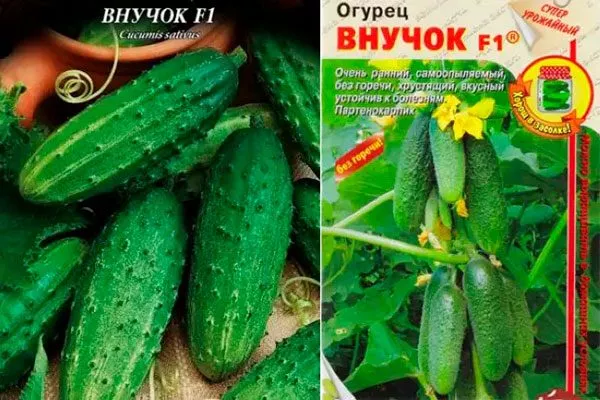
The Vnuchok F1 cucumber is a modern, first-generation hybrid that was bred relatively recently. This cucumber does not require insect pollination to produce fruit. It is ideal for growing both in open gardens and in various greenhouses, including hotbeds. It is characterized by an early and long fruiting period.
Introduction to the variety
Grandson F1 is prized by vegetable growers for its excellent flavor, generous yield, early maturity, and resistance to a number of diseases. This variety is indeterminate, meaning its bushes have medium branching but continue to grow even after the first flower clusters have formed.
Originators
The Vnuchok F1 hybrid was created by Russian breeders, notably M. Kudryavtsev and E. Golovatskaya. Research began in the 2000s, and an application for registration was submitted in 2005.
The hybrid successfully passed state testing and was registered with Rosreestr in 2009. It is recommended for cultivation in open ground and under plastic film in Eastern Siberia and is suitable for gardens in the central part of the country.
External characteristics of the plant and cucumbers
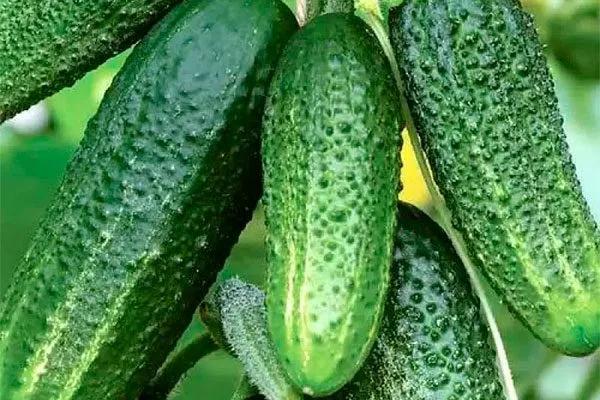
The Vnuchok bush is a vigorous indeterminate vegetable, the main stem of which ranges in height from 140 to 170 cm. Lateral shoots develop less actively.
To achieve the desired compactness of the bush, it is necessary to regularly pinch the top and remove branches from the sides.
Other varietal characteristics:
- It is distinguished by thick stems, a medium degree of branching and moderate density of leaves, painted in a dark emerald color, as well as a developed root system.
- Budding occurs very early: yellow flowers with five lobes bloom on the plant, collected in inflorescences-brushes, predominantly of the female type.
- Most of the fruit forms on the main stem. The Vnuchok cucumber is parthenocarpic, meaning it doesn't rely on external pollination.
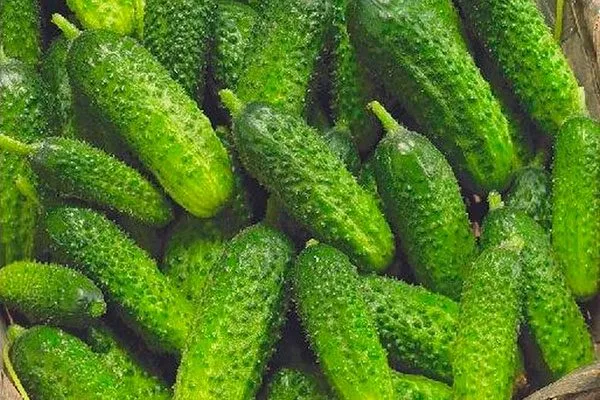
- A medium-sized cucumber variety classified as a gherkin. The fruits weigh up to 60-75 g and are compact: 7-9 cm long and no more than 3 cm in diameter.
- A distinctive feature is the uniformity of the cucumbers in shape and other parameters, which indicates their impeccable commercial value.
- Cucumbers have a neat spindle-shaped or oval-cylindrical shape with small tubercles on the surface.
- The skin is thin, elastic and shiny, decorated with small whitish spines.
- The colour of the fruits is rich green, with lighter tips and longitudinal light lines, which give them an attractive appearance.
- Beneath the thin skin lies a white-green pulp that is meaty, tender, juicy, and has a distinctive crunch. Inside the pulp are small, soft, and almost invisible seeds.
Taste and purpose
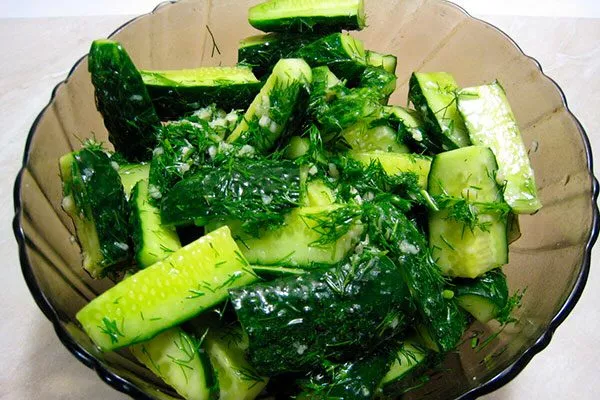
Green fruits have a balanced flavor with a slight sweetness and refreshing undertones, but are not bitter. This vegetable is suitable for eating fresh, in salads and appetizers, and can be preserved for the winter.
When it ripens and the yield
The Vnuchok variety begins bearing fruit early, just 35-42 days after the first green shoots appear. It delights with uniform emergence and begins bearing fruit in early July, with active harvest continuing for three to four weeks.
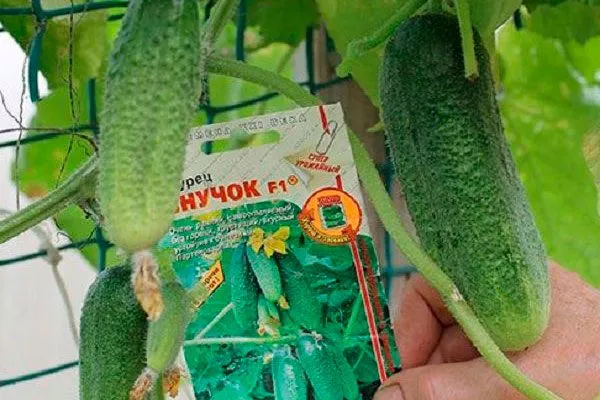
The Vnuchok hybrid is distinguished by its high productivity. Commercial cultivation yields between 375 and 470 centners of cucumbers per hectare. In greenhouses, the yield is 33 kg per square meter, and in open ground, 19 kg per the same area.
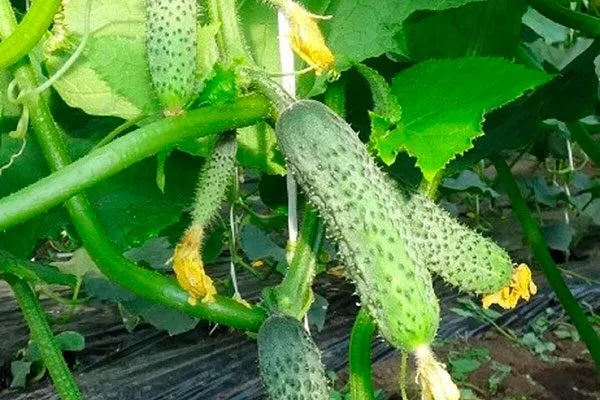
The harvested fruits are easy to transport and retain their freshness and flavor for a long time, which is a big plus for early-ripening varieties, as their shelf life reaches 10-12 days.
Planting cucumbers
When sowing the Vnuchok hybrid, it is important to take into account the level of soil and air warming, as well as to follow the site preparation instructions.
Planting dates
In southern regions, Vnuchka f1 seeds can be planted directly in garden beds. Planting should preferably be carried out between May 1 and 16, while monitoring the soil temperature to ensure it does not drop below 15 degrees Celsius.
In cooler climates, the seedling method is recommended. In this case, seeds are sown from April 3rd to 12th for greenhouse cultivation, or after the 15th of the same month if they are to be grown outdoors.
Site preparation
Preparing the area for sowing begins in the fall. This typically involves loosening the soil, removing unwanted plants, and adding mineral and organic matter, such as bird droppings, compost, and potassium-rich fertilizers.
With the arrival of spring, the preparation process is repeated: the soil is dug up again and enriched with new portions of fertilizers, but including compost, rotted manure, superphosphate and potassium nitrate.
Planting seeds
Vnuchok f1 cucumber seeds don't require pre-treatment, as the manufacturer has already taken care of this. However, experienced gardeners recommend hardening the seeds by immersing them first in hot water for a few minutes, then in cold water for the same amount of time.
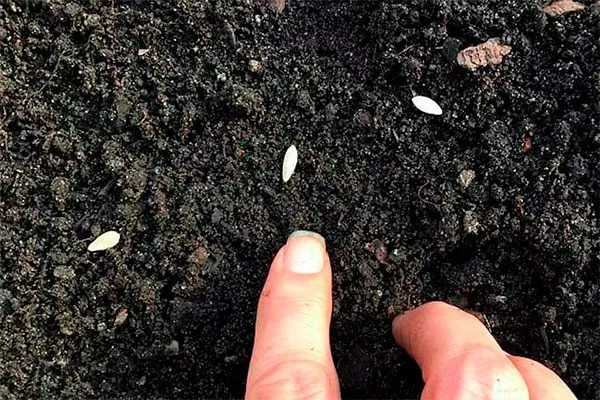
- ✓ The optimal soil temperature for seed germination should not be below +15°C, but to speed up the process, +26-28°C is recommended.
- ✓ To prevent diseases, it is necessary to provide plants with access to fresh air, especially in greenhouse conditions, through regular ventilation.
Seeds can be planted either in individual containers (such as peat pots or long boxes) or directly into the ground. However, keep in mind the specifics of sowing and growing seedlings:
- For seedlings, place two seeds in each peat container. This will avoid the need for transplanting, which is completely undesirable for cucumbers. Plant the seeds at a depth of 2 cm, water with warm water, and cover with plastic wrap.
- Place the containers with seedlings in a warm place with a temperature of about +26-28 degrees, and after the first shoots appear, reduce the temperature to +18-19 degrees.
- Provide 12-14 hours of light using grow lights. Ventilate and moisten the substrate daily using a spray bottle.
- When sowing in open ground, place the seeds at the same depth as in the first case, water with warm water and protect with a temporary film cover to acclimatize the plants and prevent hypothermia.
- Basic requirements for planting in open ground include:
- marking rows at intervals of 50-60 cm;
- planting 2 seeds in each hole with a gap of 30-35 cm.
- The seedlings should be transplanted into open ground 2 weeks after 2-3 leaves appear.
Transplanting seedlings
A month after sowing the seeds, the plants, which by this time have 5-6 green leaves and have reached a height of about 25-35 cm, are transplanted to their permanent location. It's important to monitor the soil temperature, which should be at least 15 degrees Celsius.
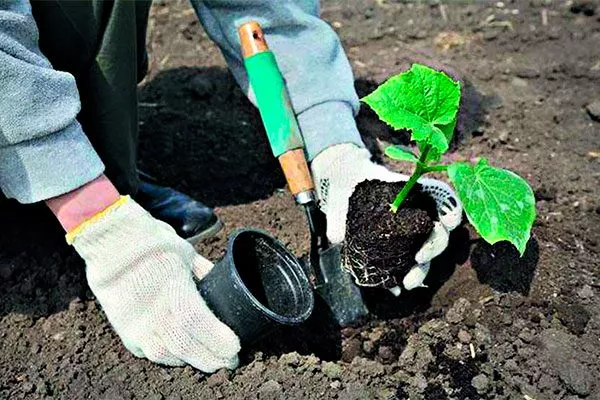
Planting is done in the standard manner: the hole should be large enough to accommodate the root system, and the transplant should be carried out with a ball of soil. After the cucumbers are planted, moisten them and cover them with plastic film. To allow the plants to acclimate to the new conditions, lift the cover for a few hours every day.
Rules for caring for cucumbers
To achieve a bountiful cucumber harvest that will delight you not only with its volume but also with the quality of its fruit, it's important to adhere to certain agronomic practices. These include regular watering, fertilization, soil aeration, and proper plant training.
Watering
Vnuchok f1 bushes require watering every 3-4 days, but this frequency may vary depending on climate conditions. During periods of extreme heat, the frequency should be increased to every 2 days.
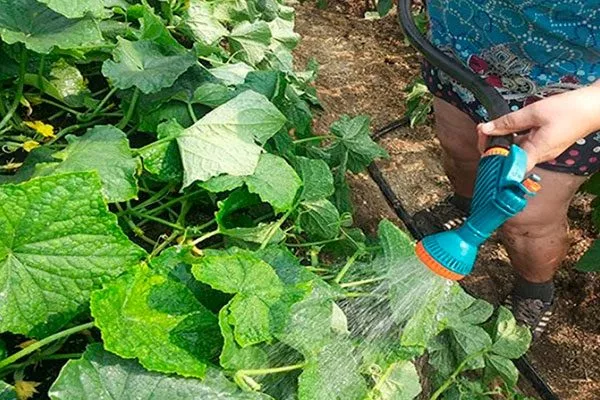
Subtleties that should not be overlooked:
- For watering, use only warm water, which can be heated in the sun or over a fire.
- The optimal time for moisturizing is the evening hours after sunset.
- During the fruiting period, it is important to monitor the humidity level in the trunk area and water the cucumbers according to the condition of the upper layers of soil.
- There are about 18-22 liters of water per 1 square meter.
During high temperatures, gardeners recommend using nutrient-rich sprinkler irrigation. To do this, prepare a solution of 5 liters of water and 15 grams of urea, which is then sprayed onto the plant's green foliage.
Garter and shaping of bushes
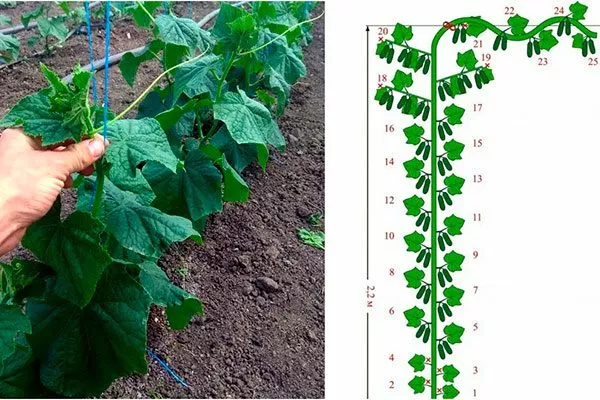
Vnuchka bushes need to be supported by tying their vines to a pre-installed support. To do this, remove side shoots up to five ovaries. When tying, try to direct the stems so that the fruit does not touch the ground. The support can be installed either vertically or horizontally.
Top dressing
During the growing season, cucumbers are fertilized twice. Typically, mineral fertilizers such as urea and potassium nitrate are used for this purpose. Experts recommend first fertilizing the soil with minerals and then moving on to organic matter. This could include compost, humus, manure, or nettle infusion.
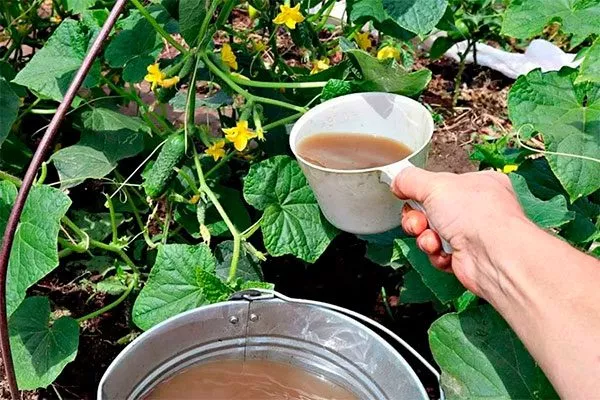
Fertilize several times at different stages of growth:
- 10-15 days after transplantation;
- during the budding period;
- in the fruiting phase.
Ammonium nitrate, potassium and superphosphate preparations, and organic matter are diluted in water and applied under the roots, avoiding contact with leaves and stems.
Hilling
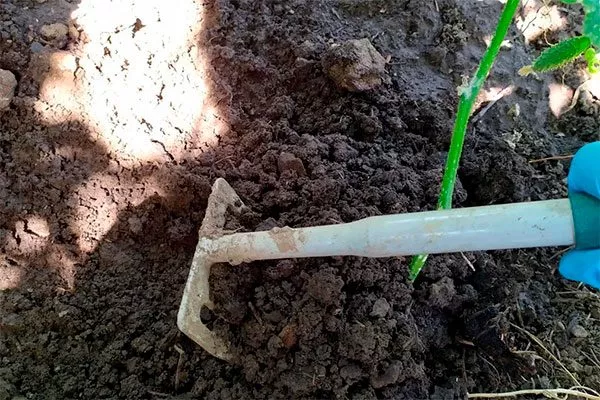
Although hilling is not necessary for this crop, loosening the soil with a fork allows water and oxygen to reach the roots and helps control weeds.
Resistance to diseases and pests
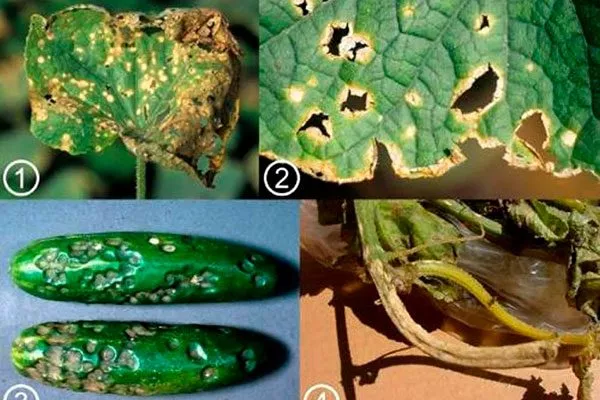
The Vnuchok f1 hybrid is renowned for its resistance to various diseases. However, during agronomic practice, it was noted that this variety can be susceptible to attacks by certain harmful insects and diseases:
- Gray rot. It is characterized by the appearance of a grayish coating and light brown spots on the surface of fruits and leaves. The affected areas begin to rot, which can lead to the death of the entire plant.
To protect against gray mold, agronomists recommend using the fungicide Hom, Bayleton, or Rovral. - Powdery mildew. It manifests as a barely noticeable whitish coating on the leaves, which eventually spreads to the entire green foliage, leading to the formation of white tumors on the stems. The leaves turn yellow, dry out, and fall off.
To protect plants from powdery mildew, spray the bushes with fungicides - Trichodermin or Fitosporin-M. - Nematode. This is a parasitic worm that can appear in greenhouses or hotbeds. Infestation by this pest is characterized by slower plant growth and reduced fertility. Small tumors form on the roots, where nematode larvae develop.
To effectively combat them, purchase Fitoverm, Actofit, Marshal or Alanikarb.
Harvesting and storage
Cucumbers have a unique ability to self-regulate the number of fruits they produce. However, to achieve maximum yield, agronomists recommend harvesting the Vnuchok variety daily. For a neat cut, it's recommended to use pruning shears.
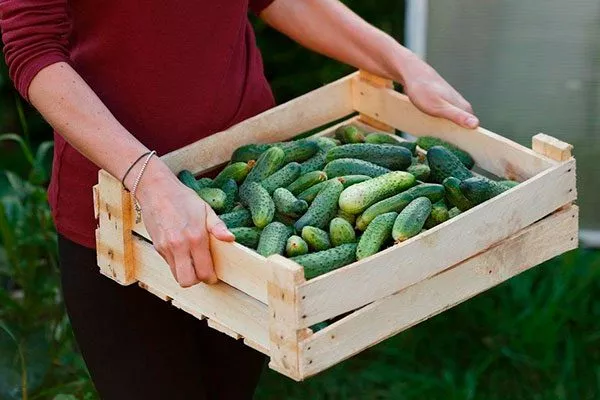
Vnuchok f1 cucumbers are renowned for their long-lasting freshness, so they are often stored in rooms with temperatures up to 4°C (39°F). To preserve the fruit for immediate consumption, it's best to refrigerate them.
Positive and negative qualities
The F1 Grandson has gained popularity among gardeners and farmers thanks to its impeccable qualities. Here are the key advantages of this variety:
Reviews
The Vnuchok F1 cucumber variety deserves the attention of any gardener. This hybrid impresses not only with its yield and flavor, but also with its disease resistance. It can be grown even in small spaces; it doesn't require insect pollination, making it a popular choice for greenhouses.