
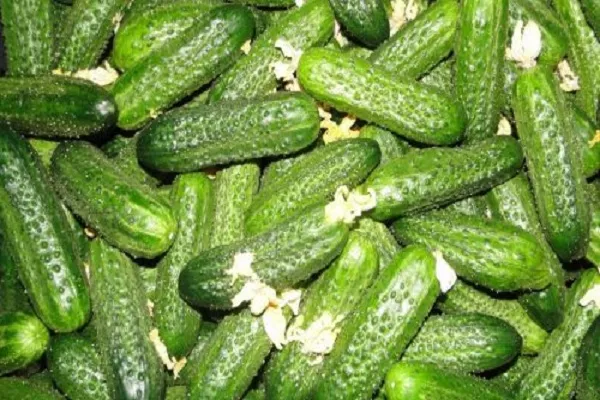
Vladimir F1 is the name of an early-ripening cucumber variety popular with gardeners due to its high yield, excellent marketable quality, and remarkable flavor. It is easy to care for and is suitable for cultivation in open ground, with or without temporary plastic cover.
Introduction to the variety
The hybrid exhibits partial parthenocarpy. Its bushes produce predominantly female flowers, but are not self-fertile. They require bees for pollination, making this vegetable variety poorly suited for greenhouse cultivation.
Originators
Vladimir F1 is a new variety bred in Russia. It was developed by researchers at the Aelita agricultural firm:
- Nastenko N.V.;
- Kachainu V. G.;
- Gulkin M.N.
In 2013, it was included in the state register of the Russian Federation for the following regions:
- Northern;
- North-West;
- Central;
- Volga-Vyatka;
- Central Black Earth Region;
- North Caucasian;
- Middle Volga;
- Lower Volga;
- Ural;
- West Siberian;
- East Siberian;
- Far Eastern.
External characteristics of the plant and cucumbers
The Vladimir hybrid bushes are indeterminate. They are characterized by moderate growth vigor. They devote the lion's share of their energy not to foliage growth, but to fruiting. The latter is a semi-bouquet-like growth habit. The fruit, gathered in bunches of 2-3, ripens simultaneously.
Plants also have other distinctive features:
- medium degree of branching;
- medium foliage size;
- light green color of leaves;
- Flowers: yellow, predominantly female, collected in a brush of 2-3 pieces.
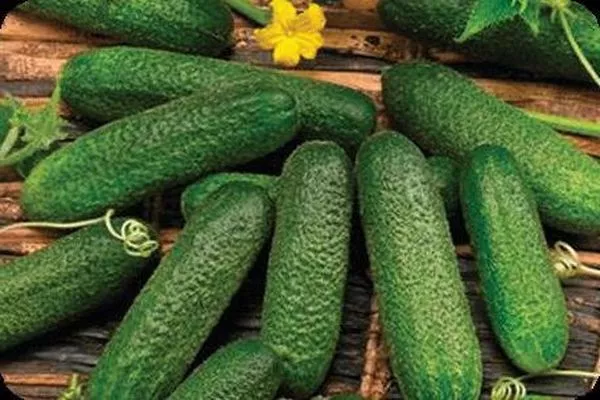
The yield of this hybrid vegetable variety is renowned for its high commercial quality. The fruits are uniform, small in size, and neatly shaped. They belong to the gherkin type. They possess the following characteristics:
- short length - 9-11 cm;
- length to diameter ratio of 3.1:1;
- weight - 90-95 g;
- shape close to cylindrical;
- dark green skin with a pattern of medium-length stripes of a slightly lighter shade and spots;
- finely tuberculate surface with medium density of tubercles;
- the presence of white spiny pubescence on it.
- dense, crunchy flesh that is genetically not prone to the formation of voids.
- ✓ The hybrid exhibits increased resistance to sudden temperature changes, which is rare for cucumbers.
- ✓ The fruits retain their crispness and flavor even after heat treatment, making them ideal for canning.
Taste and purpose
Vladimir hybrid gherkins have excellent flavor. Their flesh is pleasantly sweet with a refreshing note, never bitter. They are delicious fresh, pickled, salted, or fermented. Homemakers add them to salads, entrees, and sauces.
When ripe, the yield
This vegetable variety is a representative of the early-ripening cultivars and hybrids. Its harvest matures in 40-43 days after emergence. The bushes bear fruit uniformly and abundantly. Gardeners harvest 12.5-13.0 kg per square meter of cucumber planting.
Landing conditions
Select a level, sunny area for your Vladimir cucumber bed. Remember that this crop is demanding when it comes to soil. The most suitable soil for it is one that meets the following criteria:
- fertile;
- loose;
- good moisture retention;
- with acidity close to neutral;
- loamy or sandy loam.
- ✓ Soil pH should be between 6.0-6.8 for optimal nutrient absorption.
- ✓ The organic matter content of the soil should be at least 4% to ensure good water-holding capacity.
Practice crop rotation. Vegetable growers include the following crops among the best cucumber predecessors:
- parsley;
- beans;
- peas;
- corn;
- onions.
Do not use a site for planting cucumbers where you previously grew poor predecessors of the green, bumpy vegetable:
- eggplants;
- zucchini;
- carrot;
- cucumbers;
- squash;
- pumpkin;
- peppers;
- tomatoes.
Plant cucumber seedlings or seeds in soil that has been dug over in the fall and fertilized with organic matter. Follow the instructions below:
- distance between plants - 30 cm;
- between rows - 60 cm.
Growing seedlings
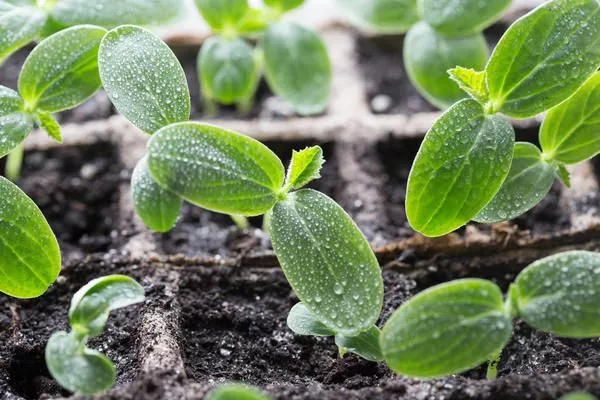
Experienced gardeners cultivate the Vladimir hybrid using seedlings, adhering to the following rules:
- sow seeds for seedlings 30 days before transferring them to the garden bed;
- the seeds are pre-soaked and germinated to speed up the emergence of sprouts;
- grow seedlings in cups or peat pots to avoid picking them;
- For growing seedling bushes, use loose, light, well-aerated soil with a high organic content (rotted manure, peat, compost);
- When sowing, seeds are planted to a depth of 0.5-1 cm;
- seedlings are grown at a temperature of +25°C until the sprouts emerge, then the temperature is lowered to +15°C;
- provide seedlings with maximum illumination by using phytolamps to provide additional illumination to plants and extend daylight hours;
- The bushes are planted in the garden bed when there is no threat of recurrent frosts.
Agricultural technology
Follow proper cucumber cultivation practices to ensure a bountiful harvest. Carry out the following care for the Vladimir hybrid:
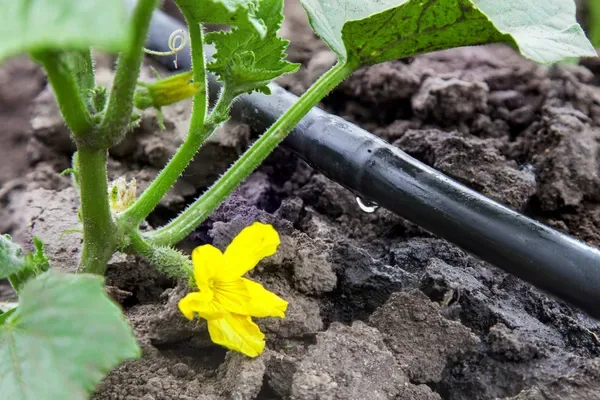
- WateringDon't overwater newly sprouted seedlings. Use 4-5 liters of water per square meter of planting. Water once every 4 days. During the flowering period, increase watering to 3-4 times a week. Use 4-5 liters of water per square meter. Avoid dripping onto the inflorescences and leaves.
During fruit set, increase water consumption to 10-12 liters per square meter. Water the plants every 2 days. During cucumber ripening, use 10-12 liters per square meter. Water the bed 1-2 times a day—morning and evening. This will ensure the juiciness of the fruit.
For watering, use only warm, settled water (+24°C). Stop watering when the air temperature drops to +15°C. - Loosening the beds and removing weedsAfter watering and rain, loosen the soil to a depth of 4 cm to ensure adequate drainage and air circulation. Remove weeds as they appear.
- Top dressingApply fertilizer in four stages. Fourteen days after planting the seedlings in the garden bed, when they have formed 5-6 true leaves, use nitrogen-rich fertilizers (urea, ammonium/calcium nitrate, mullein, chicken manure, herbal infusion).
During budding (at the start of flowering), apply fertilizers that stimulate fruit set and increase their production. These should contain potassium, nitrogen, and phosphorus. Use nitroammophoska, potassium sulfate, superphosphate, urea or ammonium nitrate, and wood ash. Also use micronutrient fertilizers containing boron.
During the fruiting period, apply fertilizers containing nitrogen, phosphorus, and potassium to prolong fruiting. Apply them every 7-10 days. Use complex mineral fertilizers for cucumbers, such as nitroammophoska, ammonium, calcium, or potassium nitrate, potassium magnesium sulfate, chicken manure, mullein, and herbal infusions.
At the fourth stage, apply potassium- and nitrogen-containing fertilizers: wood ash, potassium sulfate or monopotassium phosphate, and herbal infusion. Also, spray foliar fertilizers to prolong fruiting. For this purpose, use succinic acid, magnesium sulfate, boric acid, and calcium nitrate. - Garter and pinching. Secure the cucumber vines to a trellis. Tall crops such as corn and sunflowers can also be used as support. After 6-7 true leaves appear on the seedlings, pinch out their main stem. This will stimulate branching and increase the hybrid's yield.
Reviews
Vladimir F1 is a popular domestic hybrid, the seeds of which are sold by the Aelita agrofirm. It has surprised domestic gardeners with its ease of cultivation and high yield. With minimal care, its plants produce numerous beautiful and delicious fruits. Cucumbers of this variety are prized for their commercial qualities, excellent taste, and versatility.