
The Victoria cucumber impresses with its potential: on average, 14 kg of produce can be harvested from 1 square meter of planting area, and sometimes even more, making it an ideal choice for commercial farming. This variety stands out not only for its impressive yields but also for its pleasant flavor and attractive fruit appearance.
Introduction to the variety
The Victoria cucumber is the result of joint work by scientists from the Scientific Research Institute for Vegetable Crops Selection and the Gavrish Selection Firm, and was registered for agricultural use in 2007.
Characteristics of the appearance of the plant and cucumbers
Victoria is a modern first-generation hybrid. This variety is considered a plant that continues to grow and bear fruit throughout the growing season.
Main varietal characteristics:
- The plant has a moderate number of branches. The leaves are medium-sized and bright green.
- This variety is distinguished by its tendency toward female flowering. Three or more female buds can form on each node, which contributes to an increased fruit production and, consequently, increased fertility.
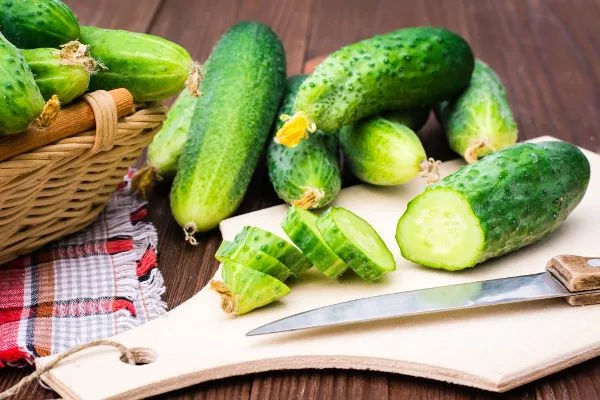
- These fruits have excellent flavor. They are suitable for both fresh salads and canning.
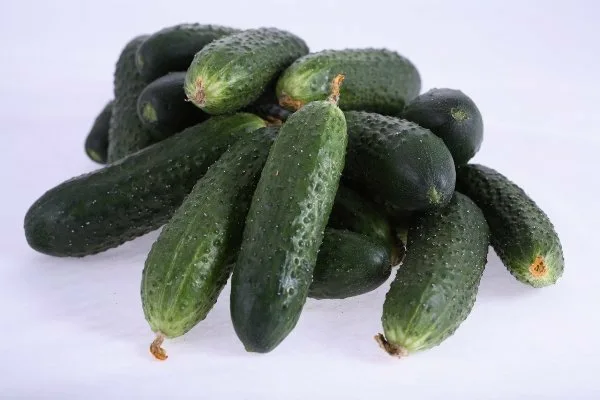
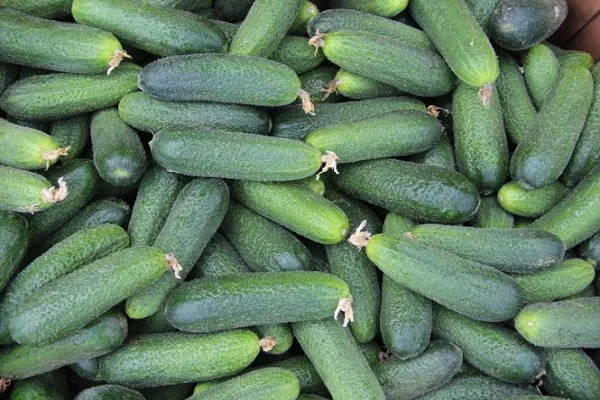
- Cucumbers, shaped like a regular cylinder, can reach a length of 10 to 15 cm, while their weight is approximately 130-140 g.
- The vegetables are colored green with narrow longitudinal lines, which makes them visually attractive.
- The surface of the fruit is decorated with numerous tubercles, which are compactly located.
- The spines on cucumbers are white, adding additional aesthetic appeal to the fruit.
- ✓ Tendency towards female flowering type, which contributes to high yields.
- ✓ Resistance to powdery mildew and cucumber mosaic virus, which reduces the need for chemical treatments.
Positive and negative traits
This cucumber variety is a salad variety, distinguished by its versatile culinary use. Based on its ripening time, Victoria F1 is classified as a mid-early variety.
Landing features
Cucumbers thrive in nutrient-rich soils. To improve air circulation in clay soils, installing a drainage system is recommended. Soil lacking minerals requires the addition of organic matter.
- ✓ Soil acidity levels should be within the pH range of 6.0-6.8 for optimal nutrient absorption.
- ✓ The organic matter content in the soil should be at least 4% to ensure sufficient nutrition for plants.
Timing and preparation
Cucumbers can be grown in a heated greenhouse at any time of year, provided the soil is preheated to a depth of 1 m. Seeds should be sown at an air temperature of 18-20°C.
The Victoria variety is suitable for growing under film starting from April 13-16, and in cold regions planting can be postponed until the end of this or the first of May.
Providing the Victoria variety with sufficient nutrients is essential. This hybrid thrives in sandy or loamy soils with moderate acidity. It is particularly sensitive to minerals, which should be added to the soil beforehand.
Sowing and transplanting
Planting of seeds is carried out as follows:
- To sow the Victoria F1 variety, use paper, plastic, or peat cups. Fill them halfway with loose potting soil, and as the seedlings grow, add more soil to promote root development and strengthening.
- To begin growing, carefully place one or two seeds into each container, planting them to a depth of 10mm.
- Mound soil on top and water with a spray bottle, then cover with plastic wrap to retain moisture. Create favorable conditions for the seedlings by maintaining a room temperature of 23-26°C to accelerate germination and growth.
- Before transplanting seedlings into open ground, which occurs when they are 20-24 days old, carefully prepare the beds. To do this, warm the soil in the area ten days before planting by watering it several times with hot water and covering it with dark-colored plastic.
- Immediately before planting, treat the holes with a solution of potassium permanganate to prevent diseases.
- Carefully remove the bushes from the cup (not from the peat one) and place them in the prepared holes, compacting the soil around the stems. For optimal plant growth, space the holes 35-45 cm apart and the rows 45-55 cm apart.

Care
To ensure a great cucumber harvest, it's important to properly care for your cucumber plants. Optimal fruiting is achieved through regular fertilization and careful watering.
Small leaf blades quickly lose their water holding capacity due to lack of water, which can lead to flower drop.
Watering
During the early stages of Victoria F1 cucumber development, water the plants every 5-7 days, using 3 to 5 liters of water per square meter. Once buds and fruit begin to form, increase the water volume to 10-12 liters, and water the plants every two days.
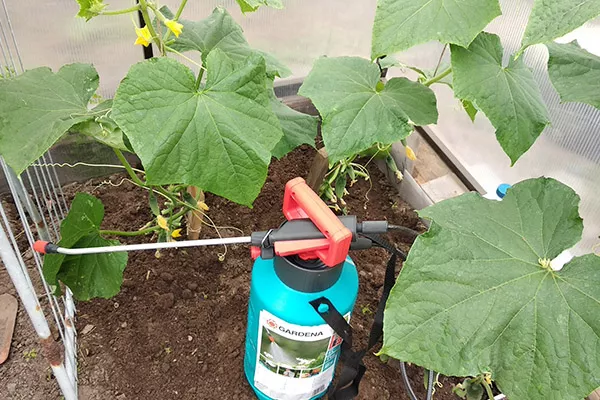
As temperatures drop, watering is reduced. With low thermometer readings and excess moisture, the risk of root disease increases. For irrigation, use a watering can with small holes.
Formation of bushes
Victoria cucumbers are grown using vertical or horizontal staking. This approach saves space, reduces the risk of disease, and simplifies harvesting.
The vertical method of tying up Victoria cucumbers includes the following steps:
- Place the supports parallel to each other along the ridge.
- Pull the wire through the top points of the supports.
- Tie ropes or threads to it.
- Use the free ends of the ropes to secure the cucumber shoots.
The horizontal method of garter involves the following steps:
- Install posts at the beginning and end of the ridge, up to 200-220 cm high.
- Stretch rows of strong rope or wire between the posts.
Fertilizer
Plants first need nutrients approximately two weeks after the first shoots emerge. Key micronutrients for growth include potassium, phosphorus, calcium, and nitrogen. Subsequent feedings are recommended at least every two weeks.
Hilling
After planting the cucumbers, lightly loosen the soil around the trunks. After two weeks, create small mounds around the young cucumbers to protect their immature root system.
Diseases and parasites
Victoria cucumbers are resistant to diseases such as powdery mildew and cucumber mosaic virus. By following preventative measures throughout the growing season, you can prevent any infection. Early detection of the first signs of disease can save your plants from dying.
What to be wary of:
- Ascochyta blight of cucumbers. This disease attacks plants during sudden temperature changes or when cucumbers are watered with cold water. To kill the pathogen, the stems are treated with copper-chalk powder. Symptoms include:
- the appearance of light gray spots along the edges of the leaves;
- white growths with a brown tint form on the stems and shoots;
- the fruits darken and dry out.
- Fusarium wilt. This bacterial infection affects young and weakened cucumbers. The shoot tips begin to wilt, and the leaves turn yellow. To prevent this, it's necessary to regularly ventilate the greenhouse and promptly remove infected plants. When handling cucumbers, use only disinfected tools.
- Tobacco thrips. This winged insect moves quickly between cucumber bushes. Adults and their larvae feed on plant tissue. Thrips are resistant to many chemicals, making them more difficult to control.
Harvesting and storage
The harvest begins at dawn or close to dusk. Cucumbers are removed from the branches using pruning shears or a knife. Avoid pulling or abruptly moving the stems. The harvest is then picked every day or two, and when there are enough fruits, the full harvest begins.
Store the fruit in a cool place or in the refrigerator. The shelf life without loss of quality is 7-10 days.
Reviews
The Victoria F1 hybrid is characterized by a low percentage of barren flowers. It requires no pollination due to parthenocarpy. To increase yields, bee-pollinated varieties and other crops are grown alongside Victoria cucumbers. The bushes are easy to care for; the main thing is to install a drip irrigation system to make the gardener's work easier.