
The Vesyoliye Gnomiki cucumber is a new breeding variety developed using modern hybridization technologies. This variety is suitable for both open-field and indoor gardening. During experimental cultivation, the hybrid was fully adapted to the climatic conditions of the Central Russian region, the Moscow region, European Russia, Siberia, and the Urals.
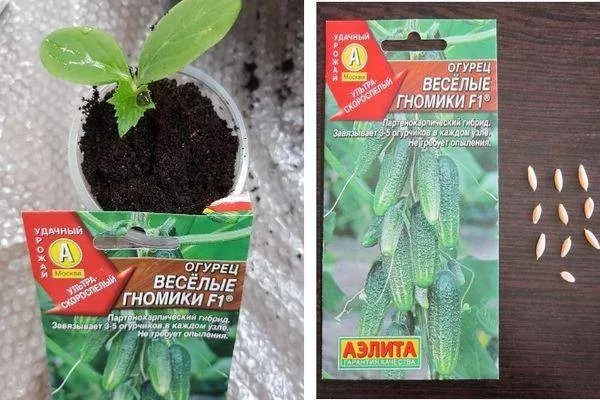
Introduction to the variety
Vesyolye Gnomiki is a classic example of a bunch cucumber. According to the manufacturer and reviews from growers, this variety has several characteristics: it ripens quickly, produces a rich harvest, and is capable of self-pollination.
Originators
In 2013, a new cucumber variety, developed by our breeders O. V. Astakhova, V. G. Kachainik, and N. V. Nastenko, entered the market.
The hybrid was officially registered and approved for agricultural use. In developing the new variety, specialists aimed to create cucumbers that could be grown both outdoors and in temporarily protected areas.
The Vesyolye Gnomiki hybrid was created by crossing varieties and does not involve the use of genetically modified organisms (GMOs). This cucumber is approved for safe consumption.
Description of the Merry Gnomes bushes
This cucumber is parthenocarpic and does not require insect pollination to bear fruit. Vesyolye Gnomiki is a semi-standard variety, reaching a height of 110-130 cm. Its growth is limited, and it does not produce many side shoots, which does not relieve the strain on the main stem.
Other varietal characteristics include the following:
- The bush is formed from a single central shoot, and its side shoots require little attention. It is grown using a trellis system, though the fruit must be secured to a support structure during ripening.
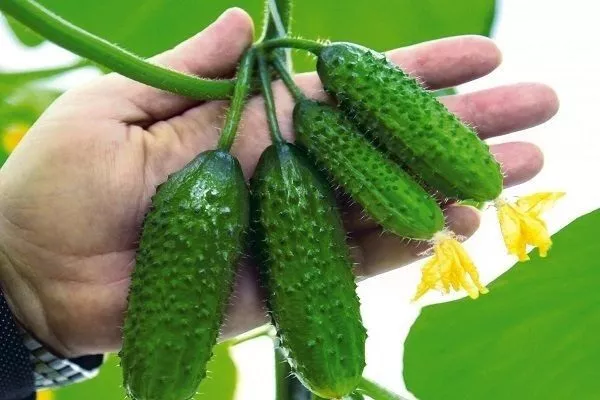
- These cheerful gnomes are distinguished by their unique clustered flowering, in which each bud contains an ovary, allowing the fruits to ripen together in a cluster.
- Due to its short stature, it's suitable for growing on balconies and windowsills in apartments. At home, the yield may not be as high, but two plants of this variety are enough to meet the needs of a family of four.
- The central stem is light green with a slight gray tint. The plant's skin is very sparsely pubescent, its surface uneven and fibrous, which feels rougher.
- Lateral shoots are few in number, graceful and poorly developed, and have a darker shade than the main stem.
- The leaves of this cucumber are small, arranged in pairs, and heart-shaped with coarsely serrated edges, growing on short petioles. The leaf blade tapers toward the tip, its surface is rough and covered with short hairs. The upper side of the leaf is green, while the underside is lighter.
- The root system is a fibrous structure that spreads superficially and is slightly branched, so the root circle is small in size.
- The lemon-colored flowers are clustered at the leaf node, forming clusters of 3-5 buds. The plant produces exclusively female flowers, with a 100% success rate of ovary formation, and no sterile flowers.
Detailed description of fruits
The fruits are evenly distributed along the stem and are uniform in size and weight. When cucumbers reach full biological maturity, they do not increase in length or width, nor do they change their greenish-yellow color. As they age, they do not turn yellow and retain their flavor and aroma, though the skin becomes denser.
Information about the fruits of the Funny Gnomes:
- the cucumber has a cylindrical shape with a slight elongation, the weight varies from 70 to 95 g, the length reaches a maximum of 9 cm, but most often 7 cm;
- the color of the fruits is not uniform, they are darker at the bottom, lighter towards the top, characteristic yellow lines extend from the stalk to the middle, while at the stage of technical ripeness they have a uniform green tone;
- the surface of the fruit is covered with a finely tuberculated pattern with a short white fluff that grows from the center of the unevenness;
- the peel is thick, but quite elastic and strong, has a glossy finish, does not have a waxy coating and is resistant to minor mechanical damage;
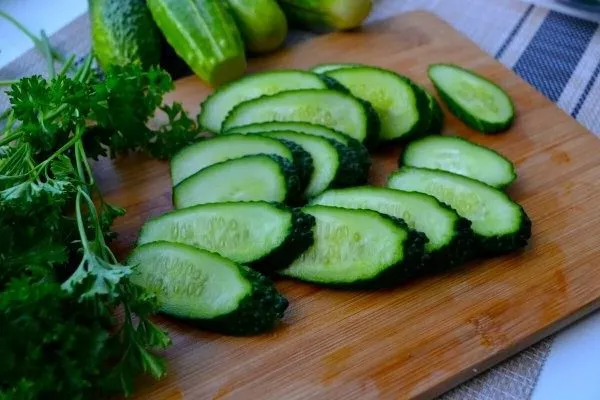
- the flesh is dense in texture, light green, juicy and without voids, the seeds are small and few in number;
Taste and purpose
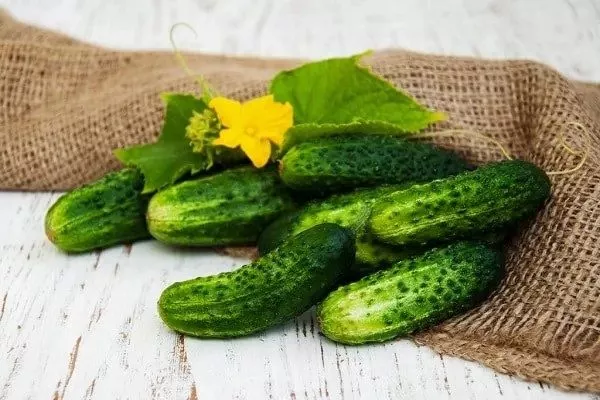
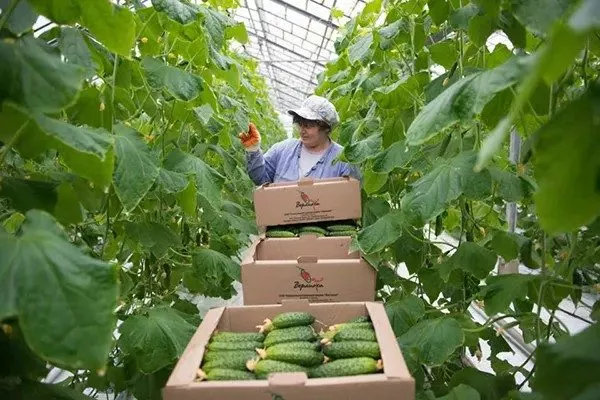
The Vesyolye Gnomiki cucumber is distinguished by its ability to be transported over long distances and maintain its attractive appearance for a long time, making it ideal for commercial cultivation. Its flavor is sweet with a distinct aroma, without a hint of bitterness.
This variety scores highly on the tasting scale; its vegetables can be eaten fresh or used as a salad ingredient. Their shape and size make them suitable for canning whole.
When ripe, the yield
These cucumbers are ultra-early: they reach perfect ripeness in just 40 days. Ripening time may vary depending on local conditions and climate. In warmer areas, ripening outdoors may be delayed by up to a week.
This variety is characterized by cluster-shaped fruiting, allowing this small plant to produce a fairly abundant harvest. Each bush can yield between 7 and 13.5 kg, regardless of whether it's grown in a greenhouse or outdoors.
Features to be aware of:
- The first harvest can be expected from June 1-15, and fruiting continues until the end of this month.
- It is recommended to plant three bushes per square meter, which ensures maximum cucumber harvest.
- To extend the fruiting period, it is recommended to plant seedlings at three-week intervals. For example, if the first batch is planted in May and the next in June, this will significantly extend the fruiting period.
- The yield of the Vesyolye Gnomiki variety is not affected by temperature fluctuations, excess or lack of ultraviolet light, or the choice of growing method.
- If there is a lack of moisture, the plant will stop developing and will not produce a harvest.
Pros and cons
The variety has one drawback: it requires regular watering and tying to a supporting structure.
Landing features
This cucumber has the ability to tolerate shade, but prefers a location with sufficient sunlight.
Planting dates
The earliest time to start growing seeds for seedlings is the last days of March. The optimal time for any sowing method is after April 20-25. In this case, sprouted cucumbers can be transplanted outdoors between May 12 and 22.
The most important thing is to ensure that the soil temperature is not lower than 14°C so that young plants are not exposed to freezing.
Site preparation
This variety prefers flat, wind-protected sites facing the southeast. In the fall, the soil under the cucumbers is thoroughly dug, removing all weeds and excess debris. After this, according to the instructions, the highly acidic soil is enriched with dolomite flour, followed by the addition of the usual fertilizer for this variety—saltpeter and compost.
Before the actual planting of the Merry Gnomes, the soil is aerated once again and enriched with phosphorus fertilizers.

Planting seeds
Cucumbers are ideally suited to seedling cultivation. Here's how to do it right:
- Pour nutritious soil mixture into separate small pots or cups with drainage holes.
- Spray it thoroughly with water.
- Make a hole and place 2-3 seeds in each container, planting them 2.5 cm deep.
- After this, transfer the seedlings to a room with a temperature of 21-23°C.
The seedlings are watered with a spray bottle using preheated water. Before transplanting the cucumbers into the garden, one shoot is left in each pot.
Planting seedlings
By the time of transplanting, cucumbers should already have 3-4 mature leaves. This procedure should be performed with care, as the roots of young plants are particularly fragile and prone to damage.
Recommendations:
- In open ground, place 4-5 plants per 1 sq. m, and in greenhouse conditions - no more than 3.
- The depth of the hole for the Funny Gnomes should be 7-9 cm.
- After planting, each plant must be carefully sprinkled with soil and lightly compacted so that it takes root faster, and then watered.

Planting diagram
Despite its small size, the Vesyolye Gnomiki variety requires adequate space to grow; planting too closely can lead to disease. The recommended spacing between plants is 30-40 cm, and the width between rows should be 65 to 75 cm.
Care
To ensure cucumbers ripen successfully, they require standard care. It's important to keep the garden clean and inspect the plants to avoid pests.
Watering
To do this, install a drip system so that water reaches the roots directly, without damaging the foliage. Under normal conditions, water 3-4 times a week, depending on the soil moisture level. If temperatures are high, water in the morning, and on cooler days, in the evening.
Garter and shaping of bushes
It's important to remove all side shoots early on, when they reach 2-3 leaves. Leaves at this stage should also be removed to prevent the cucumber from wasting energy.
Vines should be tied and secured to trellises as high as possible, especially in greenhouses where they may be susceptible to rot. Pinching the tops is not necessary.

Top dressing
Early cucumber varieties require regular and generous fertilization. Apply the first fertilizer two weeks after planting. A manure solution or chicken manure can be used for this. Subsequently, it is recommended to apply fertilizer every ten days.
During the period of intensive plant development, cucumbers need nitrogen mixtures, and when ovaries are forming, they need potassium-phosphorus and organic compounds.
Hilling
To help cucumbers establish themselves more quickly and withstand the cold at night, they are covered with soil immediately after transplanting. After that, only cover them with soil if necessary.
Diseases and pests
This hybrid is distinguished by its resistance to cladosporiosis and average indicators to:
- powdery mildew;
- downy mildew;
- cucumber mosaic virus.
Plants most often become ill in greenhouses where optimal conditions are not met, or due to insufficient care and improper watering. Treatment involves using copper sulfate solutions, Bordeaux mixture, and additionally spraying the greenhouse with liquid potassium permanganate.
Insects dangerous for the variety:
- Whitefly. To combat it, use manual removal and washing of leaves with a weak solution of laundry soap.
- Aphid. Use a solution of wood powder or soap as an antiparasitic agent. Alternatively, you can prepare a weak celandine decoction.
Harvesting and use of the crop
The "Vesyolye Gnomiki" cucumber boasts a long-lasting flavor and attractive appearance when refrigerated, achieving a shelf life of up to three weeks. Stored indoors, it retains its flavor for 10-12 days. Stop fertilizing it a week before harvest.
Cleaning and storage rules:
- The ideal time for collection is in the evening, 30-35 minutes after watering.
- Carefully trim the cucumbers with scissors or a sharp knife, being careful not to damage the stem.
- In the refrigerator, loosely packed in plastic, the cucumber will stay fresh and aromatic for about 2-3 weeks.
- It is not recommended to wash the fruits after harvesting, as this may reduce their shelf life.
This variety handles transportation well, despite its thin skin. Even during long-distance transport, it does not crack or lose its quality, making it suitable for commercial cultivation.
Reviews
The "Vesyolye Gnomiki" cucumber is an early-flowering, parthenocarpic, GMO-free F1 hybrid. This variety is ideal for a variety of climates. It boasts abundant yields that remain high regardless of weather conditions.