
The Ukhazher F1 cucumber is a member of a family of hybrids pollinated by bees. This variety is recommended for cultivation by private and small farms in the Northern, Northwestern, Central, Volga-Vyatka, Central Black Earth, Middle Volga, and North Caucasus regions of Russia under temporary plastic shelters.
Introduction to the variety
Among the hybrid's advantages are its ease of care, decent productivity, and abundance of male flowers, making Ukhazher an ideal pollinator for neighboring cucumber varieties with a predominantly female flowering type.
History of origin
The Ukhazher variety was developed in 2001 at the Moscow Research Institute for Vegetable Breeding and registered in the Russian Federation State Register in 2004. Experts from the renowned agrofirm Gavrish participated in the development of the hybrid: S. F. Gavrish, A. E. Portyankin, and A. V. Shamshina.
Characteristic features of bushes and cucumbers
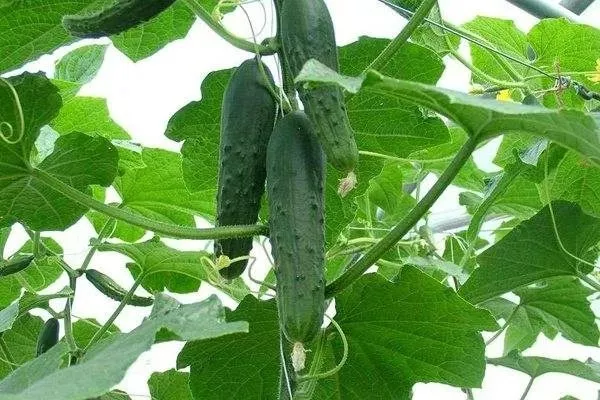
Ukhazher bushes are distinguished by their tall stature and are characterized as indeterminate in their development. This cultivar has a moderate degree of branching. Other varietal characteristics and features:
- The leaves on these bushes are large and green, with a smooth surface and slightly wavy edges. The arrangement is alternate.
- Flowering is of a mixed type, with 1 to 3 female flowers growing on the plant nodes.
- The root system is voluminous, due to which it effectively absorbs moisture from the soil, reaching a depth of 30-35 cm.
- The plant stem is strong and powerful, with a climbing height of 60 to 150 cm.
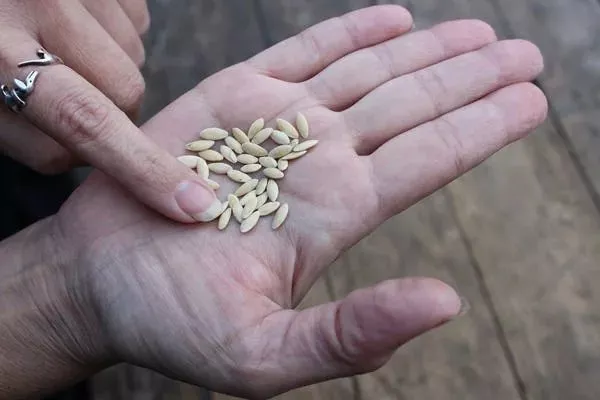
- The seeds have an unusual oblong shape and a light cream color.
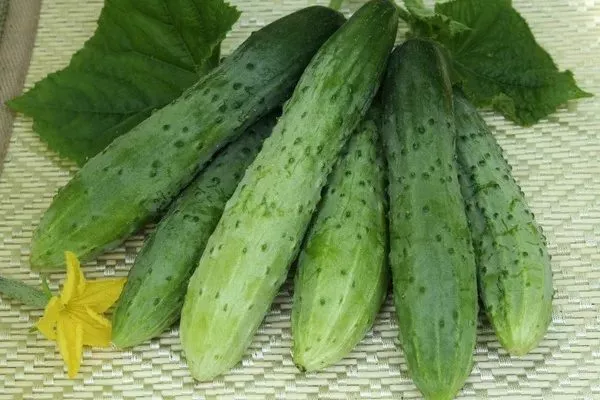
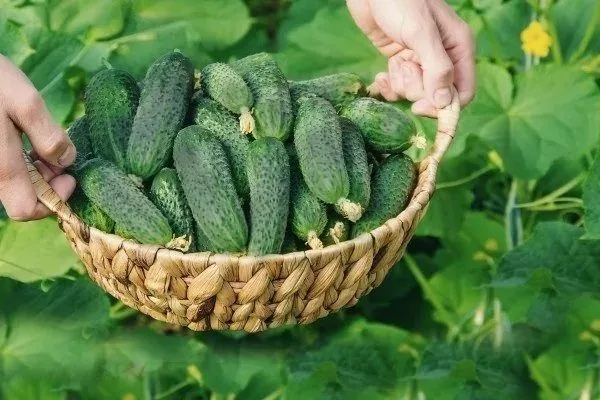
- The size of the fruit ranges from 13 to 16 cm, but sometimes larger specimens up to 18 and even 20 cm in length are found. The diameter of the cucumbers is about 4-4.5 cm, and the weight is from 120 to 200 g, but the average is 140 g.
- Cucumbers have a characteristic cylindrical shape.
- The fruits are distinguished by their rich dark green color with light and short stripes.
- The surface of the cucumbers is decorated with large tubercles, which are distributed unevenly along the length of the fruit.
- The skin is very thin.
Taste and purpose
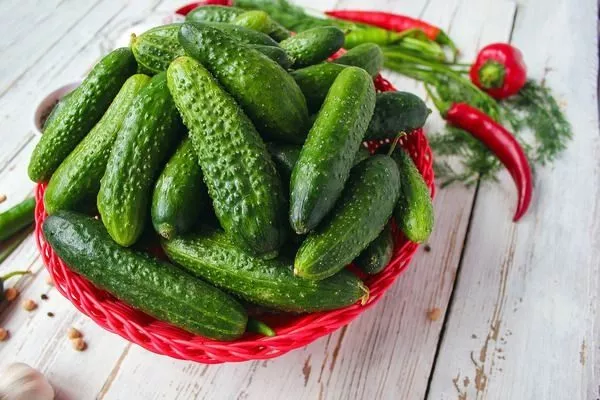
The Ukhazher cucumber has a pleasant, slightly sweet flavor. It has a rich, pleasant aroma and is ideal for freshly picked cucumbers. These fruits can be used in:
- salads;
- side dishes;
- pickles;
- snacks.
Properties, benefits, calorie content
Cucumbers are considered a dietary food, consisting of 95% water and containing only 15 kcal per 100 g. They also contain vitamins, fiber, organic acids, and other beneficial components. The high moisture content in cucumbers helps remove toxins and waste from the body, cleansing the kidneys and liver of heavy metal salts.
Additionally, the Suitor has the following features:
- The fiber found in cucumbers cleanses the stomach and promotes proper bowel function.
- Cucumber is rich in beta-carotene, magnesium, calcium, zinc, folate and other minerals.
- Regular consumption has a beneficial effect on the thyroid gland, prevents the formation of cholesterol plaques on the walls of blood vessels, and helps protect the cardiovascular system from strokes, heart attacks, and atherosclerosis.
- Cucumbers perfectly quench thirst, stimulate appetite and promote better digestion of food.
When ripe, the yield
The Ukhazher cucumber is a mid-late variety. It's important to note that it takes approximately 56 days from the appearance of the first green shoots to harvesting.
With proper care, watering, and nutrition, cucumbers can yield 15-16 kg of vegetables per square meter. This variety's yield can exceed expectations, as success depends largely on the gardener's diligence.
How to grow it yourself?
There are two methods for growing Uhazher: seedlings or direct sowing in the garden. For vegetables that will ripen indoors, seedlings are recommended. In warm climates, seeds are sown directly into the ground.
Seedling method
To successfully grow seedlings, it's important to pre-germinate the seeds. This will ensure faster and better plant establishment and accelerate the emergence of the first green shoots. Seed preparation for seedlings involves several stages:
- The first stage involves selecting and classifying the seeds. Damaged and undersized seeds are eliminated to ensure uniform seedling growth. To do this, soak them in a salt solution, where the bad seeds will float to the surface.
- Next, the seeds undergo a heating process. They are placed in bags made of natural fabric and placed in a sunny location. The seeds are heated for several days, stirring occasionally.
- The next step is disinfection. They are treated with a 1% potassium permanganate solution for 115-20 minutes and 3% hydrogen peroxide for 10-12 minutes. Fitosporin-M and Trichodermin are recommended as fungicides.
- To stimulate rapid germination, seeds are soaked in special chemical solutions such as Gumi and Epin-Extra. They are then placed in a damp natural cloth and wrapped for 2-4 days. Regular watering is necessary to keep the seeds moist.
Seeds are sown in peat pots in late March or early April. They are laid horizontally at a depth of 2.5-3 cm and evenly covered with a 0.5 cm layer of soil. Water the future plants with warm water from a spray bottle to prevent soil erosion. The room temperature should be at least 23-25°C.
Next, create the following conditions:
- daytime temperature within +20-22°C;
- evening – should not fall below +16-17°C;
- continuous lighting for 11-13 hours;
- constant maintenance of humidity.
In late May or early June, the seedlings are transplanted to their permanent location in the ground. Hybrids are best planted in areas previously occupied by tomatoes, onions, or cabbage. Avoid areas previously occupied by pumpkins or squash.

Seed method
Starting in the fall, prepare the area for growing cucumbers in the following manner:
- form beds and enrich the soil with nitrogen;
- The beds are arranged with an east-west orientation, and their height should be 20-30 cm.
With the arrival of spring, in mid-April, the soil is loosened again and the bed is leveled with a rake. In mid-May, the soil is enriched with compost, ash, and mineral fertilizers.
To disinfect the soil, use a solution of potassium permanganate, then cover it with a dark film. Sow cucumbers on a warm, bright day at a depth of 1.5 to 2.5 cm, spacing the seeds 20-5 to 30 cm apart.
Step-by-step cultivation and care
Success in growing the Uhazher hybrid cucumber is largely determined by careful care, but the key aspect is regular watering and fertilization.
How to moisturize?
Moisturize as follows:
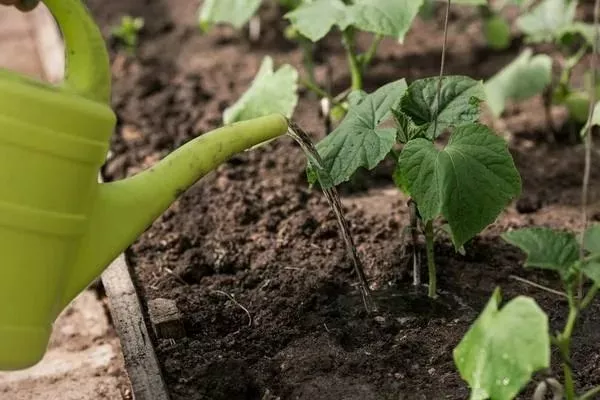
- Before the buds form, each bush is watered with 3-4 liters of water once a week.
- During the flowering and fruit development period, the need increases to 6-8 liters of water every three days.
- It is recommended to leave the water used for irrigation in a large container beforehand so that it warms up and settles.
- Morning and evening spraying of bushes is accompanied by loosening of the soil and removal of weeds.
Fertilizer Features
Fertilizing of the Uhazher hybrid is carried out with the following frequency:
- two weeks after transplanting cucumbers into the ground;
- when the ovary begins to appear;
- during the growth and development of fruits.
In hot weather, it's preferable to fertilize the root system, and on cooler days, the green foliage. For this, use a solution of cow manure or bird droppings, prepared according to a standard formula, and then apply it at a rate of 3-4 liters per square meter of cucumber field area.
For plant care, use mixtures consisting of urea, potassium sulfate, and mineral phosphorus. Alternatively, you can apply an ash solution, which enriches the area and repels insect pests.
Formation of the bush and garter
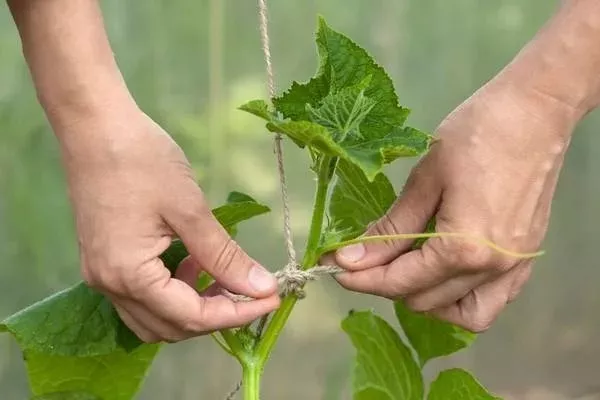
The cucumber plant doesn't tend to branch extensively, so it doesn't require any special training. Simply remove side shoots and shoots that appear below the third leaf. As the cucumber plants grow, they will need support.
Tying them up prevents them from tangling, making maintenance and harvesting easier. In a greenhouse or open area, supports are installed, with wire or thin twine stretched between them to support the plants.
Diseases and pests typical for the hybrid
The variety is renowned for its resistance to various diseases, including rot and mildew. However, this doesn't eliminate the risk of adverse effects from external conditions. To prevent potential problems, gardening experts recommend preventative treatments with specialized chemicals such as Fitosporin, Oxychom, and Topaz.
The risk of disease can be reduced by following these measures:
- competent selection of seeds;
- correct crop rotation;
- regular watering in the required volume;
- constant ventilation of greenhouses and film shelters.
In addition to chemical methods, you can also use folk remedies, such as regularly spraying cucumbers with garlic infusions or dusting them with tobacco dust. You can also add finely ground soap to the soil. The aroma of garlic and onions will repel aphids, thrips, and spider mites, so plant them close together.
Harvesting and storage
In August, starting around the 10th or 12th, it's time to harvest the Ukhazher cucumber variety. Due to the variety's varied ripening times, harvesting continues into September and October.
The Uzhazhnik cucumber has prickles, so it's recommended to wear gloves when picking it to protect against injury. The sorted cucumbers are placed in boxes and stored in a cool place, where they retain their quality for about a month.
Positive and negative qualities
The Ukhazher variety offers a number of advantages, making it popular and sought-after among gardeners. Let's look at the key benefits of this crop:
Even such a successful vegetable is not without its drawbacks. These include the relatively late ripening of the fruit, which requires patience and especially attention to watering and fertilizing. Lack of care can lead to reduced yields.
Reviews
The Ukhazher hybrid cucumber requires little maintenance, grows well in both cold and warm climates, and is disease-resistant. It's an excellent dietary and nutritious product. By following basic farming recommendations and preventative measures, you'll reap a bountiful and delicious harvest.